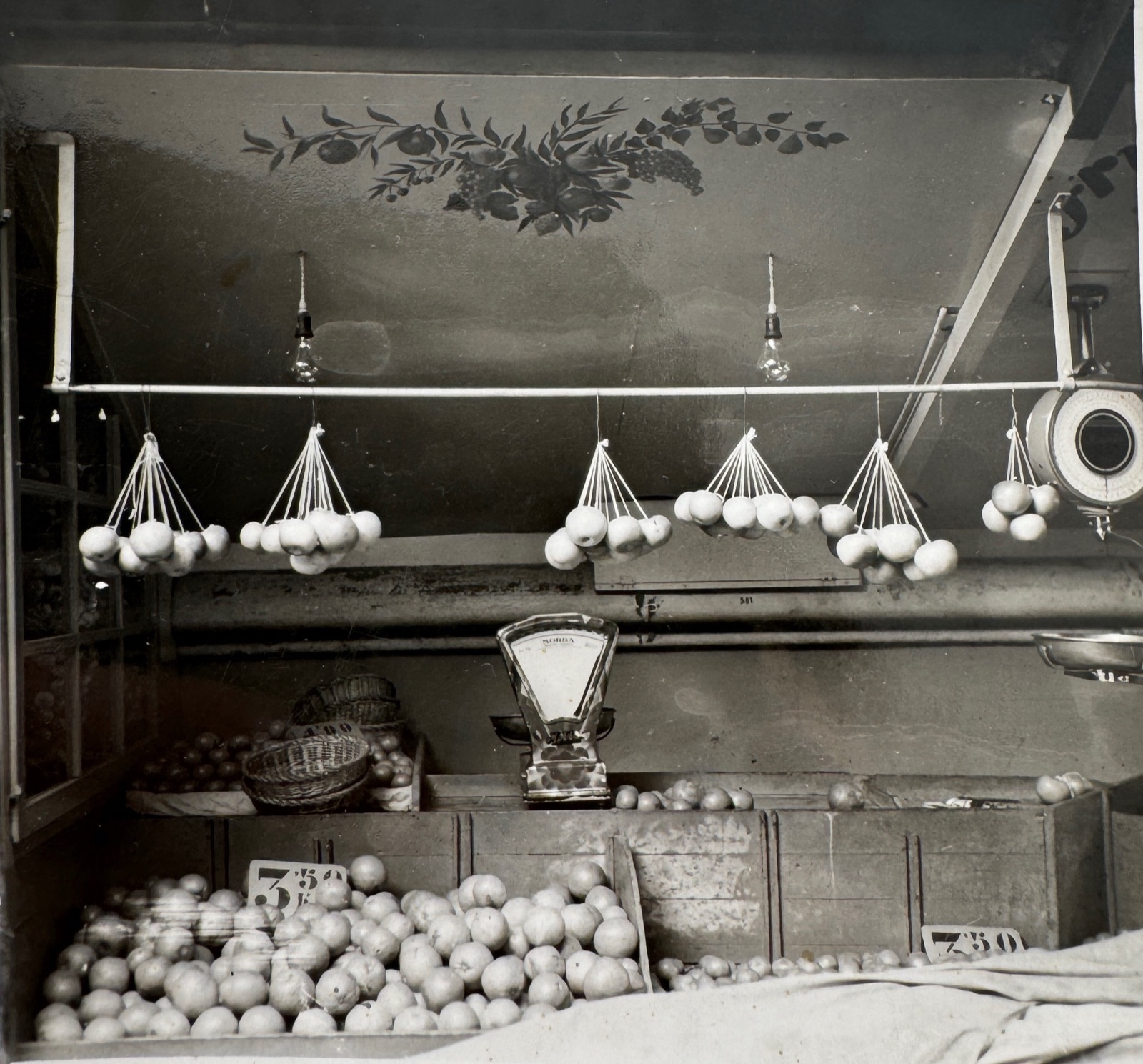
 Barcelona, 1953.A greengrocer's stall in Barcelona, 1953, shot square and head-on like a shop window because that is what it is.
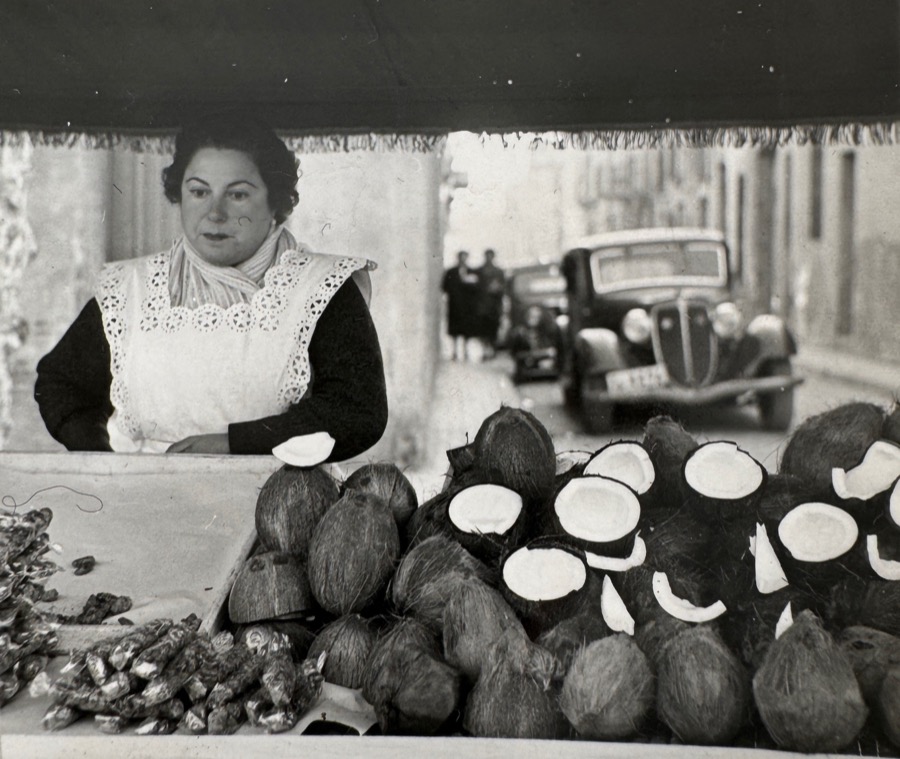 Barcelona, 1953.She stands under a fringed awning with her arms folded on the counter, a woman in a black dress and a white apron whose broad lace bib has been starched into a kind of armour.
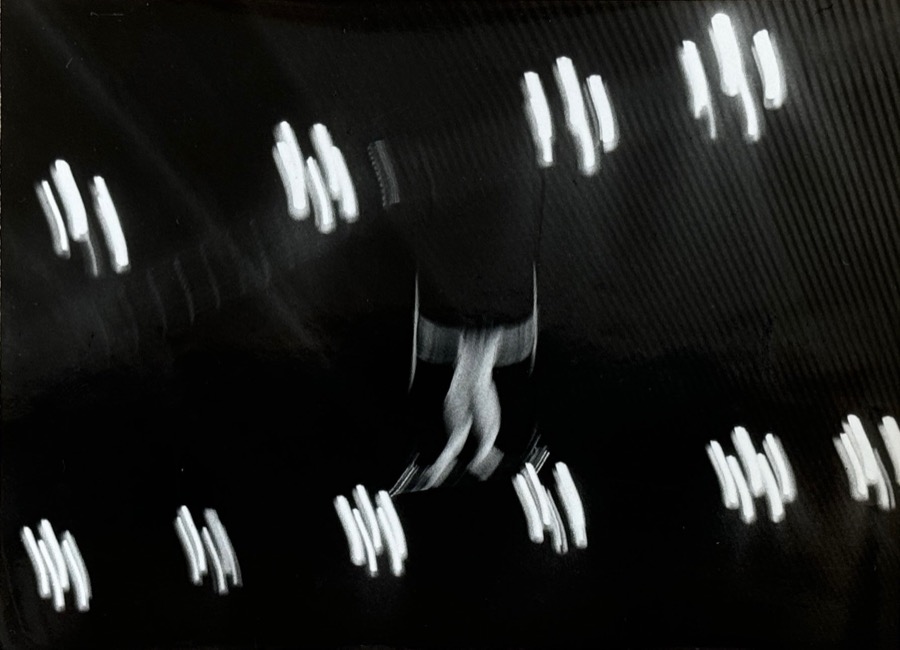 Barcelona, 1953.Nothing in this frame agrees to be identified.
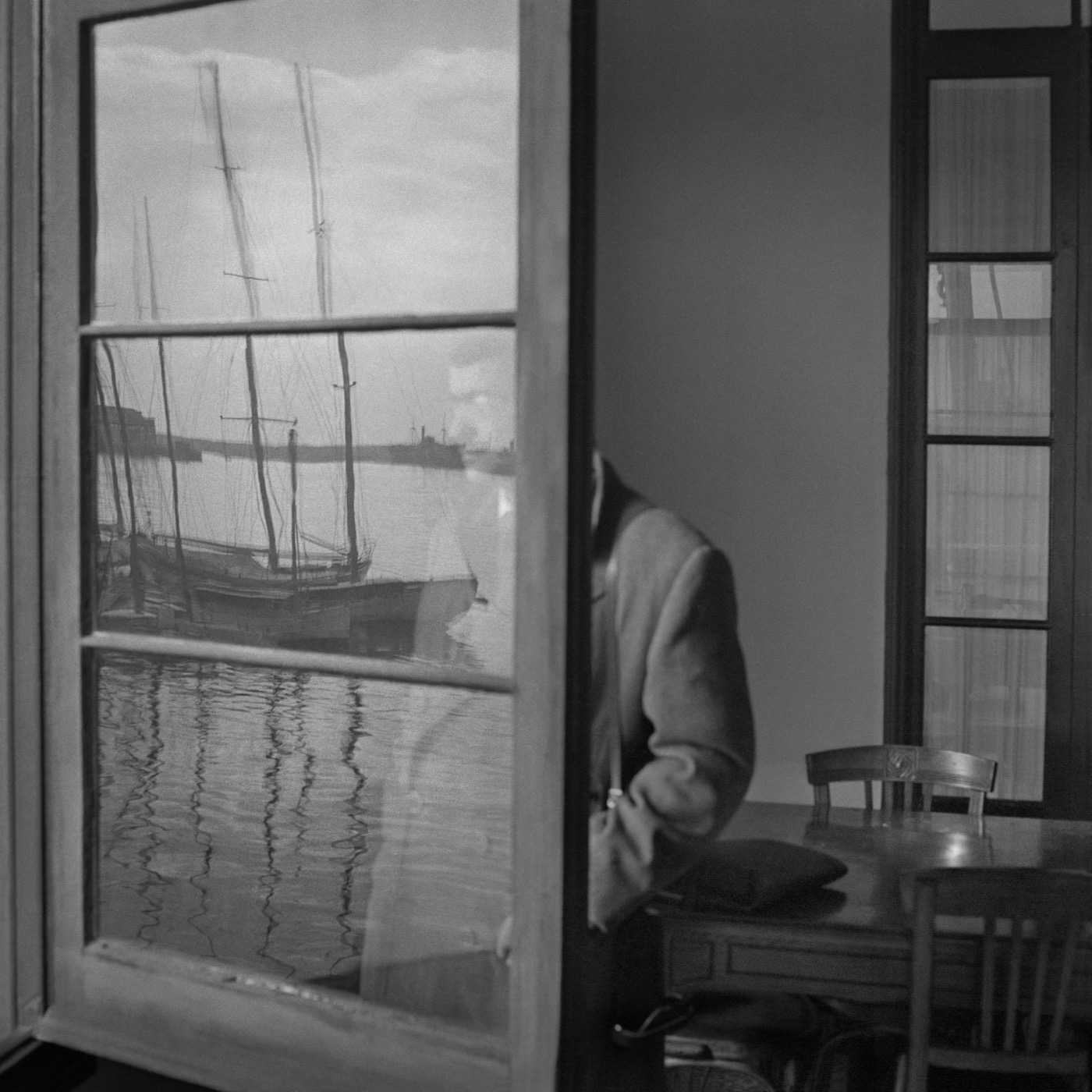 Cataluña, 1953.He has turned toward the open window and given us his back, so that a grey overcoat and a bent arm stand in for a face the picture will not supply.
 Puerto de Barcelona, 1953.On a quay, a row of slatted wooden crates lashed with rope divides the frame.
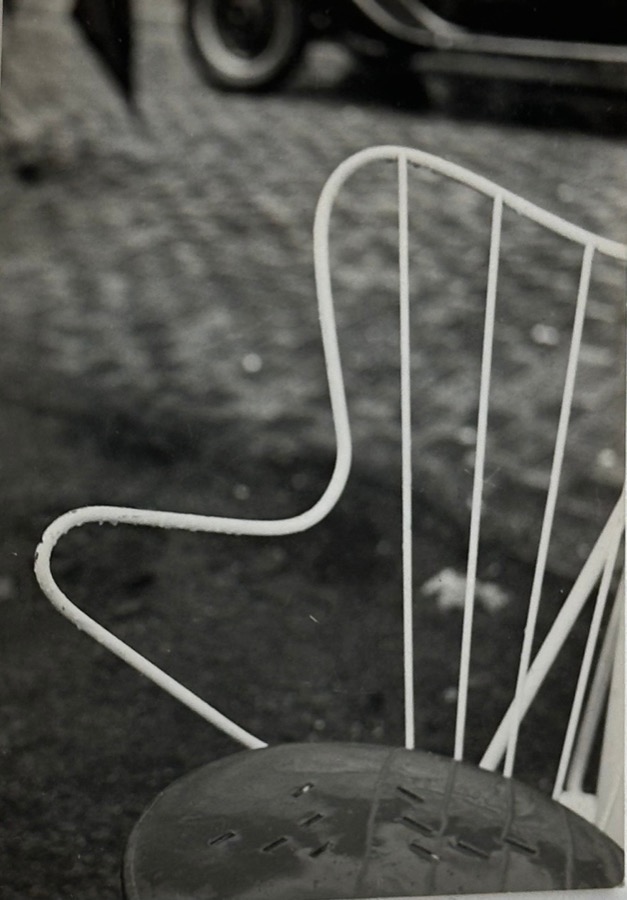 Sitges, 1953.A white wire chair fills most of the frame, so close that its curved arm loops out of focus toward us.
 Somorrostro, Barcelona, 1953.A whitewashed end wall carries an enormous painted numeral 4, brushed by hand, its strokes running slightly, its edges chipping away with the render.
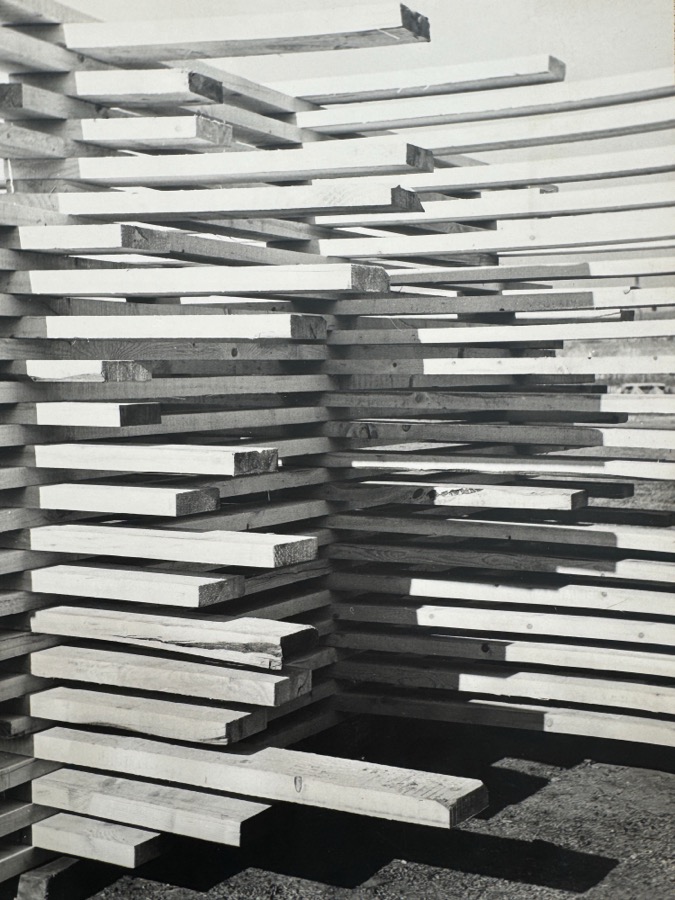 Terrassa, 1953.Sawn boards, hundreds of them, stacked in open crosshatch so the air can cure them, and the camera pushed so close that the yard, the sky and the low buildings at the right edge are reduced to…
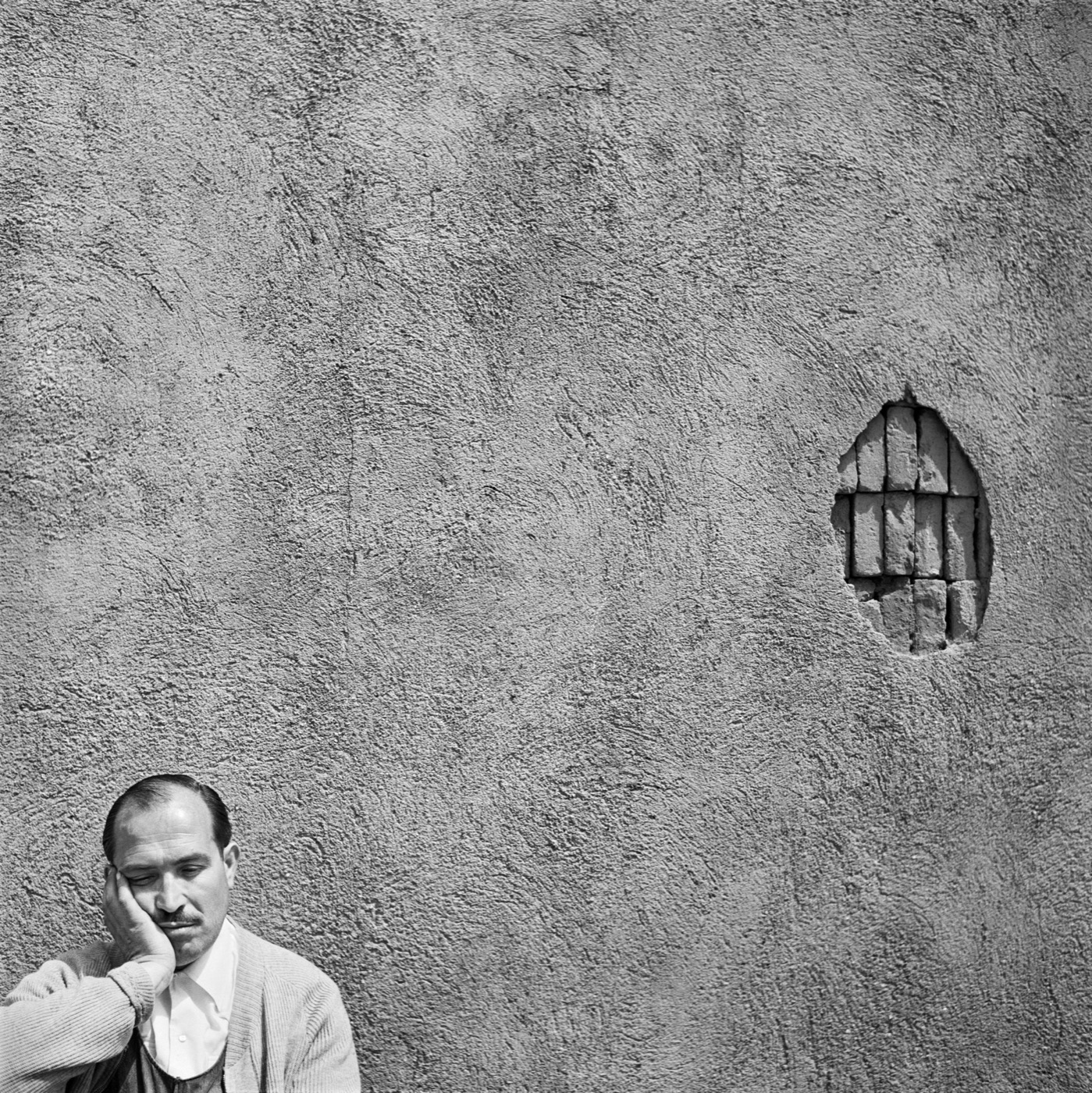 Terrassa, 1953.Most of this picture is wall. A great expanse of stucco, raked by light into a topography of nicks and trowel marks, fills nearly the whole square, and a photographer with ordinary instincts would…
 Terrassa, 1953.It's the gloves that get you, of course, but it took me a while to work out why.
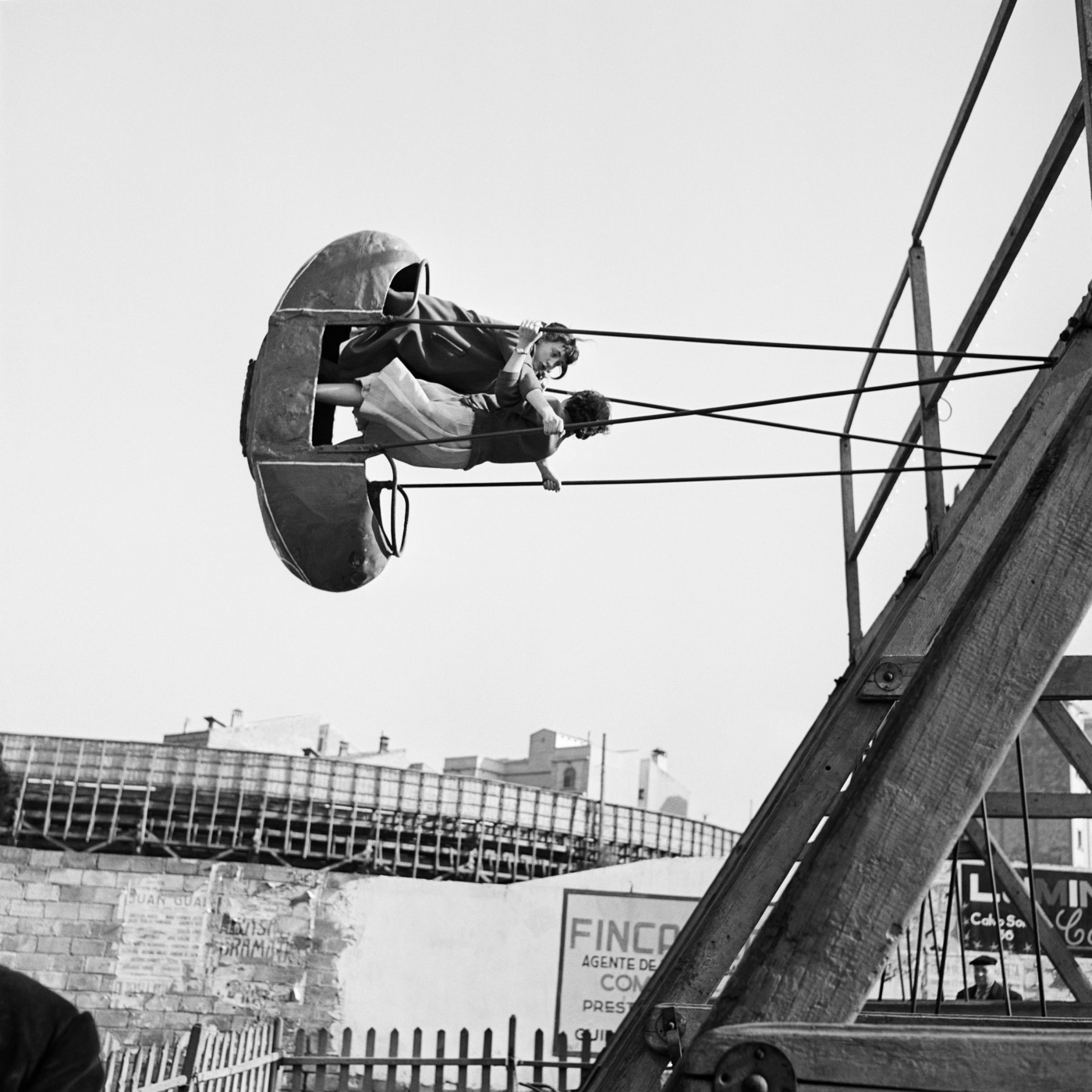 Terrassa, 1953.The sky is a blank field of light, so overexposed it reads as pure paper, and against it a swing-boat hangs at the very top of its arc.
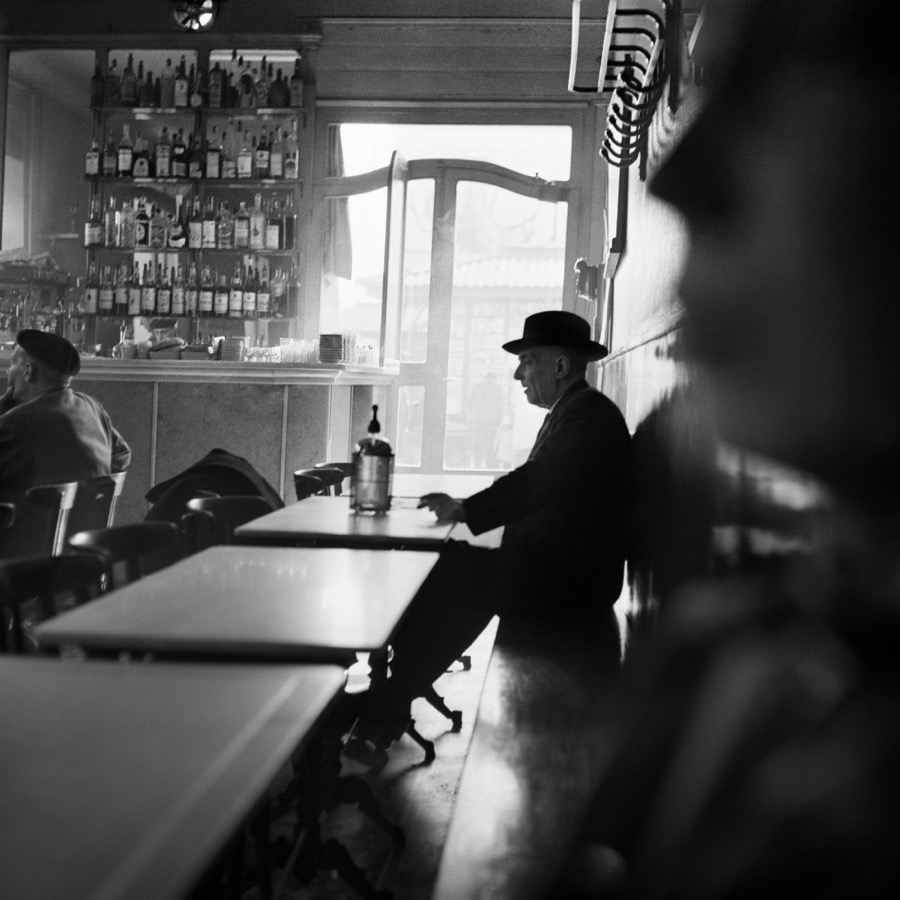 Terrassa, 1953.A bar in the middle of the morning, photographed from a table at the back.
 Terrassa, 1953.An art school in Terrassa in 1953, housed in a tall brick hall with a white iron staircase.
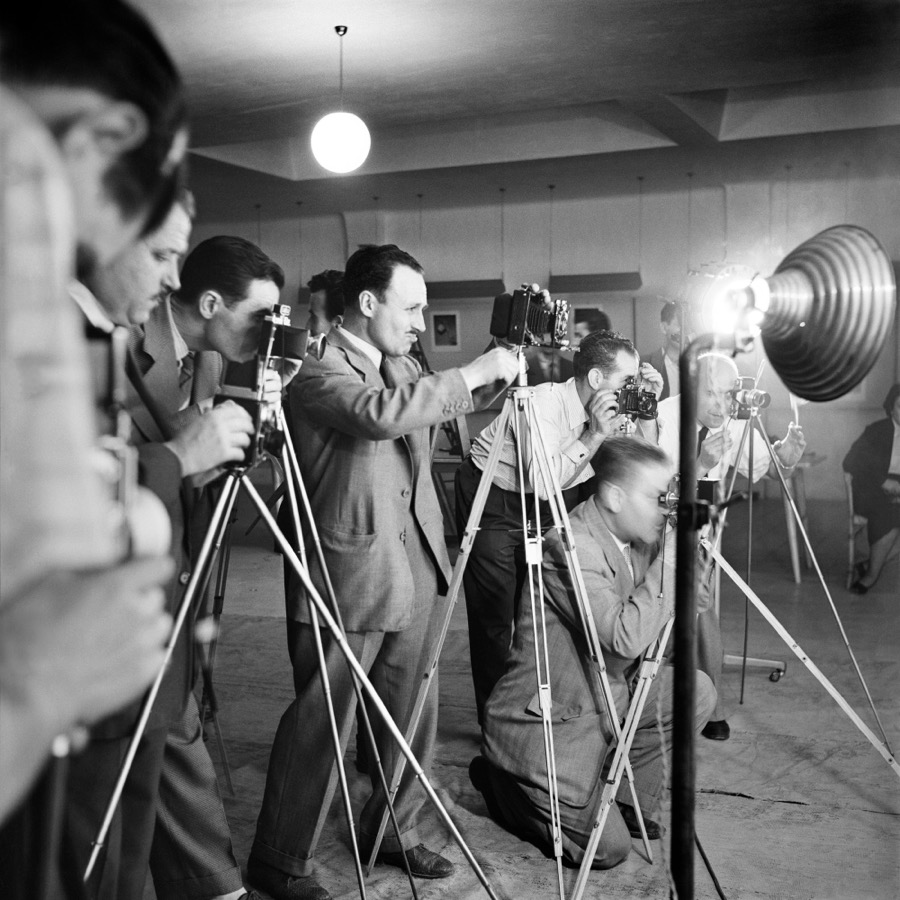 Terrassa, 1953.In 1953, Terrassa's photographic society gathered in a studio where young Ramón Masats discovered a visual language that would revolutionise Spanish documentary photography.
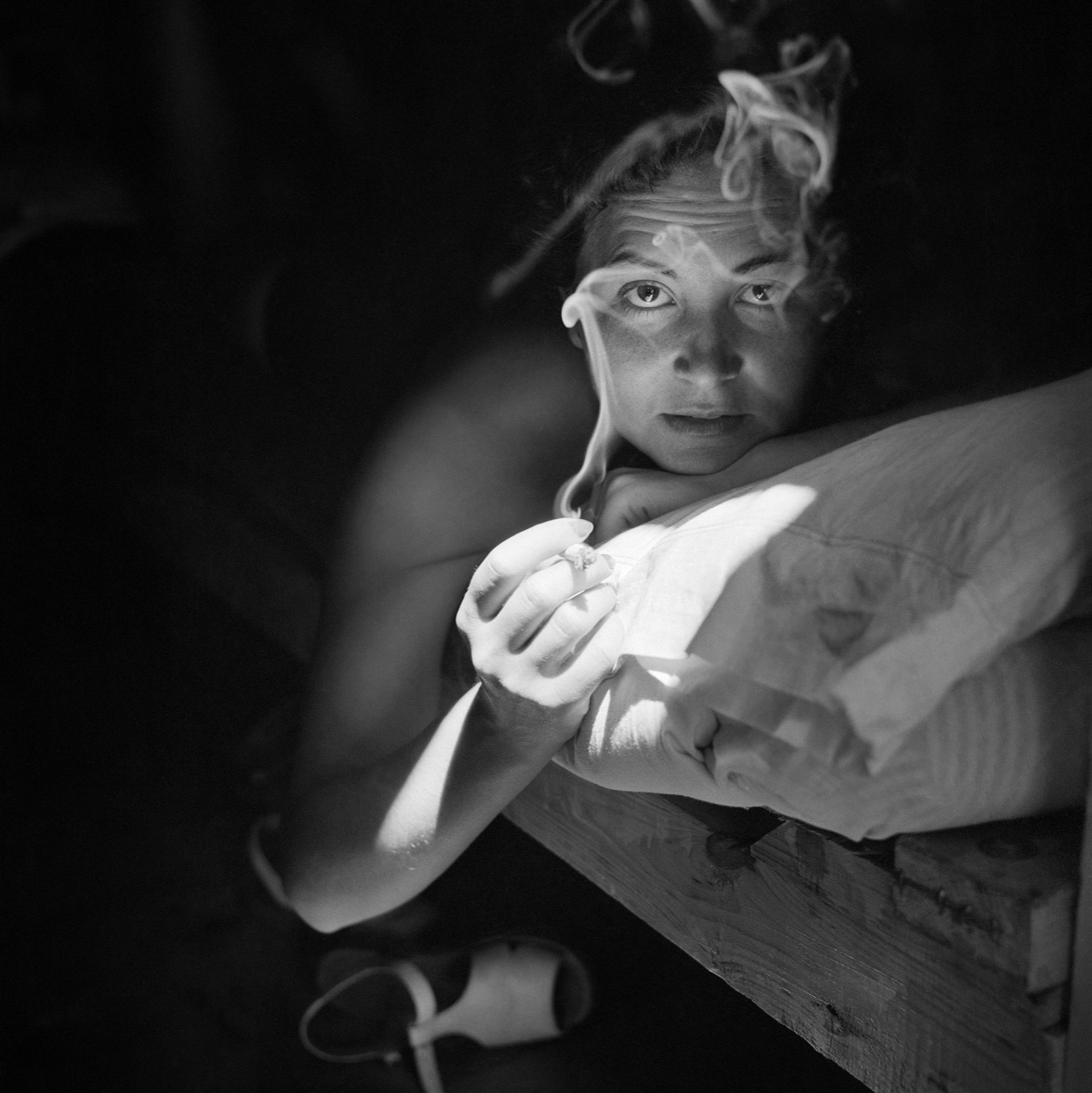 Terrassa, 1953.The face lifted from blackness by a single blade of light belongs to a lineage older than photography, running from Caravaggio’s tavern saints through the candlelit reveries of La Tour.
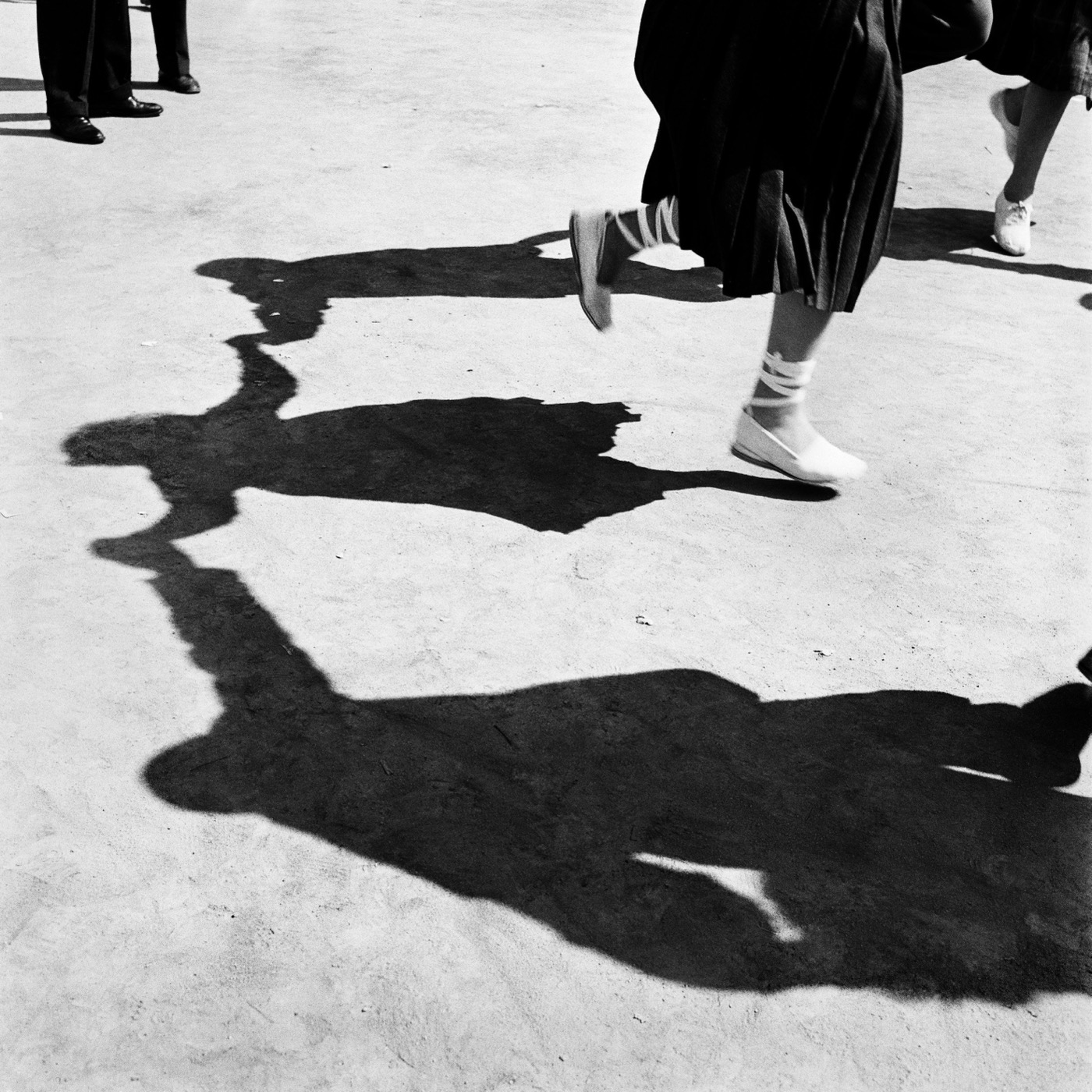 Terrassa, 1953.A half-second from now the raised white flat will come down on the sunlit concrete and the whole balance will shift; for now it hangs, toe pointed, mid-stride.
 Terrassa, 1953.The cow has almost disappeared. Brought this close, its flank turns into cartography: two dark continents pressing in from either side, a channel of white running between them, the nap of the hide…
 Terrassa, 1953.A sand yard, all mounds of pale grit and darker gravel, and standing in the middle of it a great circular wire sieve on a wooden frame: concentric rings, radiating spokes, a screen you could put a…
 Terrassa, 1953.Nine men eating their midday meal on a stack of perforated bricks, four along the top, against a tall grid of glass panes and a plain brick wall, five lower down on the ground and the rubble.
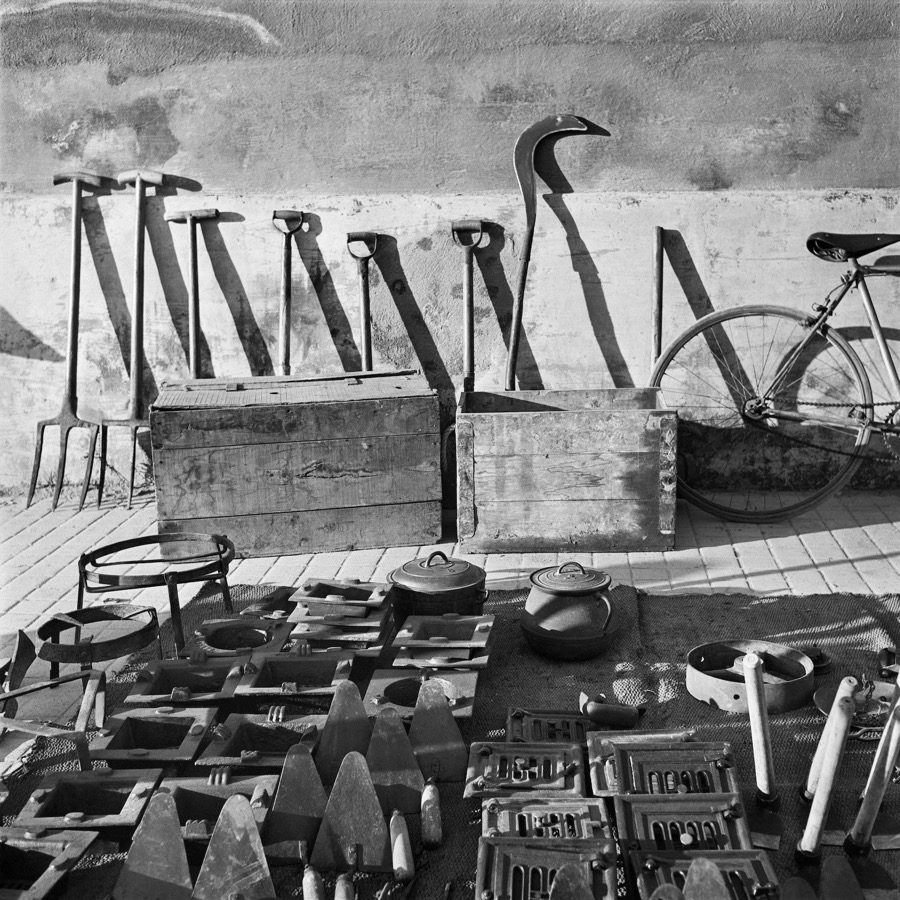 Terrassa, 1953.A shop laid out on the pavement, with nobody minding it.
 Terrassa, 1953.The only inscription on this wall is ornament: a narrow band of glazed tiles printed with a repeating lozenge motif, a geometric sentence running left to right across the middle of the frame.
 Terrassa, 1953.The wall takes almost the whole square. It is the flank of a building whose neighbour has been pulled down, and the demolition has left everything showing: plaster hanging off in scabs, a horizontal…
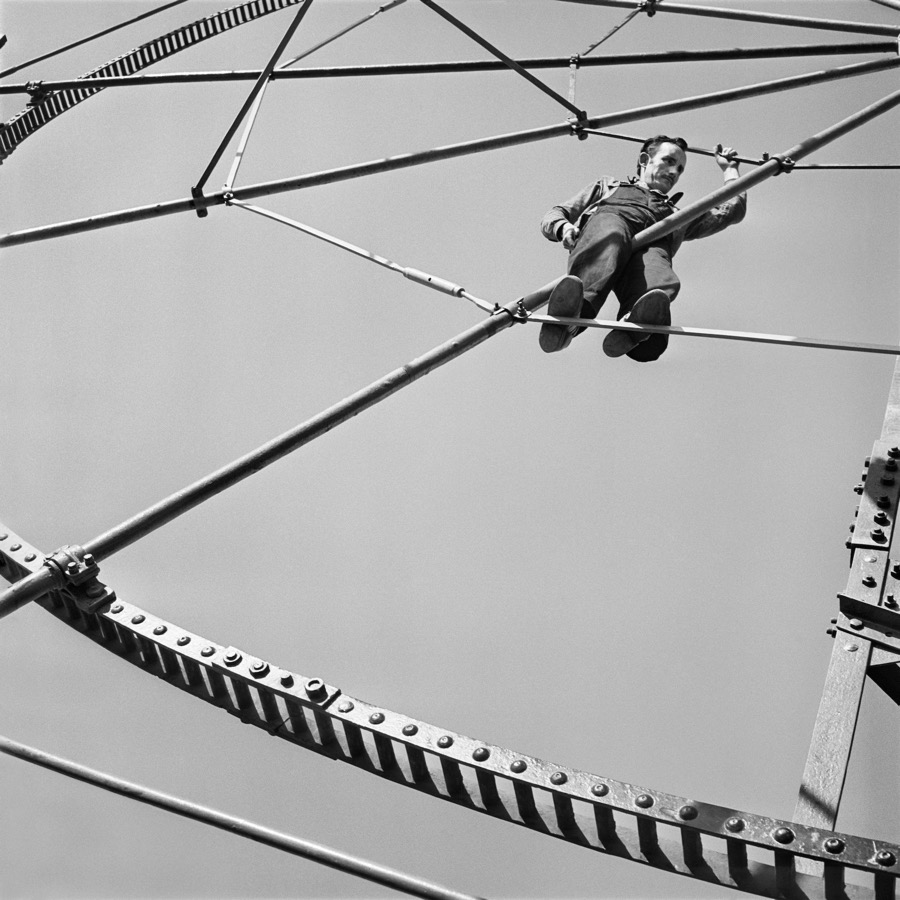 Terrassa, 1953.This photograph represents a defining moment from Ramón Masats' early work, made in Terrassa in 1953 when the artist was just 22 years old.
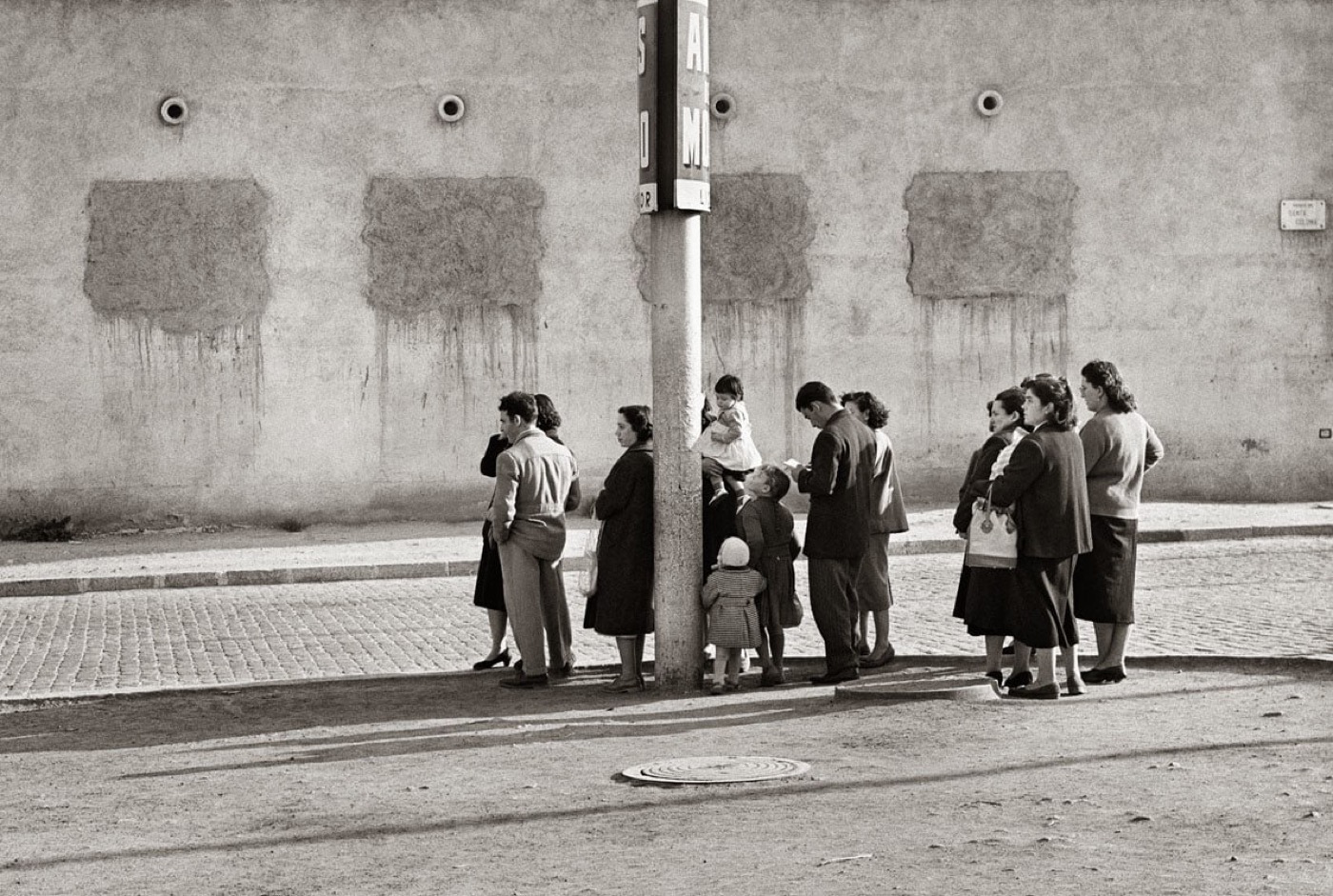 Barcelona, 1954.There is a famous wall in Cartier-Bresson’s Madrid, punctured by a confetti of tiny windows; the wall Masats found in Barcelona a generation later answers it with windows sealed, four cemented…
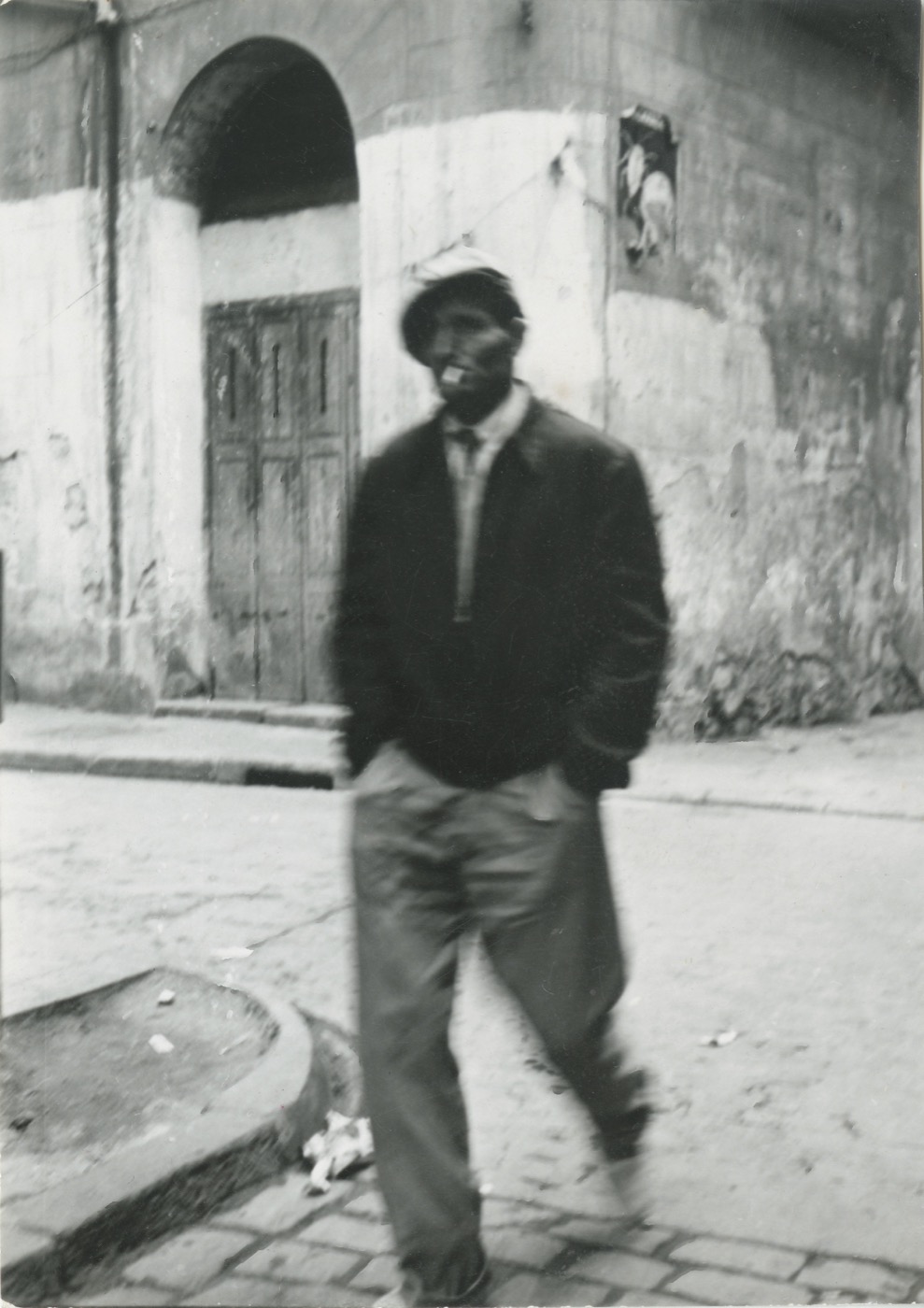 Barcelona, circa 1954.Halfway down a Barcelona back street, low sun somewhere, a man walks straight into the lens, close enough that the focus cannot quite hold him.
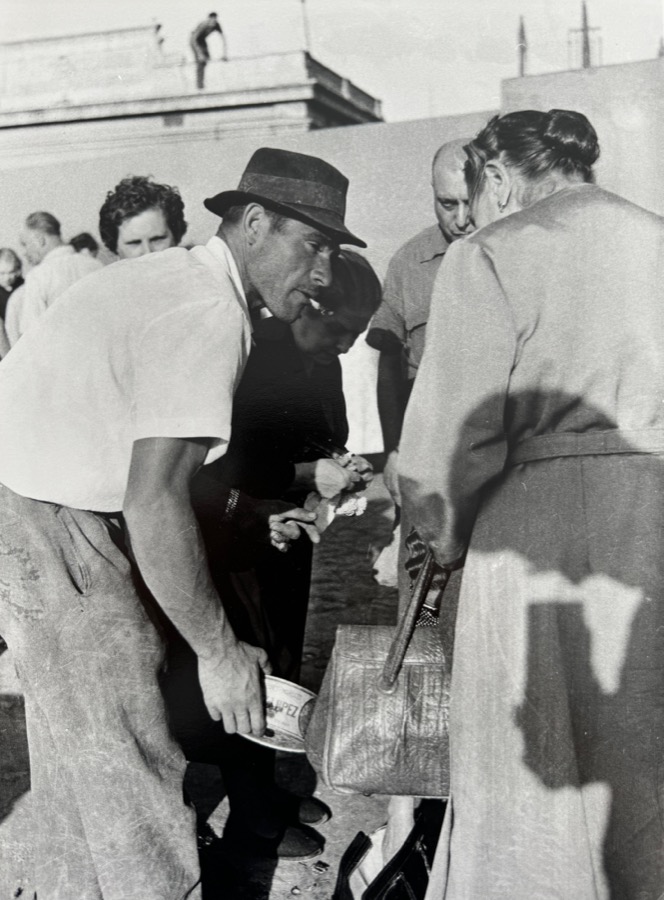 Barceloneta, 1954.A knot of bodies in bright sun, everyone bending toward something just below the frame.
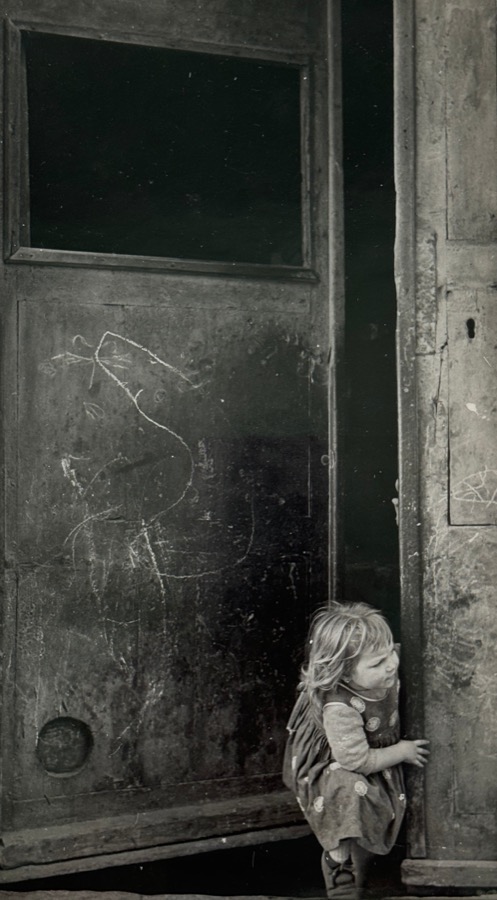 Barceloneta, 1954.A tall dark door, scarred and scuffed, with a small dark window set into its upper panel.
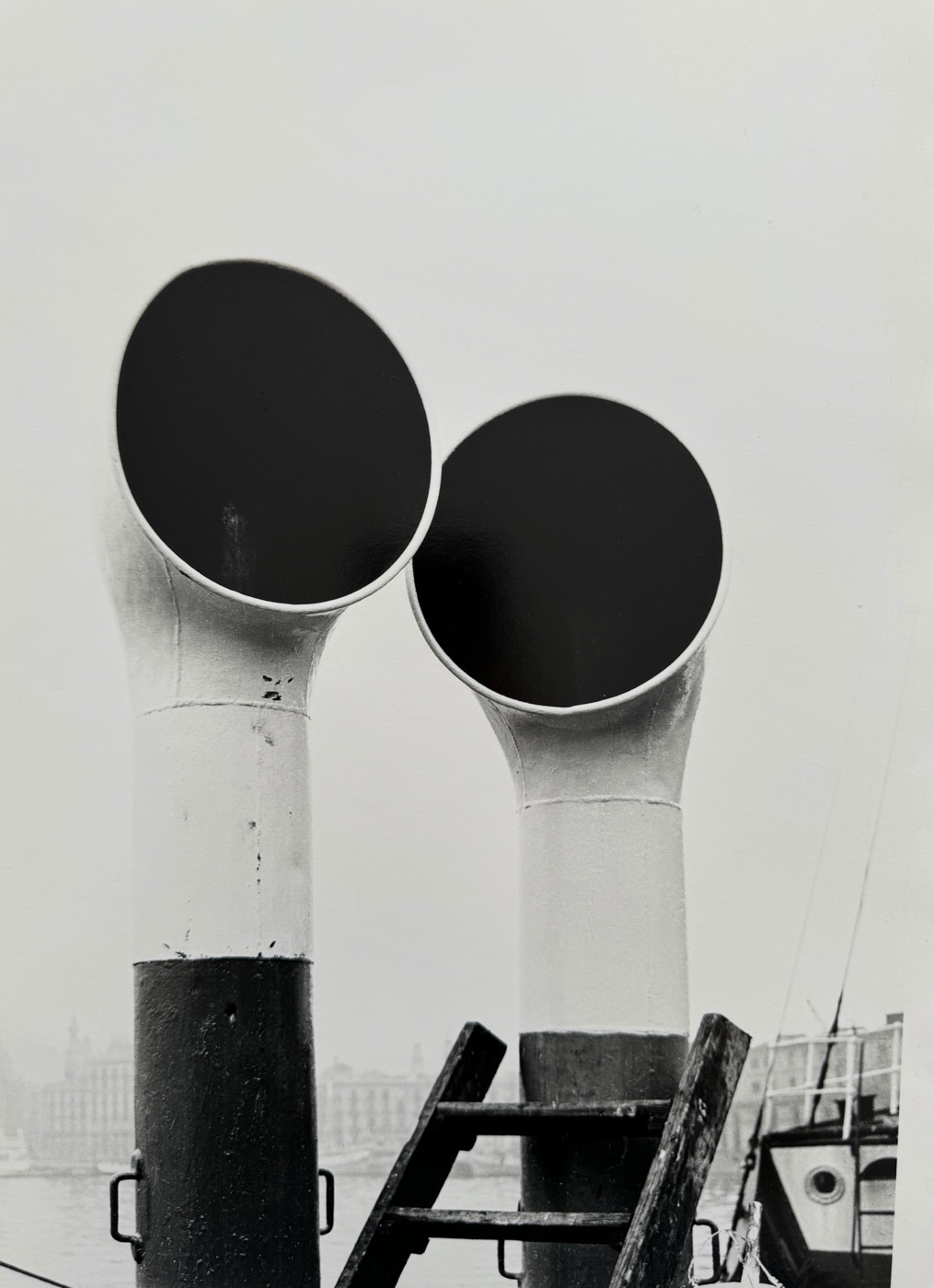 Puerto de Barcelona, 1954.The camera here has been pointed at a piece of marine plumbing and told to make a picture of it, which is the kind of dare a young photographer sets himself.
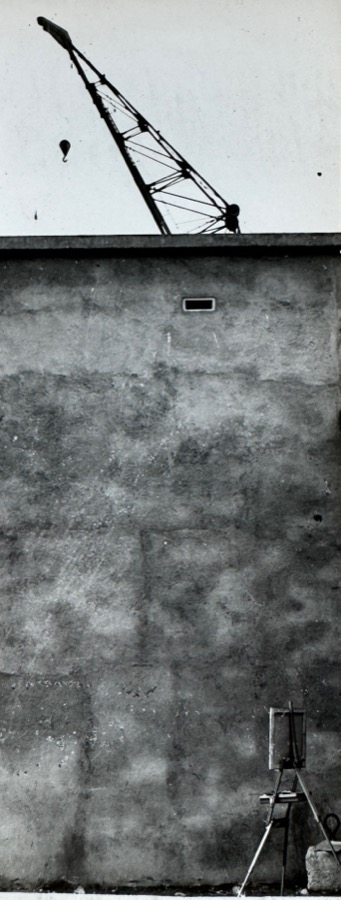 Barcelona, 1955.The print is a narrow upright strip, barely seven centimetres wide, and almost all of it is wall: a stretch of rendered concrete, mottled by damp and repair, with a single small vent set high in it…
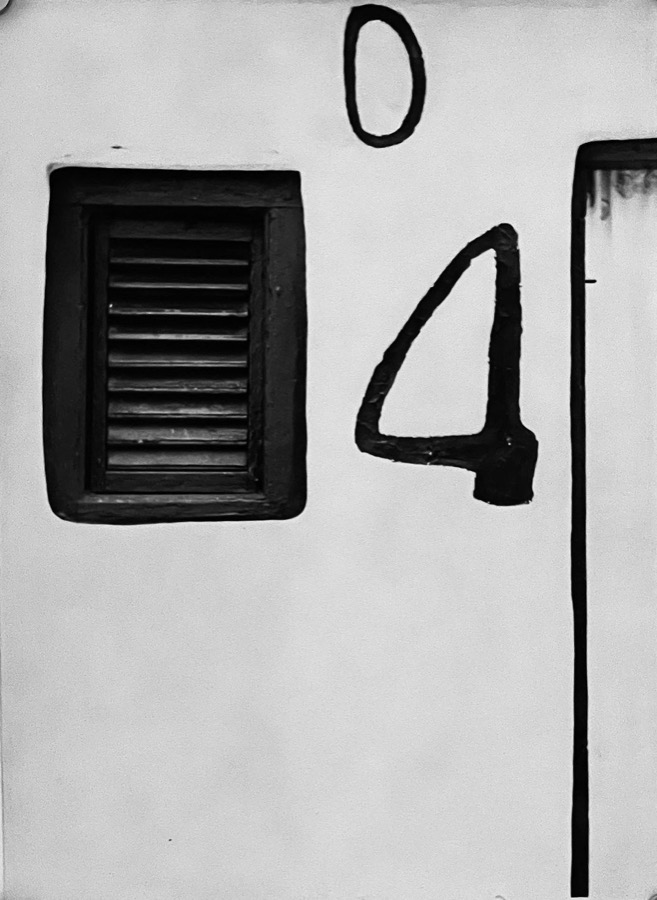 El puerto, Barcelona, 1955.A whitewashed wall. A small louvered shutter, dark, set in a dark frame.
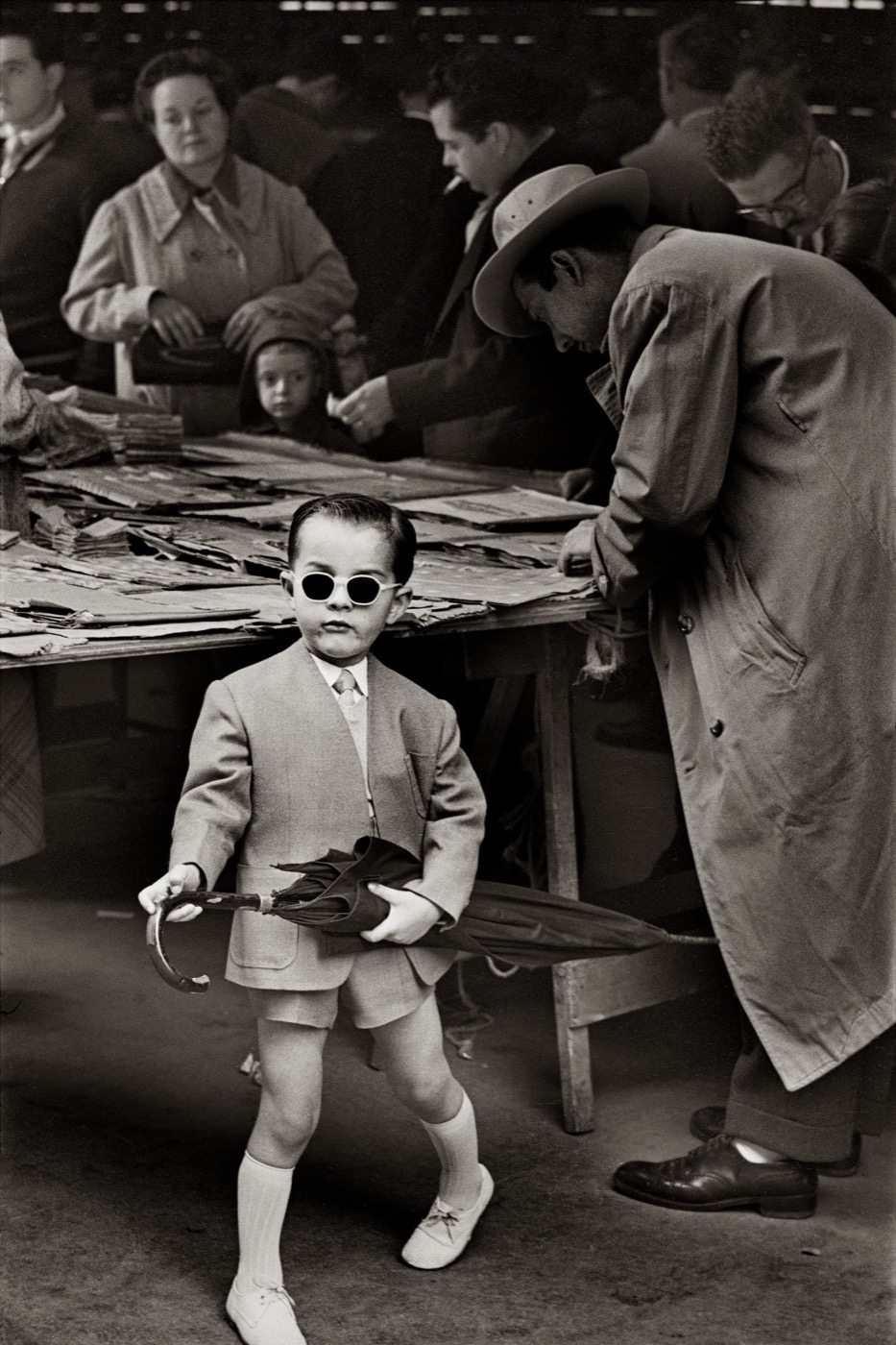 Sant Antoni Market, Barcelona, 1955.The boy in the white sunglasses got there before you did.
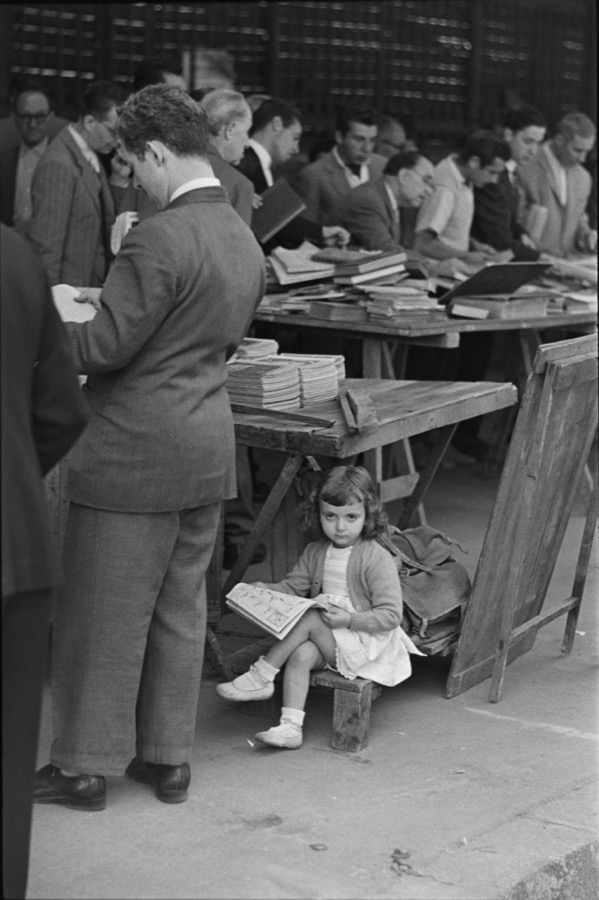 Sant Antoni Market, Barcelona, 1955.The boy stands in the one clear patch of floor, and everything taller than him leans away.
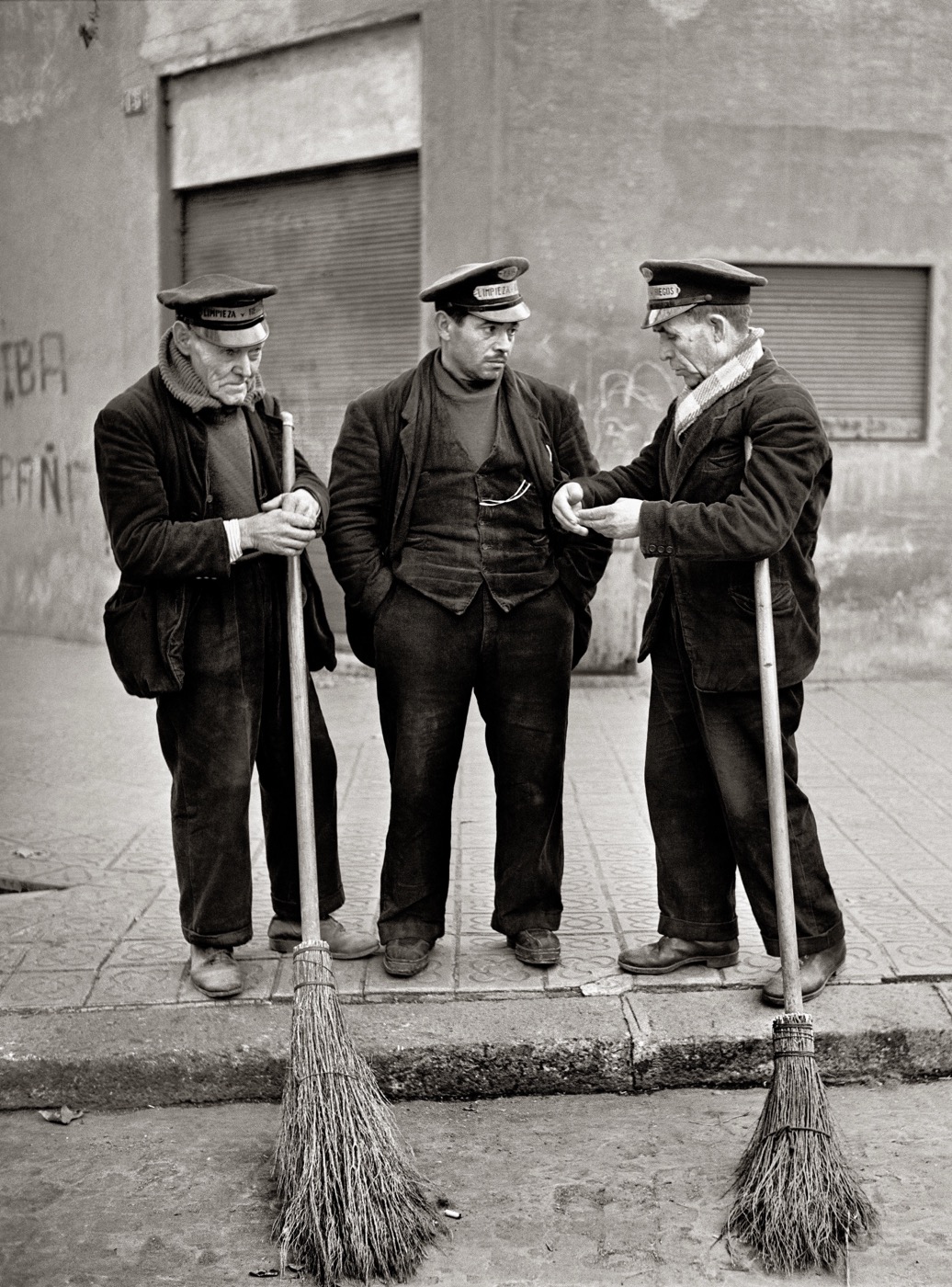 Barcelona, 1956.A photograph of three street sweepers is not necessarily about work, and this one is not.
 Rambla, 1956.Words are the stock in trade at this stall, yet the one legible run of them across the awning isn’t words at all but a printed frieze of cypress trees, their black spires snipped into pale canvas…
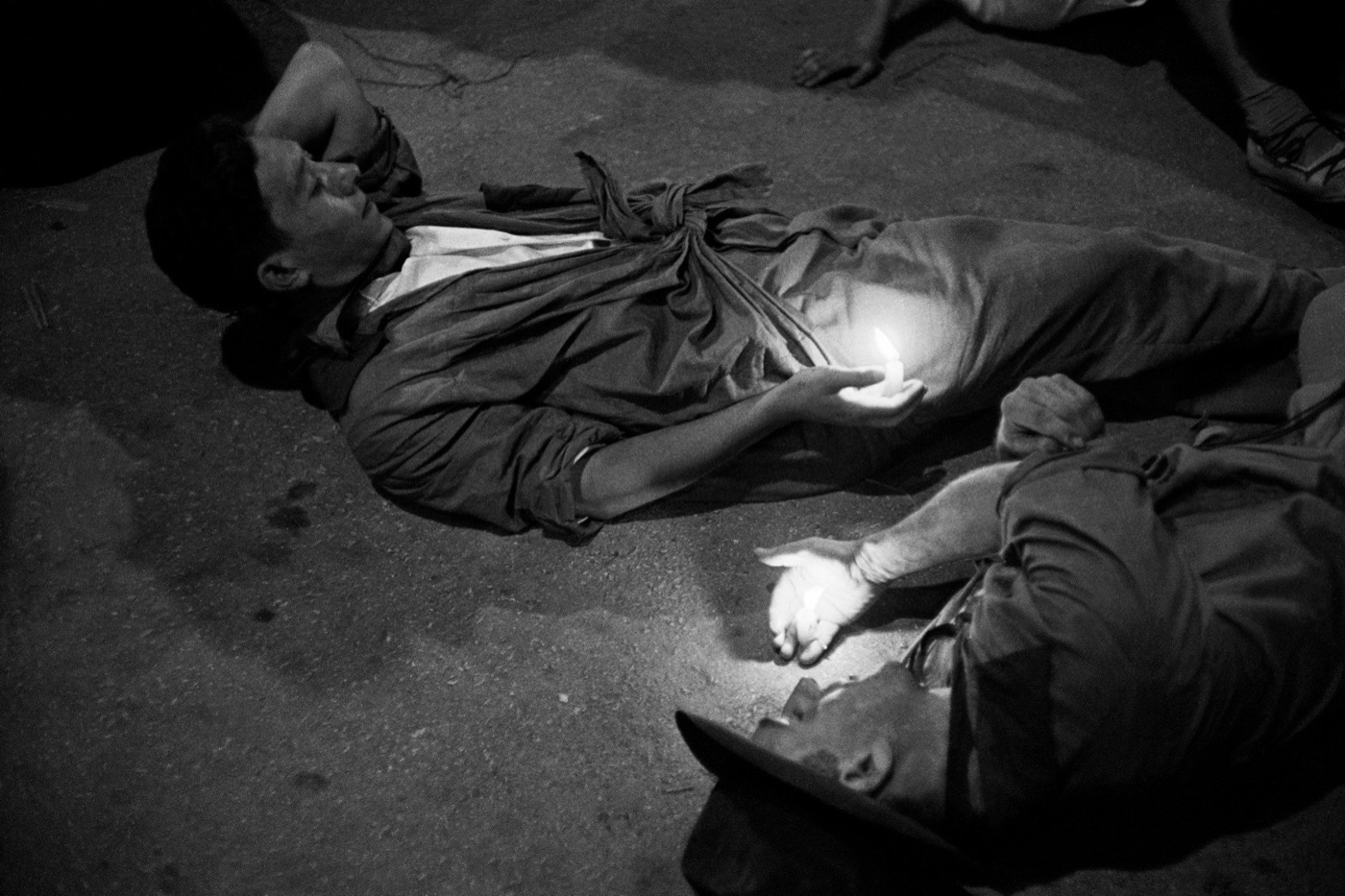 Sanfermines, Pamplona, 1956-60.What the frame declines to explain is the reason these bodies lie flat on the dust: whether the men are sleeping off the fair, praying, or acting out some drink-thickened dare.
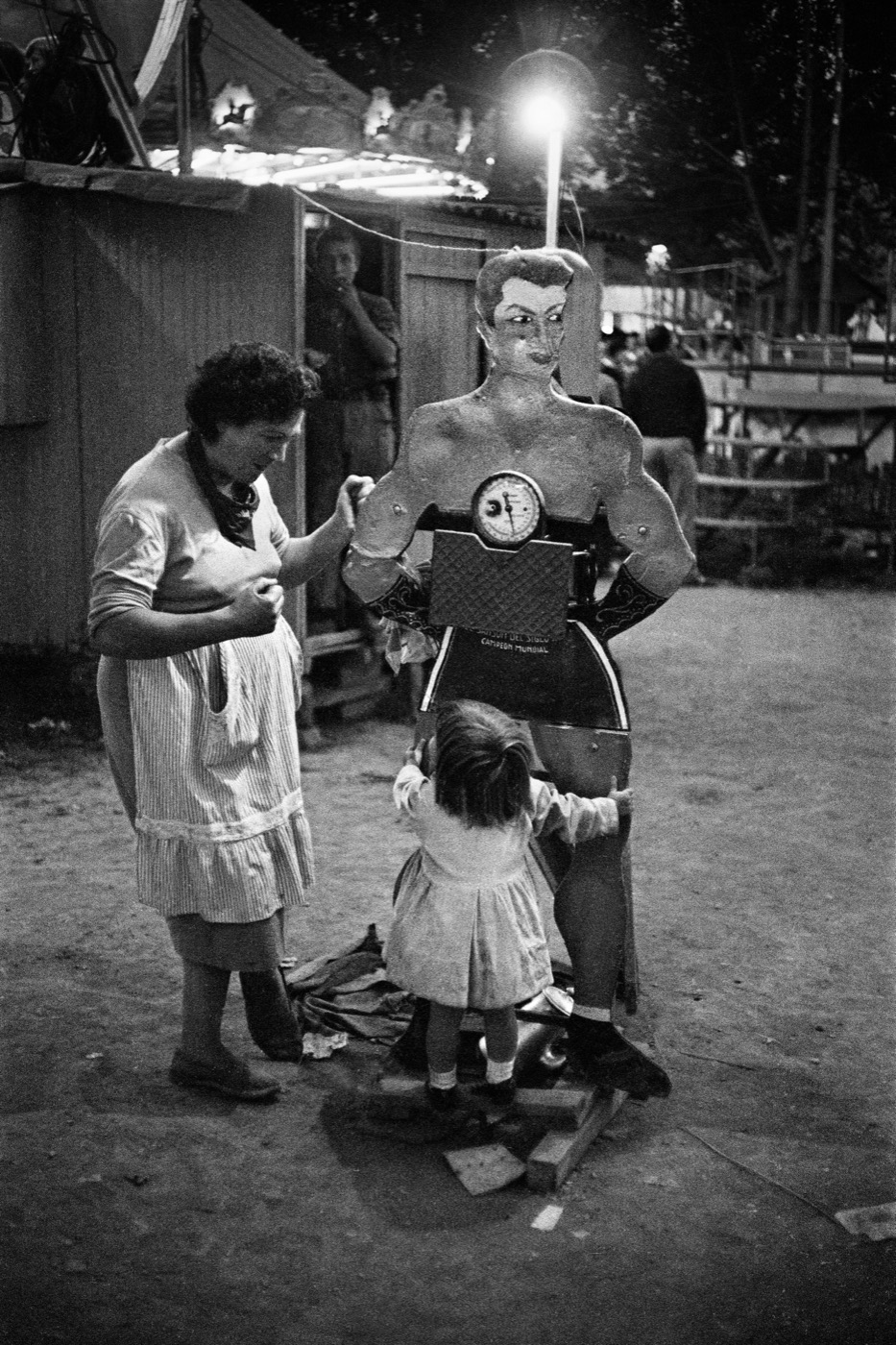 Sanfermines, Pamplona, 1956-60.On the trampled dirt of a Pamplona fairground after dark, a bare bulb flares above the head of a cardboard strongman.
 Sanfermines, Pamplona, 1956-60.Blur, at a fiesta, is not a photographic failure; it is fidelity.
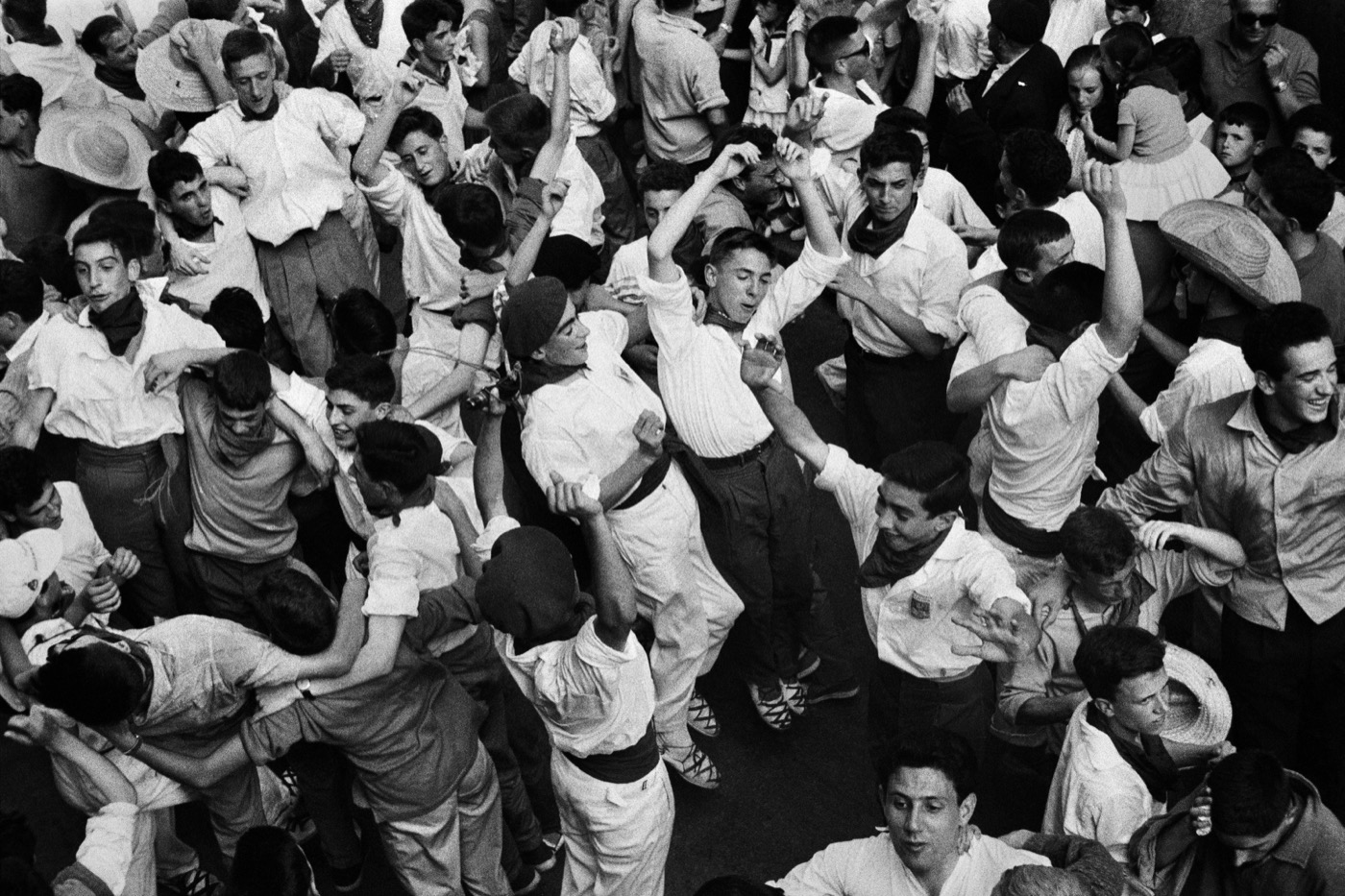 Sanfermines, Pamplona, 1956-60.How many white shirts can one frame hold before the crowd stops being a gathering of individuals and becomes a kind of weather?
 Sanfermines, Pamplona, 1956-60.It is the thumb I keep returning to: one blunt thumb pressed to the lower edge of a folded newspaper, the whole flimsy roof of print depending on that small pressure.
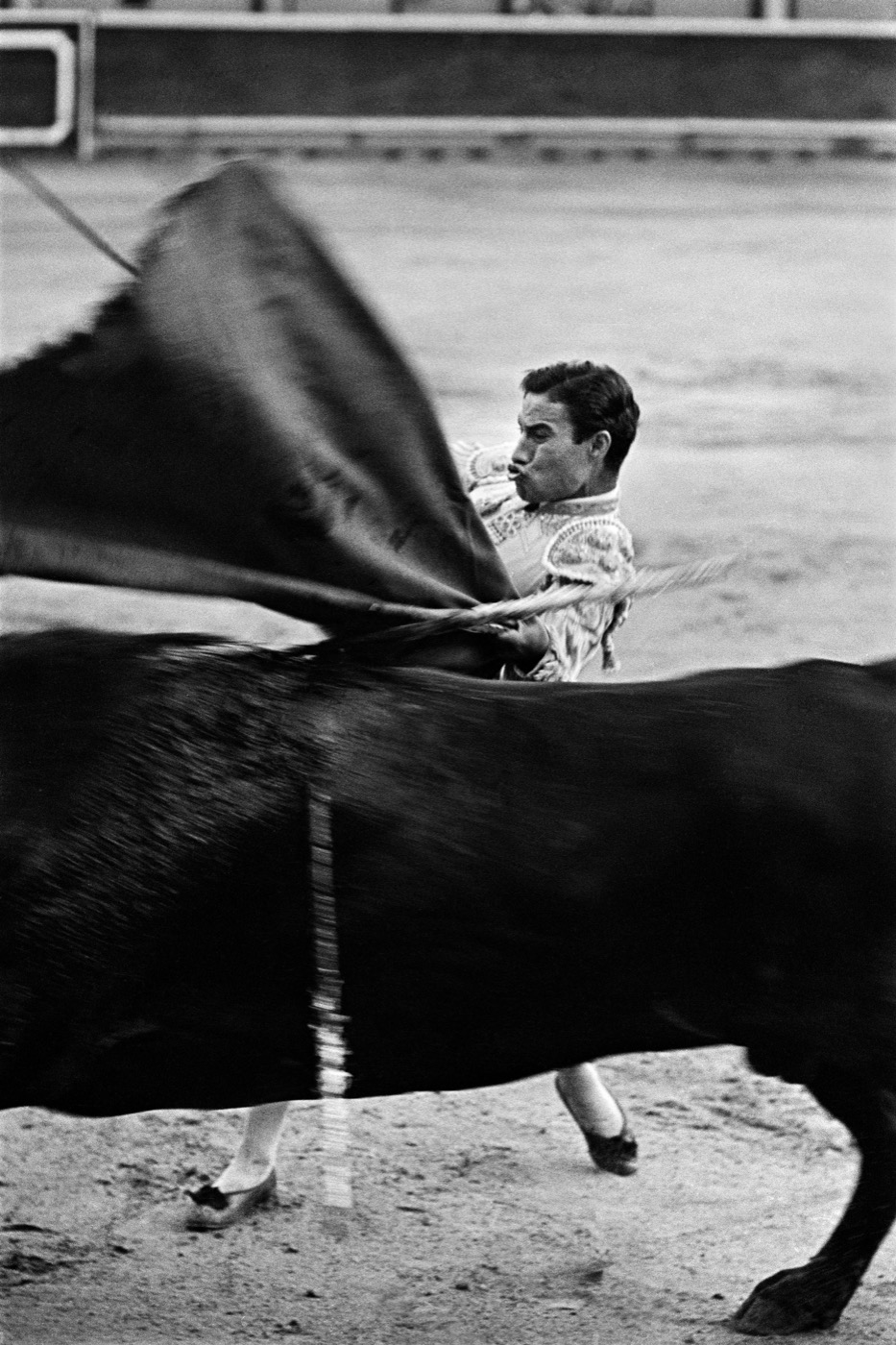 Sanfermines, Pamplona, 1956-60.A flat, shadowless glare, the light of a covered afternoon, lies evenly over pale sand, so that nothing casts a shadow and everything depends instead on motion.
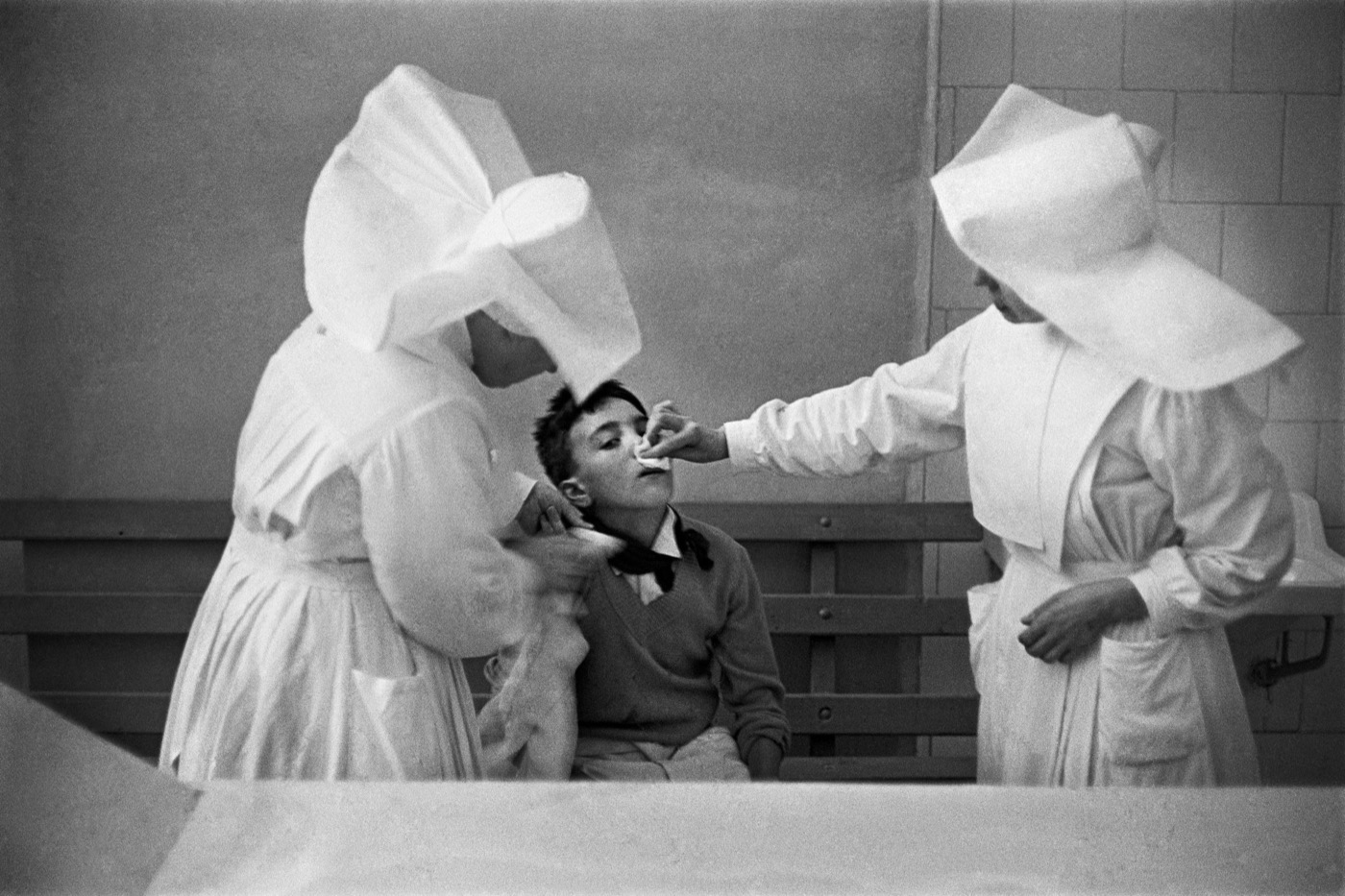 Sanfermines, Pamplona, 1956-60.Two white cornettes rise into the frame like sails, the folded linen of the Daughters of Charity catching all the available light, and between them a boy sits on a wooden bench, tipped back, while a…
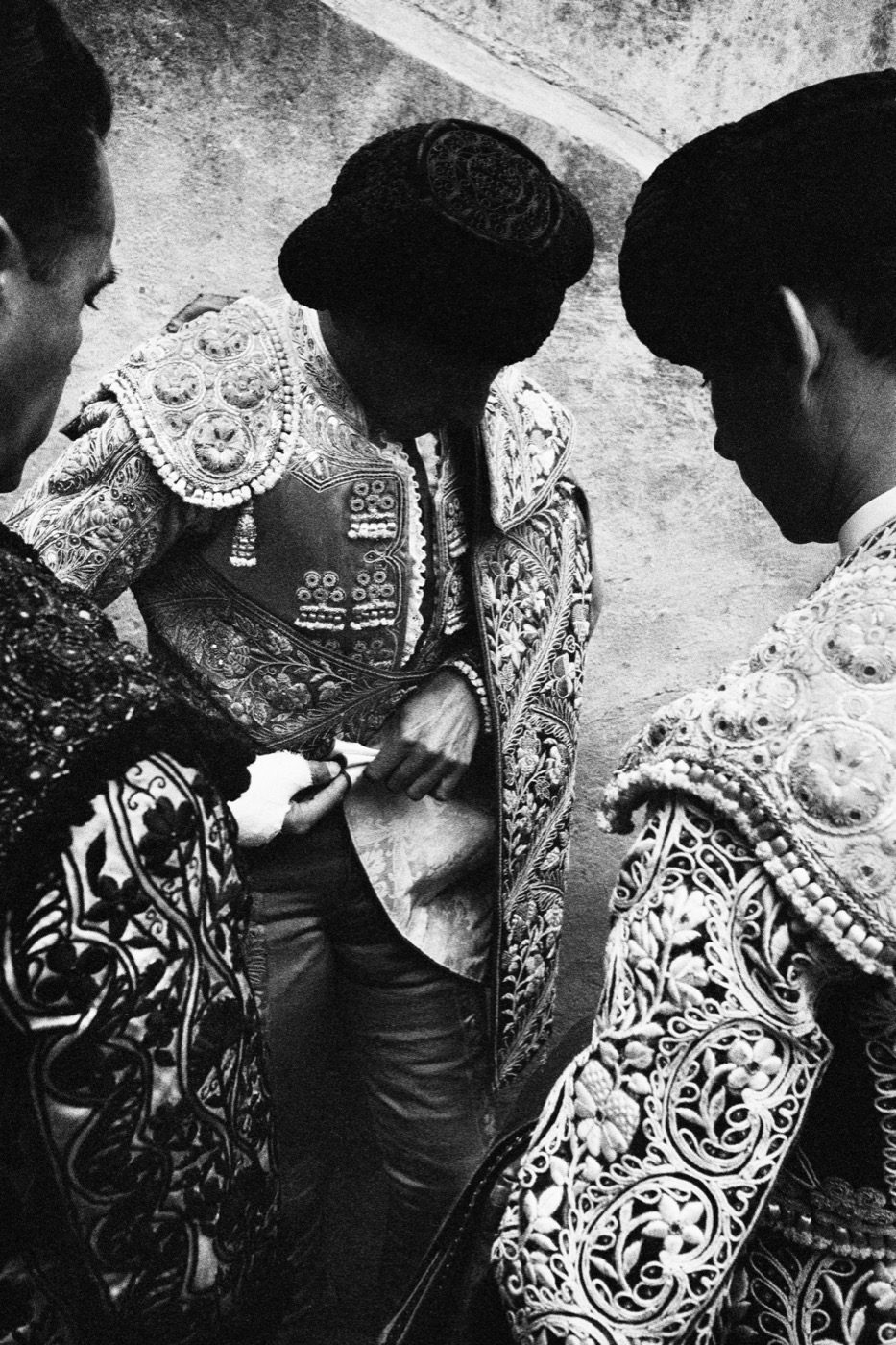 Sanfermines, Pamplona, 1956-60.Seen from directly above, three bullfighters bowing their heads in their gold-and-silver suits fall into a lineage older than photography: the Spanish devotional painting of Zurbarán and Murillo…
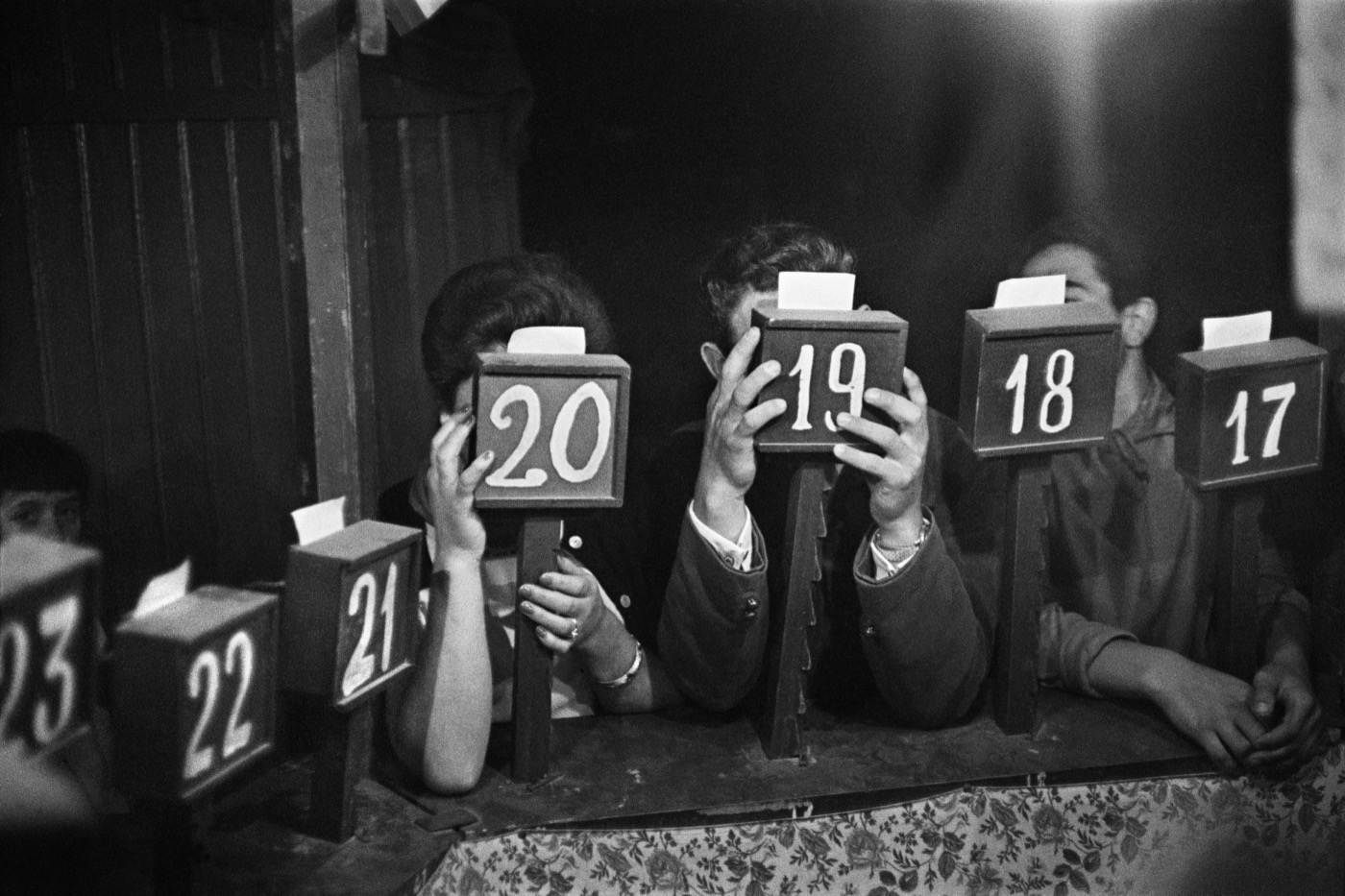 Sanfermines, Pamplona, 1956-60.Up go the numbered boxes, hoisted on their wooden stems until each painted numeral sits exactly where a face should be.
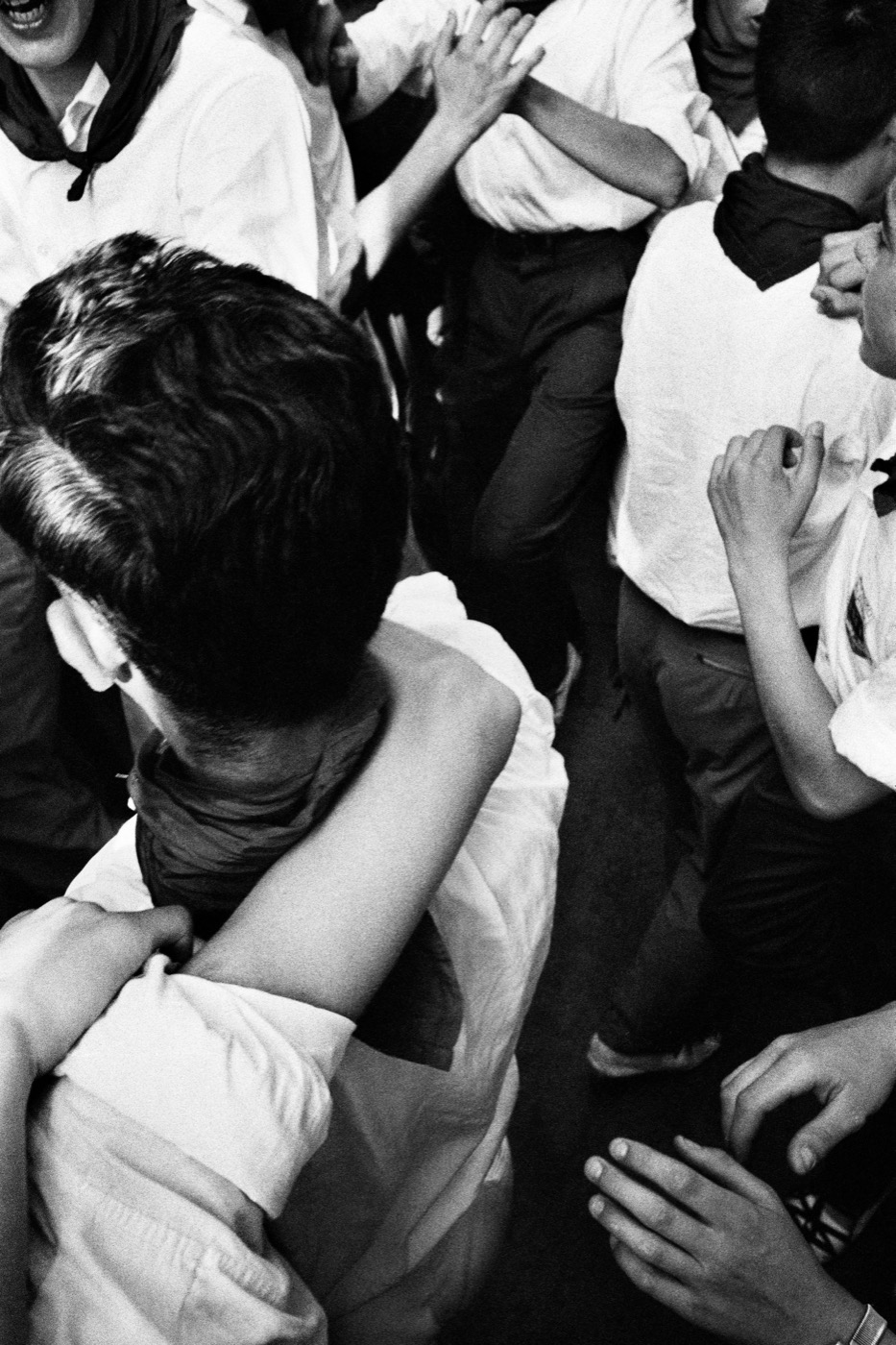 Sanfermines, Pamplona, 1956-60.A second from now the shirt will be hitched back onto that bare shoulder, the clapping hands at the lower right will meet, and the whole knot of bodies will lurch a half step on.
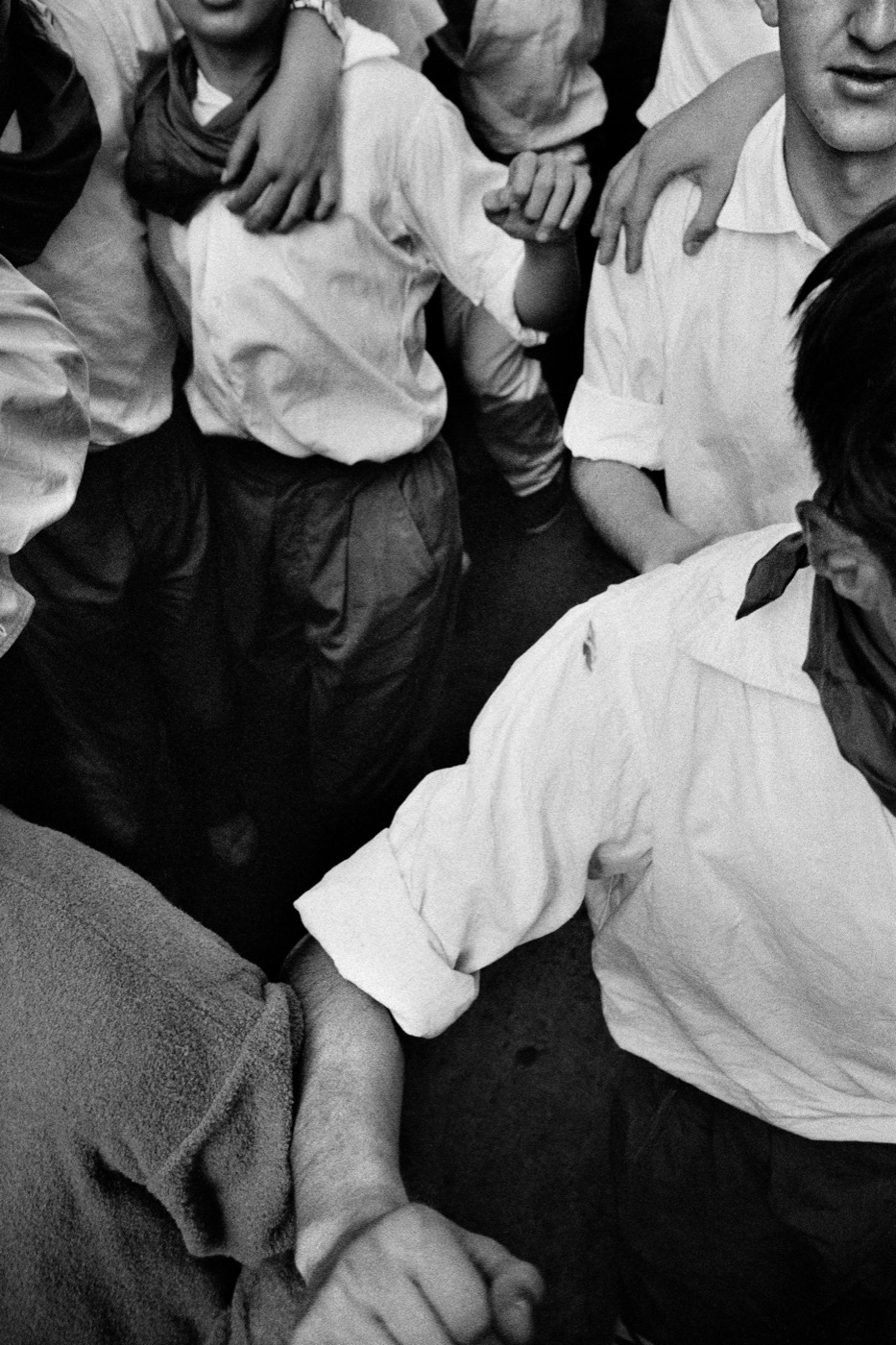 Sanfermines, Pamplona, 1956-60.In the tight-managed Spain of the Franco decades, the fiesta was one of the licensed places where a young body could disappear into a crowd, and Masats went straight for the disappearance.
 Sanfermines, Pamplona, 1956-60.A frayed white trouser hem, stained at the ankle, and beneath it a black cloth slipper laid against the rump of a small dog: this detail reaches me before the street does.
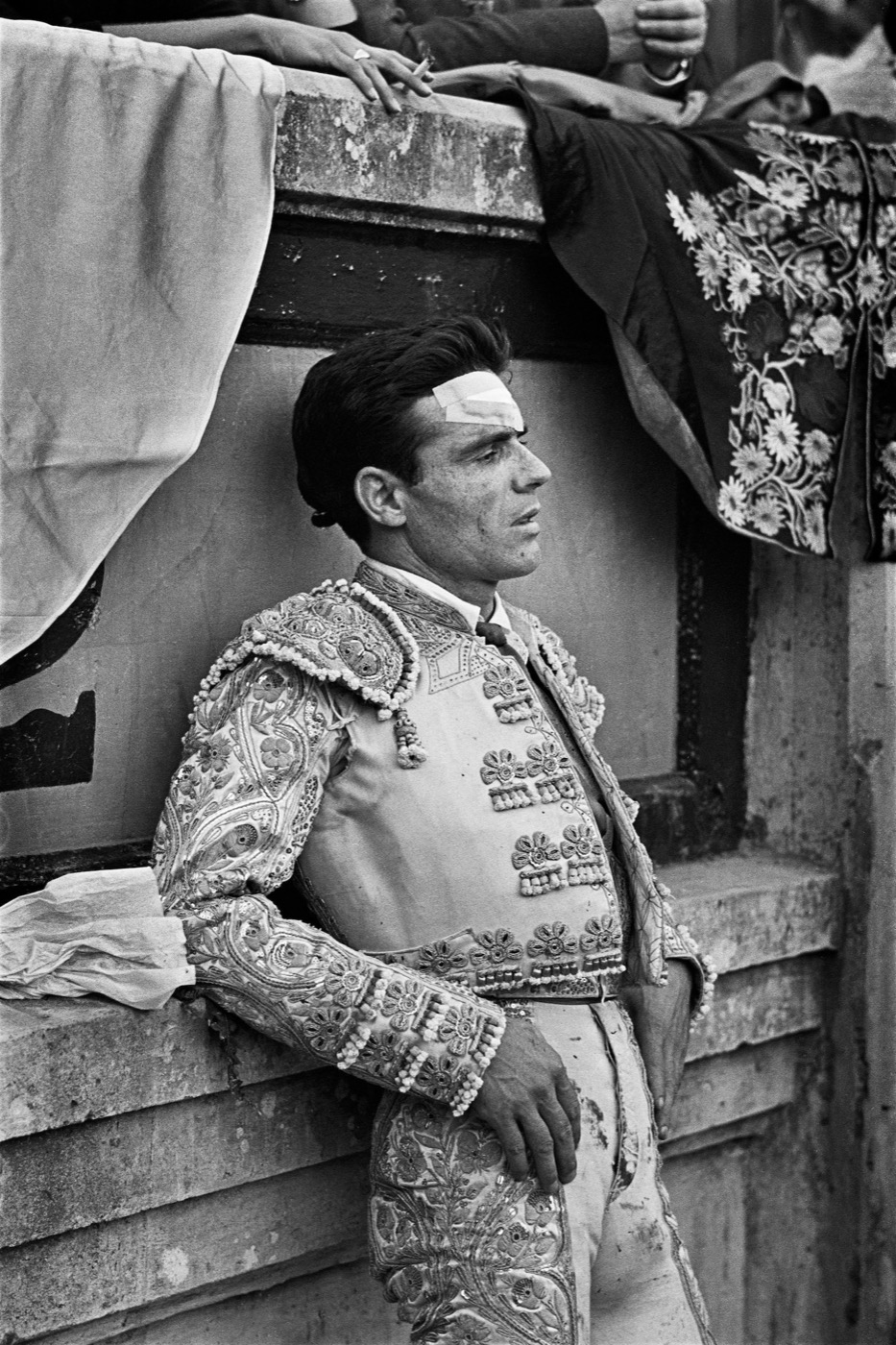 Sanfermines, Pamplona, 1956-60.Whatever opened this man’s forehead happened outside the frame: all the photograph will surrender is the small white bandage above his brow, the flecked cheek, the distance in his stare.
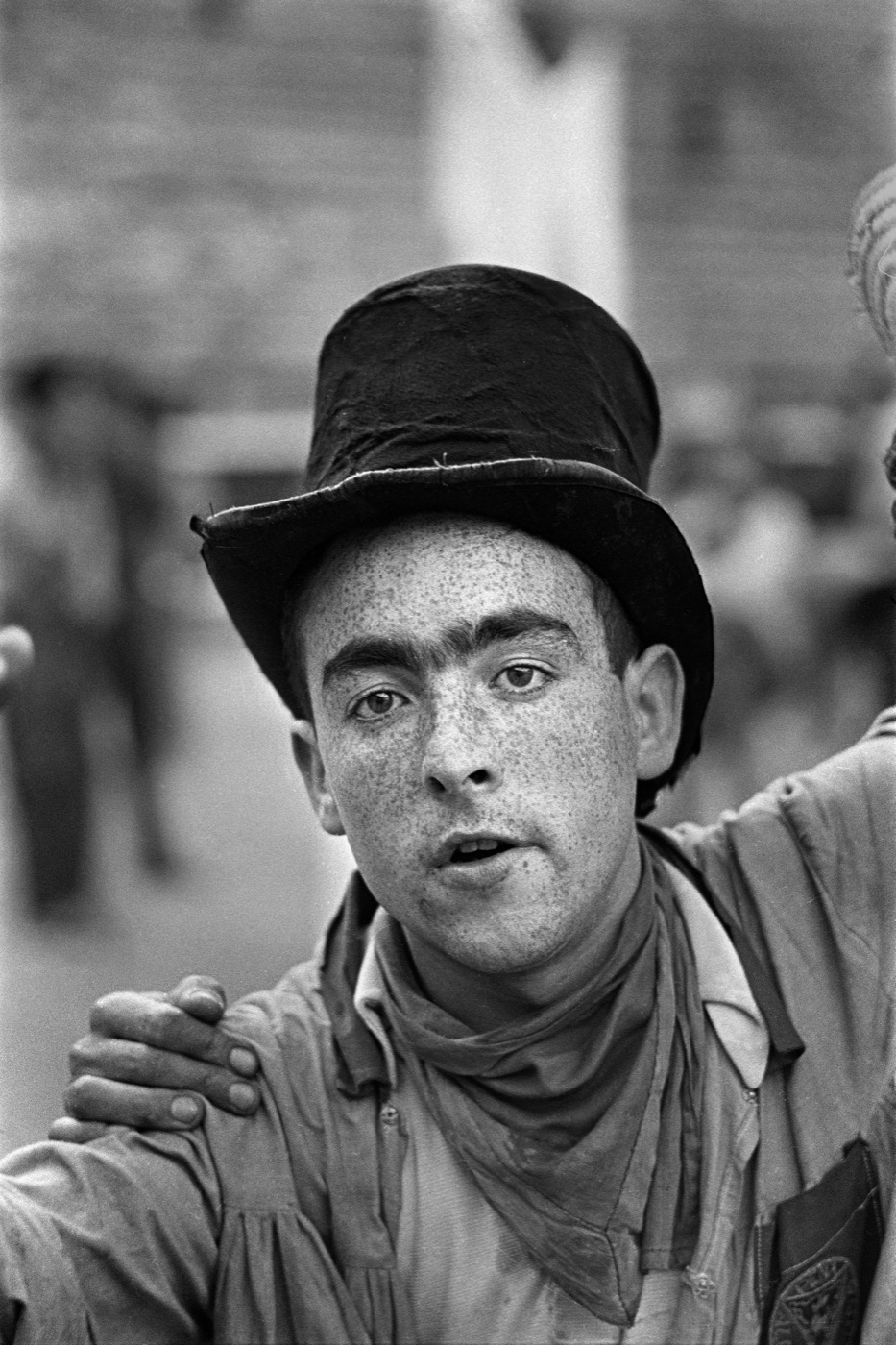 Sanfermines, Pamplona, 1956-60.We stand close, near enough to count the freckles scattered across this young man’s face and to see the worn seams of the battered black top hat crushed down over his brow.
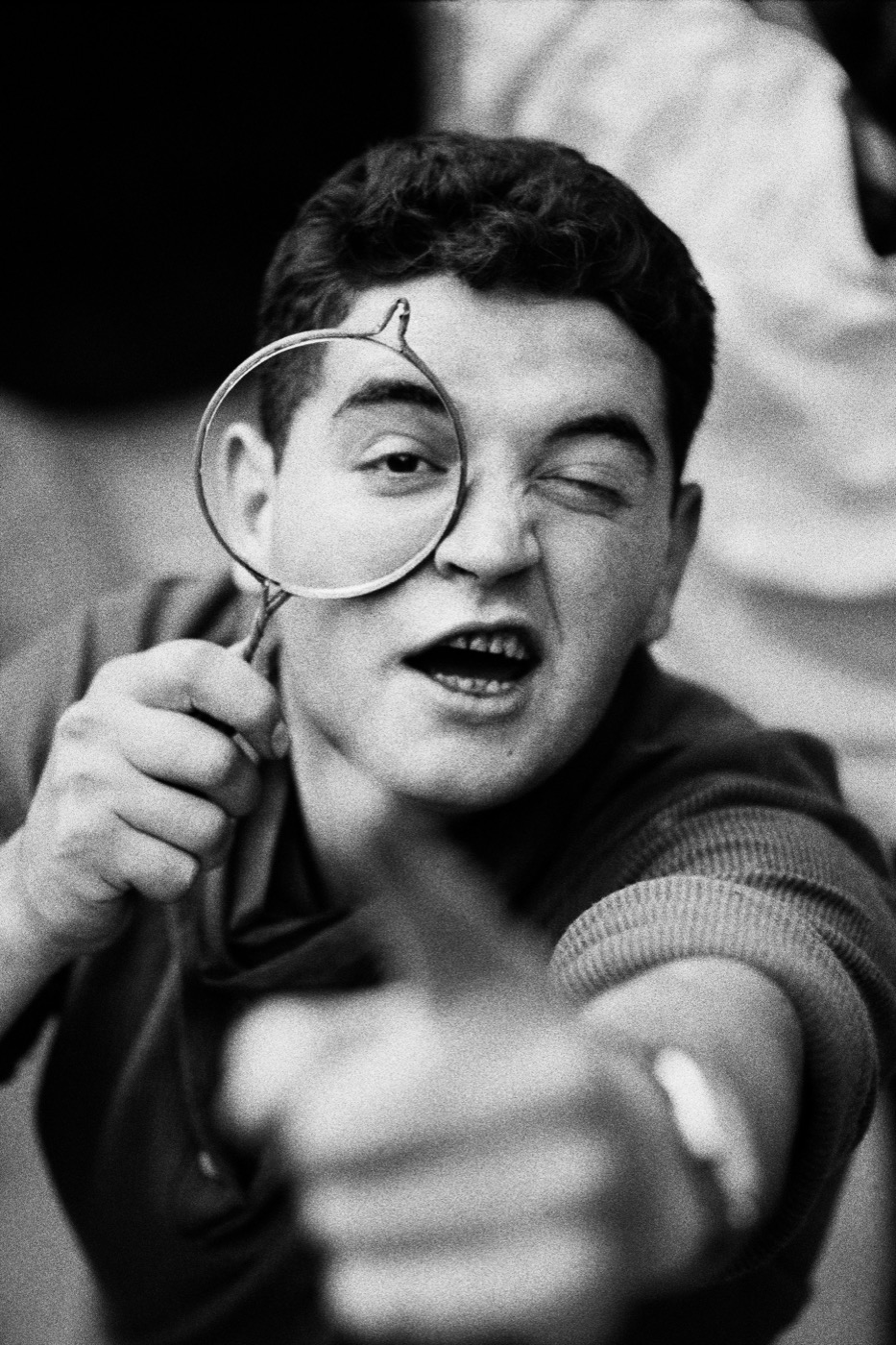 Sanfermines, Pamplona, 1956-60.To look closely is always to magnify and to distort in the same motion, and this grinning young man has turned that truism into a joke aimed straight at the camera.
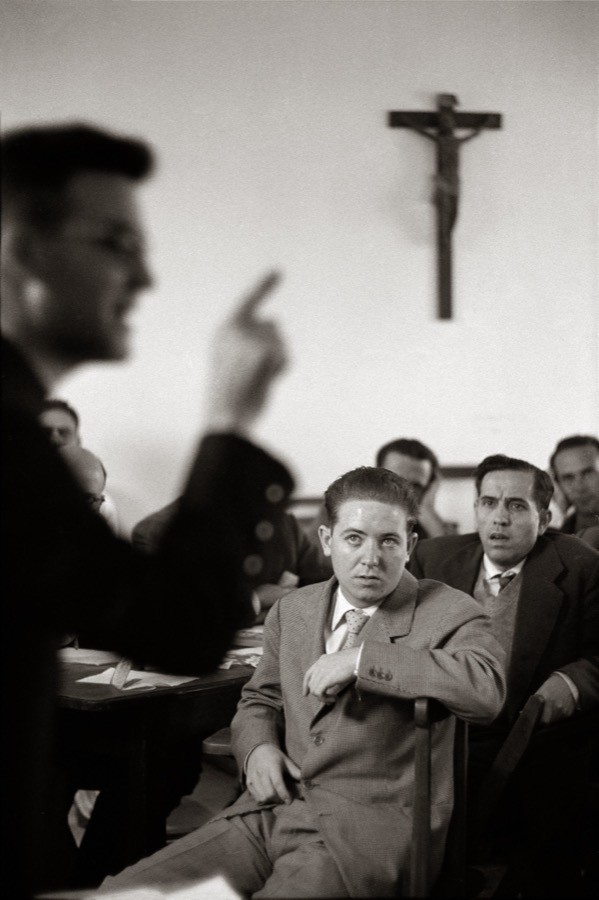 Cursillos de cristiandad, Toledo, 1957.A man in a dark jacket, thrown out of focus in the left foreground, raises a finger as he speaks.
 Madres de la División Azul, Madrid, 1957.Devotional pictures have always been made from the front, all lifted faces and clasped hands; this one is made from the floor, and it gives us heels.
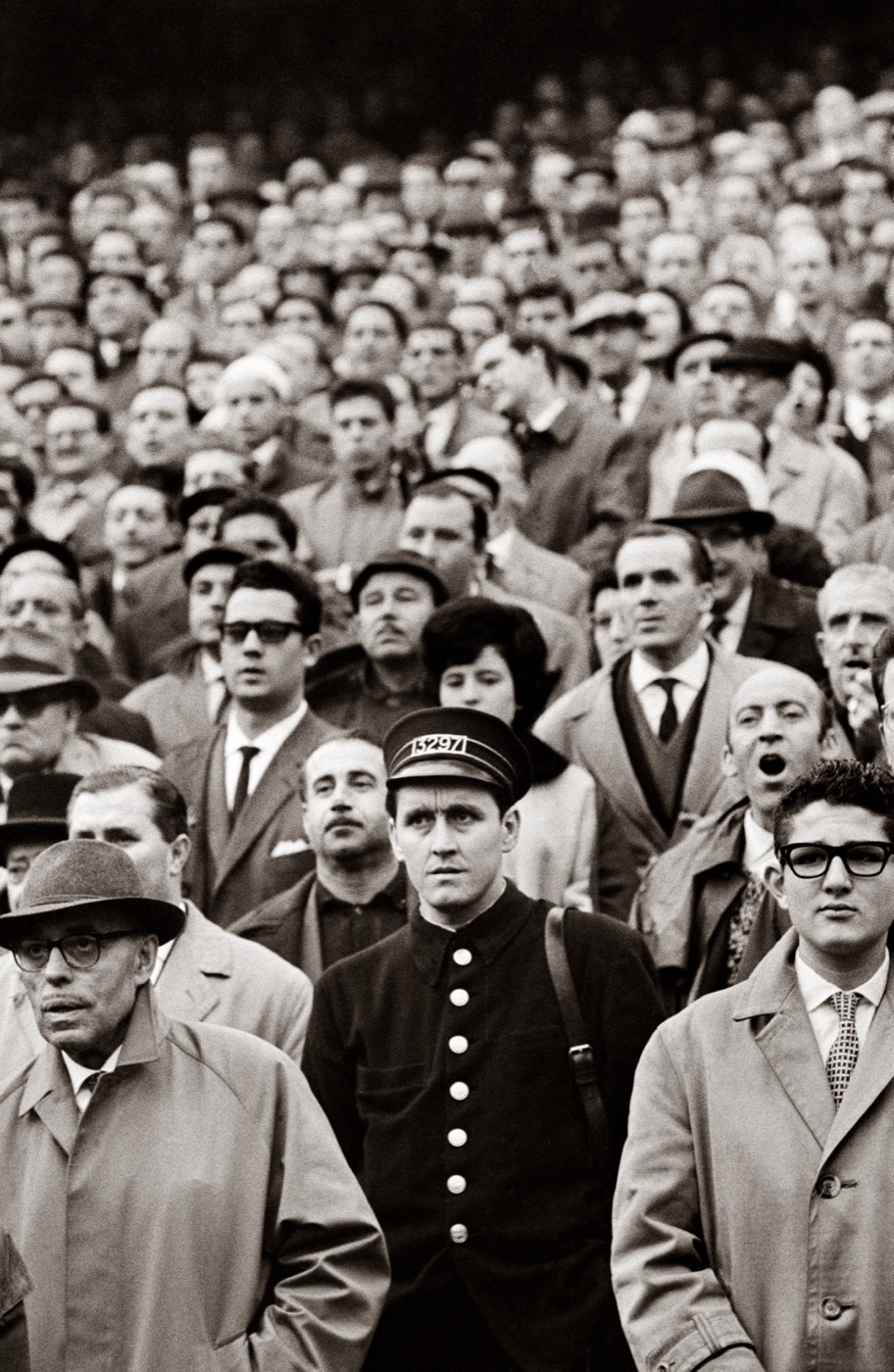 Madrid, 1957.Staring straight back at the lens, dead level, stands a uniformed usher whose peaked cap carries a stamped number — 3297 — and a double row of buttons running down a dark tunic that swallows the…
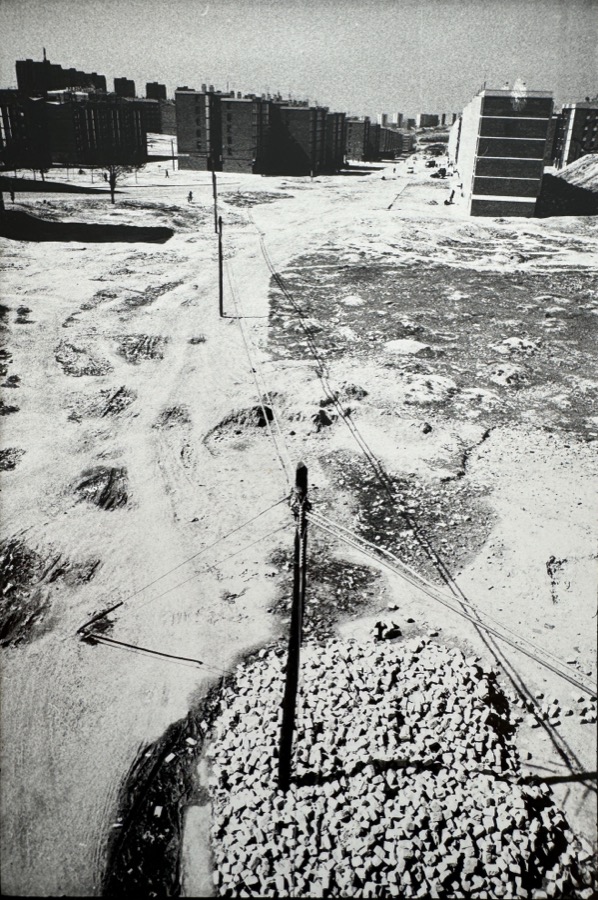 Madrid, 1957.The camera looks down from an upper floor, straight along a line of telegraph poles that runs from the bottom edge of the frame to the far end of a new street.
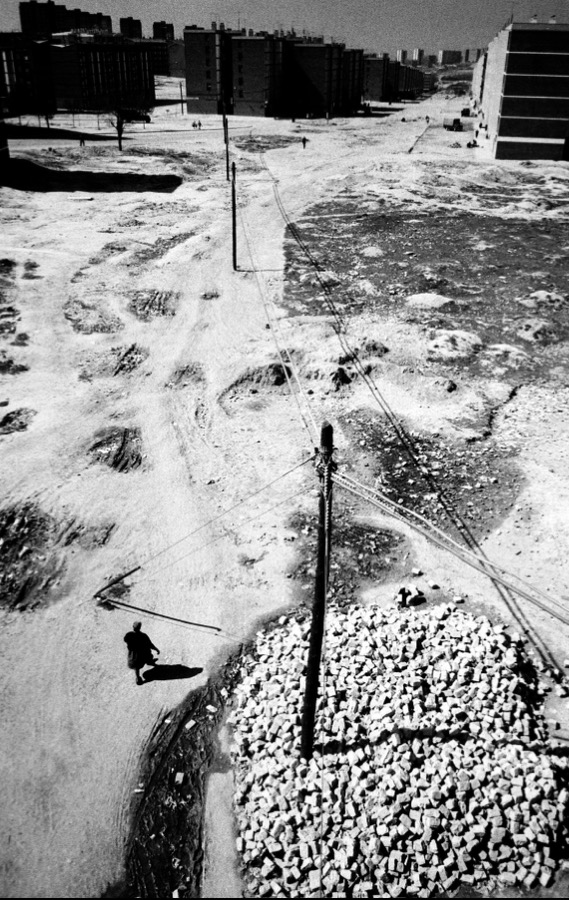 Madrid, 1957.From a height, Masats looks down on a field of raw earth at the edge of Madrid.
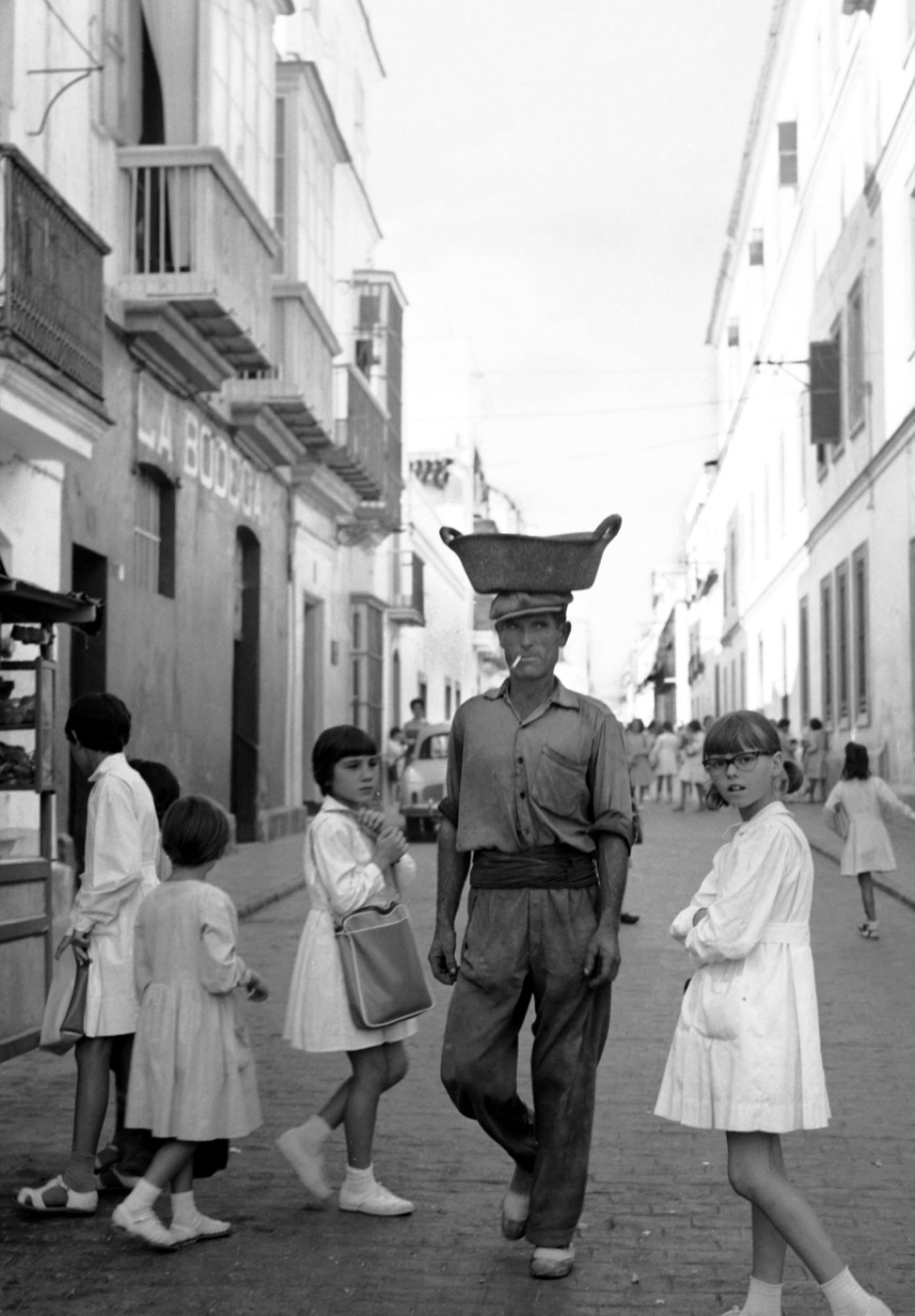 Puerto de Santa María, Cádiz, 1957.What is in the tub? That is what you want to know, and it is exactly what you are never going to be told.
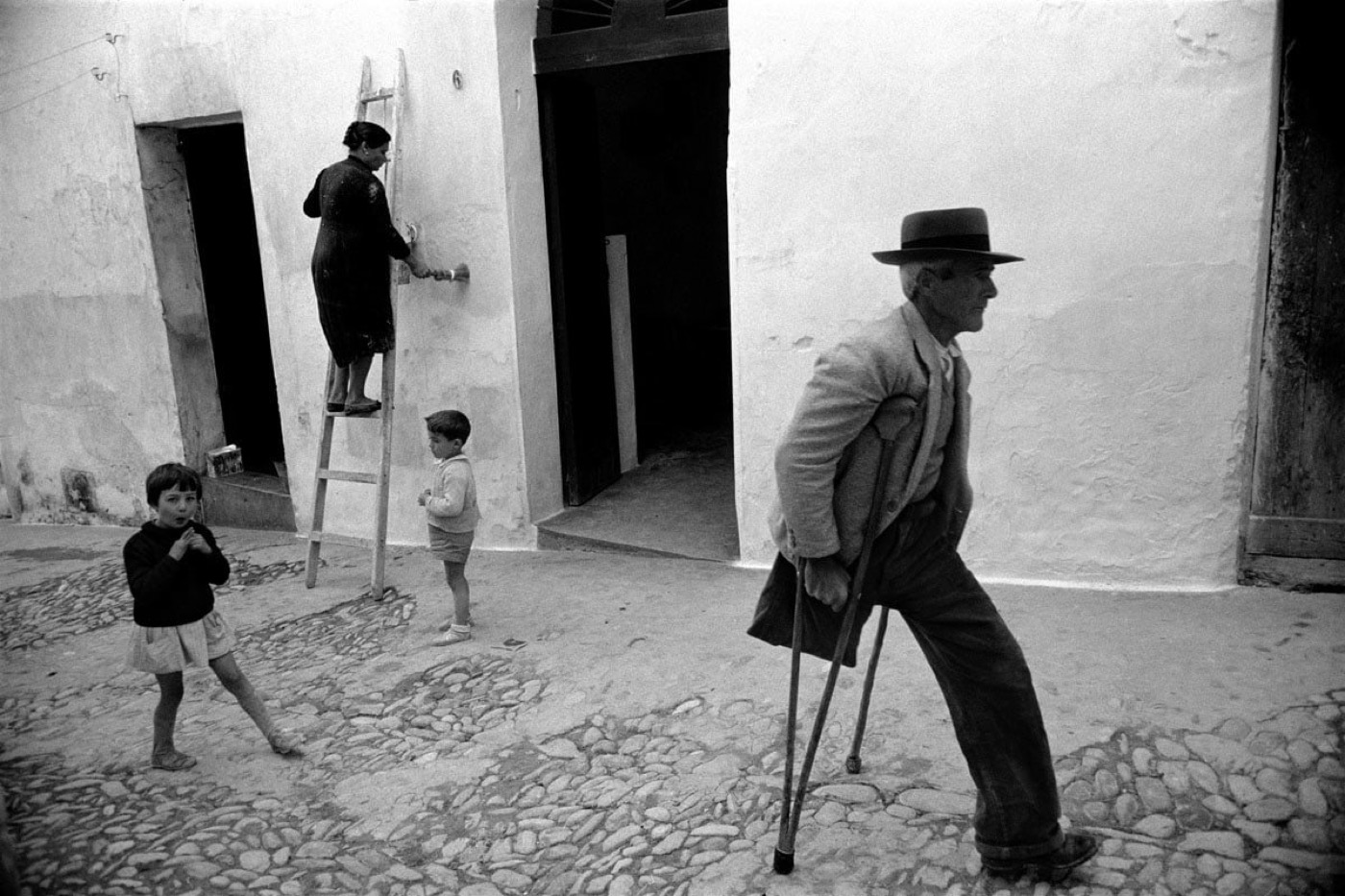 Ubrique, Cádiz, 1957.Notice first what the man on crutches does to the frame.
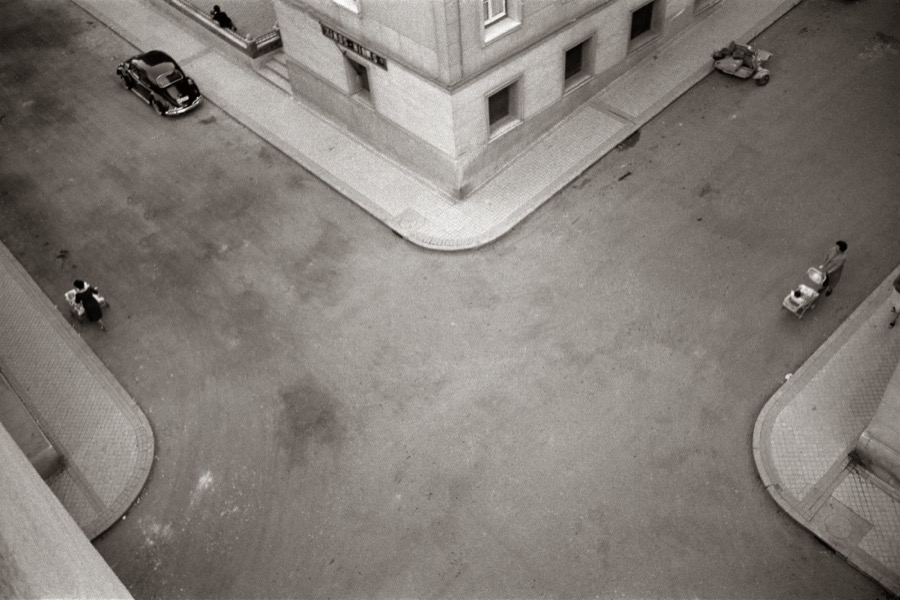 Barrio de la Concepción, Madrid, 1958.Masats is up on a roof or a high balcony, looking almost straight down at a street corner in the Barrio de la Concepción.
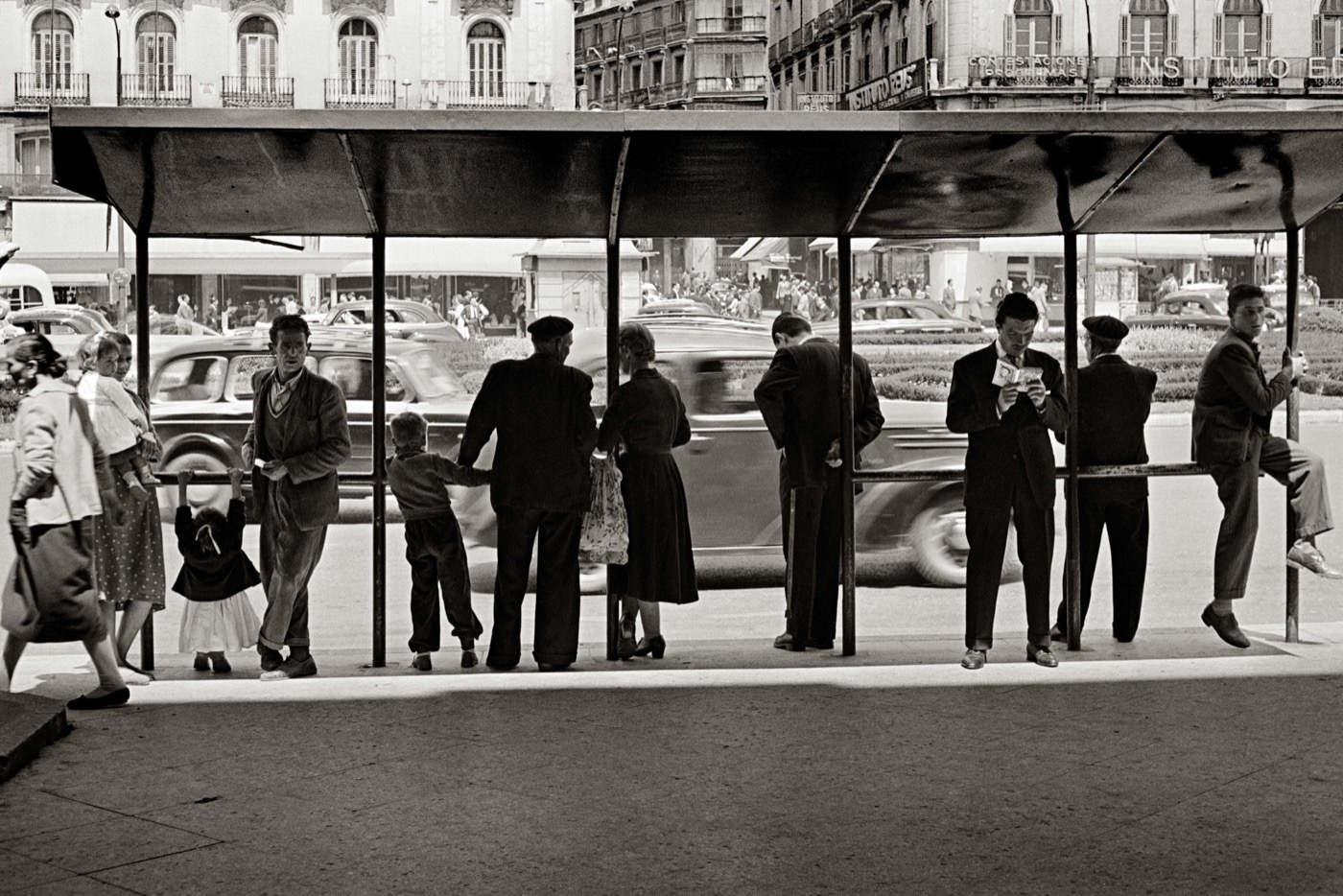 Puerta del Sol, Madrid, 1958.Hanging by both hands from the shelter's rail, a small girl lifts her feet clear of the pavement, converting the furniture of waiting into gymnastic apparatus.
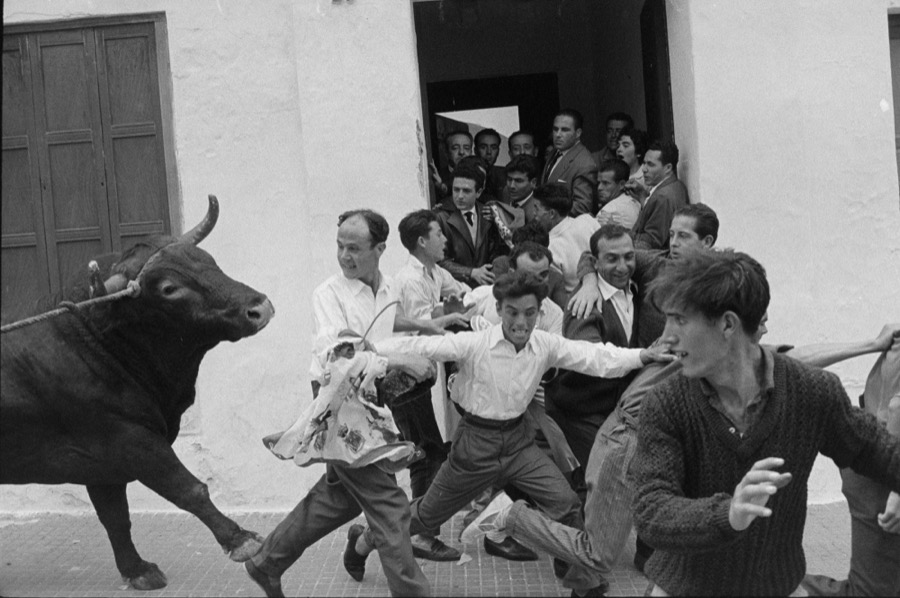 Arcos de la Frontera, Cádiz, 1959.A young bull with a rope around its horns plunges along a whitewashed street, and a crowd of men spills out of a doorway behind it, laughing, grabbing each other's shirts, one of them holding out a…
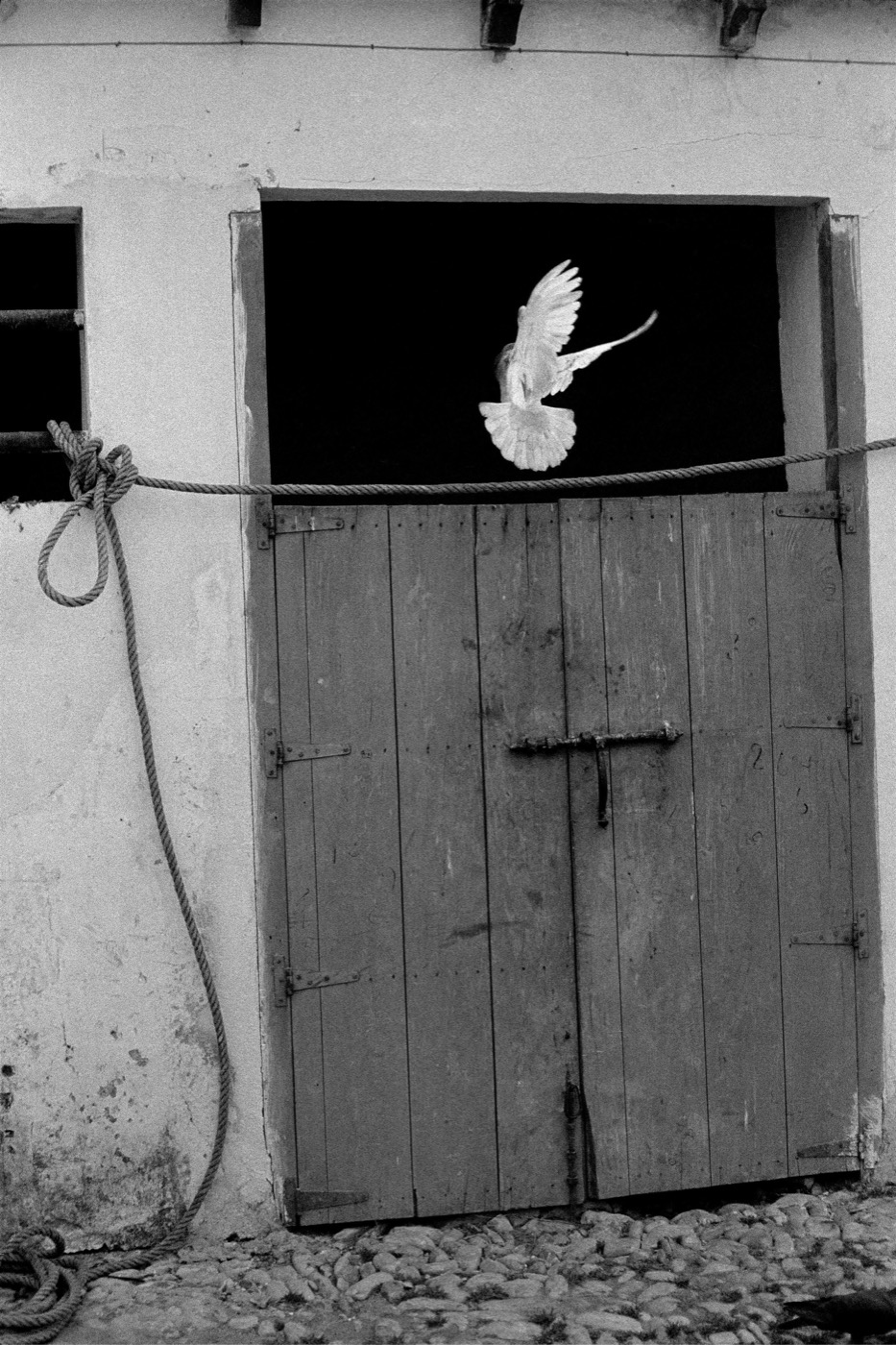 Arcos de la Frontera, Cádiz, 1959.The doors are the whole tonal argument of the picture: weathered planks of a worked grey, dry and chalked over, their vertical seams and iron nailheads catching just enough sidelight to register as…
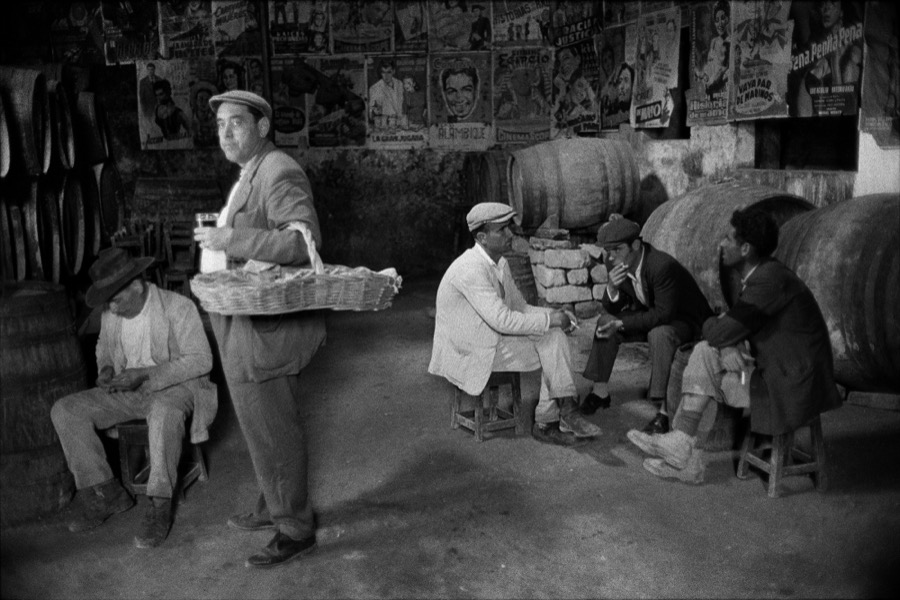 Arcos de la Frontera, Cádiz, 1959.Five men in a bodega in Arcos de la Frontera, and above them a wall papered over and over with film posters, each one lapping the last.
 El Rocío, Almonte, Huelva, 1959.It's the kind of whitewashed room you'd find behind any Andalusian house: a low ceiling, a wall scuffed where shoulders have leaned, daylight coming in flat and patient from the left.
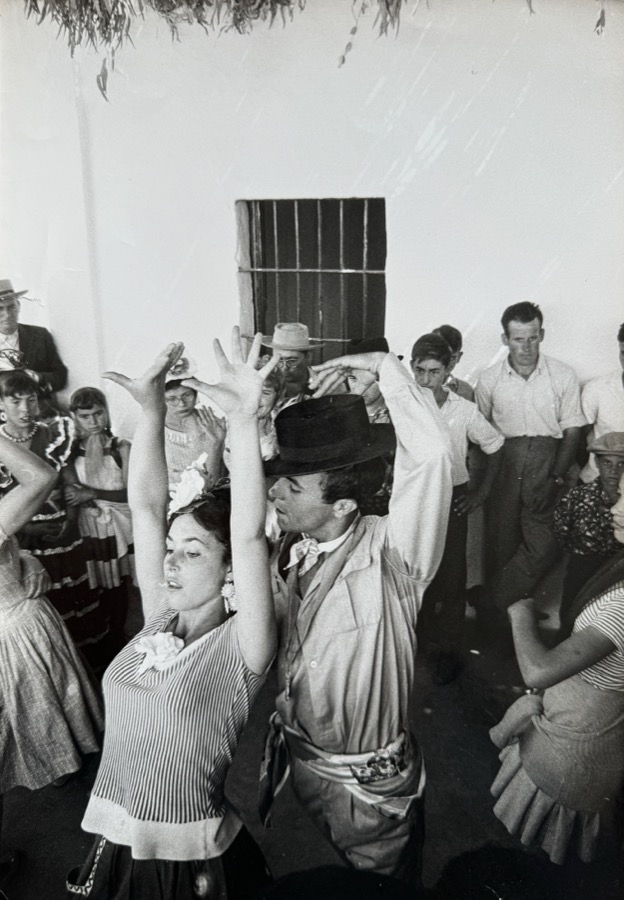 El Rocío, Almonte, Huelva, 1959.Under a roof of cut branches, against a whitewashed wall with a barred window, a young woman dances with both arms thrown up.
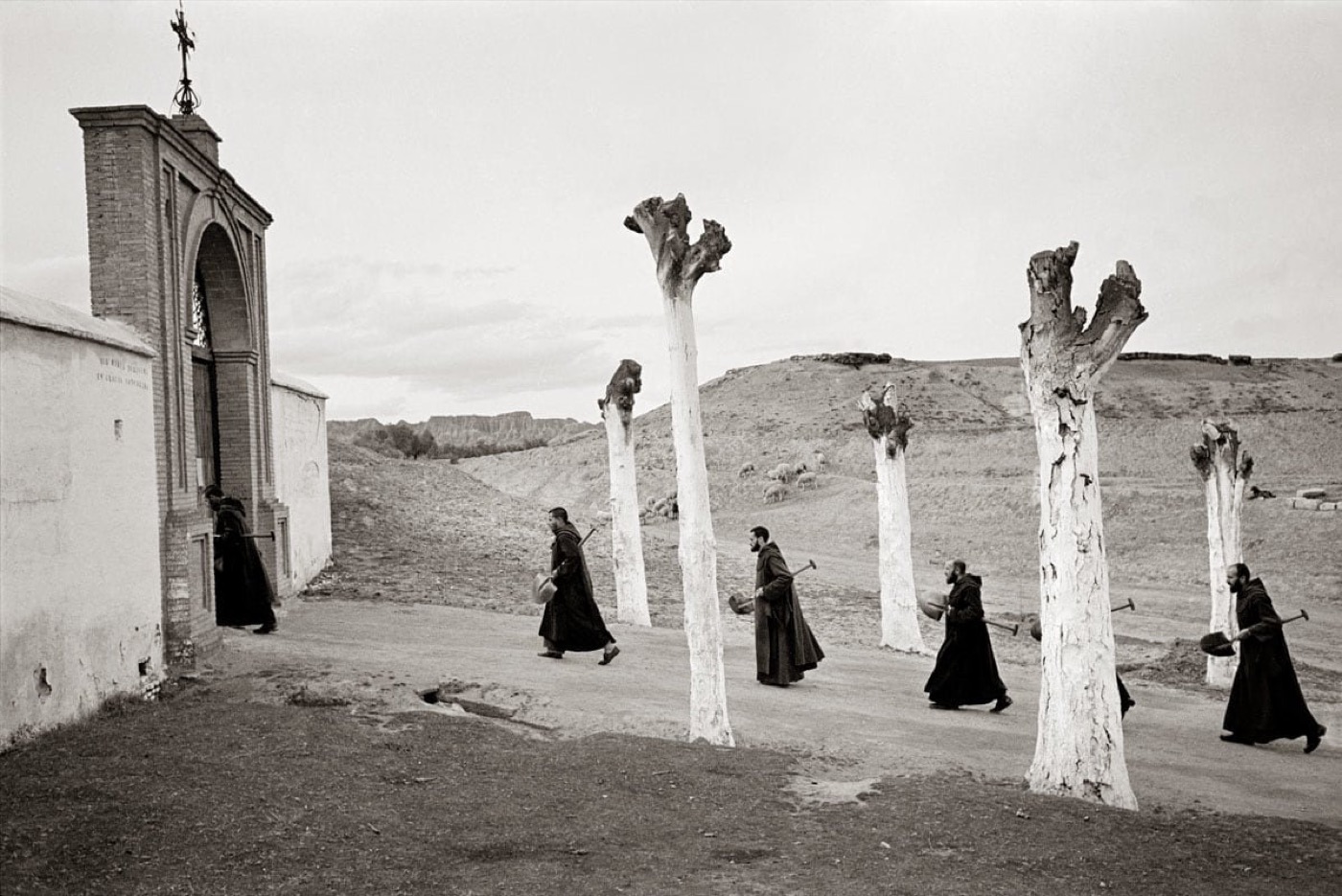 Hermanos Fossores de la Misericordia, Guadix, Granada, 1959.In Hermanos Fossores de la Misericordia, Guadix, Granada, 1959, Ramón Masats transforms a scene of rural Spain into an image of extraordinary theatrical force.
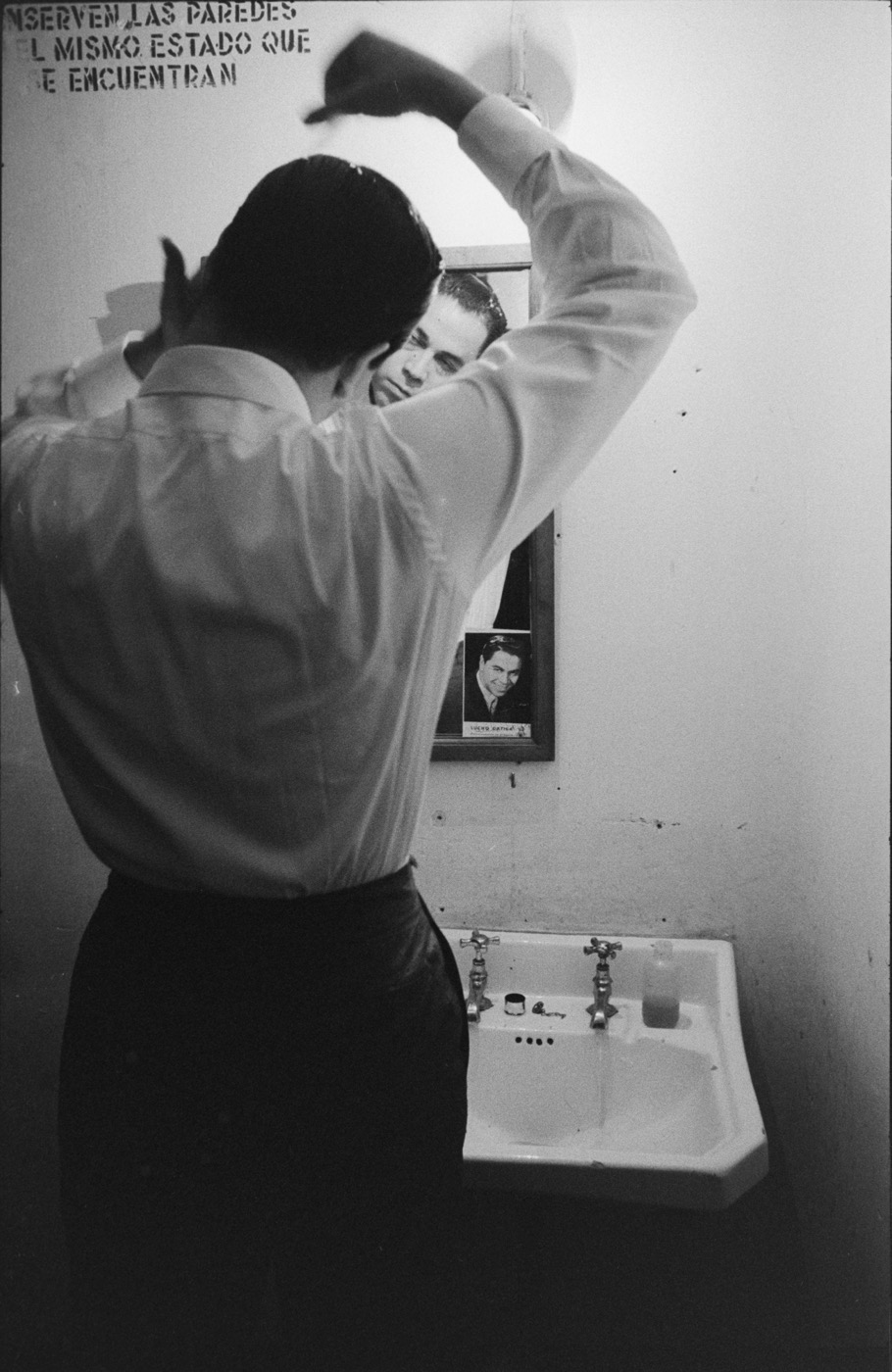 Lucho Gatica, Madrid, 1959.A man in a white shirt stands at a washbasin with both arms raised, working a comb through his hair.
 Lucho Gatica, Madrid, 1959.A thin band of white cuff, just visible where the singer’s wrist emerges from his dinner jacket, quietly reorganizes this picture.
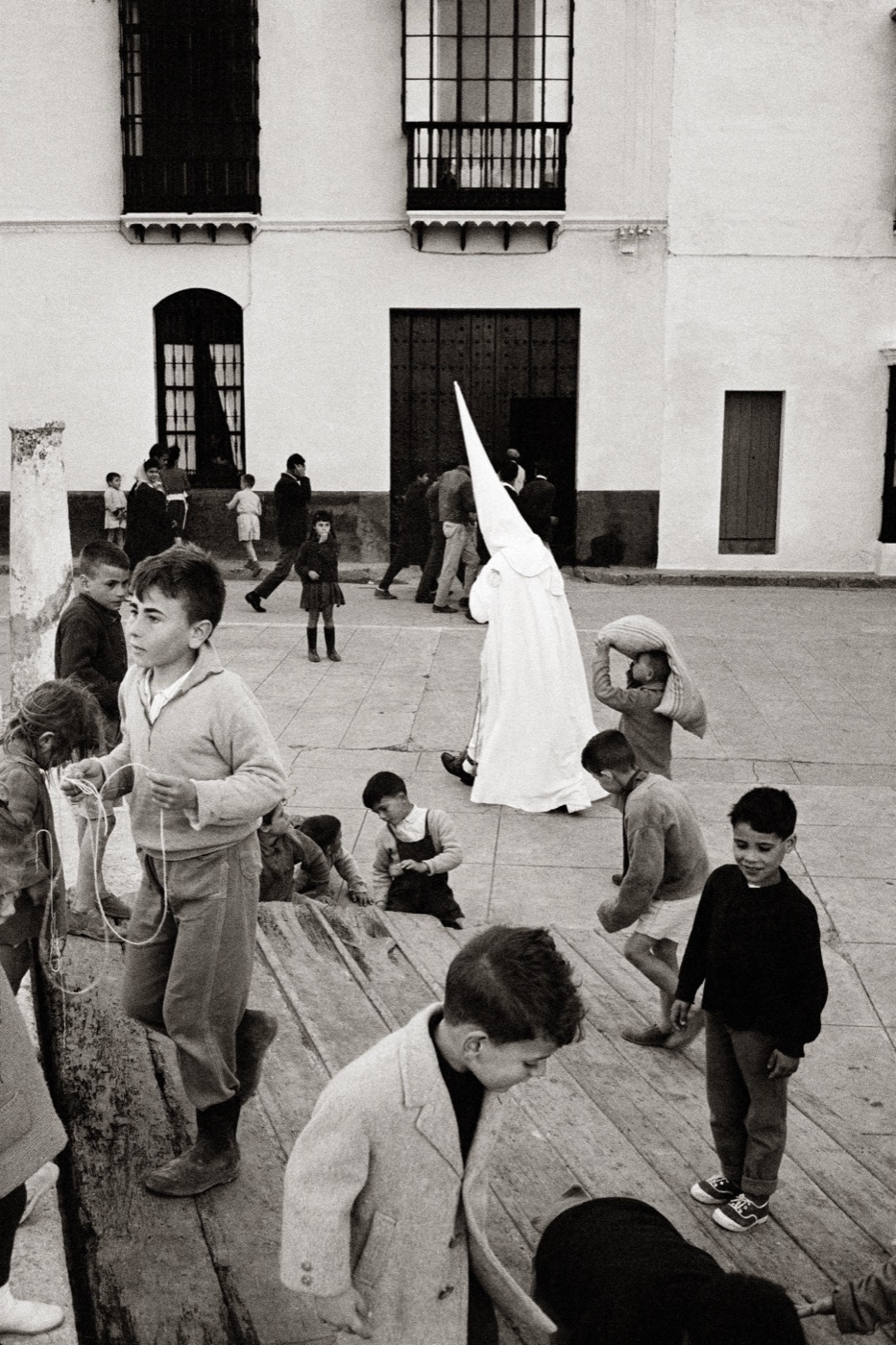 Medina Sidonia, Cadiz, 1959.In 1959, Ramón Masats was a young man from Caldes de Montbui making his way through a Spain that still preferred not to be looked at too closely, and he carried his camera into the white towns of…
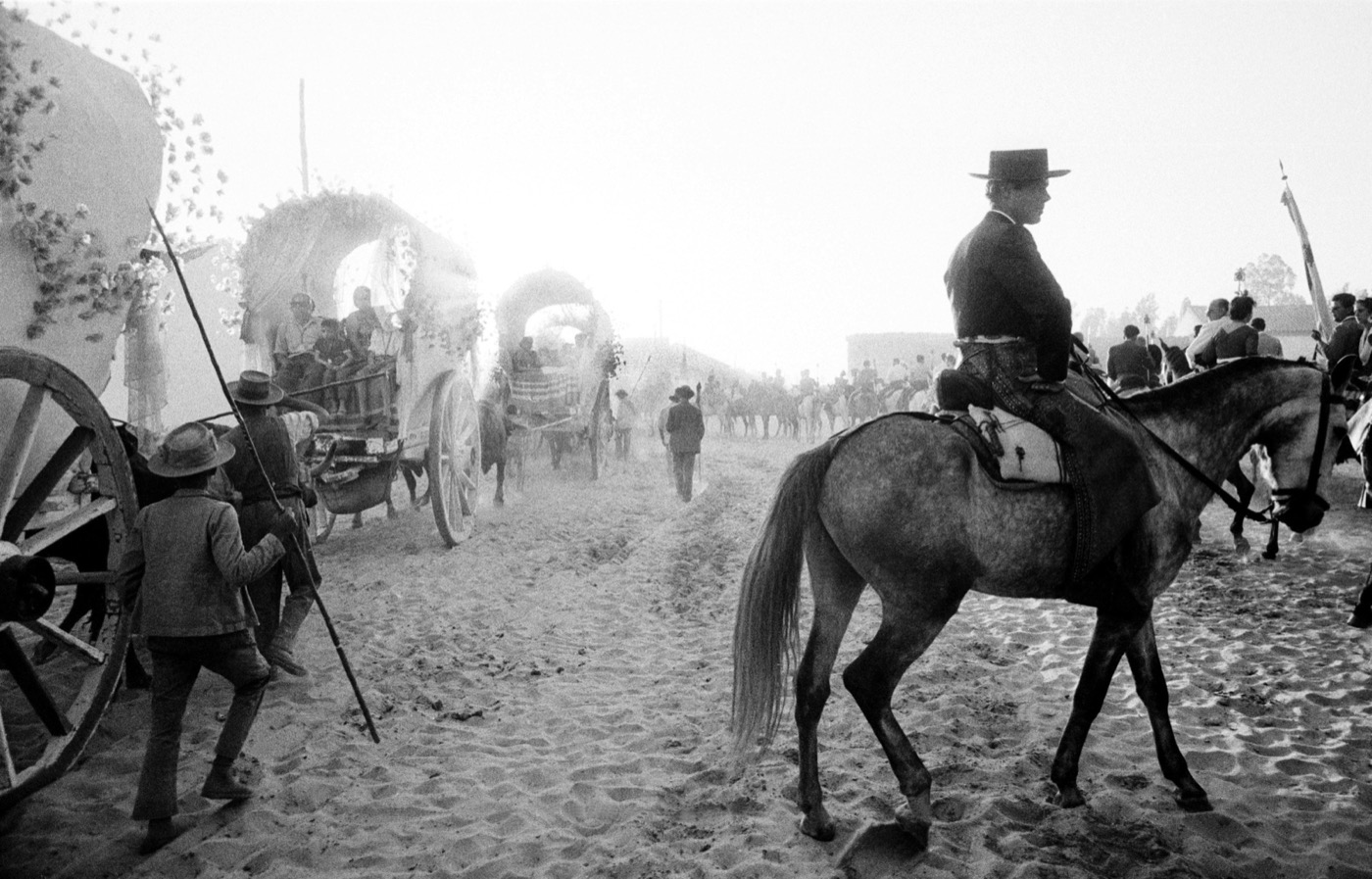 Romería del Rocío, Almonte, Huelva, 1959.The pilgrimage to El Rocío was already a centuries-old rite when Masats fell in with it, and what he found was less a spectacle than a slow machinery of devotion: flower-hung carts crawling across…
 Yves Saint Laurent, Palacio de Liria, Madrid, 1959.Ramón Masats was one of the decisive figures of Spanish photography's mid-century renewal — a leading voice of the AFAL group whose lean, humane, neorealist eye dragged the medium in Spain out of…
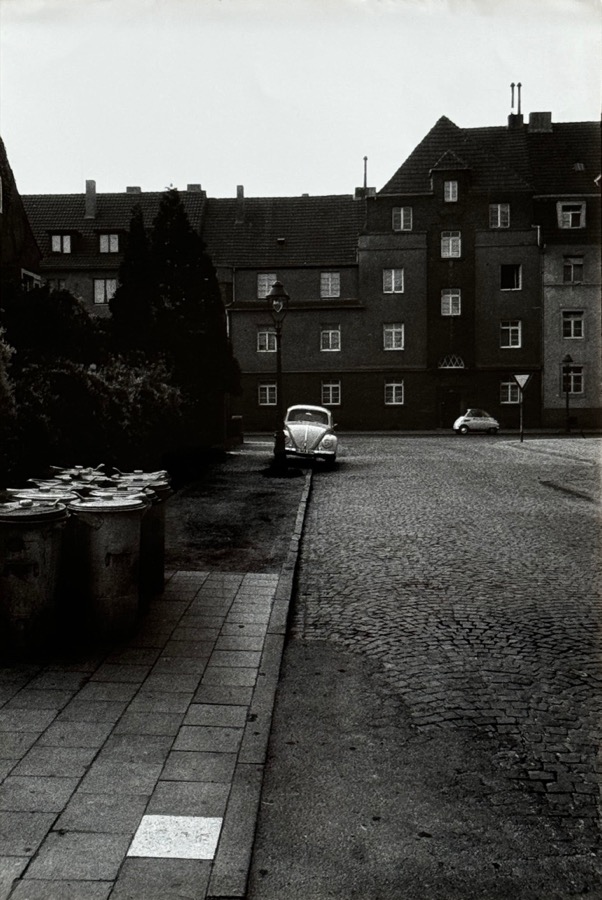 Amanecer en Colonia, Alemania, 1960.Dawn, Cologne, 1960: a cobbled street curves away toward a block of steep-roofed brick houses, their windows still dark.
 Jane Russell, American actress, Spain, 1960.Snow has fallen on the bullring, and the ring no longer means what it was built to mean.
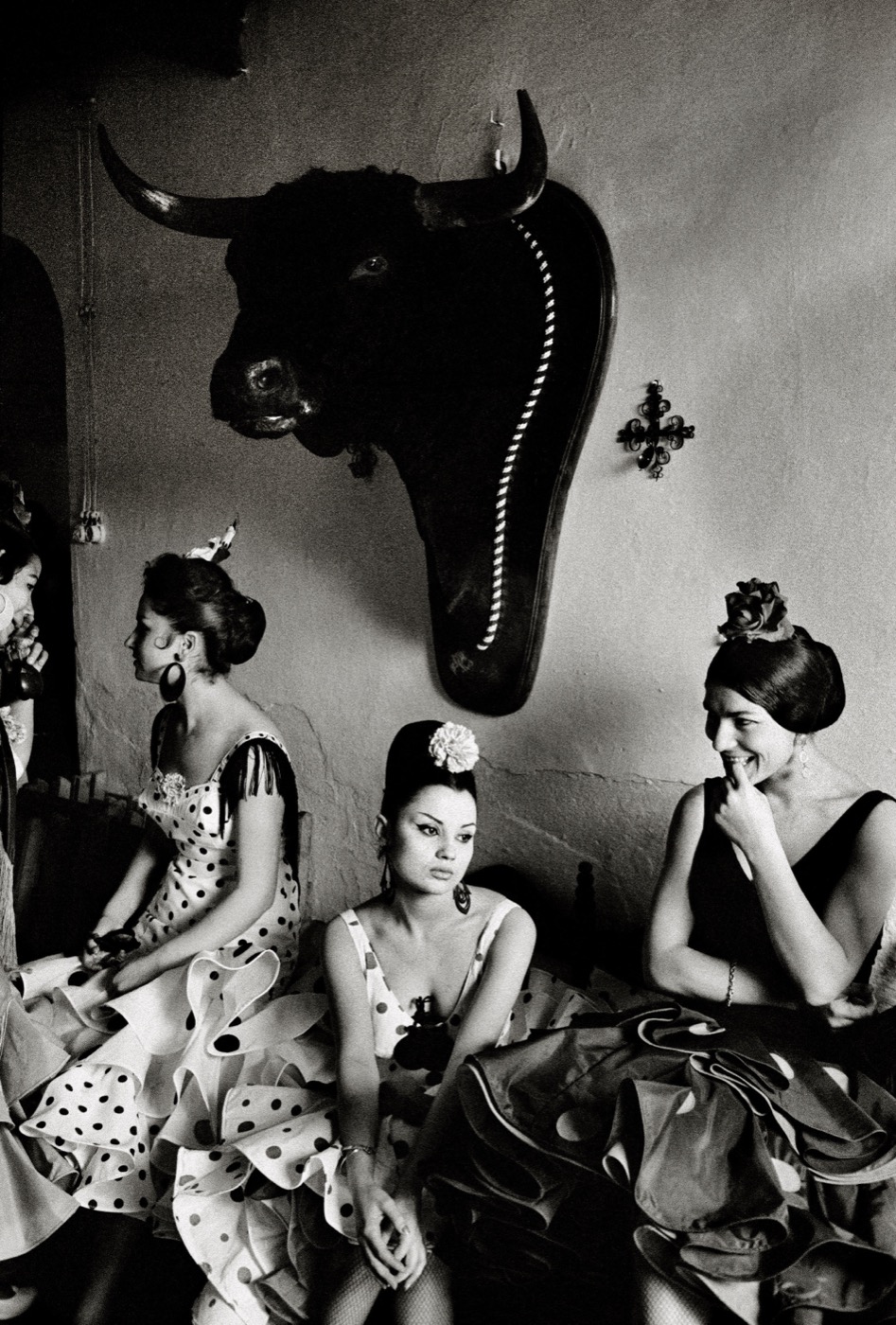 Jerez de la Frontera, Cádiz, 1960.The dance is nowhere here; what the frame withholds is the very thing these women are dressed for.
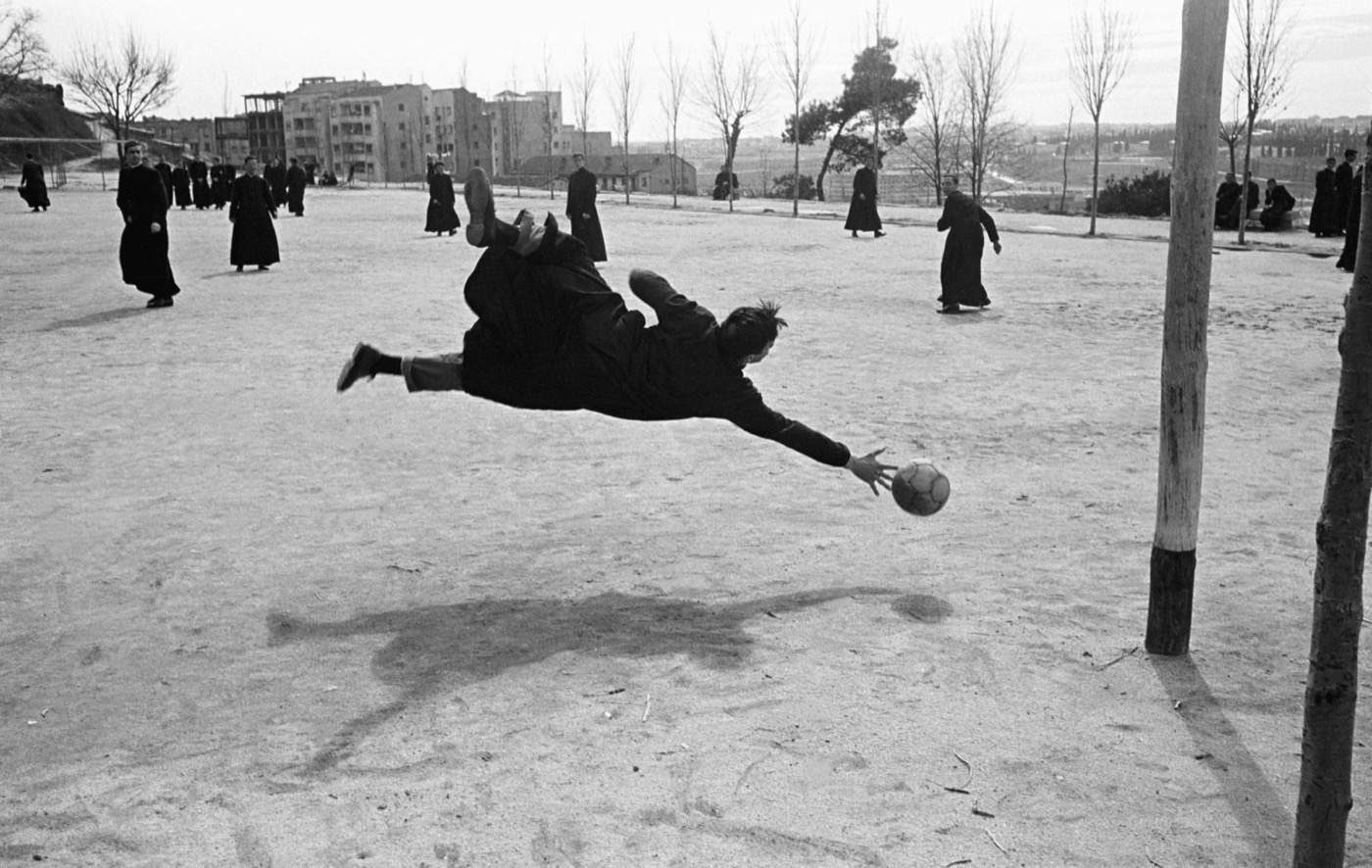 Seminario, Madrid, 1960.A seminarian in a full black cassock is horizontal in mid-air, arms outstretched, fingertips inches from a football, having thrown himself across a goalmouth marked by a rough wooden post.
 Tomelloso, Ciudad Real, 1960.A whitewashed wall meets the ground in a long shallow V that runs from the left edge to the lower centre and back up to the right.
 Cabo de Gata, Almería, 1961.A few minutes before this exposure, someone fed the long hose into the drum at the left and walked away; nothing since has moved.
 Carmen Amaya, Madrid, 1961.A rehearsal studio in Madrid, 1961: a wall of mirrors, a scuffed plank floor, towels slung over the barre, and, dead center in the clutter, Carmen Amaya — sitting down.
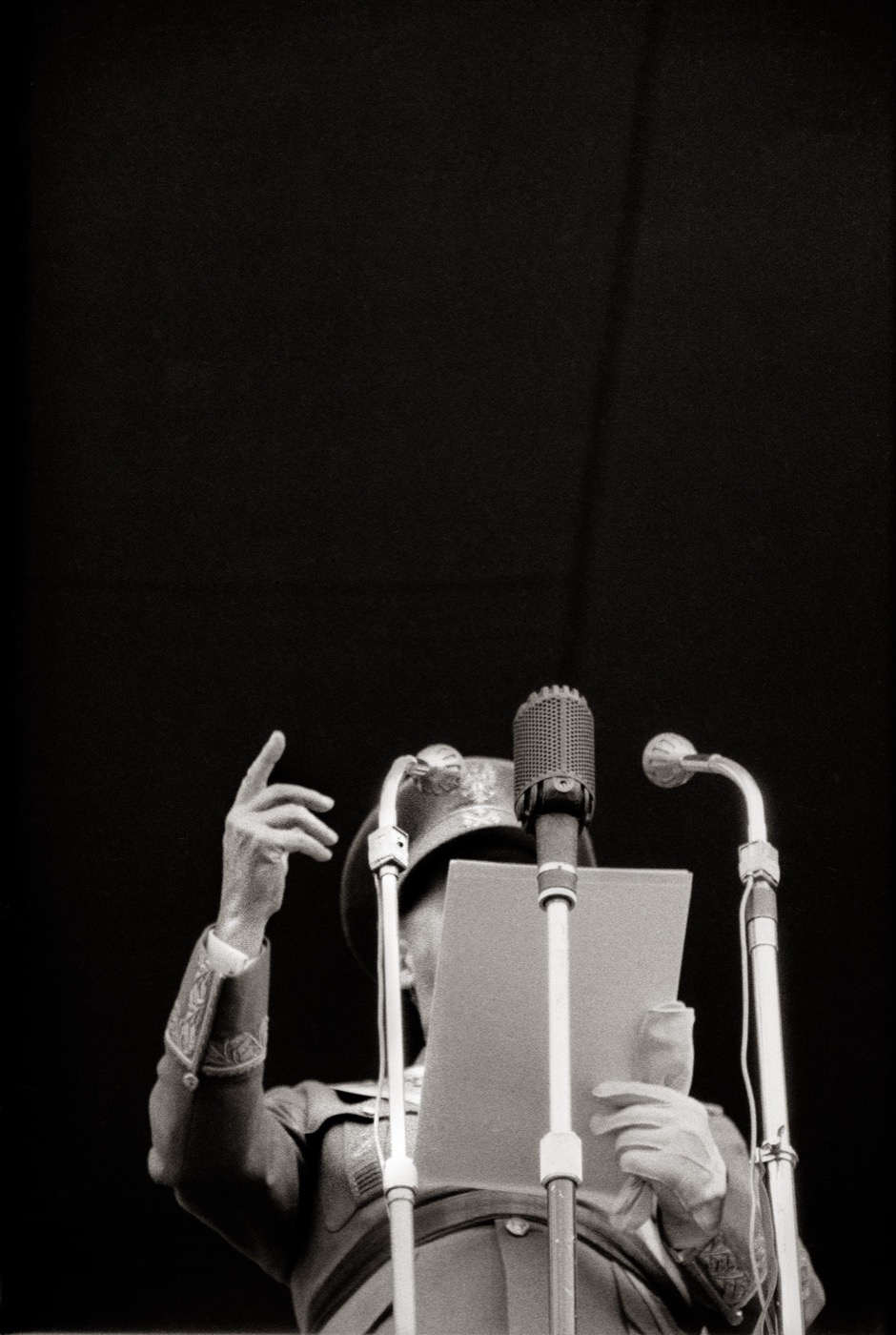 El Dictador, Burgos, 1961.A dictator is a man who arranges for everyone to look at him, and here the looking has been quietly sabotaged.
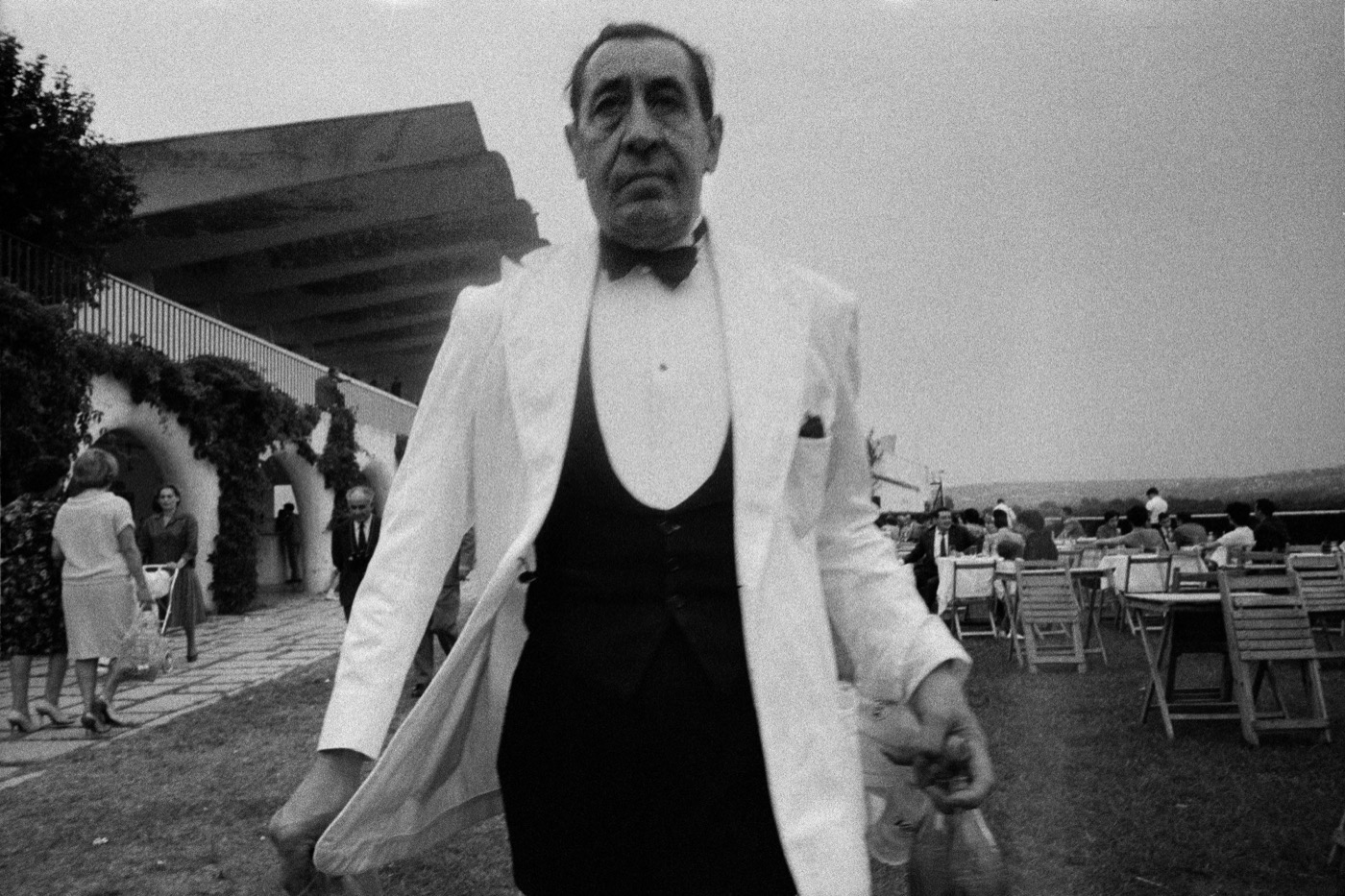 Hipódromo de la Zarzuela, Madrid, 1961.He comes straight at us, and his hand is the thing I keep returning to: trailing low at his side, fingers hooked through the necks of two emptied bottles he is carrying off the lawn.
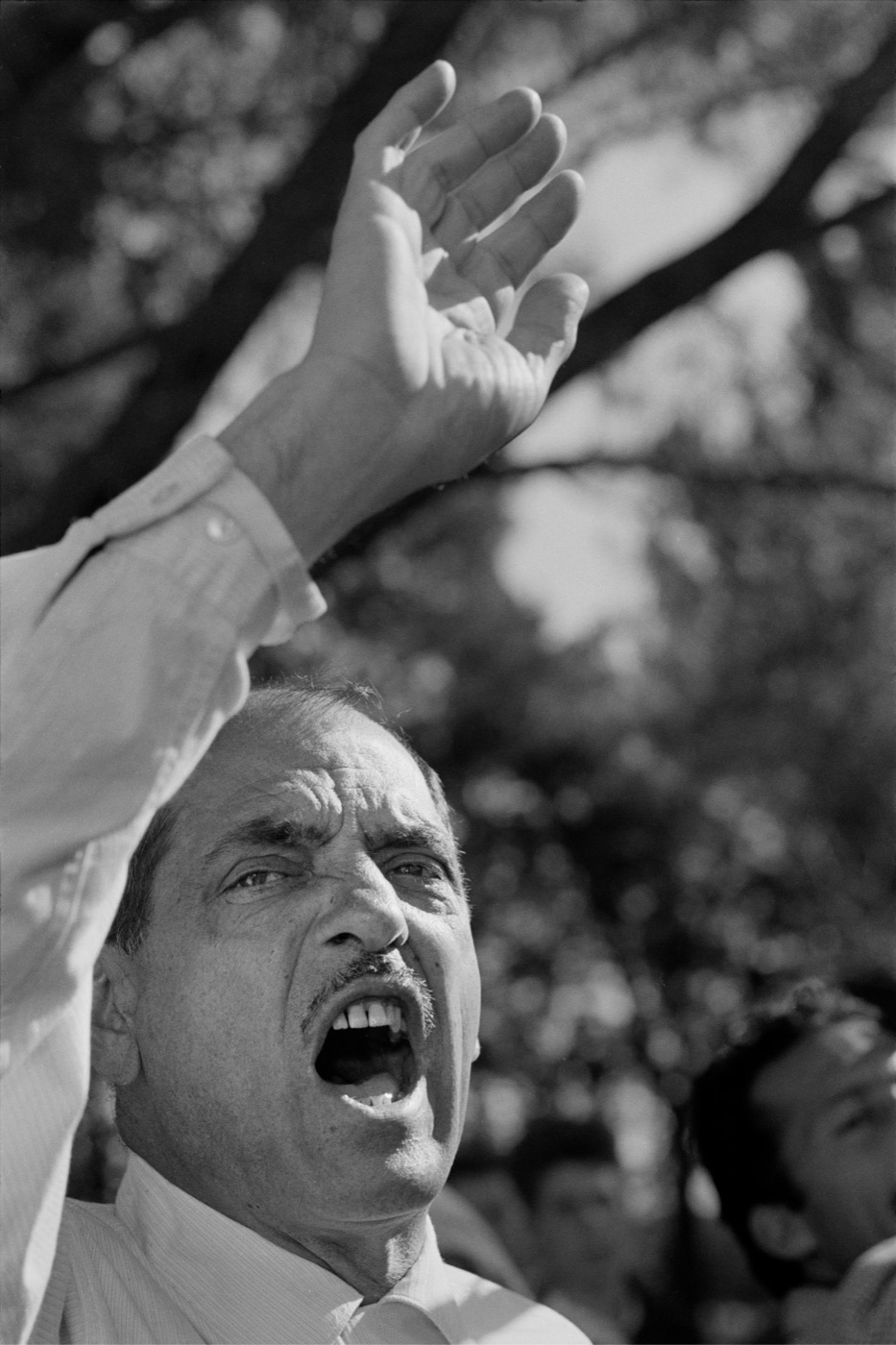 Luis Buñuel, Madrid, 1961.The arm has swung up over the head, palm open to the light, and the mouth is torn wide on a shout we will never hear.
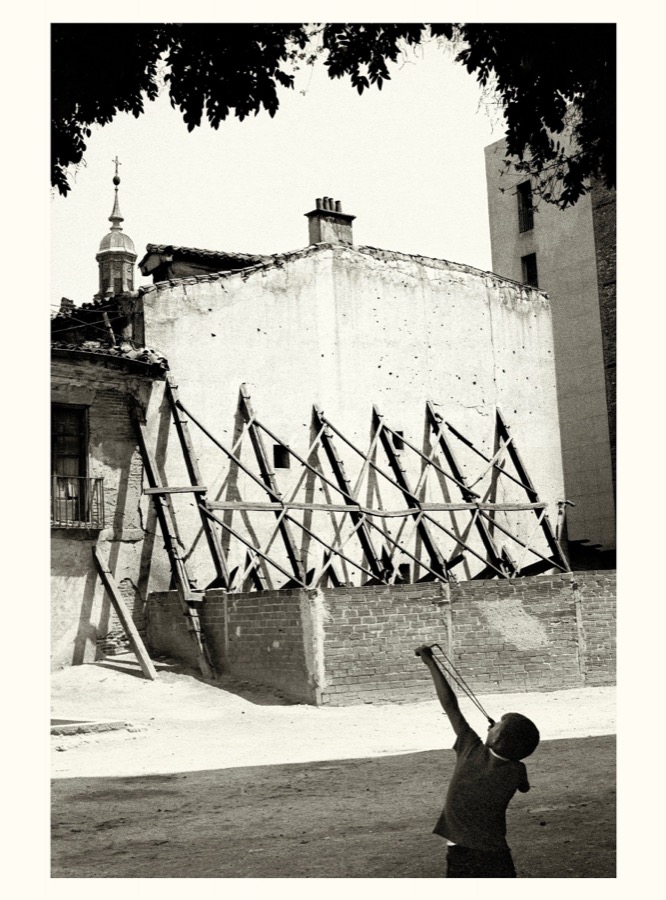 Las visitillas, Madrid, 1962.A boy stands in the shadow of a tree at the bottom right of the frame, arm raised, pulling back a slingshot at something above and out of sight.
 Neutral Corner, Madrid, 1962.The photograph from Ramón Masats’ Neutral Corner series distils boxing to its most abstract, visceral essence.
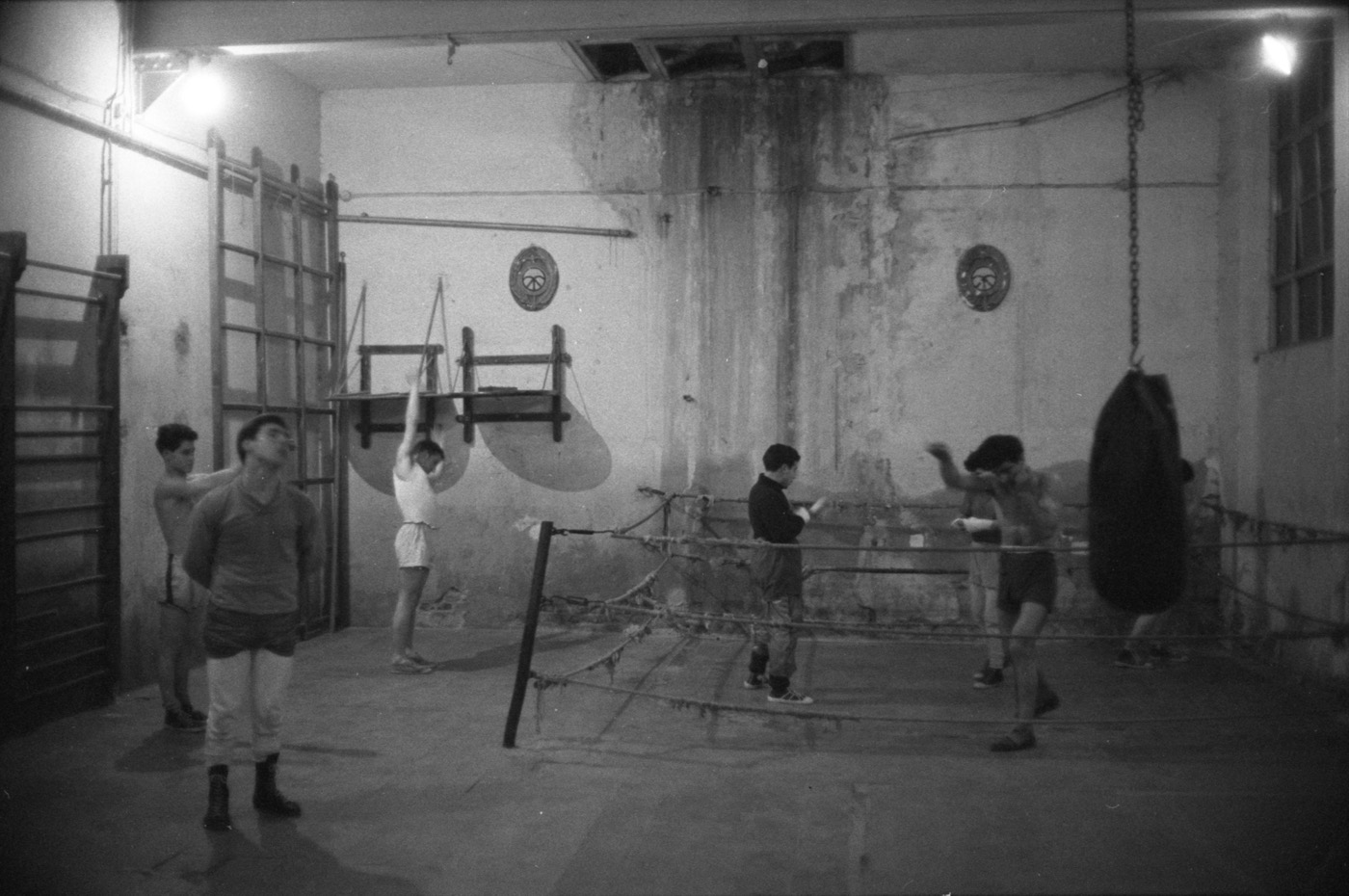 Neutral Corner, Madrid, 1962.Two round enamel medallions hang high on the flaking wall, official-looking badges whose emblems have gone illegible with distance and grime, and they are the only insignia in a room otherwise…
 Neutral Corner, Madrid, 1962.Almost nothing is given away in the foreground: three figures collapse into a single black mass, faces swallowed, the lower third of the frame gone to pure shadow so that we read the corner between…
 Neutral Corner, Madrid, 1962.We are down among them, wedged so close to the ring that a spectator’s blurred knee and shoe crowd the near edge of the frame, and from this low vantage the whole gym opens like a shallow stage.
 Neutral Corner, Madrid, 1962.Discipline photographed always risks looking like devotion, and the bowed spine at the center of this frame proves the point.
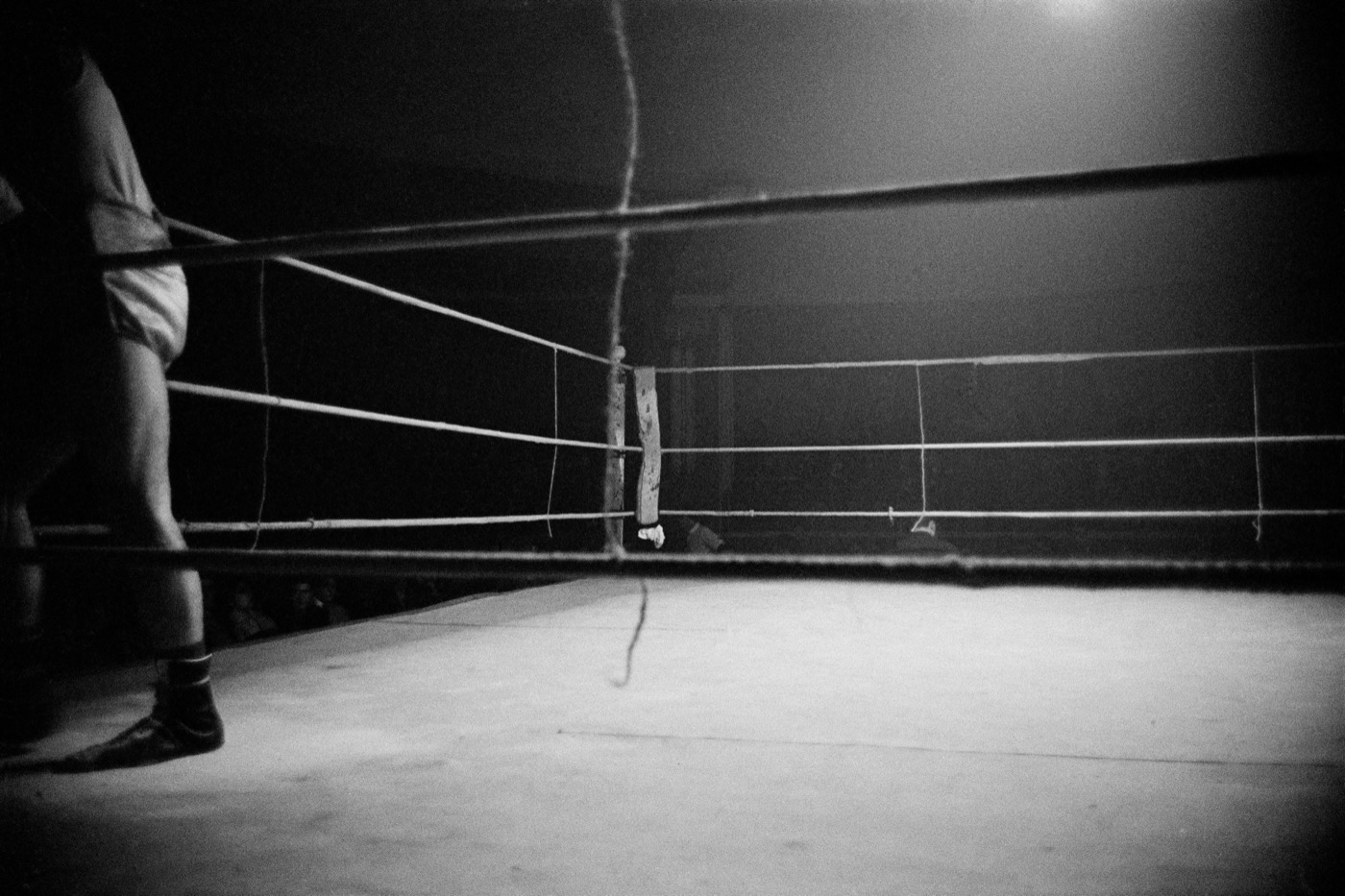 Neutral Corner, Madrid, 1962.Why does my attention slide past the waiting fighter, cropped at the frame’s left in his white trunks and dark boot, and fix instead on a scrap of pale cloth knotted to the rope near the corner post?
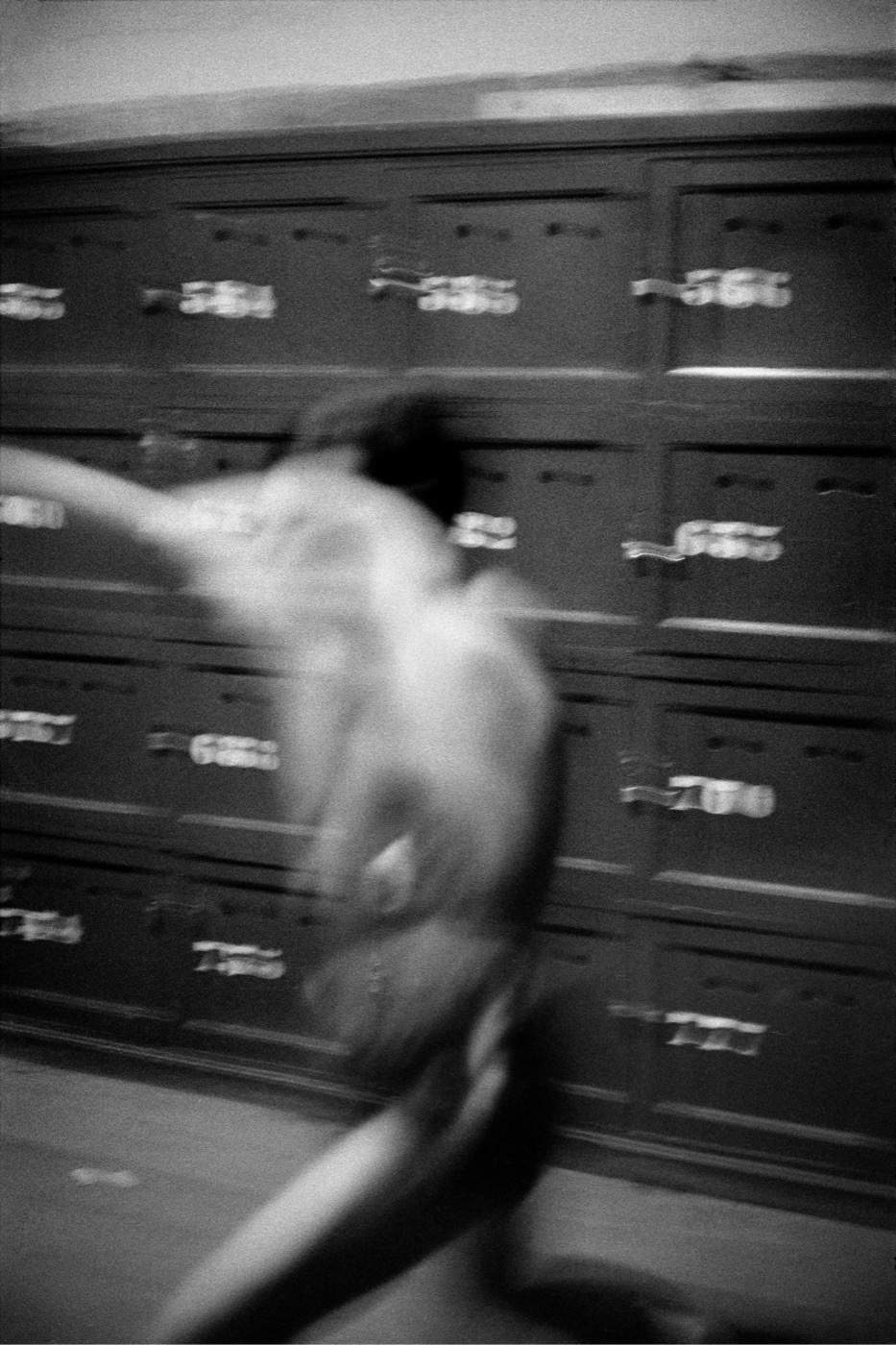 Neutral Corner, Madrid, 1962.The painted white numerals stenciled across the locker fronts smear into little comet-tails, blurred by the same motion that dissolves the figure before them, and they are the only fixed coordinates…
 Neutral Corner, Madrid, 1962.The blacks in this print are not emptiness but substance: silver laid on so thickly that the ring, wherever it was, has drowned in it, leaving a single diagonal of wet skin to carry the picture.
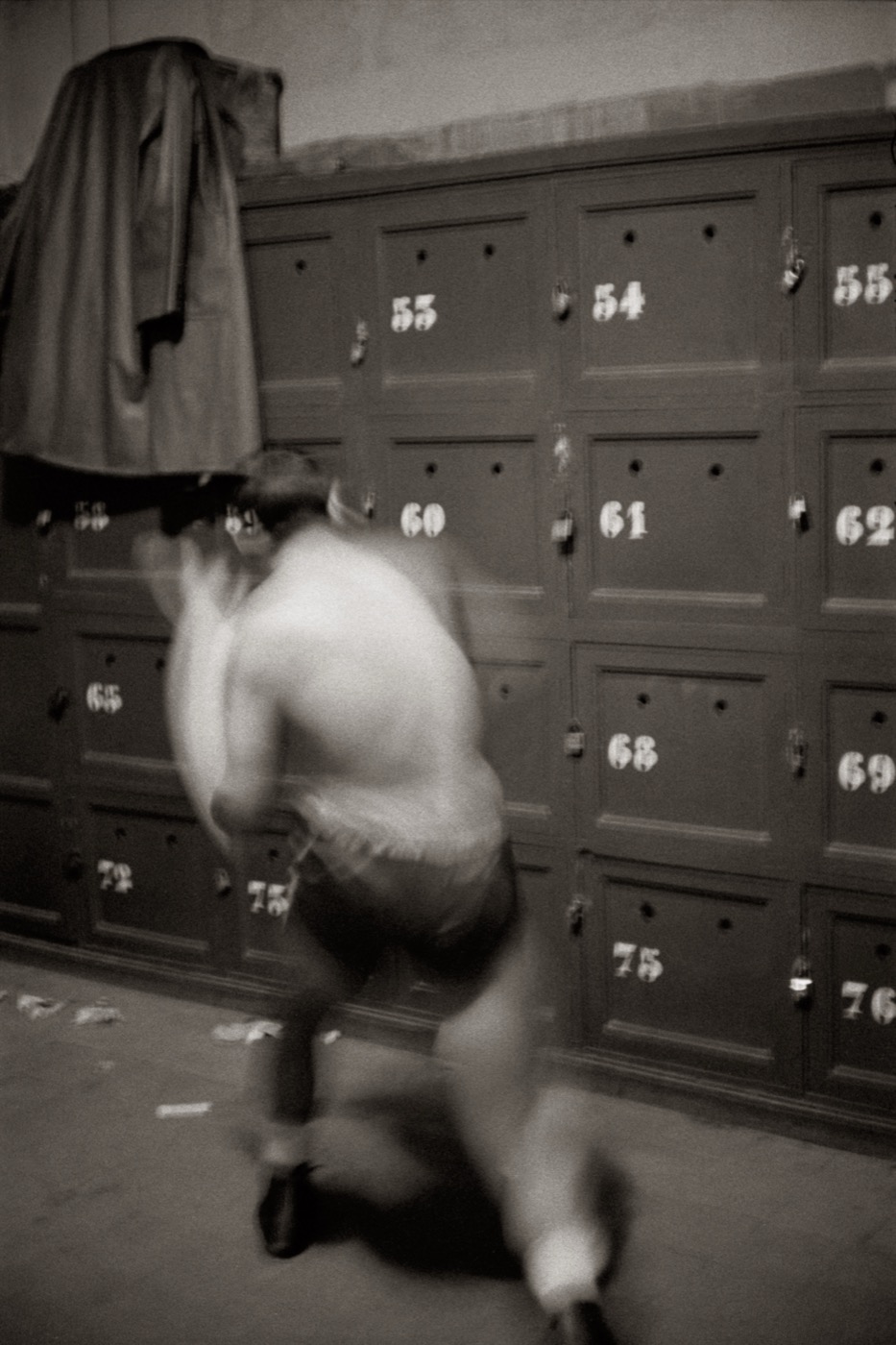 Neutral Corner, Madrid, 1962.Changing-room light is the weakest light in sport: dim, brownish, used up, and it sets the terms here.
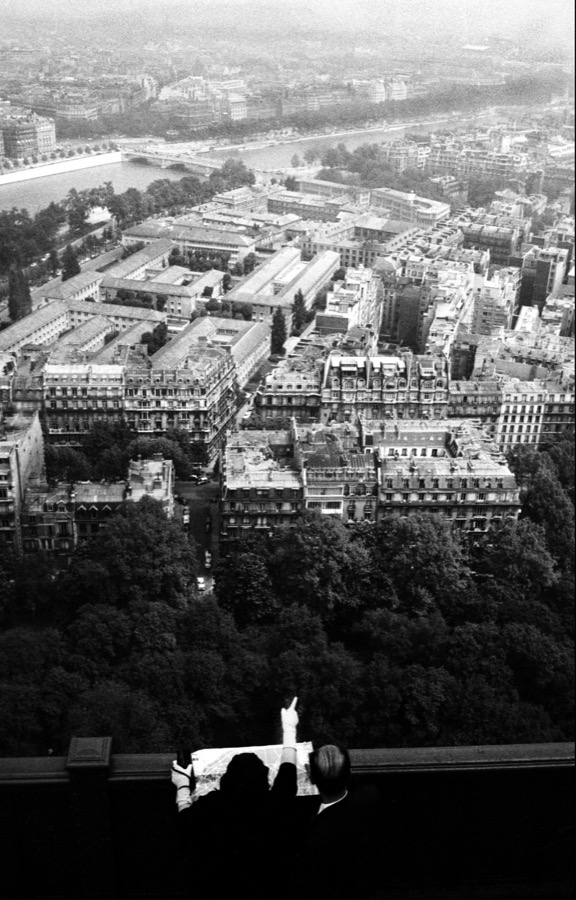 Paris, 1962.Ramón Masats stands as one of Spain's most influential documentary photographers of the 20th century.
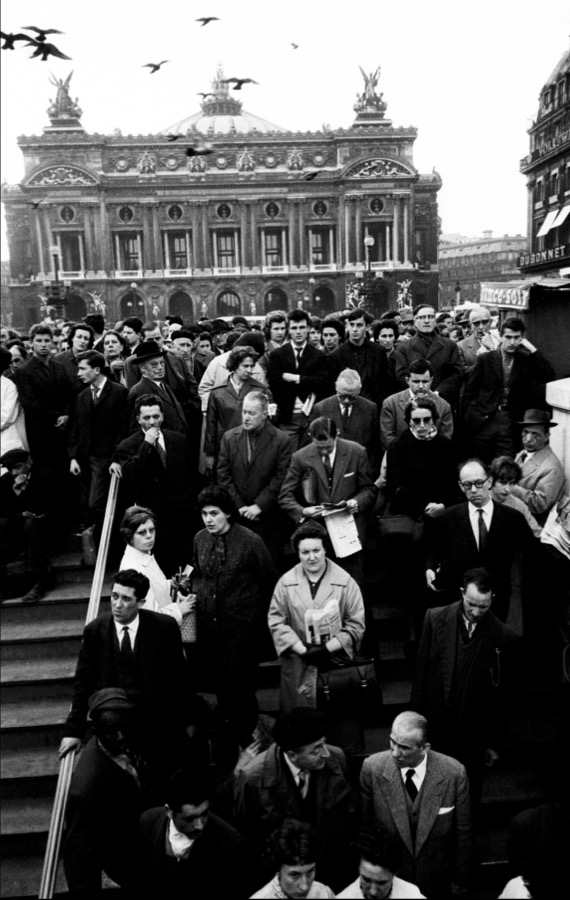 Paris, Subway Strike, 1962.Paris, 1962. The subway is on strike, so the city has spilled onto these stairs in front of the Opéra like a great human river briefly held in place.
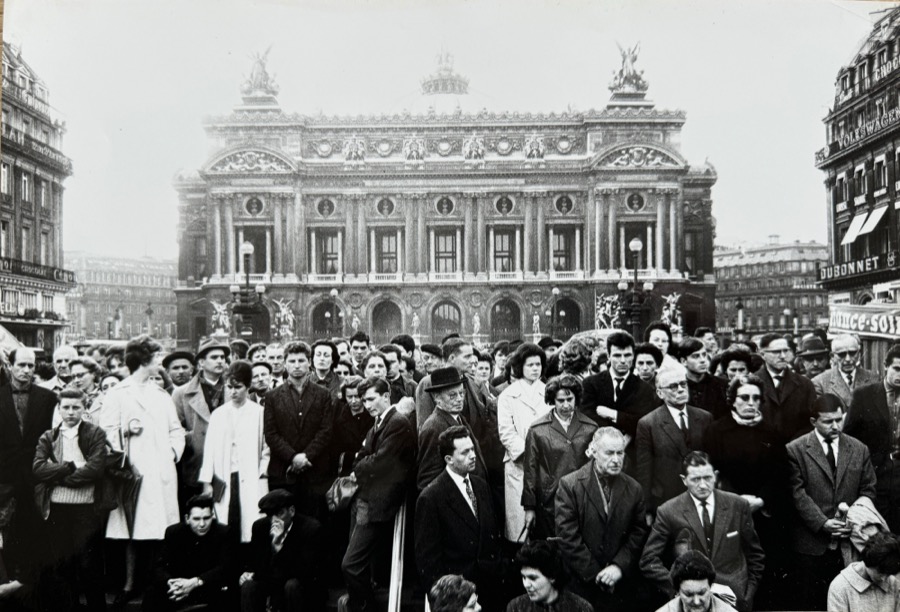 Paris, Subway Strike, 1962.Nobody in this picture is looking at the Opéra, which, if you have ever tried to photograph the Opéra, you will recognise as a kind of achievement.
 Picadores en la Plaza de toros de las Ventas, Madrid, 1962.In Picadores en la Plaza de toros de las Ventas, Madrid, made in 1962, Ramón Masats turns the bullring into more than a setting for spectacle: a threshold between ritual and mystery, between the…
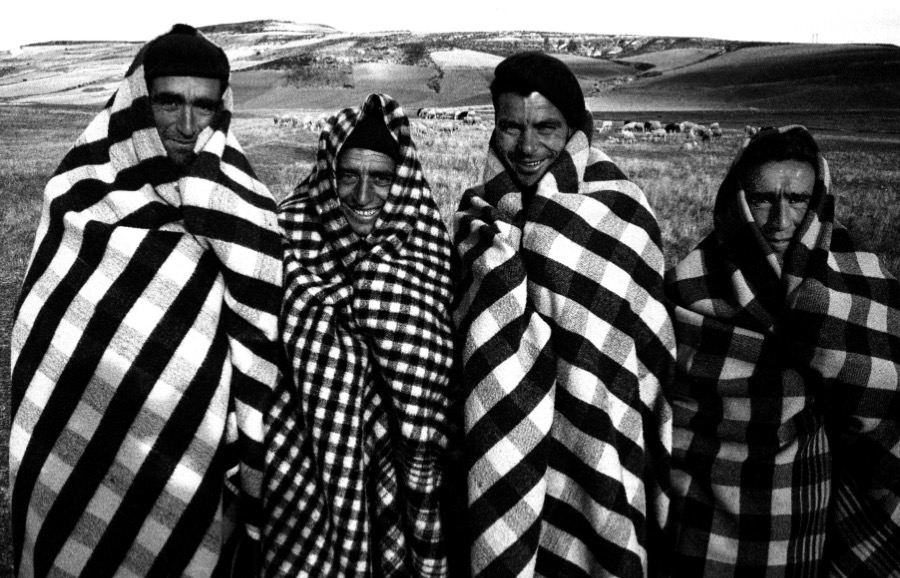 Tierra de campos, Valladolid, 1962.Four men stand shoulder to shoulder in a field, each wrapped to the eyes in a checked woollen blanket.
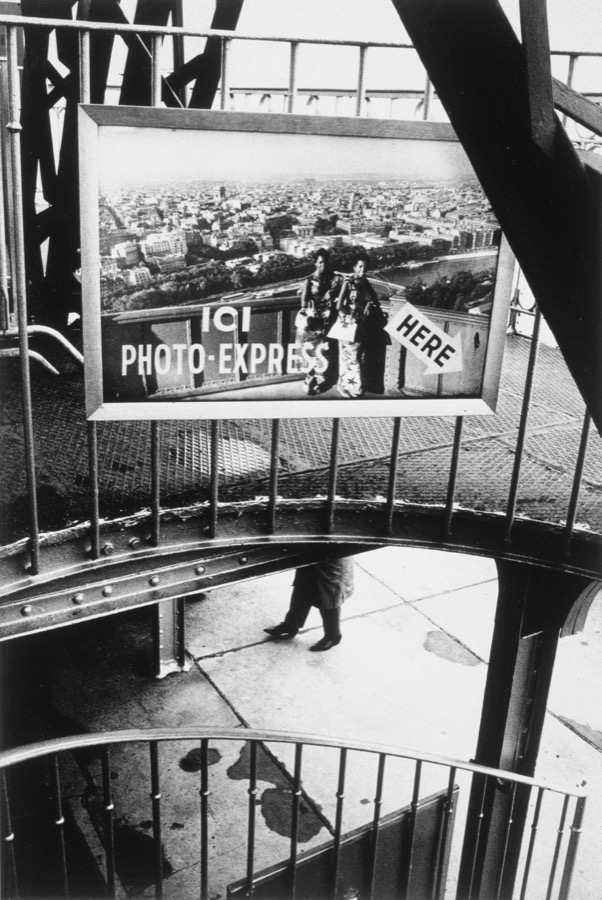 Tour Eiffel, Paris, 1962.On a platform of the Eiffel Tower a framed photograph hangs from the ironwork: two women posing at the parapet with Paris spread out behind them, and across it, in white letters, ICI PHOTO-EXPRESS…
 Tour Eiffel, Paris, 1962.The same sign, seen from a step further back.
 Tour Eiffel, Paris, 1962.Almost all of this print is black. A band of white sky at the top, then the silhouette of a machine house with one long lit window and figures moving inside it around what looks like a lift cage.
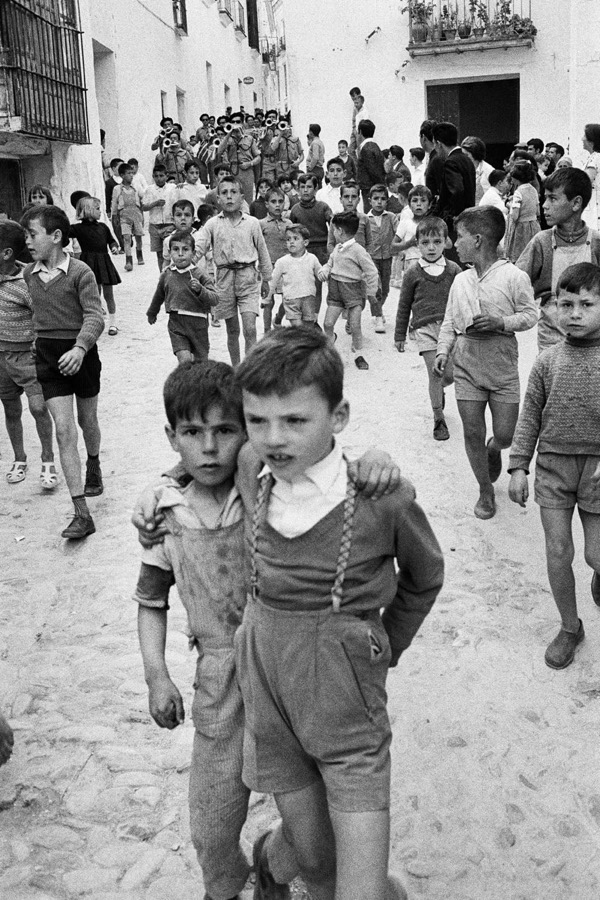 Arcos de la Frontera, Cádiz, circa 1963.Ramón Masats captures a village street overflowing with children, their restless energy transforming the narrow slope into an improvised stage.
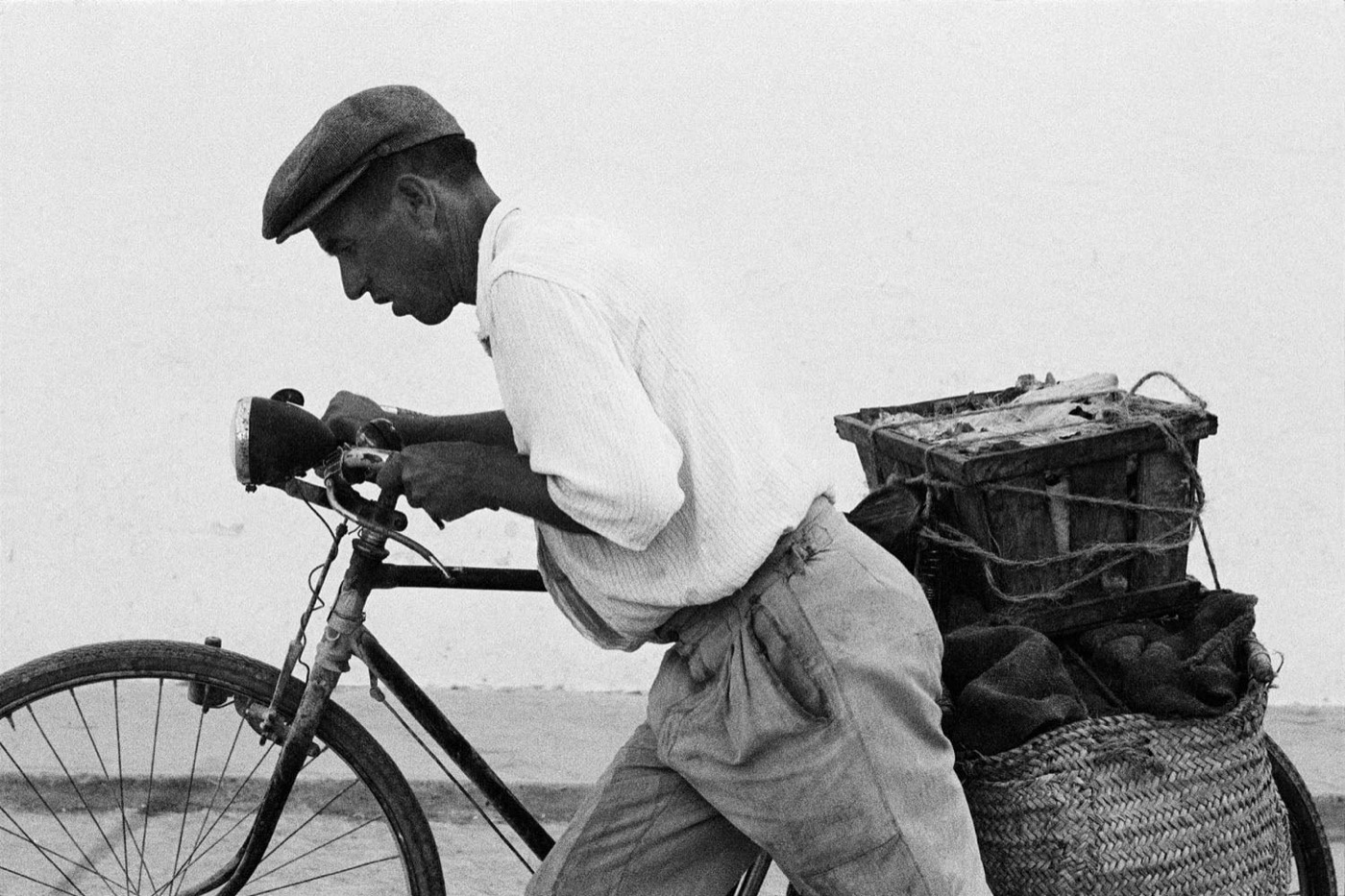 Arcos de la Frontera, Cádiz, circa 1963.A photograph of labor rarely shows the weight of it; this loaded bicycle does nothing else.
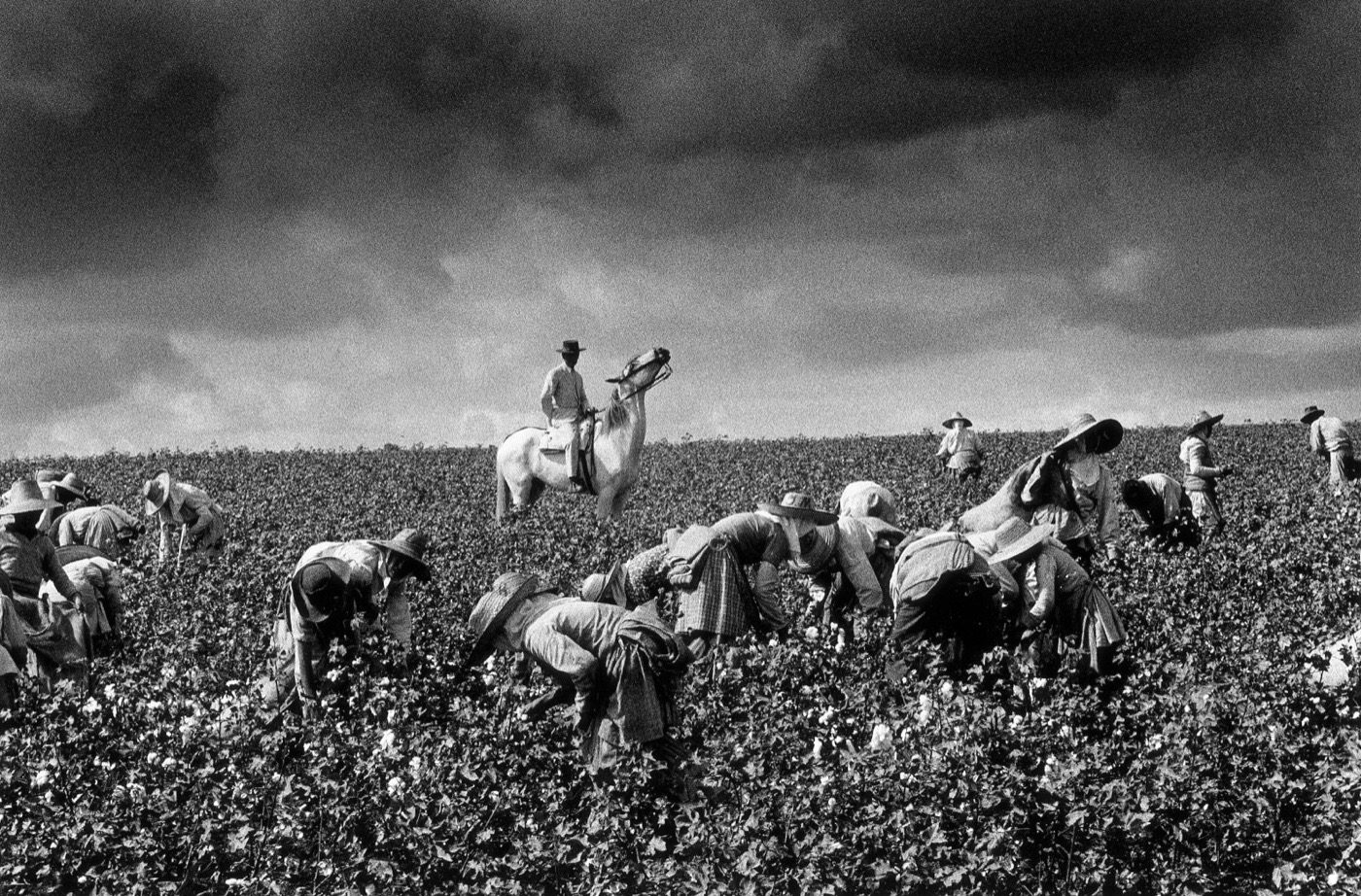 Cotton Harvest, Jerez de la Frontera, Cádiz, 1963.In Ramón Masats’ “Cotton Harvest, Jerez de la Frontera, Cádiz, 1963”; time seems to pause in the white light of Andalusia.
 Las Ventas, Madrid, 1963.A torero fills the frame from the chest up, and he has closed the picture against us.
 Las Ventas, Madrid, 1963.A man has put both hands over his face, and the camera has come in close enough that the gesture fills almost the whole frame.
 Antonio Gades, 1964.A plain first: flat, treeless, running unbroken to a pale horizon — country that offers a face no shelter and no excuse.
 Coffin, Puerto Serrano, Cadiz, 1964.The doorway keeps its subject firmly out of sight.
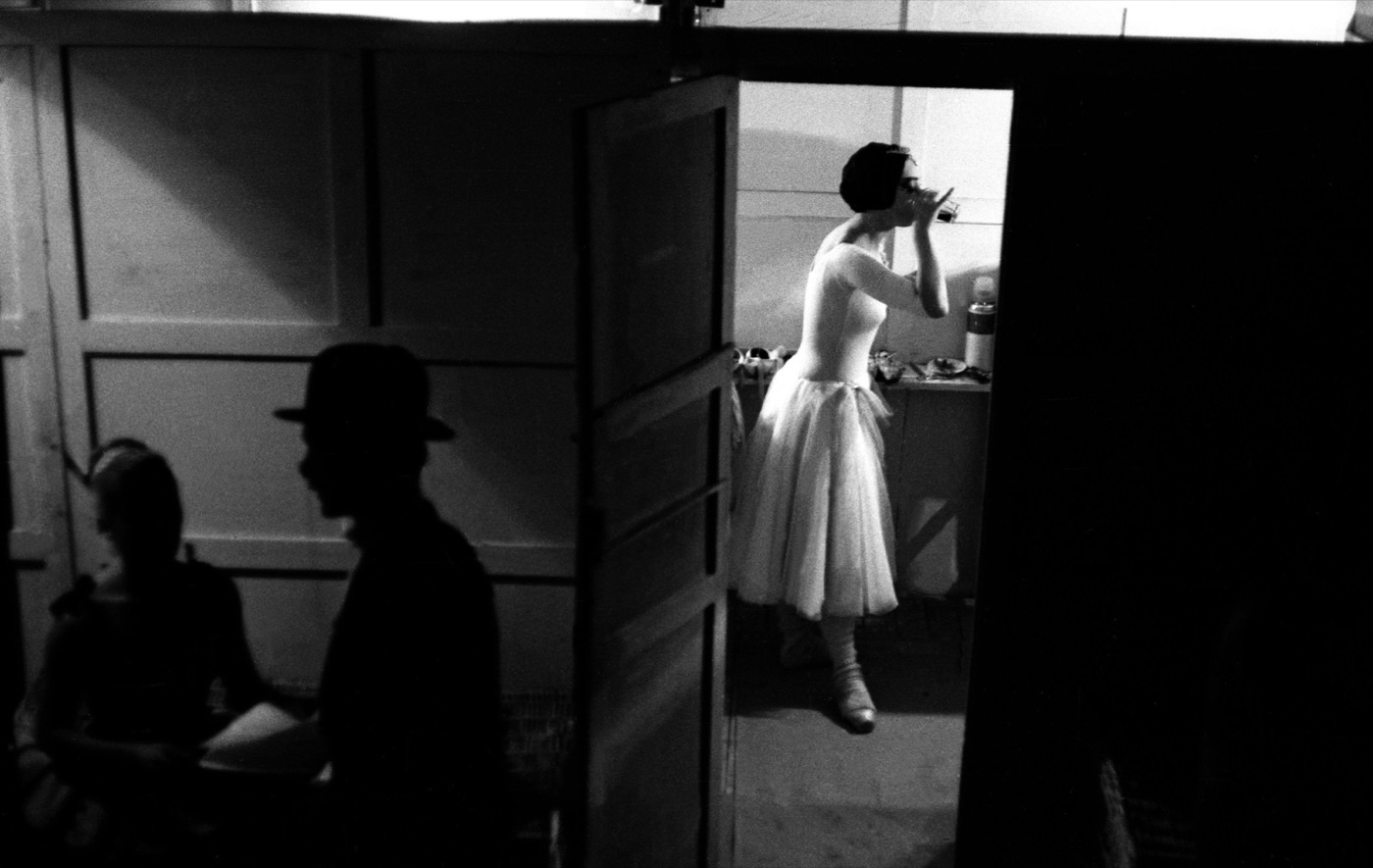 Ludmilla Tchérina, Madrid, 1964.She tips her head back and drinks — mid-gulp, throat exposed, the bottle raised the way you'd raise it backstage between acts when nobody important is watching.
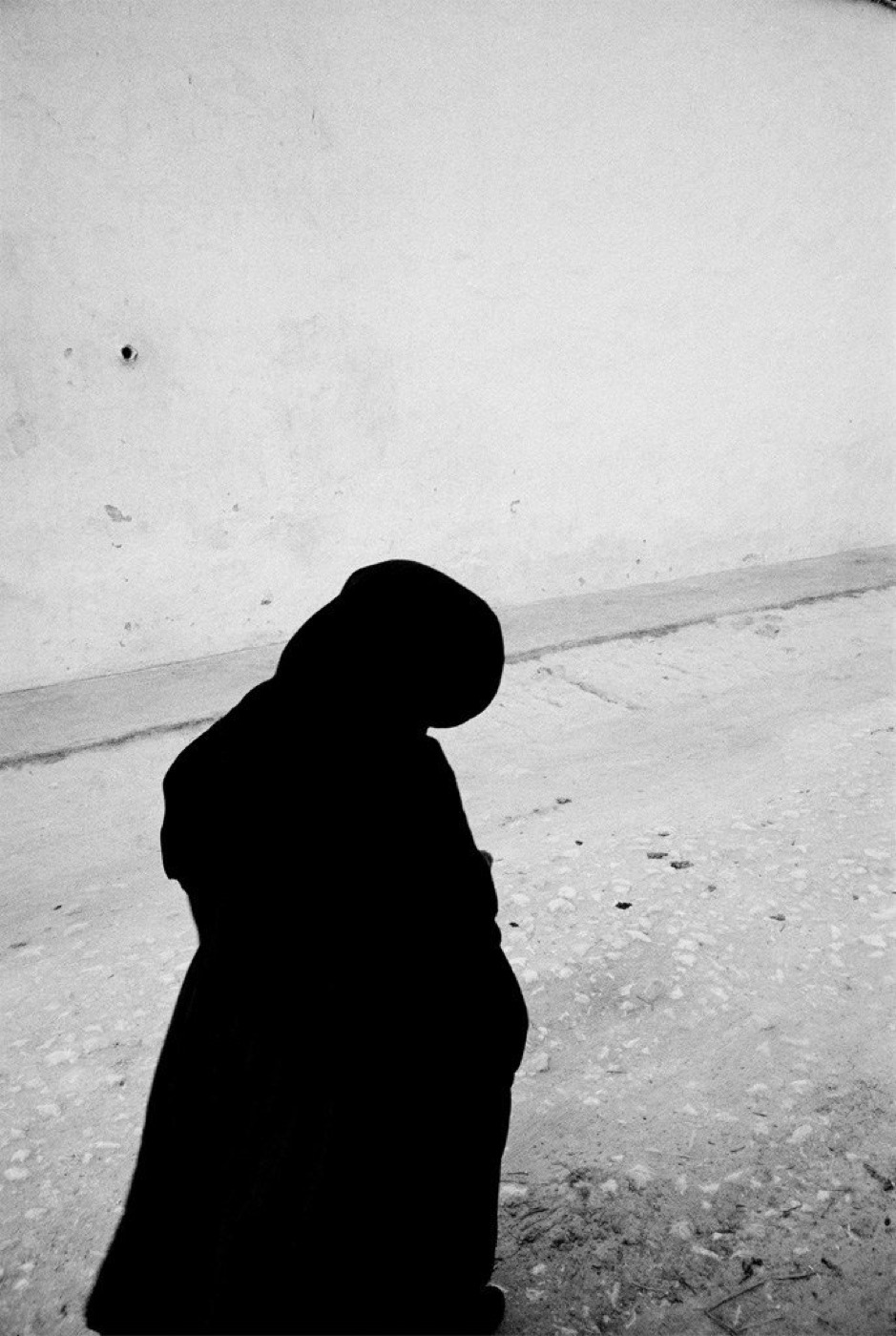 Moral de Calatrava, 1964.She lowers her head and moves along the white wall, and the movement is all we are given, for the woman herself has been reduced to a single black silhouette without a face.
 Verbena, Plaza Mayor, Madrid, 1964.Nineteen sixty-four was the year the Spanish state proclaimed twenty-five years of peace, and Madrid answered the way cities under such proclamations do: with a fair.
 Expotur, Madrid, 1965.A whitewashed wall with a bull's head mounted on it: black, curly-haired, horns curving up and out, the muzzle pushed forward off a shield-shaped plaque.
 Museo Del Prado, 1965.A woman has sat down on a folding stool in a gallery of the Prado.
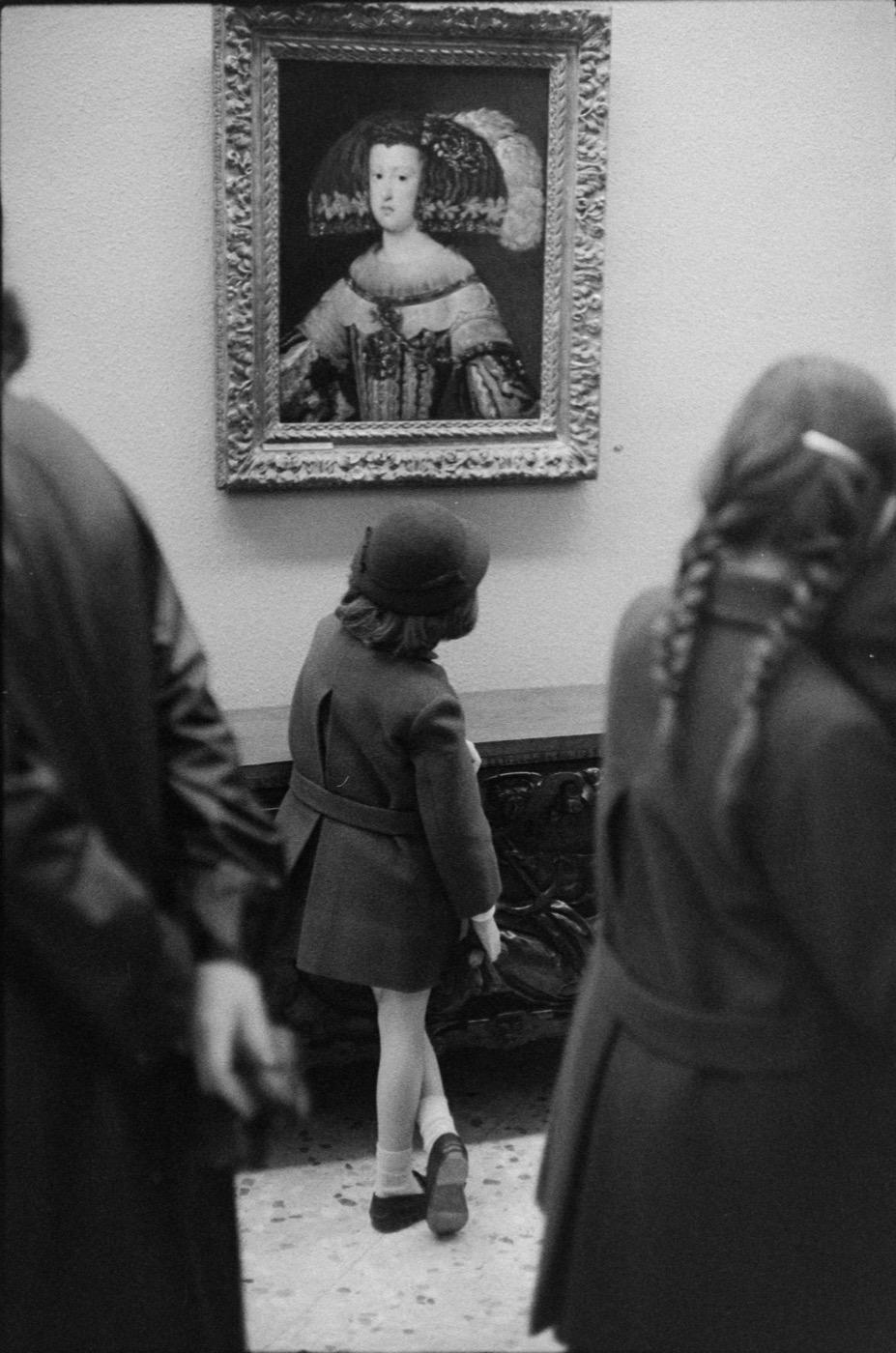 Museo Del Prado, 1965.In the Spain of the mid-sixties, a family outing to the Prado was a way of touching a grandeur the present did not otherwise offer, and Masats found the encounter in its purest form: a small girl…
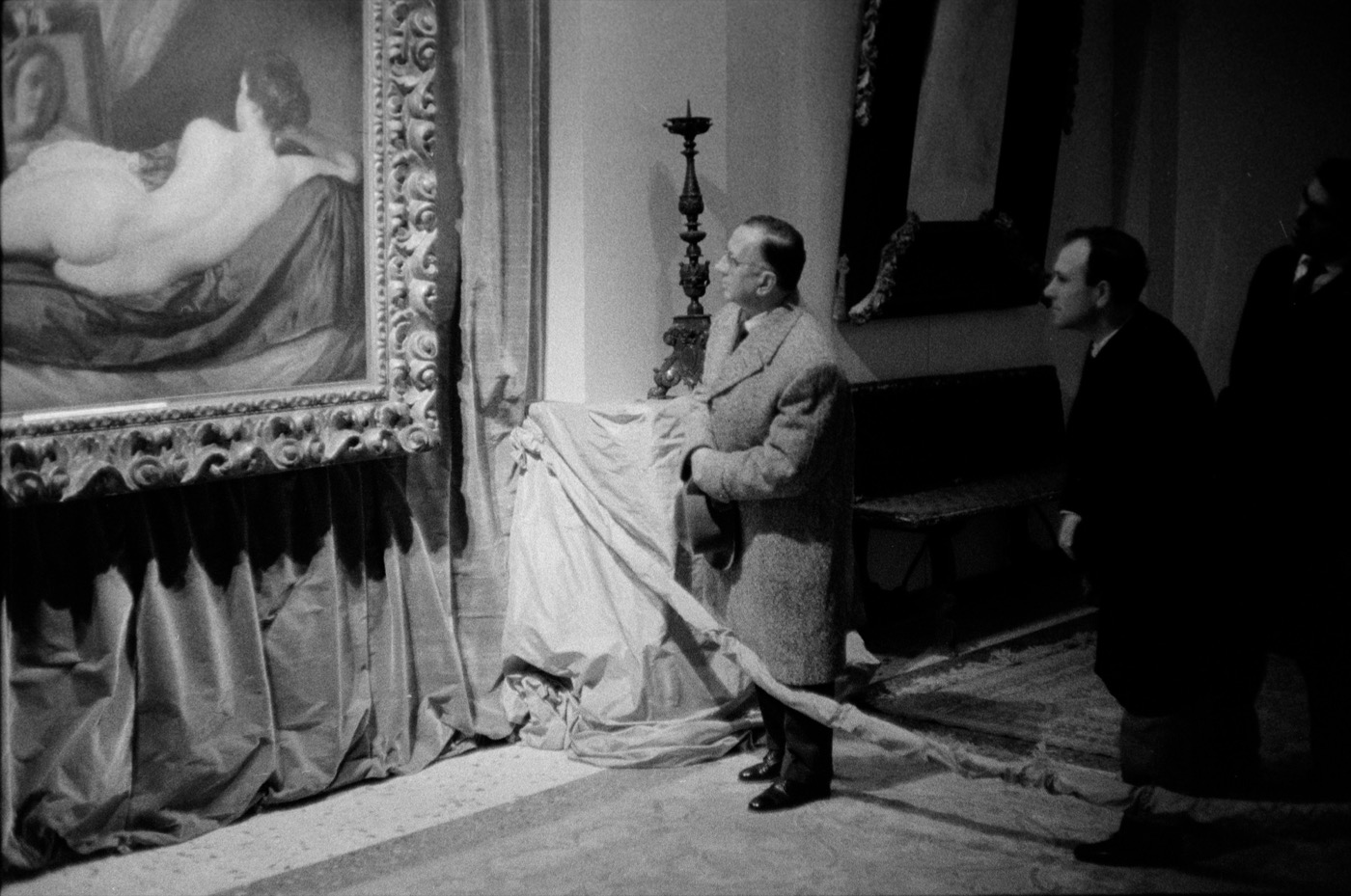 Museo Del Prado, 1965.A man in a heavy tweed coat stands at the center of the Prado, and a pale cloth pools at his feet and spills toward us across the floor, as if he had only this moment let it fall.
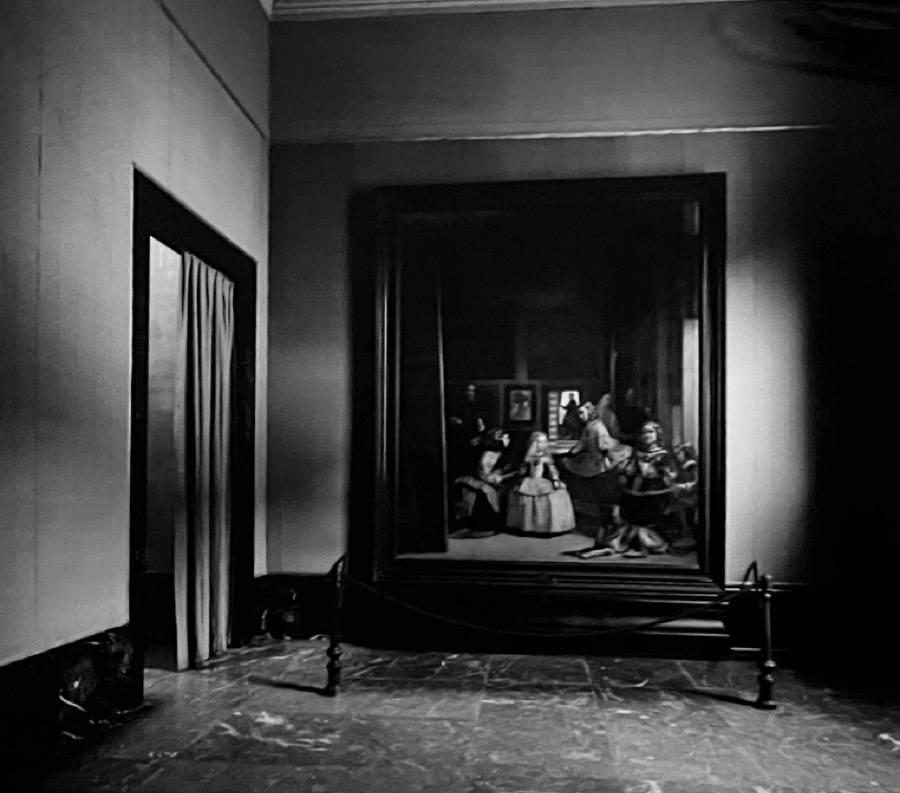 Museo Del Prado, Madrid, 1965.A gallery of the Prado, empty. On the right-hand wall, in a heavy dark frame, Las Meninas, lit so that it glows out of a room that is otherwise almost dark.
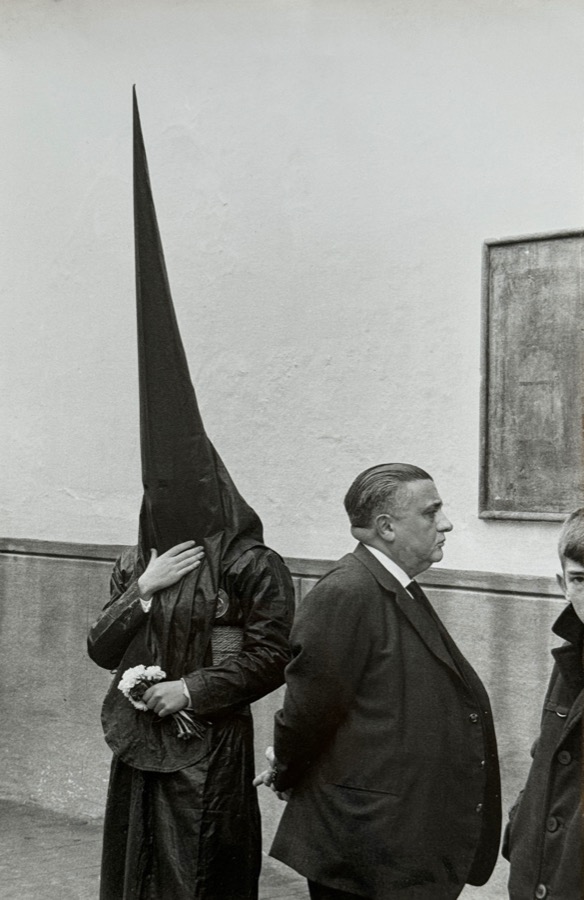 Semana Santa, Sevilla, 1965.This unique vintage gelatin silver print reveals Masats' genius for capturing decisive moments within sacred ritual.
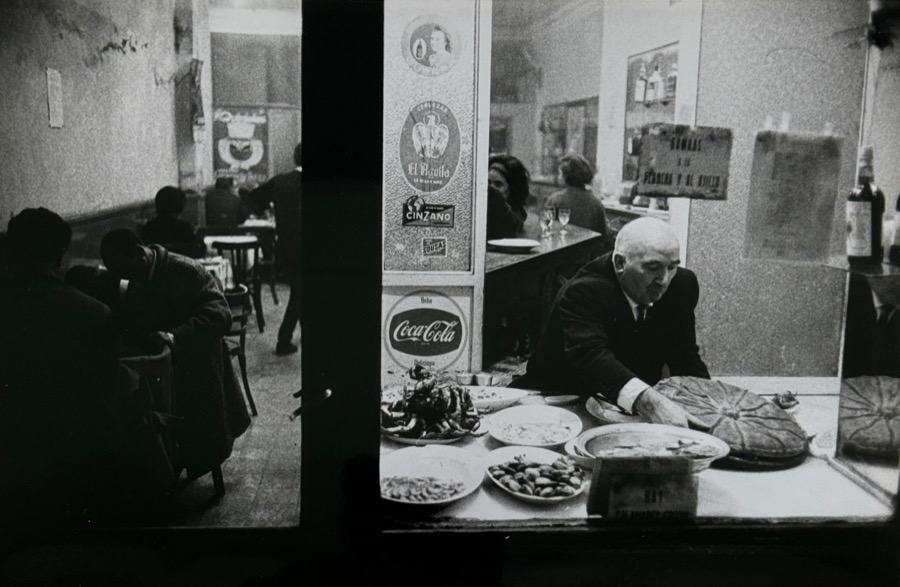 Tasquero, La Coruña, 1965.A tavern window in La Coruña, photographed from the pavement at night.
 Excursión con la Real Sociedad FotográficaPhotography never travels alone; it moves in company, and the company casts shadows.