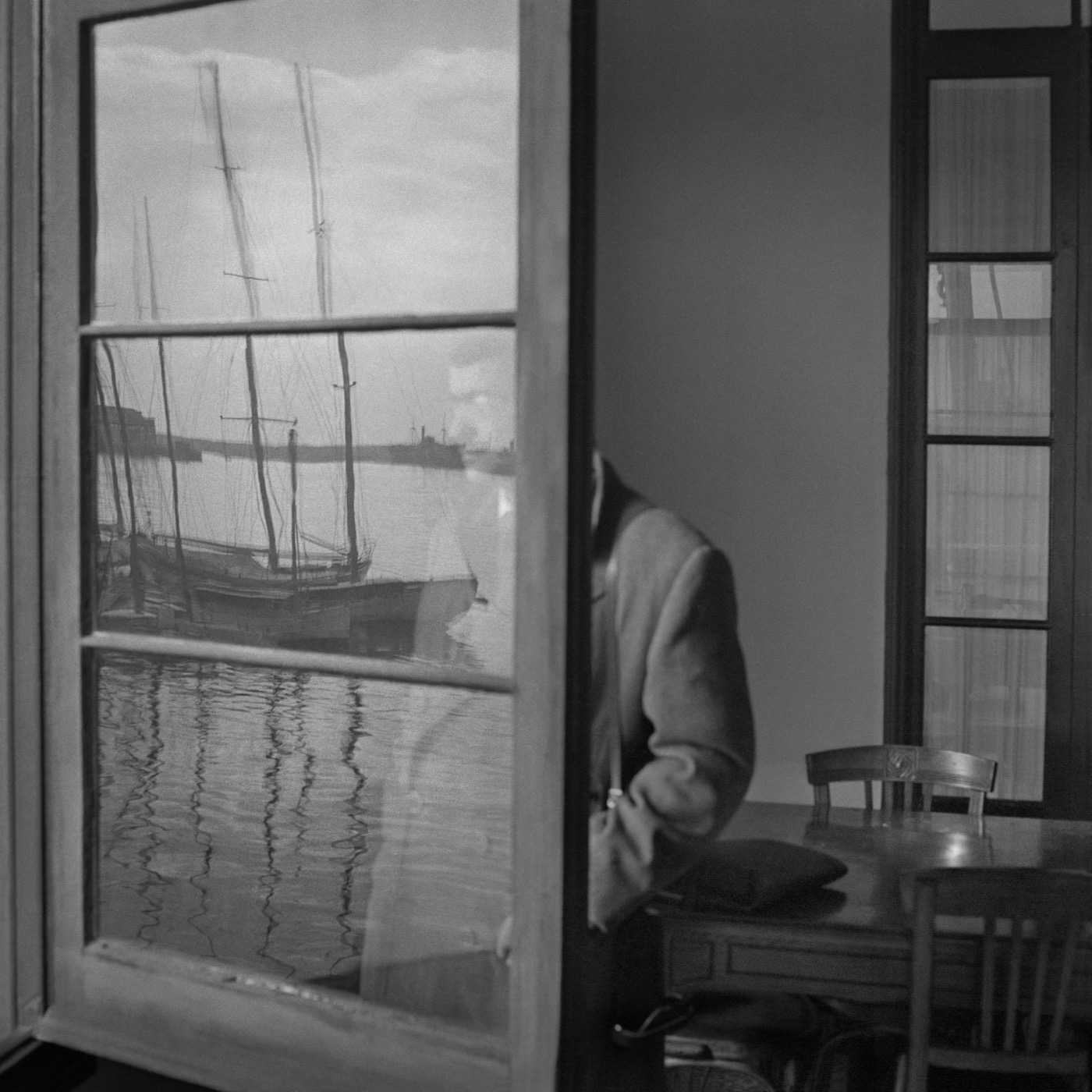
Ramón Masats Spanish, 17/03/1931–4/03/2024
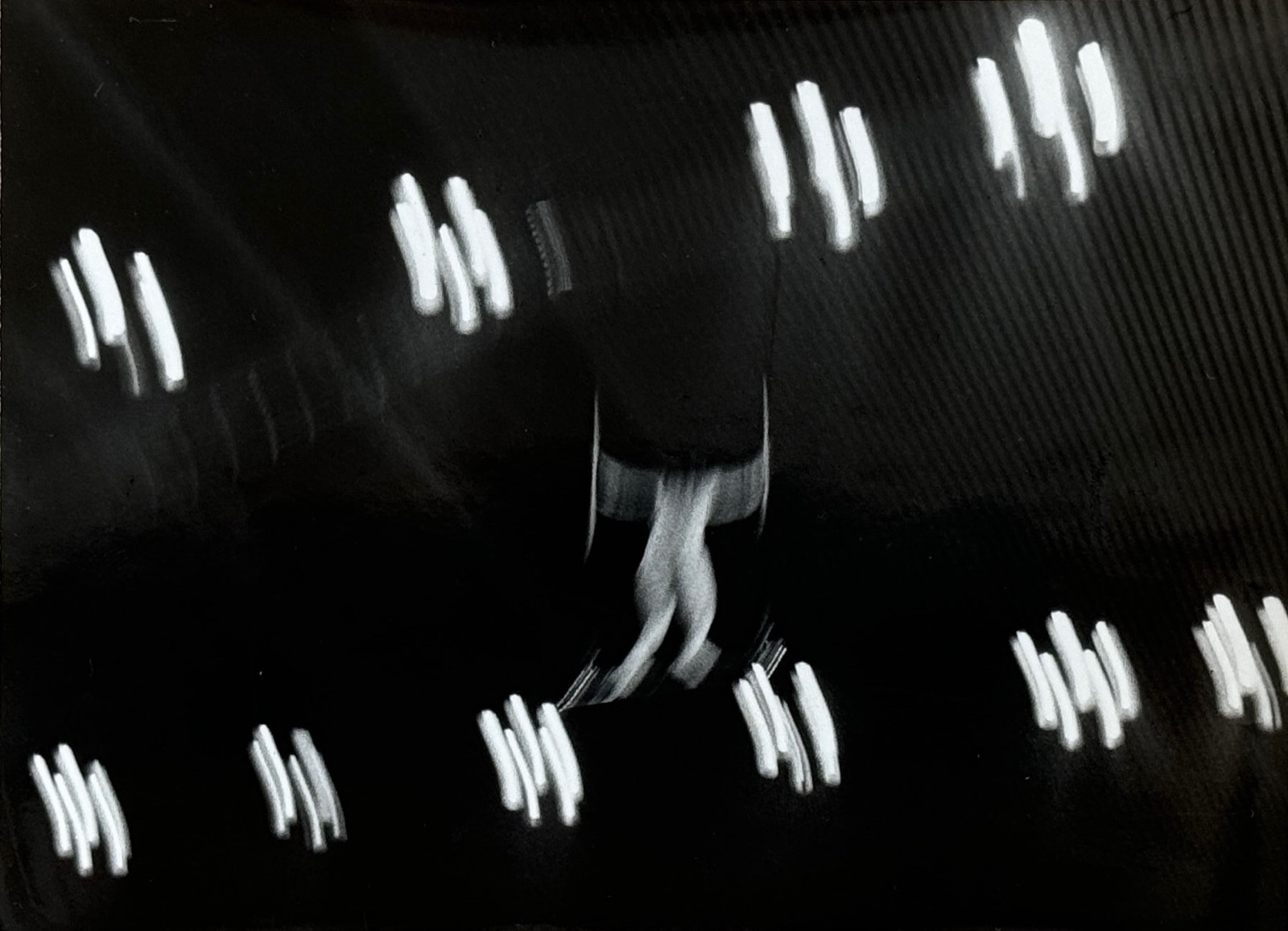
Nothing in this frame agrees to be identified. Across a black field, pairs and triplets of white strokes hang like tally marks, each one a lamp or a headlight dragged by the shutter into a short vertical smear; a faint hatching of diagonal lines runs through the upper right, the trace of some surface the lens never resolved. In the centre, the only thing with a body: a blur that could be two legs stepping through the dark, or a hand, or the ghost of a figure that moved while the city stood still.
Masats made this in Barcelona in 1953, at twenty-two, when he was still deciding whether he wanted the camera to describe or to invent. The picture refuses the choice. It is a document, in the sense that light really did fall on this paper in this order; and it is a fiction, in the sense that no one standing on that street ever saw this. The photograph testifies to an event that existed only inside the camera.
That is what interests me here. We are told photography is the medium that cannot lie, and we forgive it everything on the strength of that promise. This small print, made in the first years of a career that would go on to look Spain squarely in the face, already knows the promise is negotiable: hold the shutter open a little longer and the evidence begins to hallucinate. The lights keep their pairs, the figure keeps its secret, and the viewer is left holding a truthful image of something that never quite happened.