Ramón Masats Spanish, 17/03/1931–4/03/2024
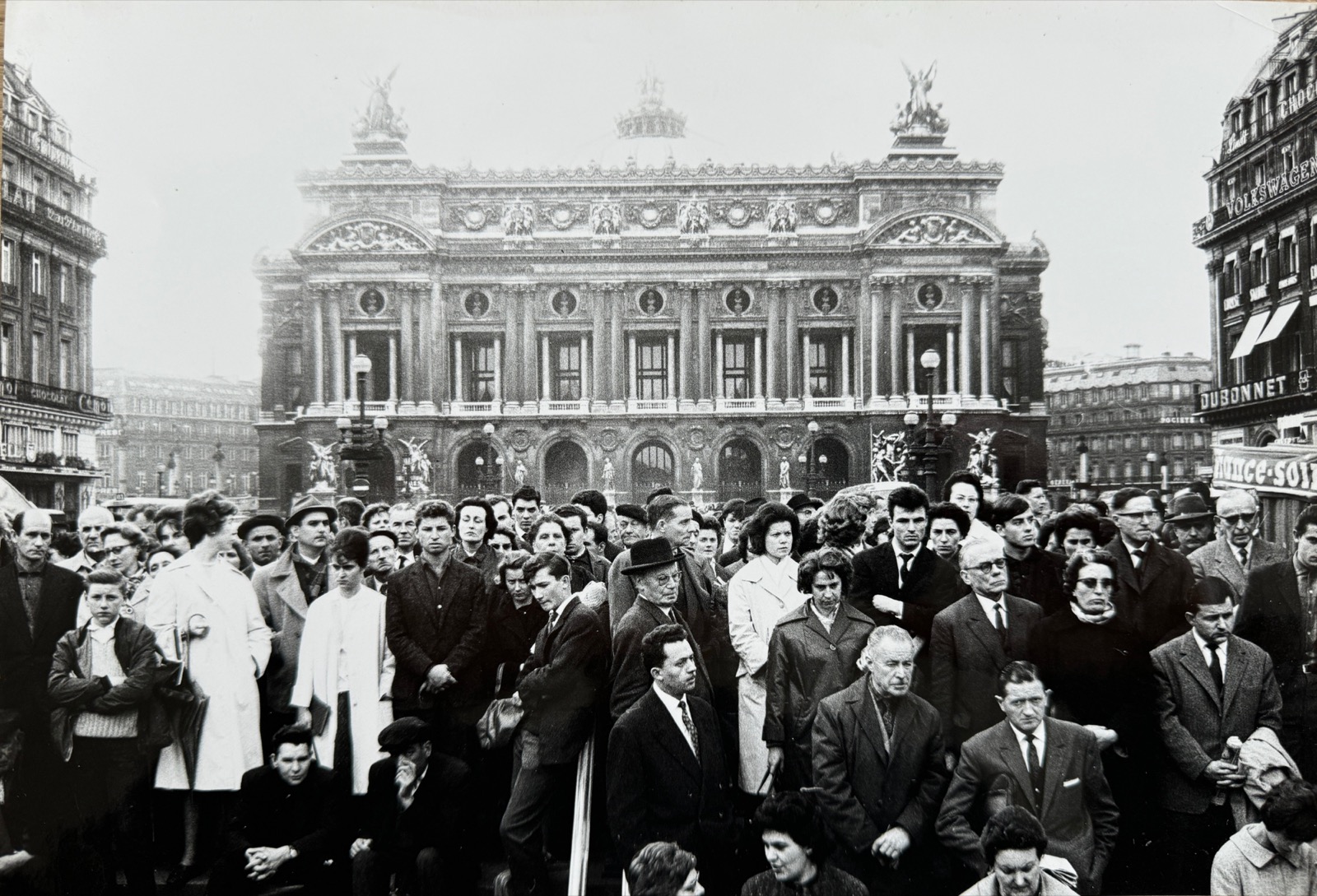
Nobody in this picture is looking at the Opéra, which, if you have ever tried to photograph the Opéra, you will recognise as a kind of achievement. It sits in the top half of the frame with its two gilded winged figures and its dome, doing its best to be the subject, and a hundred Parisians in raincoats have turned their backs on it. They look left, right, down at their shoes; a man in a bowler hat in the middle looks at nothing in particular. A woman in a pale belted coat holds her bag against her hip. A boy in a striped jumper folds his arms the way his father, presumably, folds his. Two men have given up and sat down on the kerb.
The title says the Métro is on strike, 1962, and so this is what a city looks like when it has been asked to wait. I have stood in crowds like this and what I remember is not the grievance but the tedium: the way you begin to read the shop signs, Dubonnet, France-Soir, the word Chocolat cut off at the left edge, for something to do. Masats, who had come from Spain to work for the illustrated press, understood that the strike was not the picture. The picture was a hundred people not knowing where to put their faces.
What holds it together is the light, the flat, patient, slightly damp light of a Paris afternoon, which treats the Opéra's columns and the man's bowler hat with exactly the same indifference. Everybody is dressed for an occasion. The occasion has failed to turn up. And yet one woman at the bottom of the frame has her mouth open, mid-sentence, saying something to someone we cannot see: the only person in the picture who has found a way to make the time pass.
