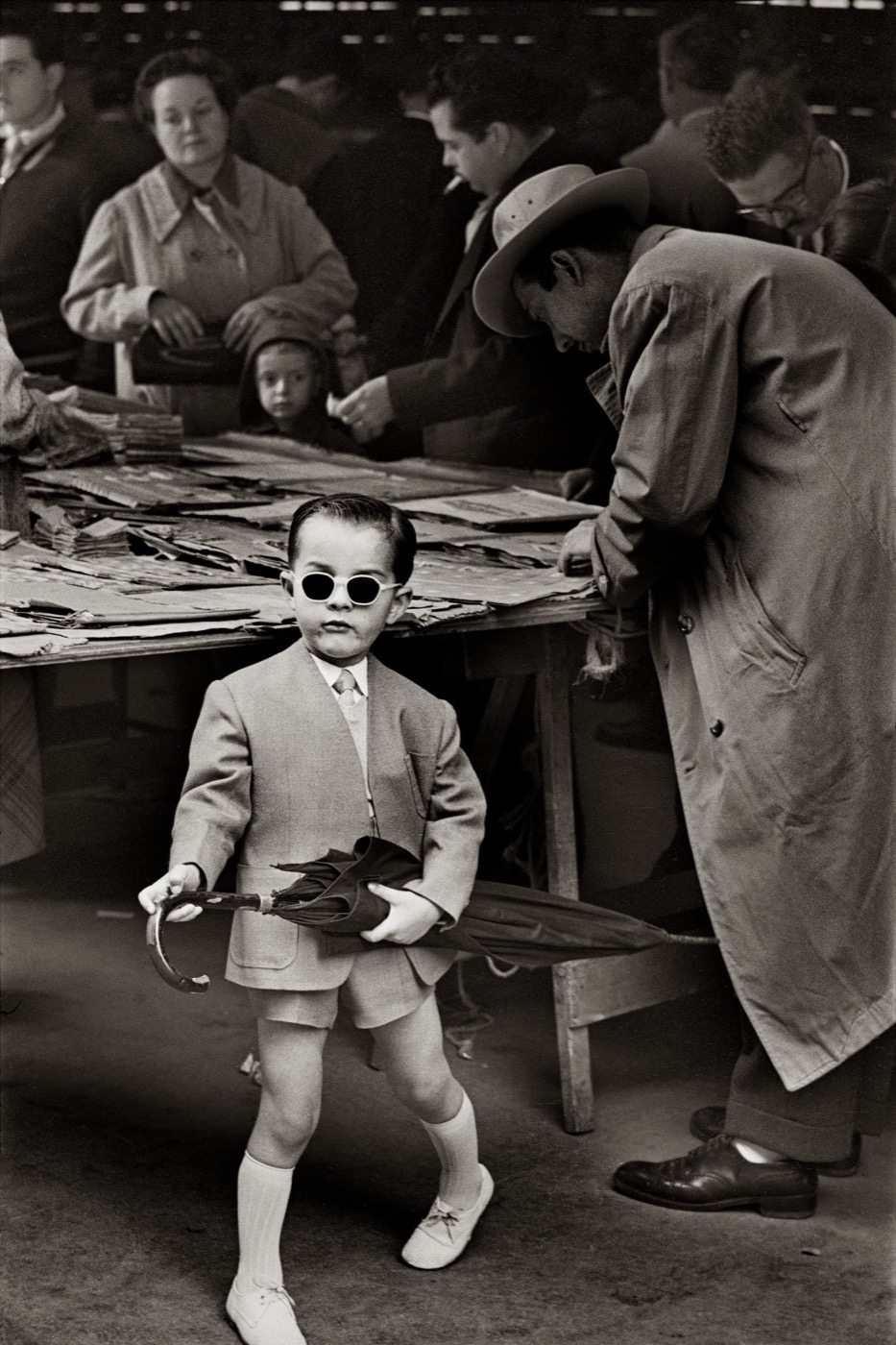
Ramón Masats Spanish, 17/03/1931–4/03/2024
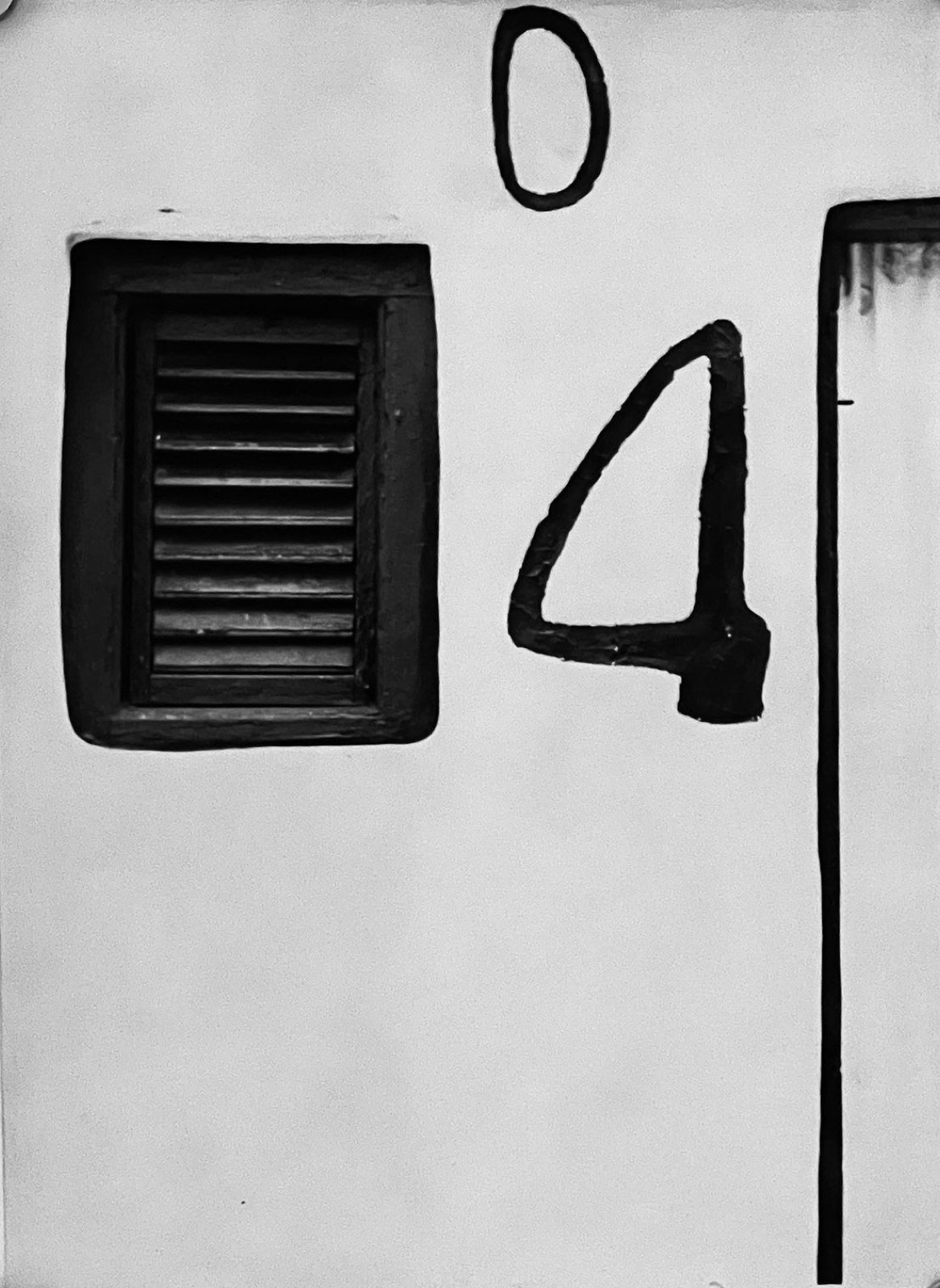
A whitewashed wall. A small louvered shutter, dark, set in a dark frame. To its right, painted in thick black, a zero and beneath it a four, the four drawn with the flourish of someone using a brush that was too wide for the job. A vertical black line runs down the right edge, the corner of a doorway or a drainpipe, we cannot tell. That is the whole picture: four marks on a white ground, in the port of Barcelona, 1955.
I distrust images that pretend to be innocent, and this one is not innocent at all. Masats has framed the wall so that the numbers stop being an address, a berth, a warehouse count, and become pure sign. A zero and a four: is it forty, or four and nothing, or a lock and a key? The shutter, with its horizontal slats, reads as the eye that refuses to look back. In the same years that Spain was learning to sell itself abroad through photographs of sun and folklore, Masats was photographing a wall and asking what a photograph knows.
The answer is that it knows almost nothing, and that this is its power. Every element here was painted or built by someone for a practical reason, and every reason has been stripped away by the frame. What remains is a composition that Miró would have recognised, made not in a studio but by a man with a camera who understood that the document and the abstraction are the same picture, depending only on how much of the world you let in.