Ramón Masats Spanish, 17/03/1931–4/03/2024
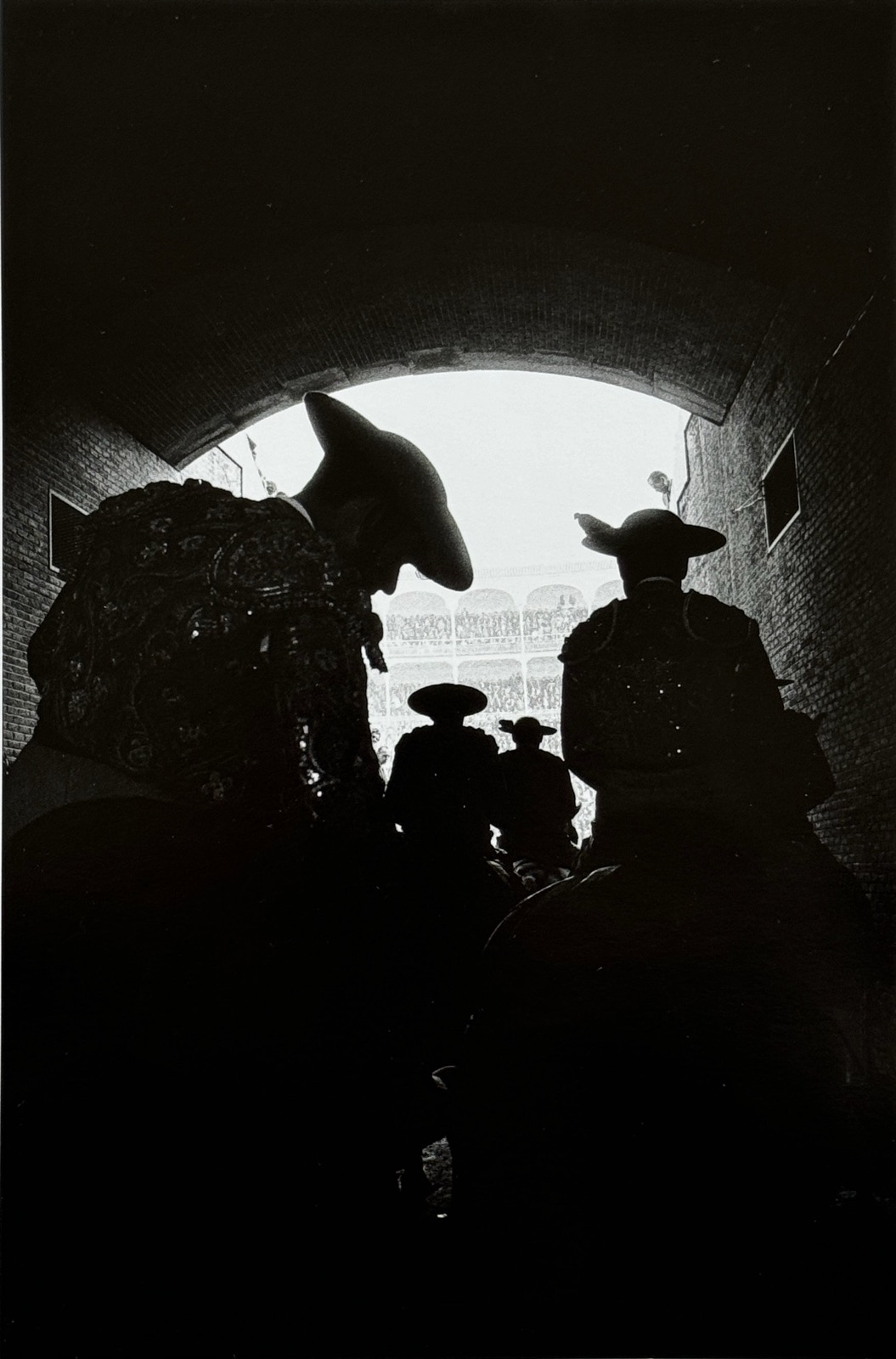
In Picadores en la Plaza de toros de las Ventas, Madrid, made in 1962, Ramón Masats turns the bullring into more than a setting for spectacle: a threshold between ritual and mystery, between the blinding public arena and the dense, almost secret world that precedes it. Seen from the shadow of a tunnel, the riders emerge as dark presences, their wide-brimmed hats and embroidered suits reduced to silhouettes at once monumental and fragile. The white burst of light beyond the arch does not reveal the scene; it withholds it, forcing the eye to linger on contour, posture and suspense.
In that decision lies Masats's greatness as one of the central figures of Spanish documentary photography: he does not merely describe a custom, he distils its atmosphere and emotional temperature. The picture belongs to his observation of Spanish society through its rituals, labour and inherited forms of life, seen with clarity and without sentimentality. Yet the picadores are not heroic protagonists stepping into glory; they are figures suspended in an instant of concentration, almost swallowed by the architecture that frames them. The vault presses down like a dark sky while the opening ahead burns so intensely that the passage becomes nearly metaphysical.
Masats understood that photography becomes more powerful when it suggests more than it explains. The corrida is not shown in action; what we receive is the solemn breath before exposure, the compact drama of bodies, stone, costume and light. That restraint gives the picture its enduring force: it speaks of Spain, of performance, of discipline and of collective memory through a language of shadow and form so precise that the scene remains contemporary, unsettling and deeply alive.