Ramón Masats Spanish, 17/03/1931–4/03/2024
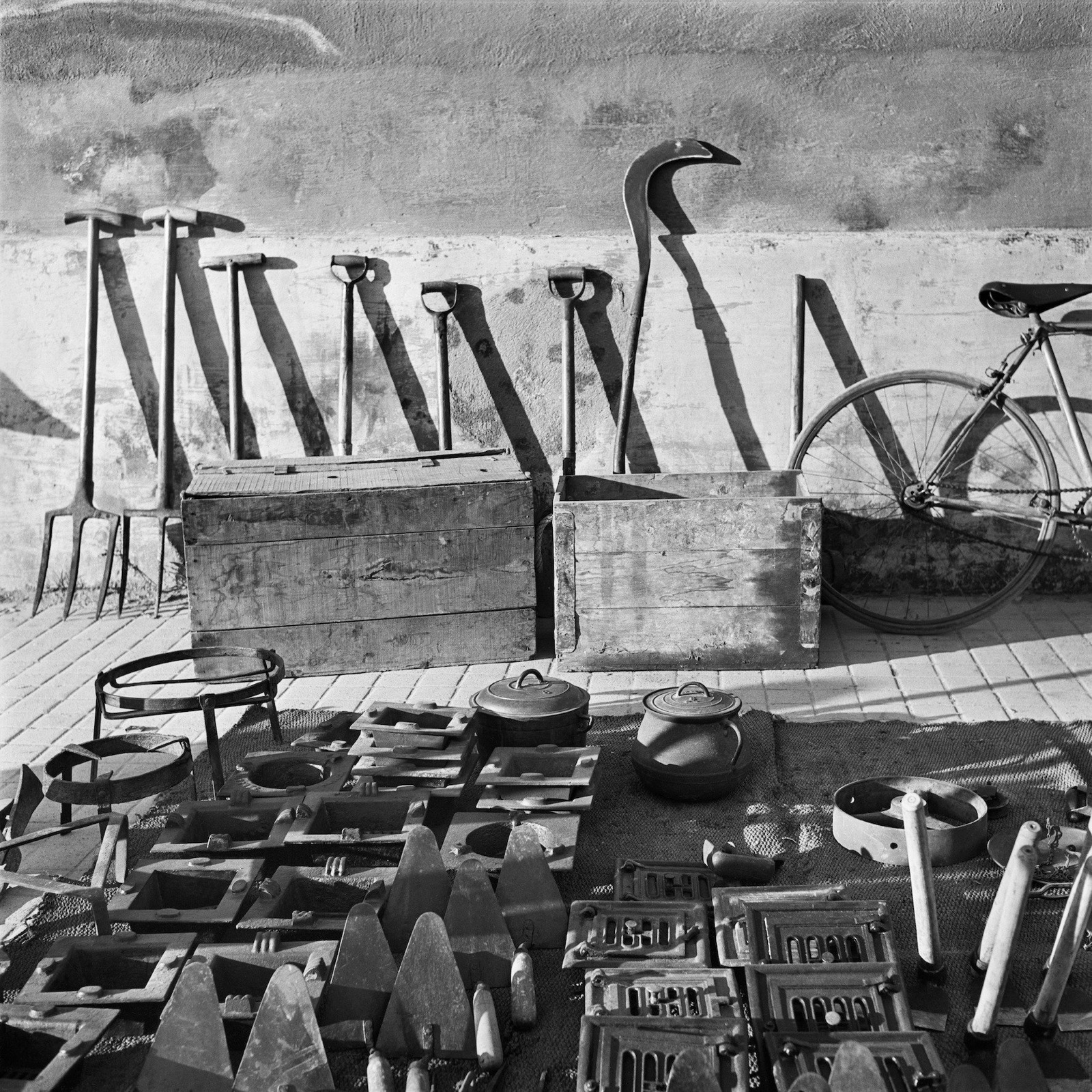
A shop laid out on the pavement, with nobody minding it. Against a whitewashed wall scuffed grey at head height lean a row of forks and D-handled spades and one long-necked hoe; the sun is low enough that each of them throws a second, darker tool across the render. Two wooden crates sit at the foot of the wall, one shut, one open, and a bicycle waits at the right edge like a customer. On the brick paving in front, a rug has been spread and covered in ironmongery: stove grates and vent covers with slotted mouths, two lidded cooking pots, a three-legged trivet, and rank upon rank of trowels laid point-forward, their wooden handles catching the light in a row.
What interests me is that Masats, twenty-two and in his own textile town, has photographed not people but the things people had left out to be bought, and photographed them as if they already belonged to a collection. The square frame, the tilted view down onto the rug, the tonal patience given to cast iron and worn wood: this is the language of the inventory, applied to a street stall in 1953. The objects are not in use. They are between uses, waiting, and in that interval they become pure form and pure shadow.
Photographs are objects too, made to be handled, sorted and kept, and this one behaves like the things it shows. It is as much about the culture of the vernacular as about the town: the hand tools of a working country, arranged with a care no one had asked for, and recorded by a young man who understood that laying something out is already a way of describing it. The tools wait for hands; the picture waits for eyes.
