Ramón Masats Spanish, 17/03/1931–4/03/2024
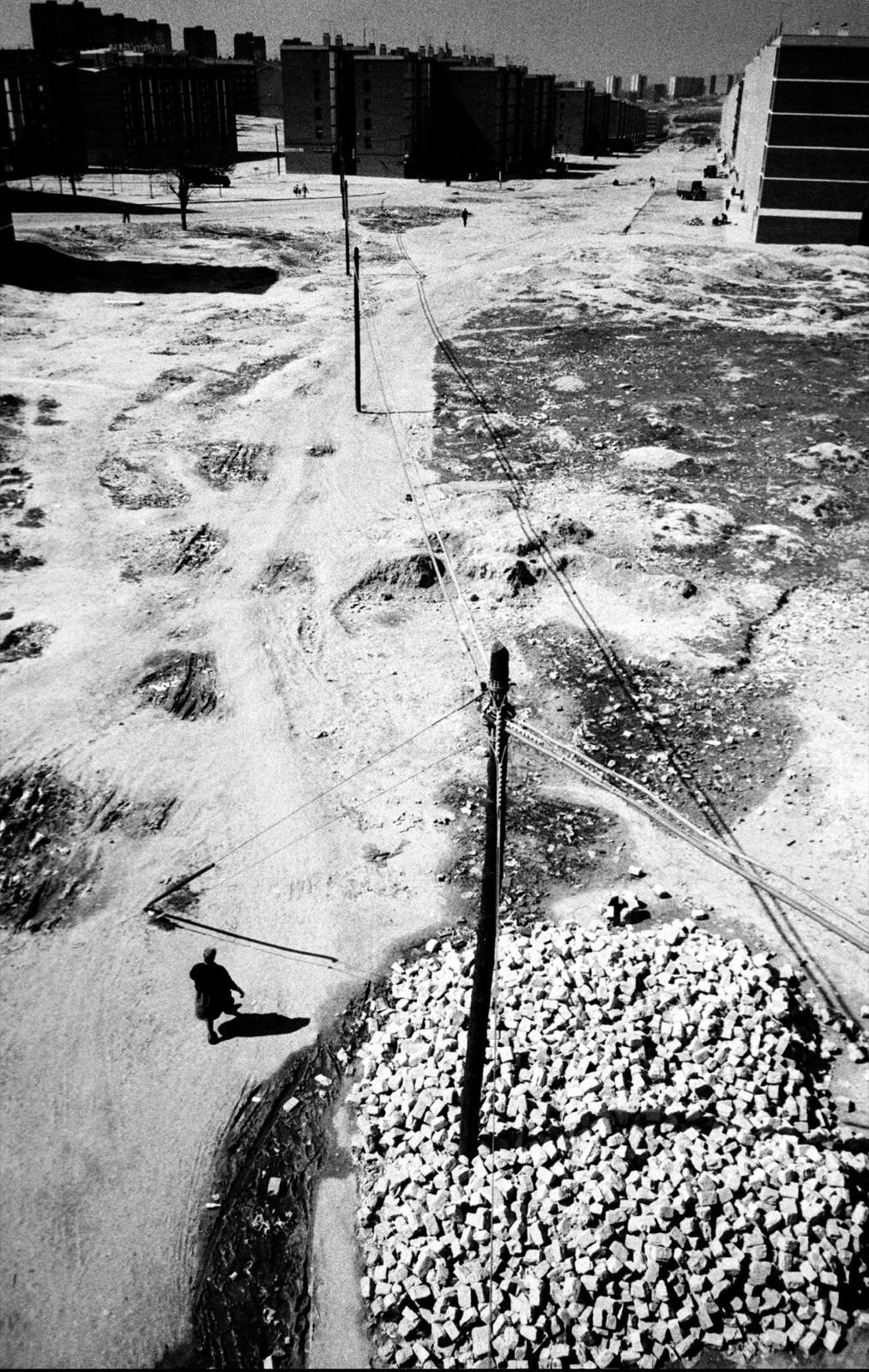
From a height, Masats looks down on a field of raw earth at the edge of Madrid. New blocks of flats stand in ranks along both sides, one of them still unfinished. In the foreground a pole is driven into the ground, its guy wires cutting the picture into triangles, and beside it a heap of pale building blocks waits to be used. A woman in a headscarf crosses the open ground alone, dragging a long shadow behind her.
The year is 1957, and this is what the future looked like before anyone had moved into it. The ground has been scraped and mounded, the paths are improvised, the flats are already lived in. The photograph catches the gap between those two states: a city arriving faster than the land can be levelled for it.
Photographs turn the present into something already lost, and this one has done its work. The pole, the wires, the heap of blocks and the small woman with her shadow have become a relic of the housing boom that swallowed them. The picture no longer shows us a building site. It shows us that there was one, and that somebody had to walk across it.