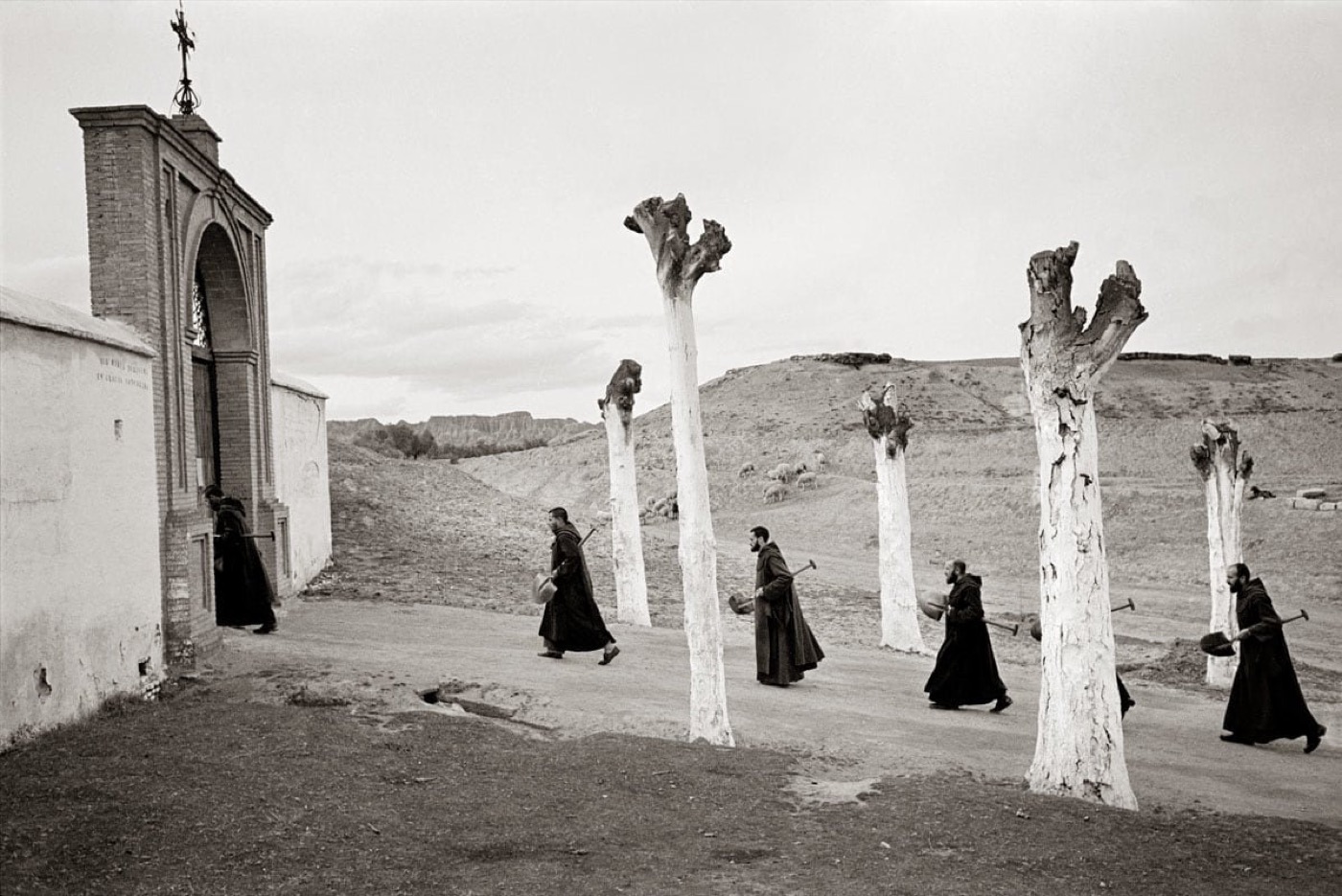
Ramón Masats Spanish, 17/03/1931–4/03/2024
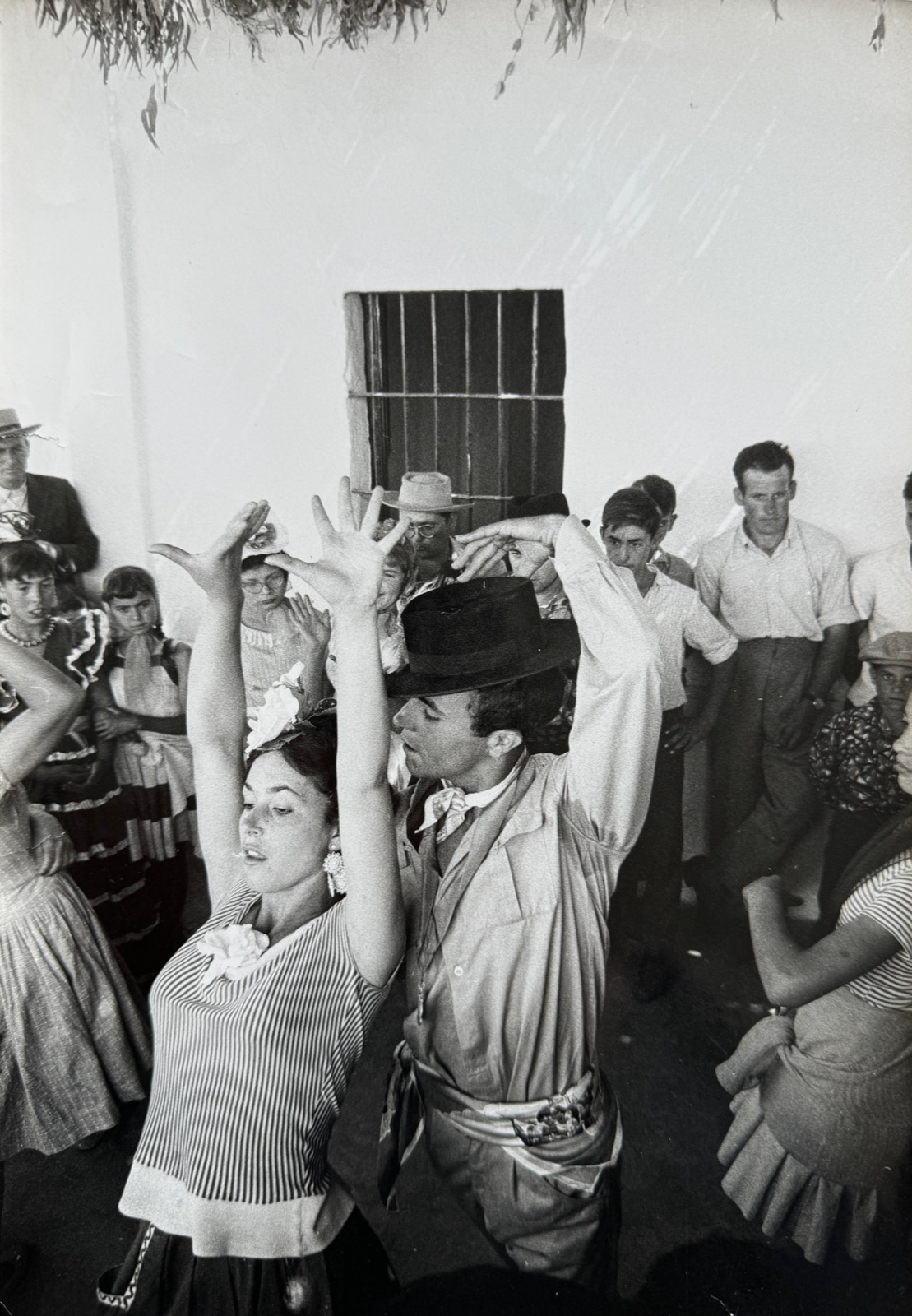
Under a roof of cut branches, against a whitewashed wall with a barred window, a young woman dances with both arms thrown up. She wears a striped sleeveless top, a flower and heavy earrings, and her mouth is slightly open, as if the song were hers. Behind her a man in a flat-brimmed hat and a printed sash raises his hands to hers, singing, eyes half closed. Around them the pilgrims of El Rocío stand and watch: girls in flounced dresses, men in white shirts with their hands on their hips, a boy in a cap. Sunlight rakes the wall in long streaks.
What Masats catches is not the dance but the looking. The couple are the only people moving; everyone else has gone still, and their stillness is a kind of consent. The woman does not look at her partner or at the camera. Her eyes are down, turned inward, and that privacy in the middle of a crowd is the picture's secret. The man performs; she inhabits. The difference between those two verbs is what the sevillana is for.
I keep returning to the hands. Hers are open, fingers spread, offered to the air. His are cupped, reaching. In 1959, in a country that policed its bodies, this was where desire was allowed to be public: in a form so old and so codified that nobody had to name what it was. Masats, twenty-eight, knew that the ritual was the alibi and the bodies were the truth.