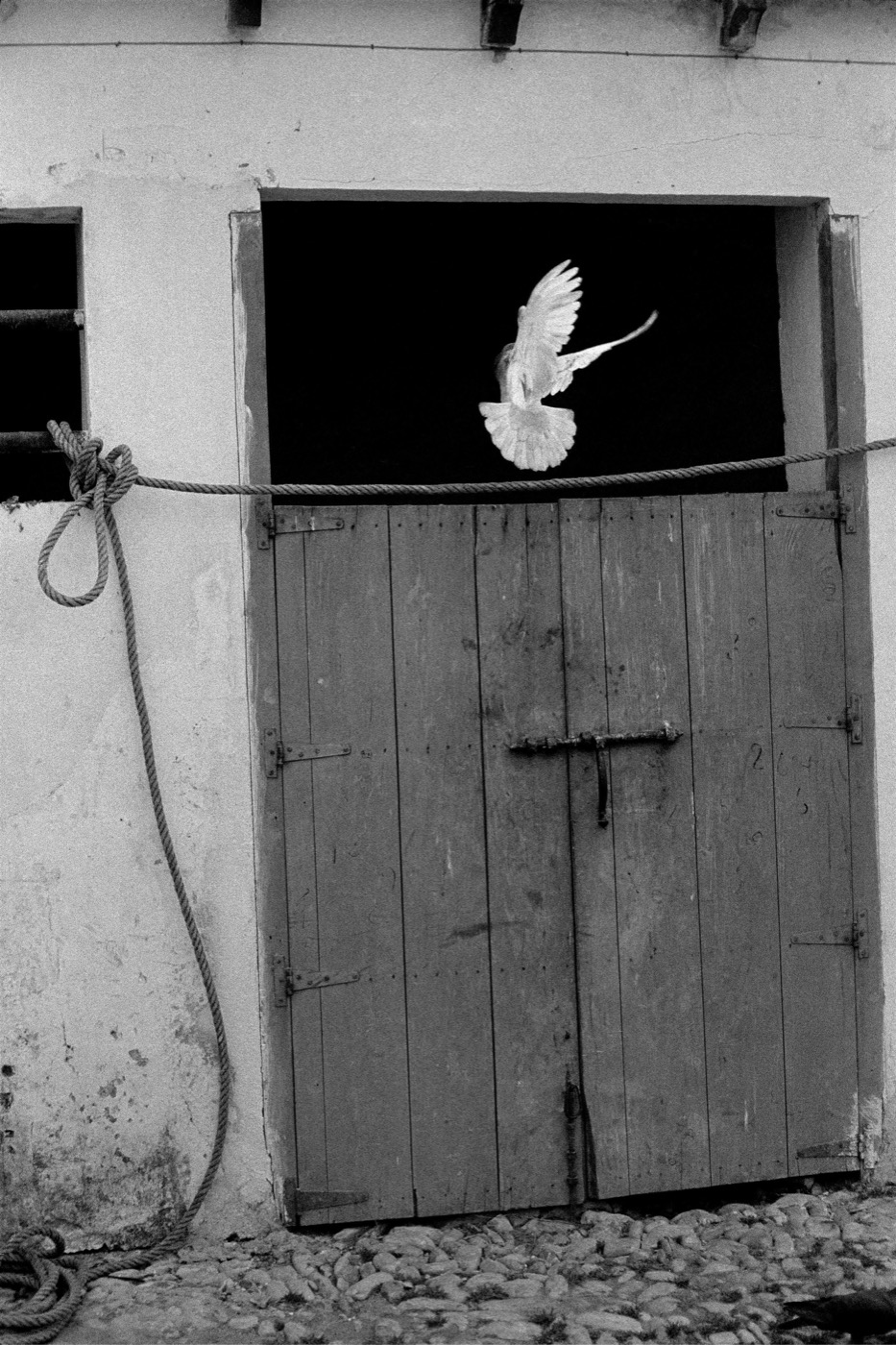
Ramón Masats Spanish, 17/03/1931–4/03/2024
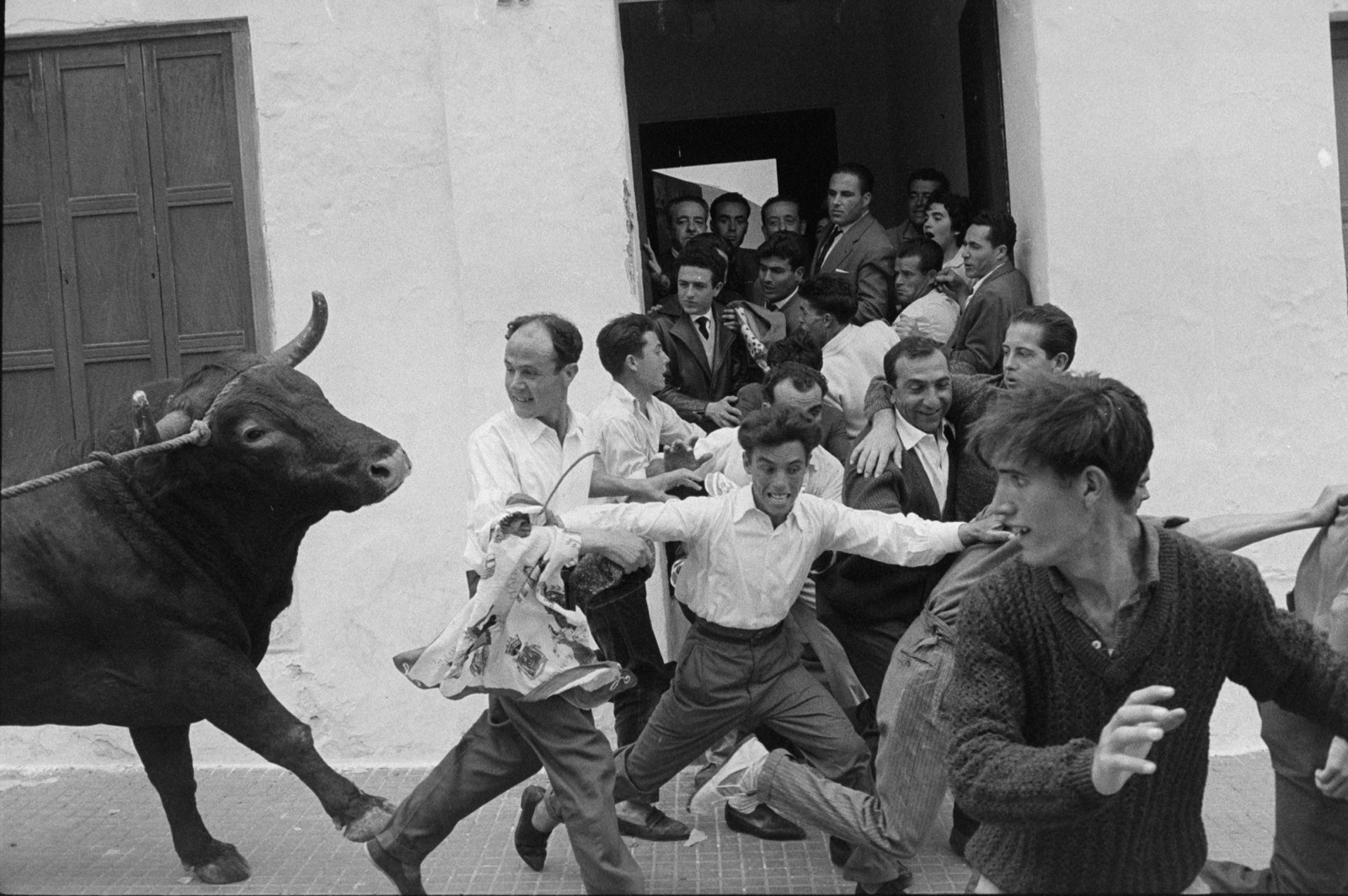
A young bull with a rope around its horns plunges along a whitewashed street, and a crowd of men spills out of a doorway behind it, laughing, grabbing each other's shirts, one of them holding out a printed cloth as a makeshift cape. The man at the right edge, in a knitted sweater, has his hand at his mouth in something between a shout and a grin. Arcos de la Frontera, 1959, a town festival in Cádiz, and the whole picture pitches downhill from left to right as if the street itself were running.
The photograph tells us a great deal and refuses to tell us the one thing we want to know, which is what happens next. It does not say whether the bull turns. It does not say whether the man with the cloth is brave or drunk or both, or whether the fellow at the back in the suit and tie is the mayor. Masats has chosen the fraction of a second in which the danger and the comedy are perfectly balanced, and then declined to resolve it. That refusal is the whole art of the thing.
What the picture does establish is the geometry of a Spanish street festival: a doorway that acts as a funnel, a wall that acts as a backstop, and a crowd that acts as a single body with too many legs. The bull is dark and the men are pale and the wall is white, and the eye sorts these tones before it sorts the story. Masats understood that a photograph is a description first and an anecdote only later, and that the description, if it is precise enough, will outlast any account of who was gored.