
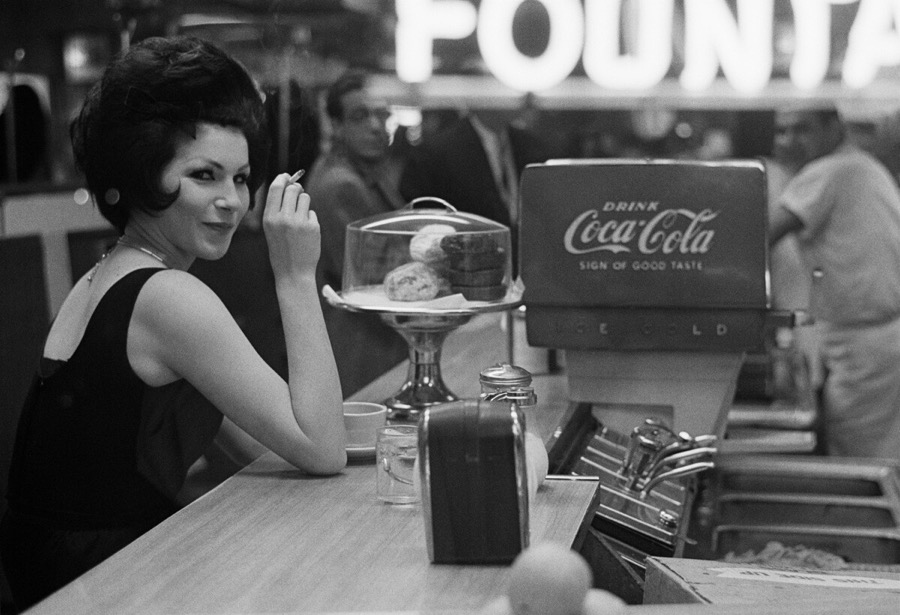
 New York, 1963.She has half-turned from the counter to meet the lens, cigarette poised near her cheek, her smile pitched between invitation and challenge.
 New York City, 1963.A pane of glass, a chrome mullion, another pane behind it: the picture is built from thresholds, and behind the last one a child is crying.
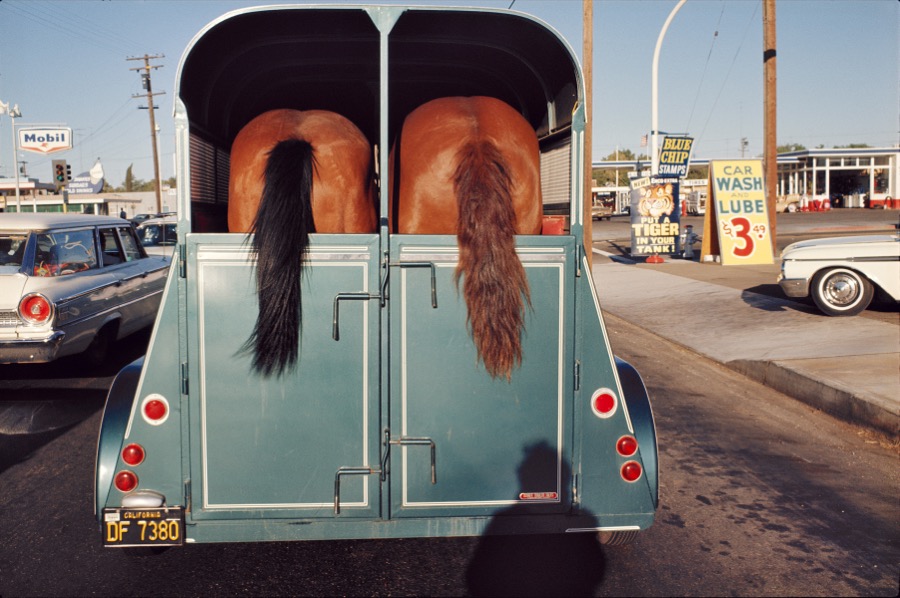 California, 1964.Two horses have been loaded into a trailer, and all we see of them is what they present to the traffic behind: two glossy chestnut rumps above the tailgate and two tails hanging down the painted…
 Chicago, Illinois, 1964.A corner storefront in Chicago has been turned into a front porch.
 Malaga, Spain, 1965.A vertical post stands near the center of the frame, and the picture's whole argument hangs on it.
 New Jersey Interior, 1965.The only weather in this room is on the screen.
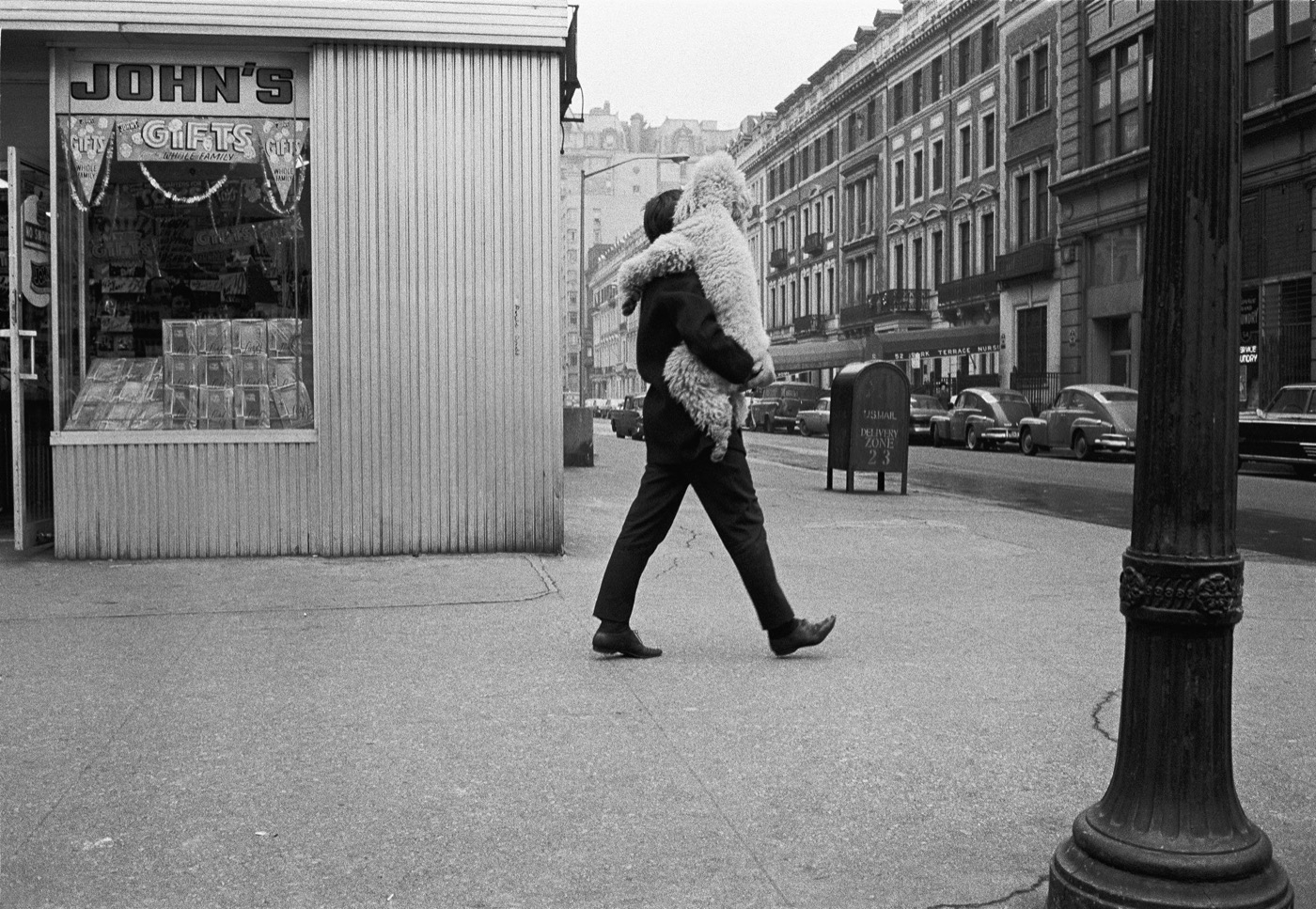 New York, 1965.Joel Meyerowitz’s 1965 photograph from New York distills the vibrancy and contradictions of urban life into one unforgettable street scene.
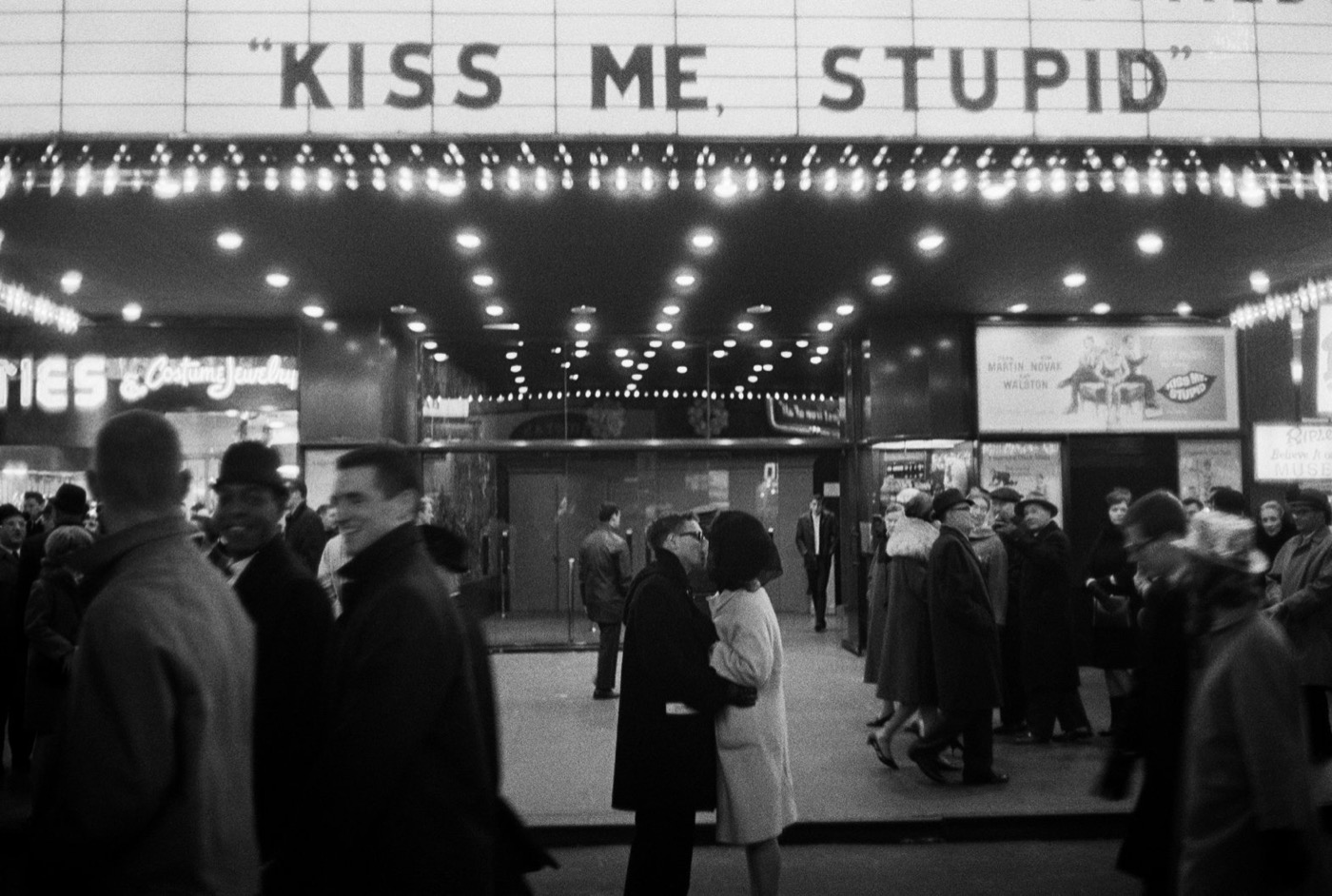 New York City, 1965.You wait your whole life for a coincidence this good and then distrust it when it comes.
 Central Park, New York City, 1966.Two women with bright red hair sit side by side on a straw mat in Central Park, both in mustard-yellow trousers.
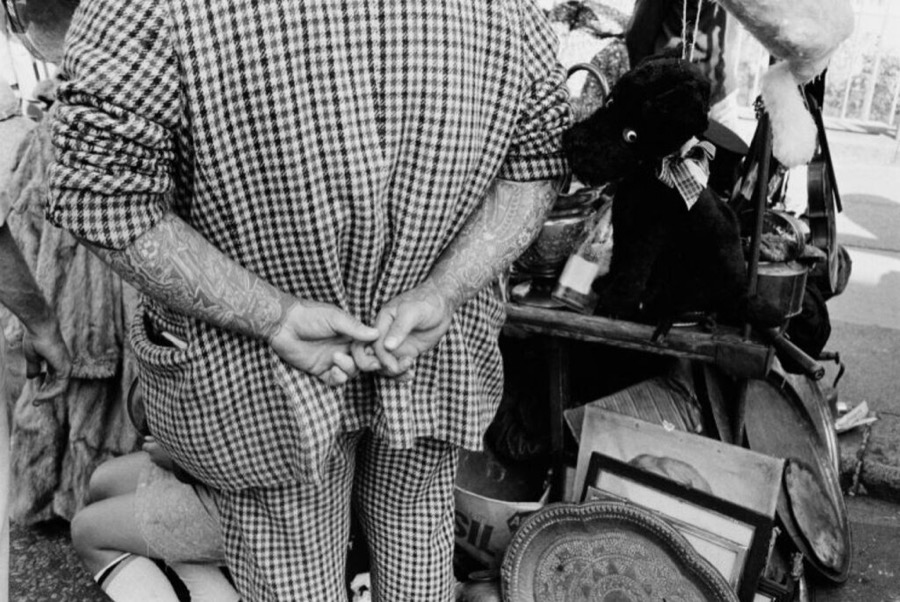 London, 1966.Long before photographers built their tableaux in the studio, the street handed them ready-made ones, and this houndstooth-suited back — turned squarely to us at a London junk stall — belongs to that…
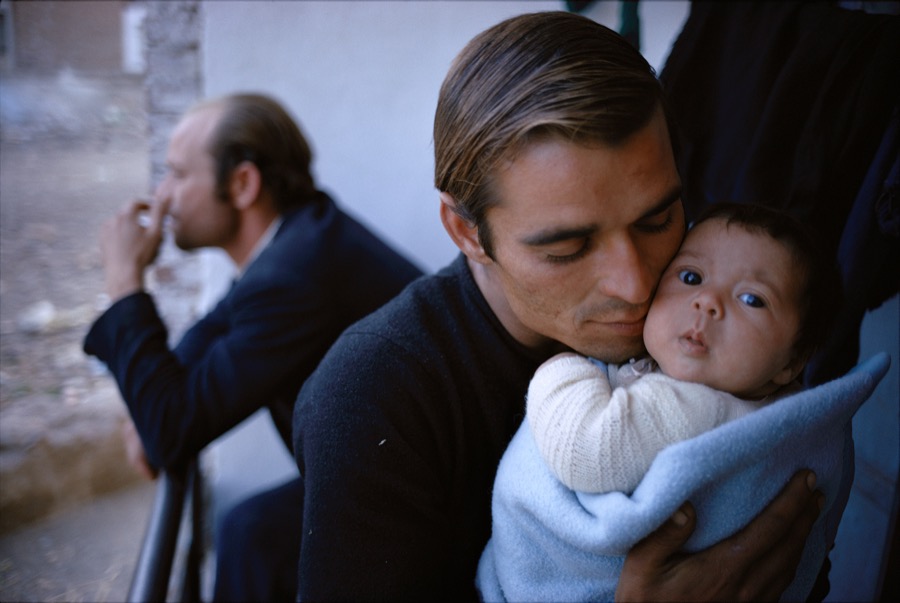 Spain, 1966.A young man with slicked-back hair and a dark sweater holds a baby against his cheek, his eyes lowered almost shut, his mouth pressed to the child's face.
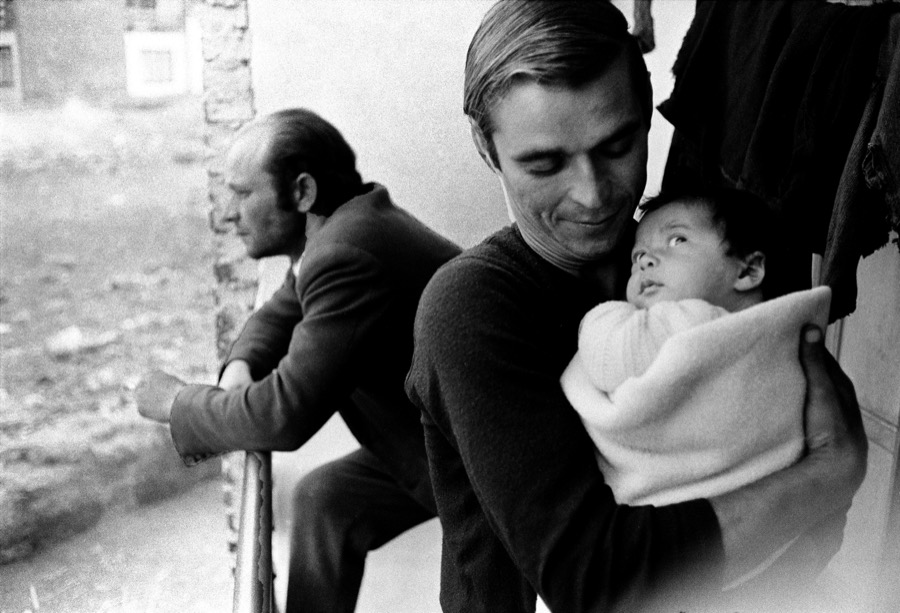 Spain, 1966.On a narrow balcony two men stand back to back.
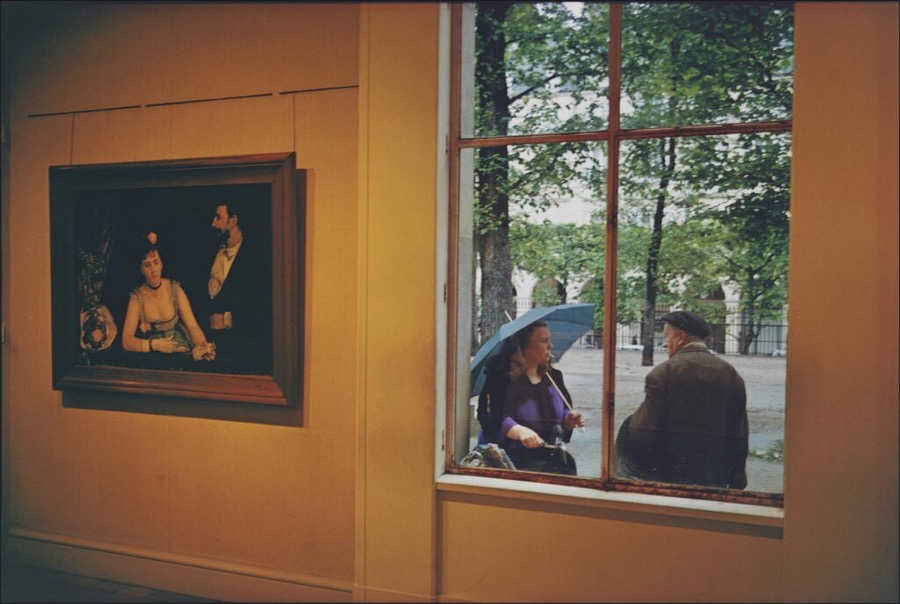 Afternoon at Jeu de Paume, 1967.Two pictures hang side by side on the same wall.
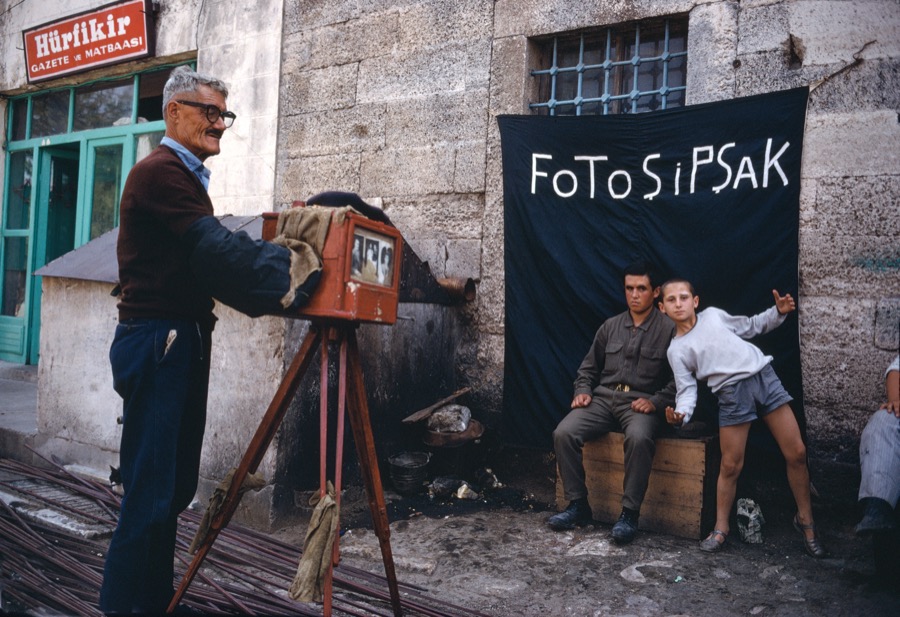 Bulgaria, 1967.A street photographer is at work in front of a wall of big stone blocks.
 Bulgaria, 1967.The painted cloth hangs beneath a barred window on a wall of heavy stone blocks, its white letters reading FOTO ŞİPŞAK, and this time the sitters face the lens squarely.
 Crossing The Atlantic Ocean, 1967.A man in a dark jacket and trousers, barefoot, tumbles head over heels into the swimming pool of a ship, caught upside down in a tight tuck a hand's breadth above the turquoise water, the soles of…
 Crossing The Atlantic Ocean, 1967.A man in a dark shirt and trousers, barefoot, falls sideways into a ship's swimming pool, one leg thrown straight up, the other stretched back towards the edge he has just left, his arms spread and a…
 Fallen Man, Paris, 1967.A man lies on the Paris pavement behind a chain railing while the crowd at the bus stop looks elsewhere, and a single young man in a grey suit turns back with an expression poised between concern and…
 Florida, 1967.A stocky man in blue trunks stands alone on a shuffleboard court, sandals planted, neck craned back to watch a Goodyear blimp cross a cloudless sky.
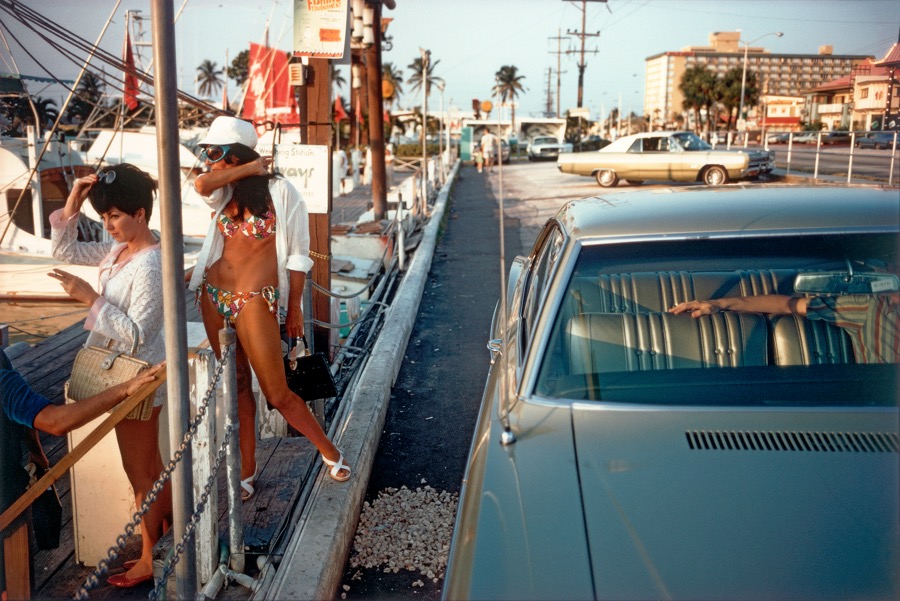 Florida, 1967.At the edge of a wooden dock in Florida, beside a row of sport-fishing boats, two women have stopped in the late sun.
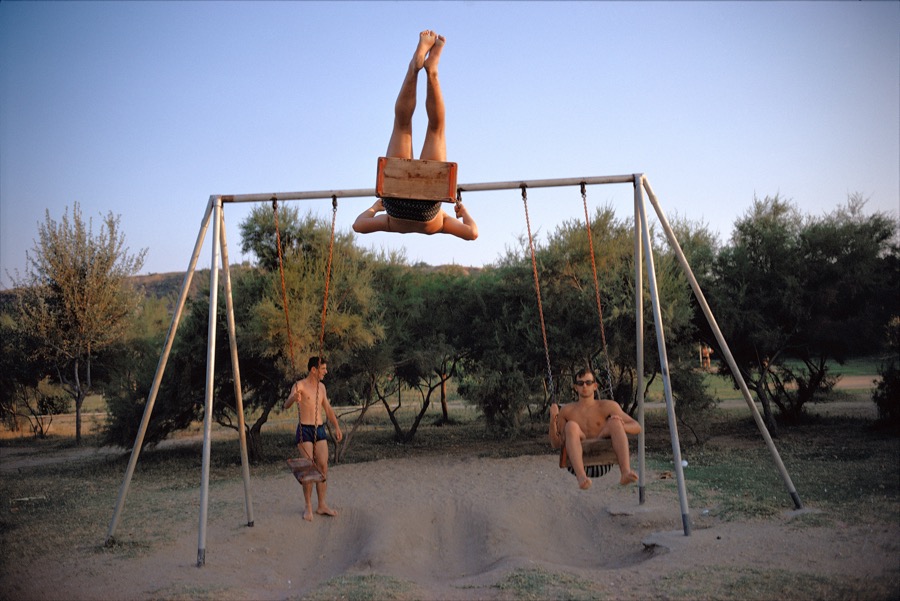 Greece, 1967.Above a steel swing set in a dry park, a swinger has gone so high that the seat appears above the crossbar.
 Joel Meyerowitz, Greece, Corfu, 1967.A hand curls around the steering wheel in the foreground, and everything we see is granted by that grip.
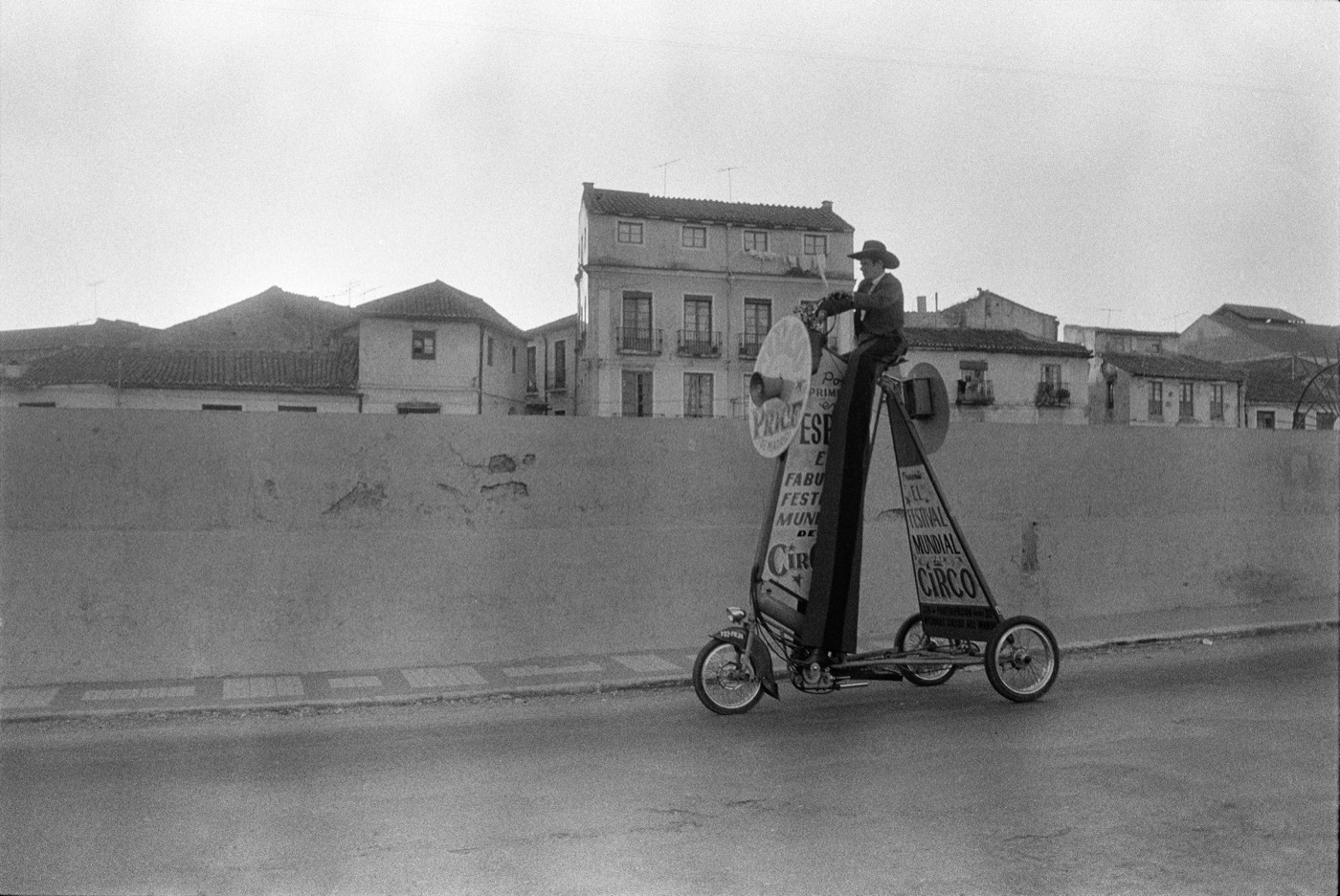 Malaga, España, 1967.The contraption is the whole event: a tall, spindly three-wheeler stacked into a kind of rolling tower, its placards crying El Festival Mundial del Circo while a man in a flat-brimmed hat sits…
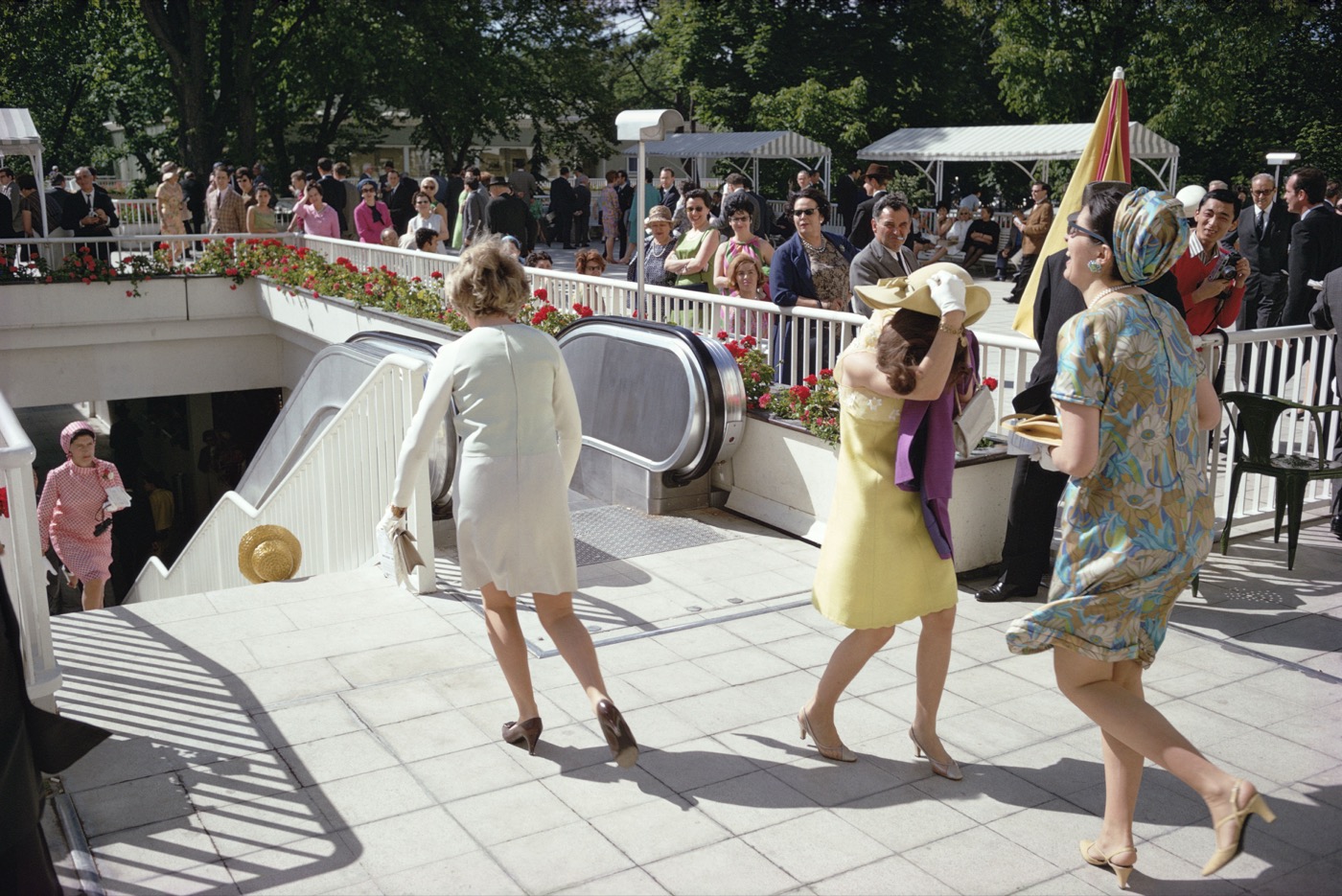 Paris, 1967.Paris 1967: A Study in Anticipation In Joel Meyerowitz's luminous capture of 1960s Paris, three figures frozen mid-moment embody an era suspended between exuberance and restraint.
 Paris, France, 1967.In a Paris garden, under horse chestnuts, a marble group stands on a tall pedestal: a muscular man flings up one arm and holds a serpent away with the other while two children cling to his legs.
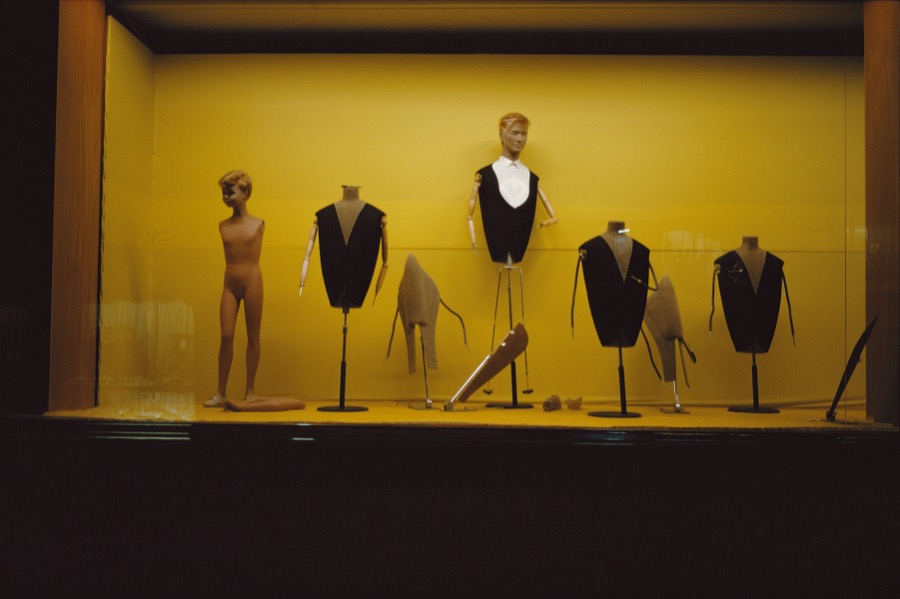 Paris, France, 1967.A shop window in Paris fills most of the frame, a lit box of saturated yellow between wooden pilasters.
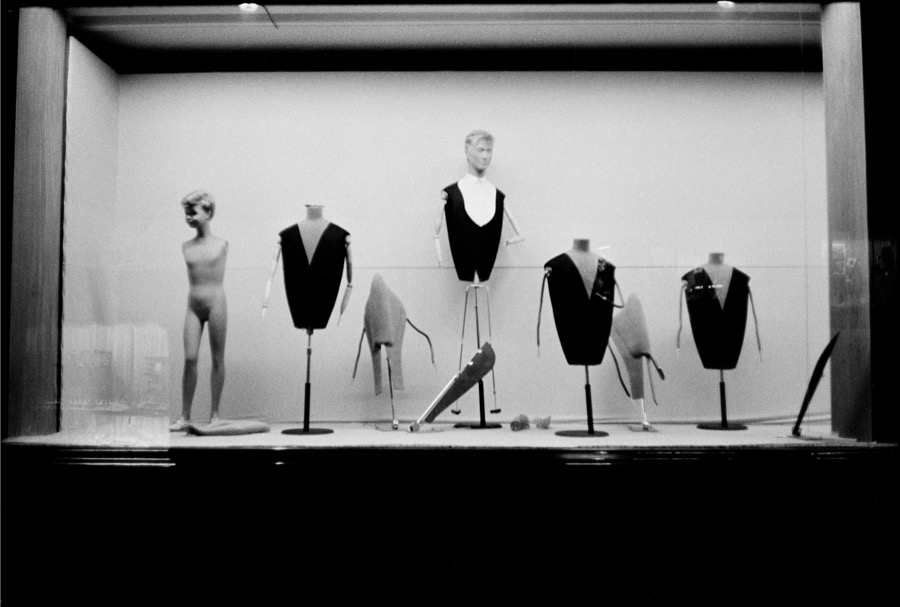 Paris, France, 1967.A shop window in Paris, seen straight on in black and white, framed by two pilasters and a dark lintel, with two small lamps set into its ceiling.
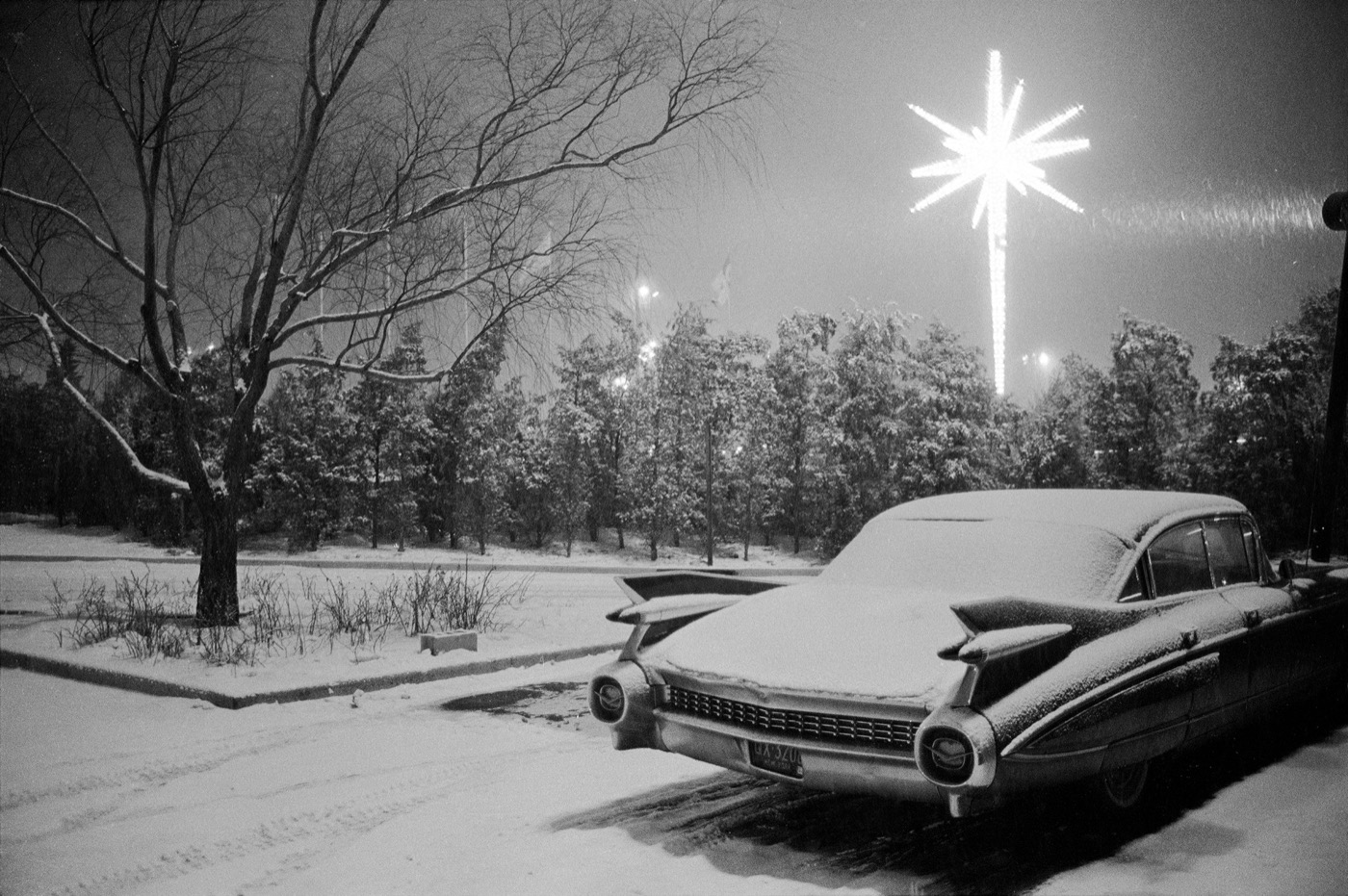 Christmas at Kennedy Airport, 1968.Christmas at Kennedy Airport belongs to the moment, around 1968, when Joel Meyerowitz was still working primarily in black and white and beginning to argue, against the grain of his peers, that the…
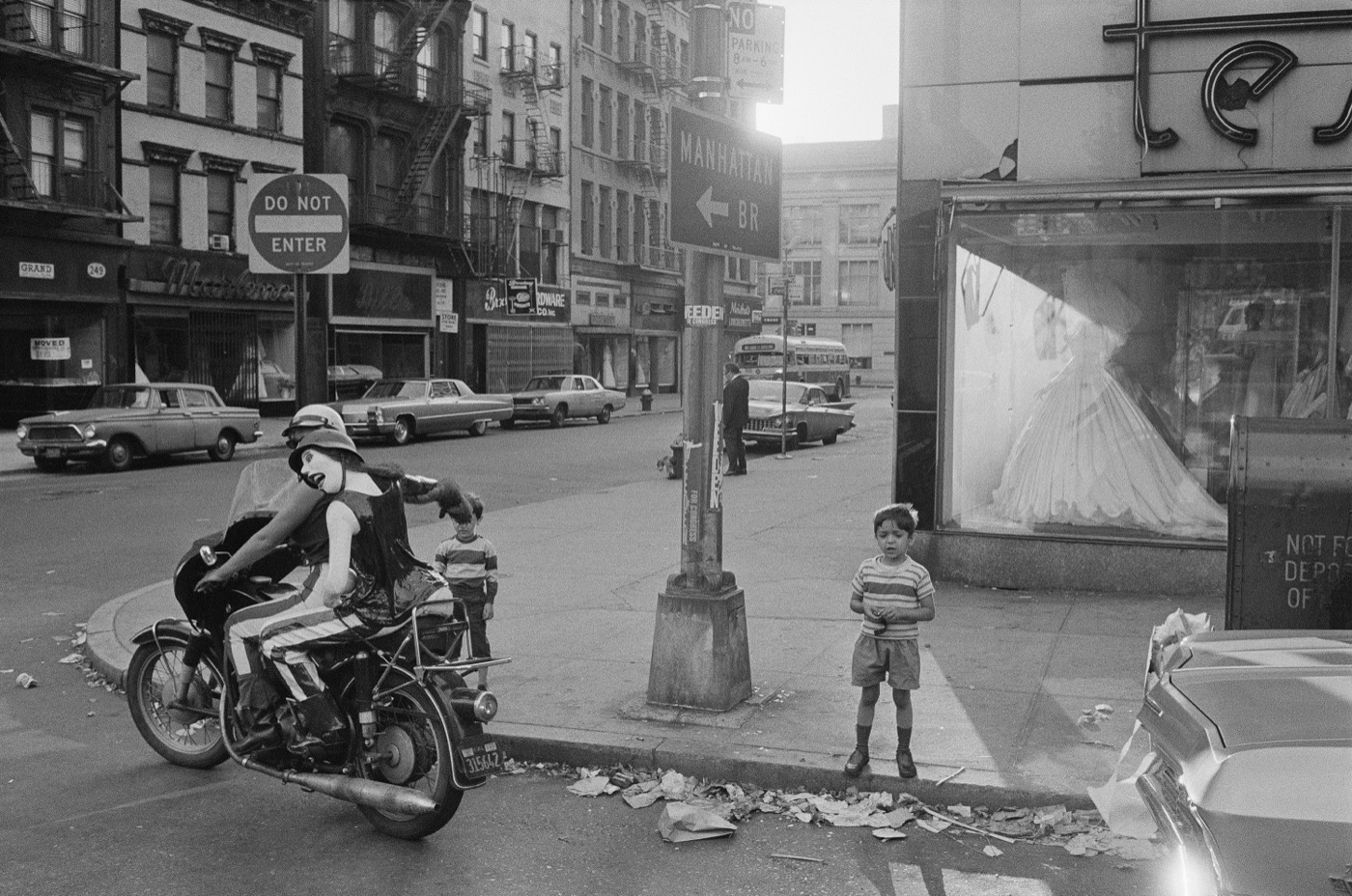 New York City, 1968.The photograph New York 1968 fixes a fleeting intersection of fantasy and grit on a Lower East Side corner.
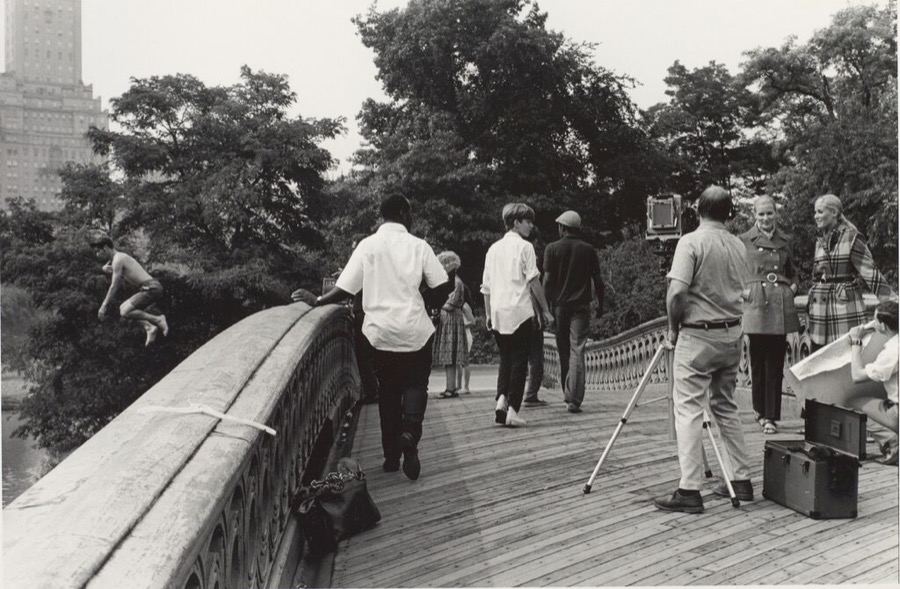 Central Park, NYC, 1969.Worn planks run the length of the bridge over the Central Park lake, and a cast-iron balustrade curves off toward the bank where the summer trees close the view.
 California, 1971.Everything in this picture happens on a single plane of glass.
 San Cristóbal de las Casas, México, 1971.The boy has laid himself out full-length on the grass and lifted a thin wooden cross above his face, holding it the way a child holds a found thing up to the light to study it.
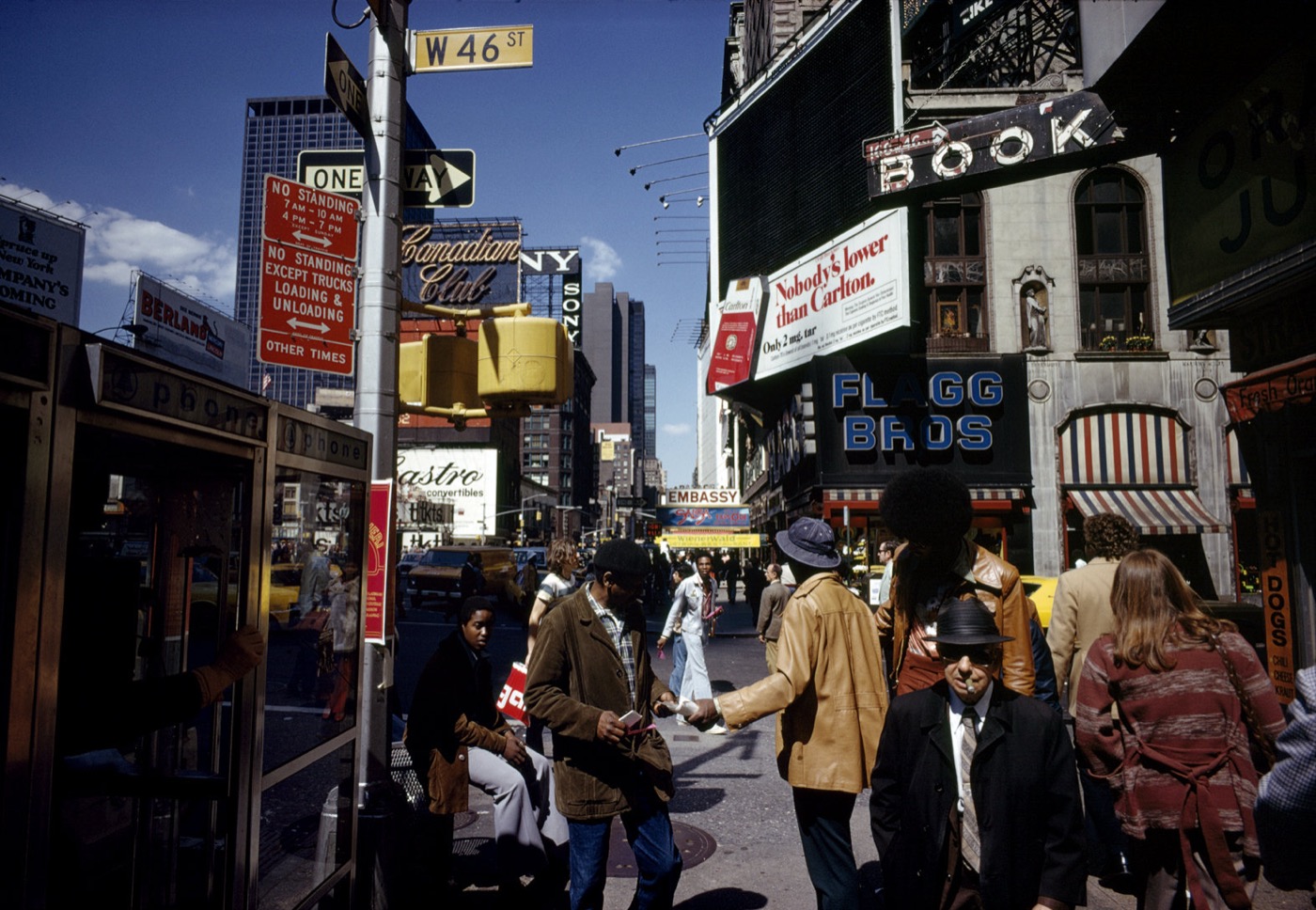 46th Street, New York City, 1974.A wedge of cloudless Kodachrome blue opens above West 46th Street, so saturated it reads almost as enamel, and beneath it the cross-street sign and a thicket of regulatory placards — ONE WAY, NO…
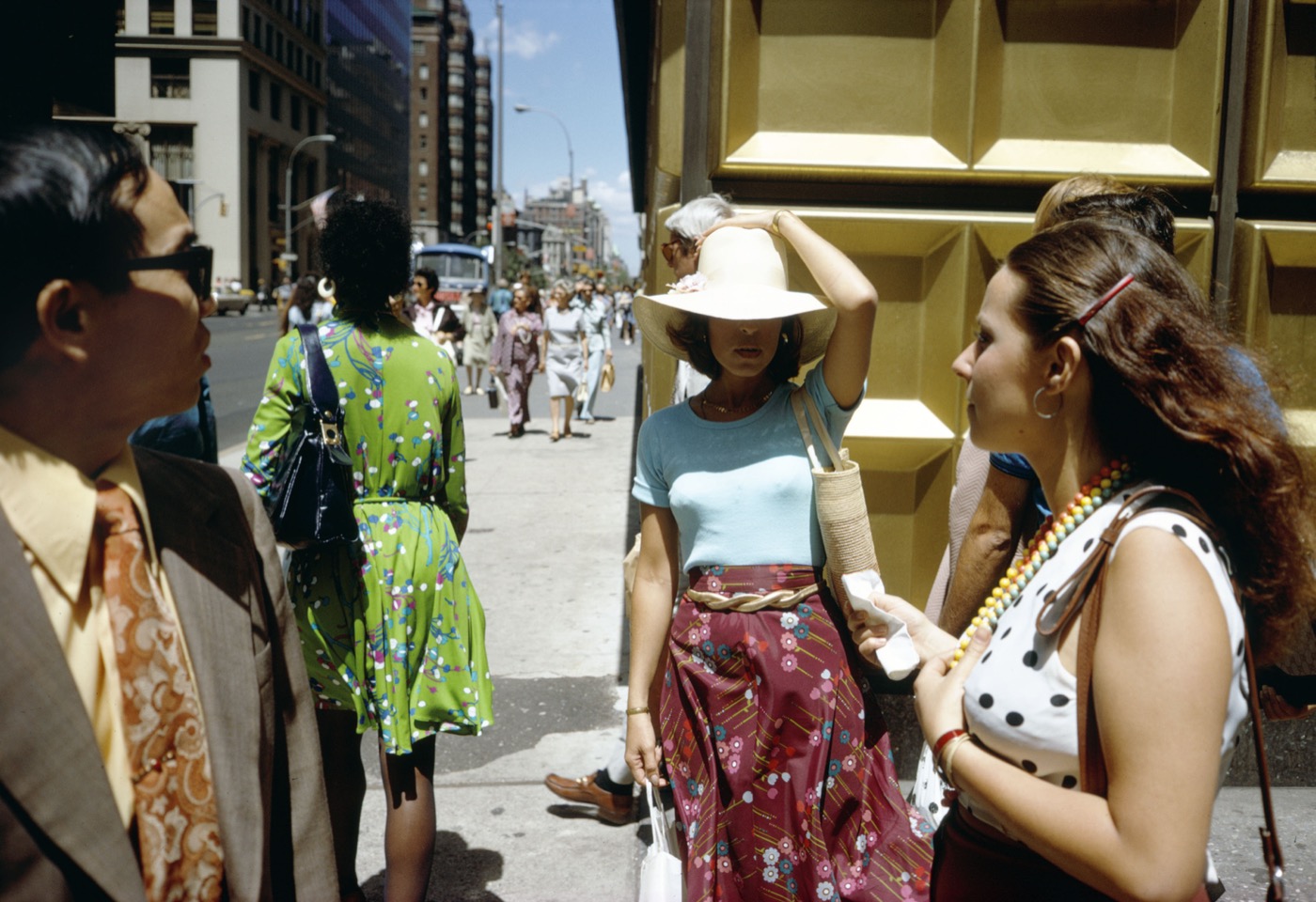 Madison Avenue, New York City, 1974.She's the only one not giving us her face, and of course she's the one I keep coming back to.
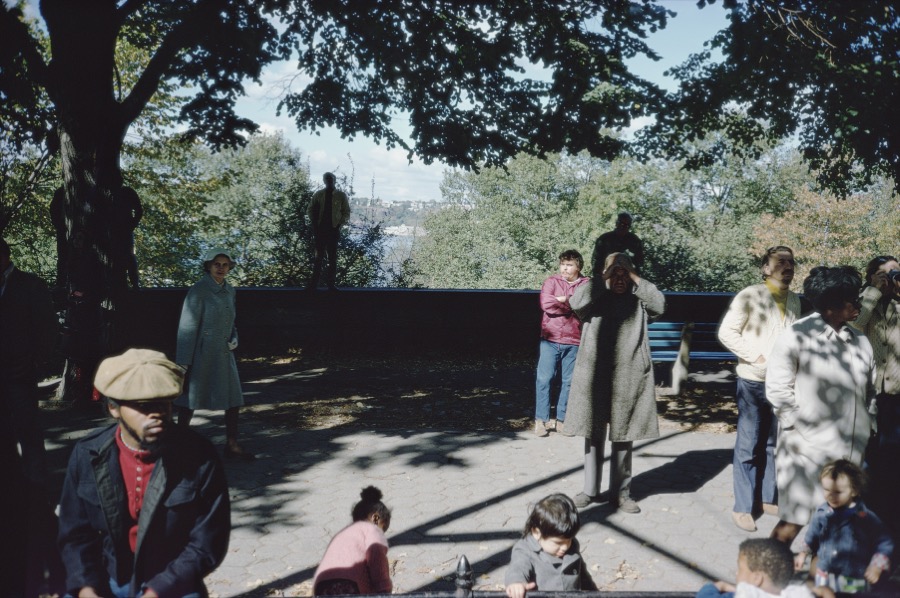 New York City, 1974.A paved terrace above a river, in autumn light that falls through the leaves in patches.
 New York City, 42nd Street and Fifth Avenue, 1974.A street photographer of the older, black-and-white persuasion would have made this a study in posture and gesture, a question of who leans where.
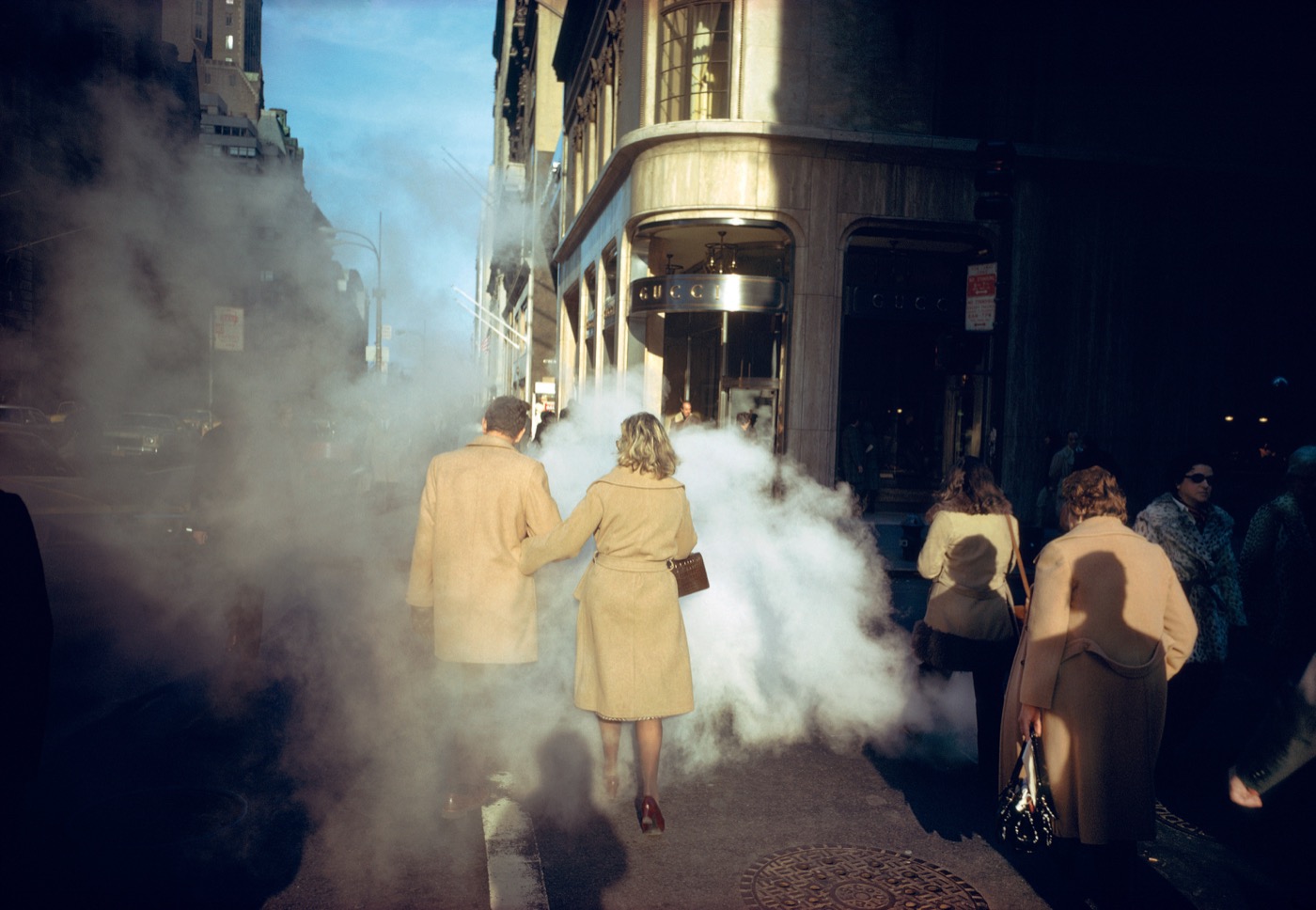 Camel Coats, New York City, 1975.Two camel coats, the same warm tan, move away from us into a wall of steam.
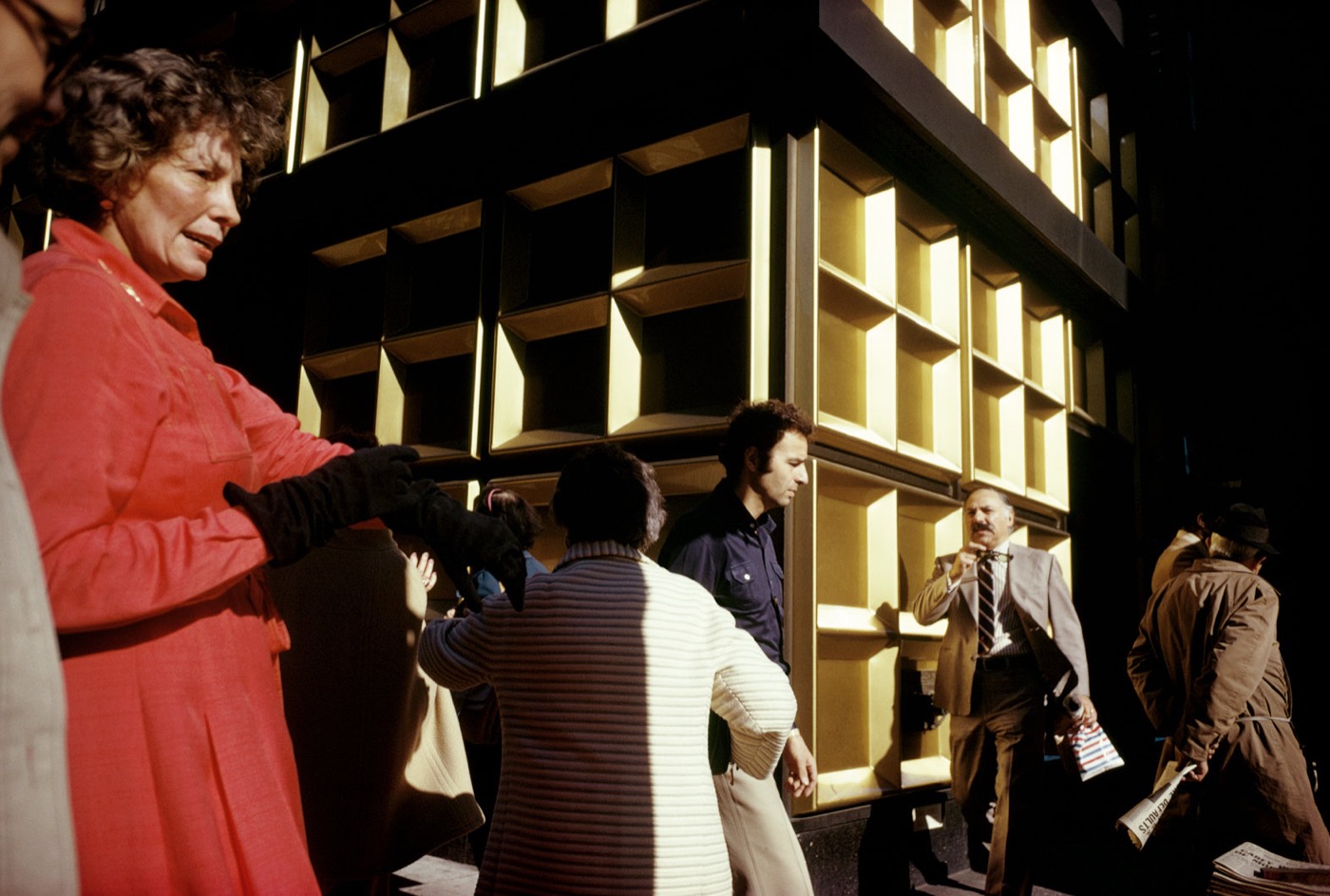 Madison Avenue and 60th Street, New York City, 1975.The building itself does the work here: a deep grid of gilded coffers, each recessed box catching the low Madison Avenue sun so that the facade reads less as architecture than as a wall of light…
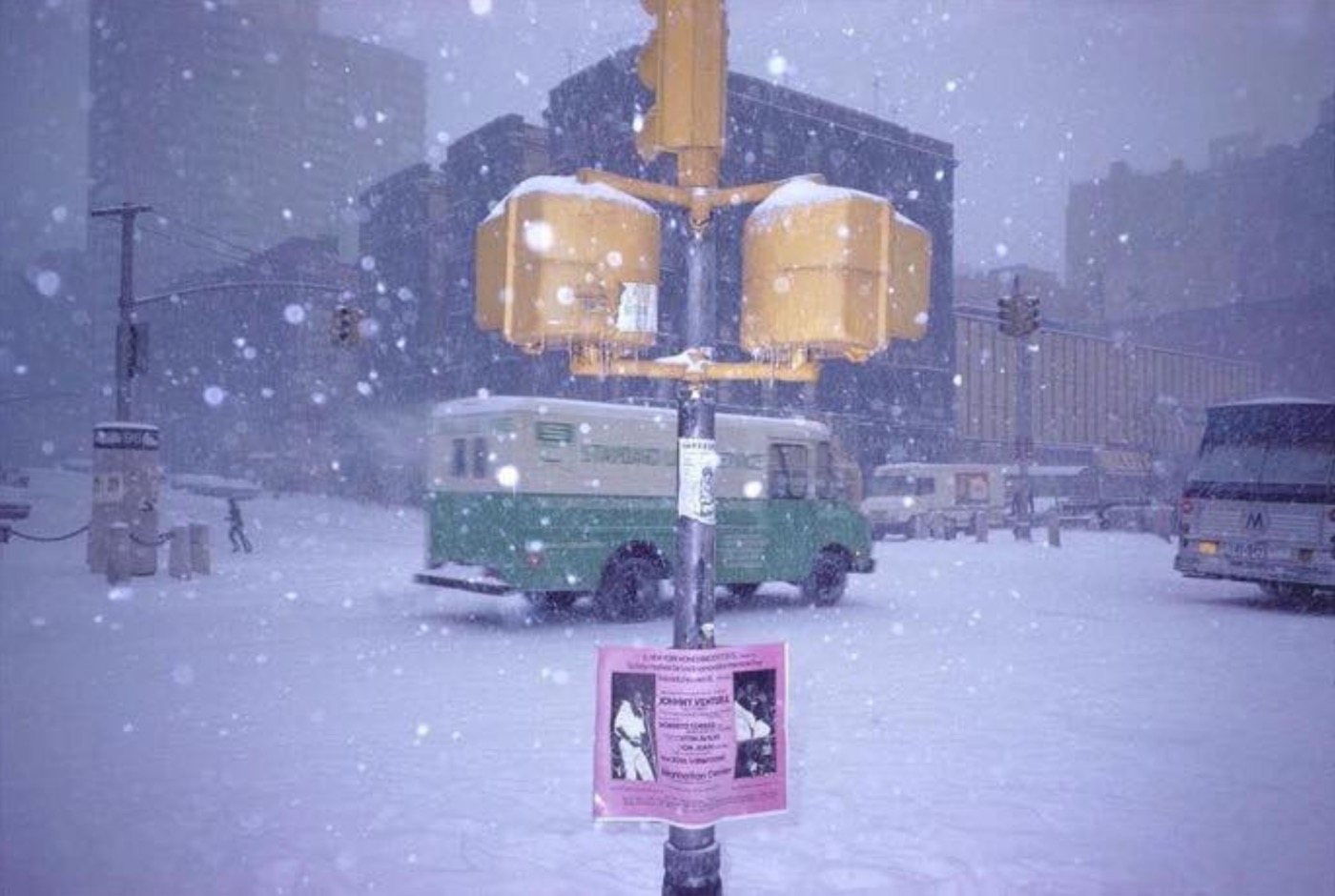 New York City, 1975.A photograph made in a snowstorm gives up most of what a photographer usually relies on.
 New York City, 1975.A corner in New York, crowded to the edges.
 Corn Hill, Truro, Cape Cod, 1976.Colour is the whole argument here, and it turns on a single opposition: the sky, a saturated storm-navy that all but blackens toward the top of the frame, set against the row of cottages catching a…
 Cosmos, Provincetown, 1976.The subject, really, is that high clear Cape sky combed with cirrus and strung with telephone wires, pouring an even summer brightness onto everything below.
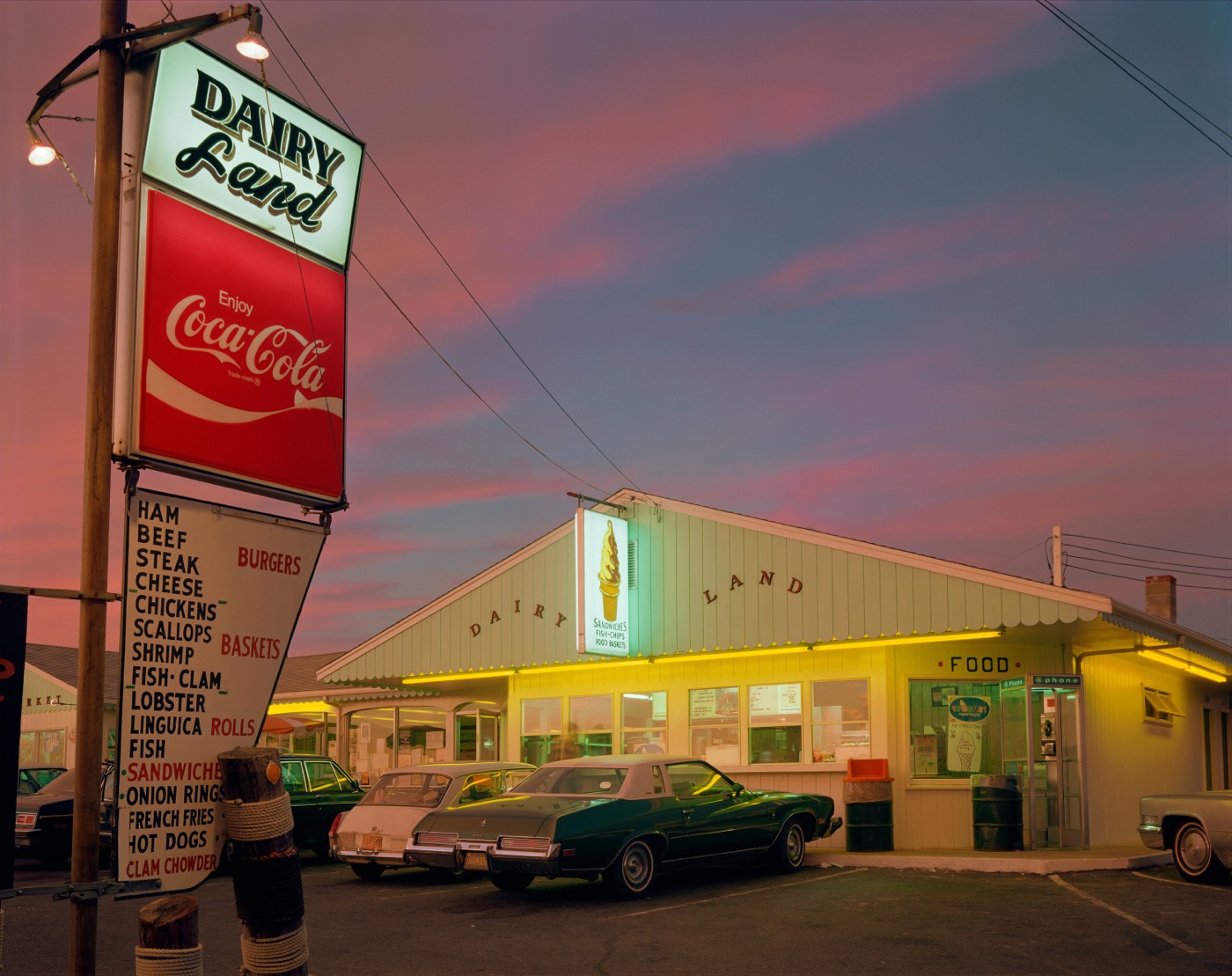 Dairy Land, Provincetown, Massachusetts, 1976.Joel Meyerowitz revolutionized color photography when black-and-white dominated fine art.
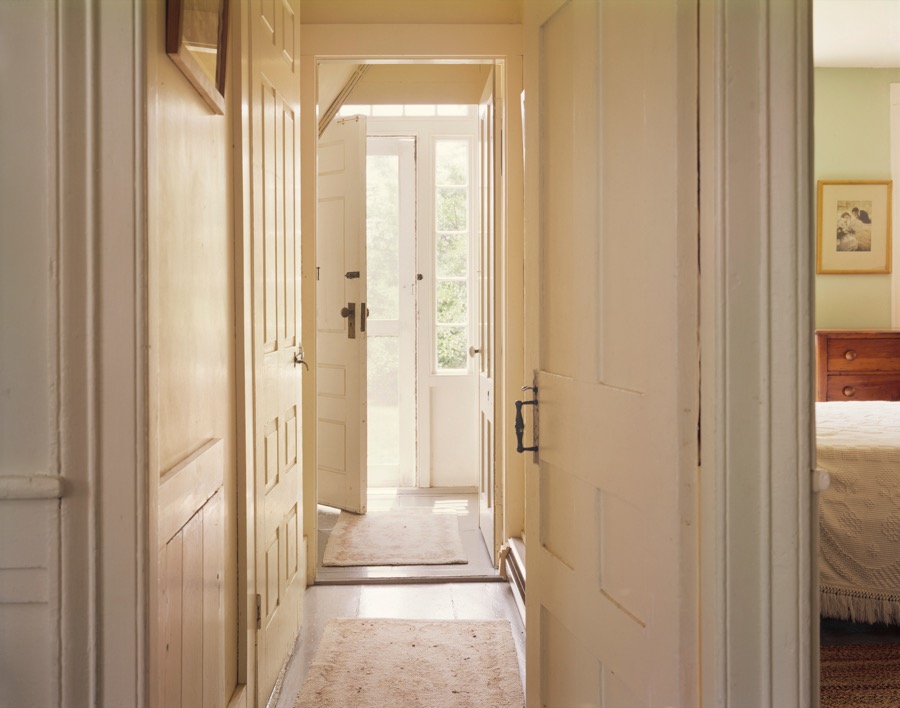 Hartwig House, Truro, Massachusetts, 1976.From a narrow hallway we look through a sequence of open doors.
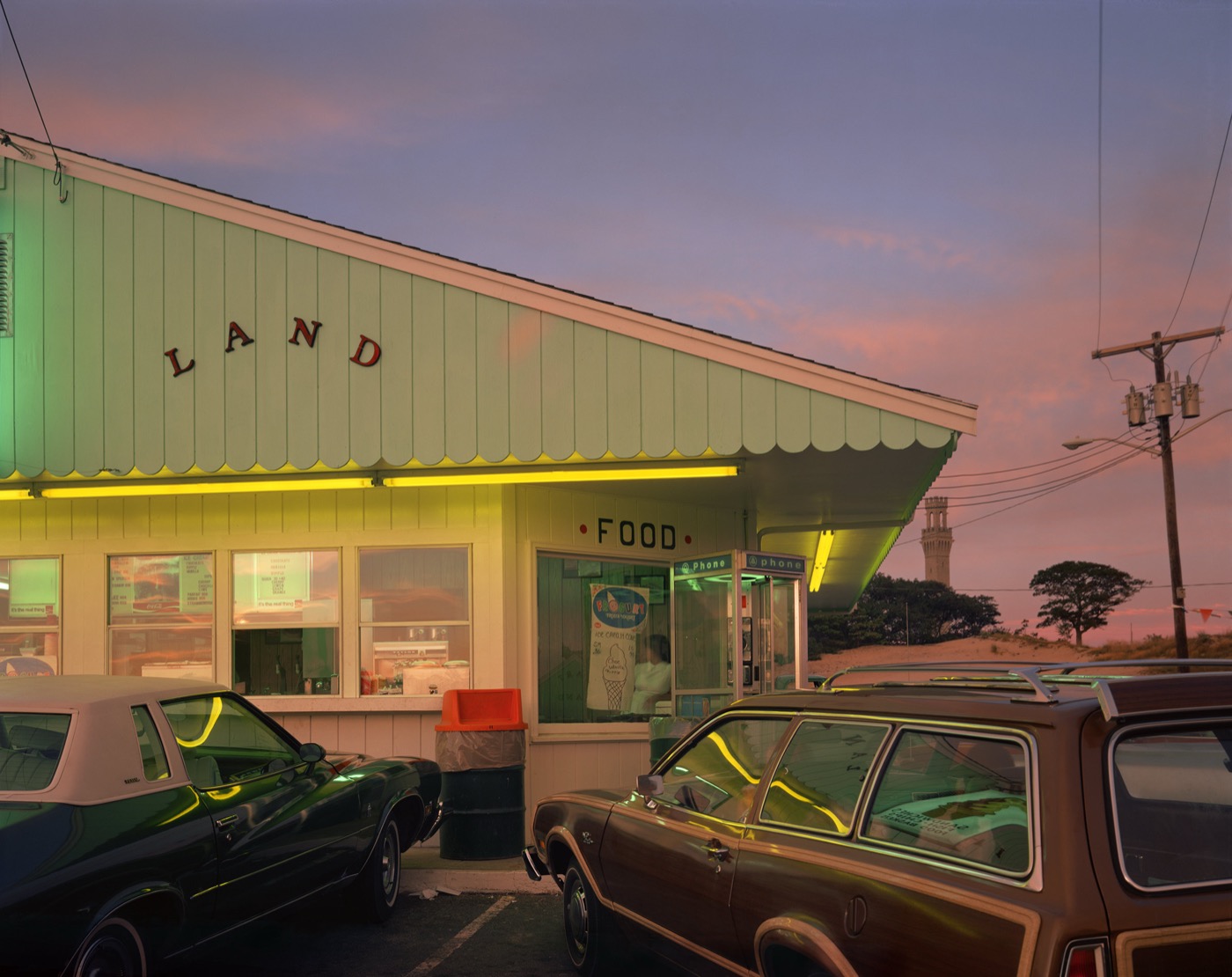 Land, Provincetown, 1976.A snack bar named LAND is the kind of joke only Provincetown could make with a straight face.
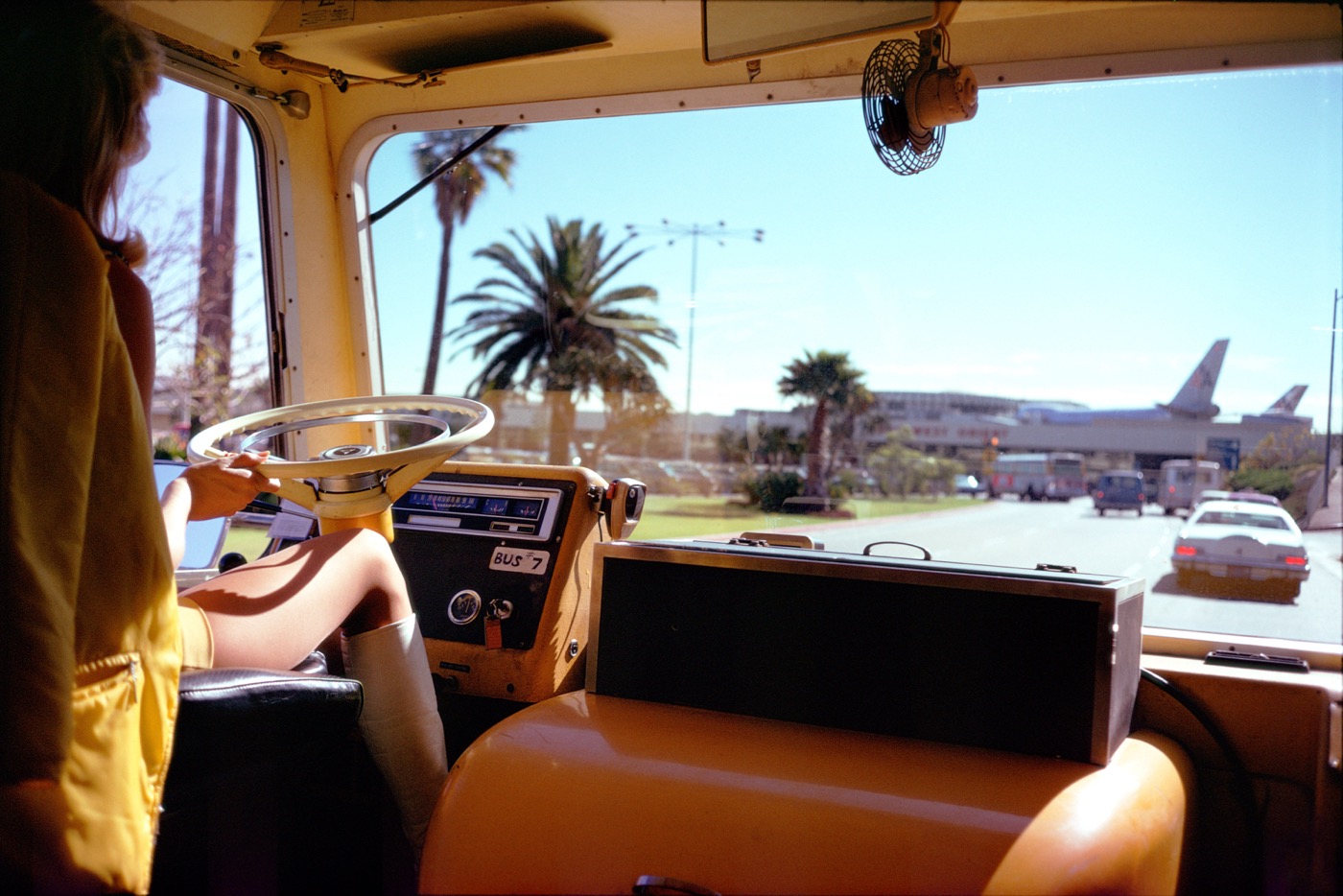 Los Angeles Airport, California, 1976.When Joel Meyerowitz boarded shuttle bus number seven at the Los Angeles airport in 1976, he was a decade into a project that would help redraw the boundaries of serious photography.
 Provincetown, Massachusetts, 1976.In 1976 Meyerowitz had not long traded the quick black-and-white of the street for a large-format camera and colour film, and Provincetown was where he went to learn what that swap actually cost and…
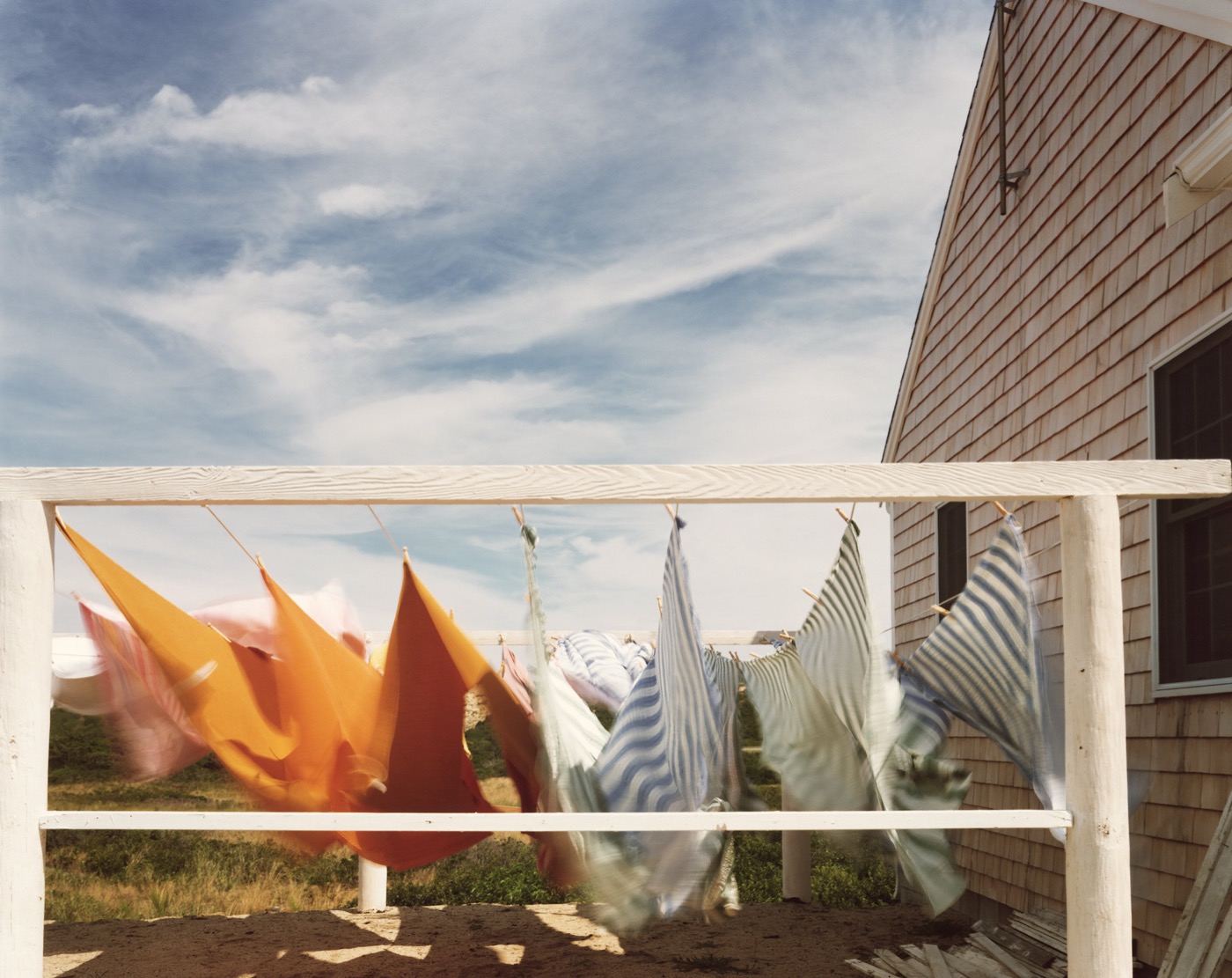 Provincetown, Massachusetts, 1976.The orange sheet is the event. The wind has caught it broadside and pulled it taut into a sail, and the camera, with its 8x10 patience, has held that gust still long enough to let us read every fold…
 Roseville Cottages, Truro, Massachusetts, 1976.There is a lineage of American dusk that runs from Hopper’s lit windows to the roadside nocturnes of colour photography, and this glowing telephone booth, green and red against a rose sky, takes its…
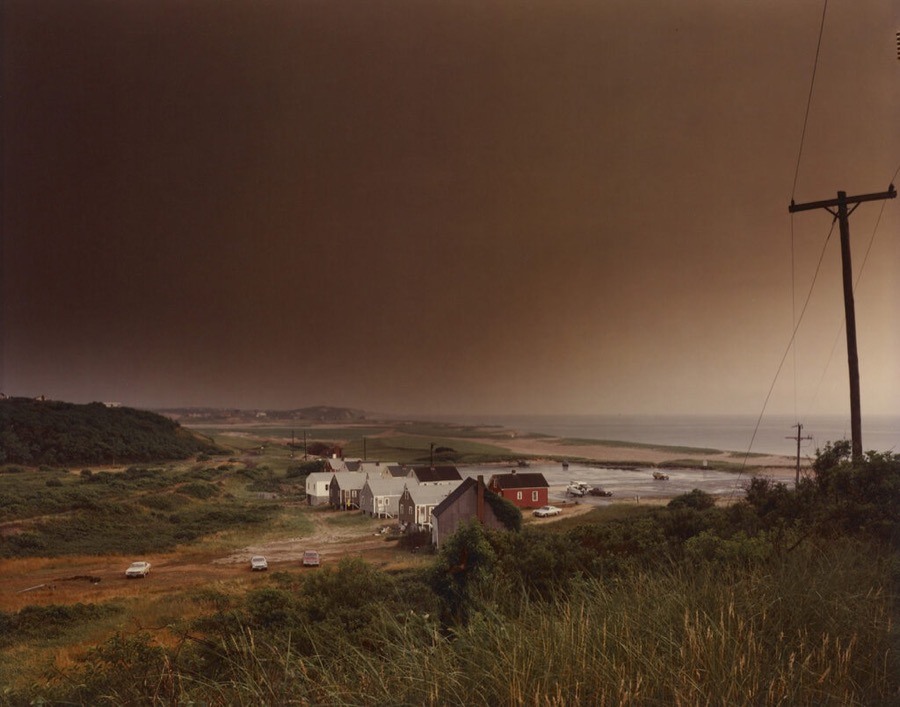 Storm Over Corn Hill Beach, Truro, Cape Cod, 1976.Down on the sandy track, two or three small cars have been left nose to tail as though the drivers only meant to pop in for milk.
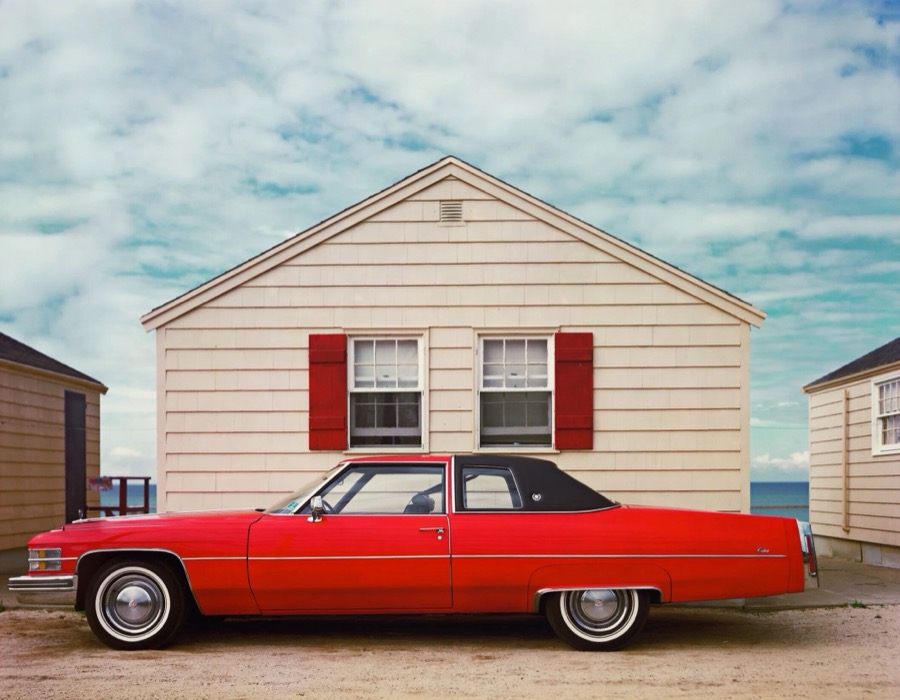 Truro, Massachusetts, 1976.Meyerowitz parks the picture as deliberately as someone has parked the car.
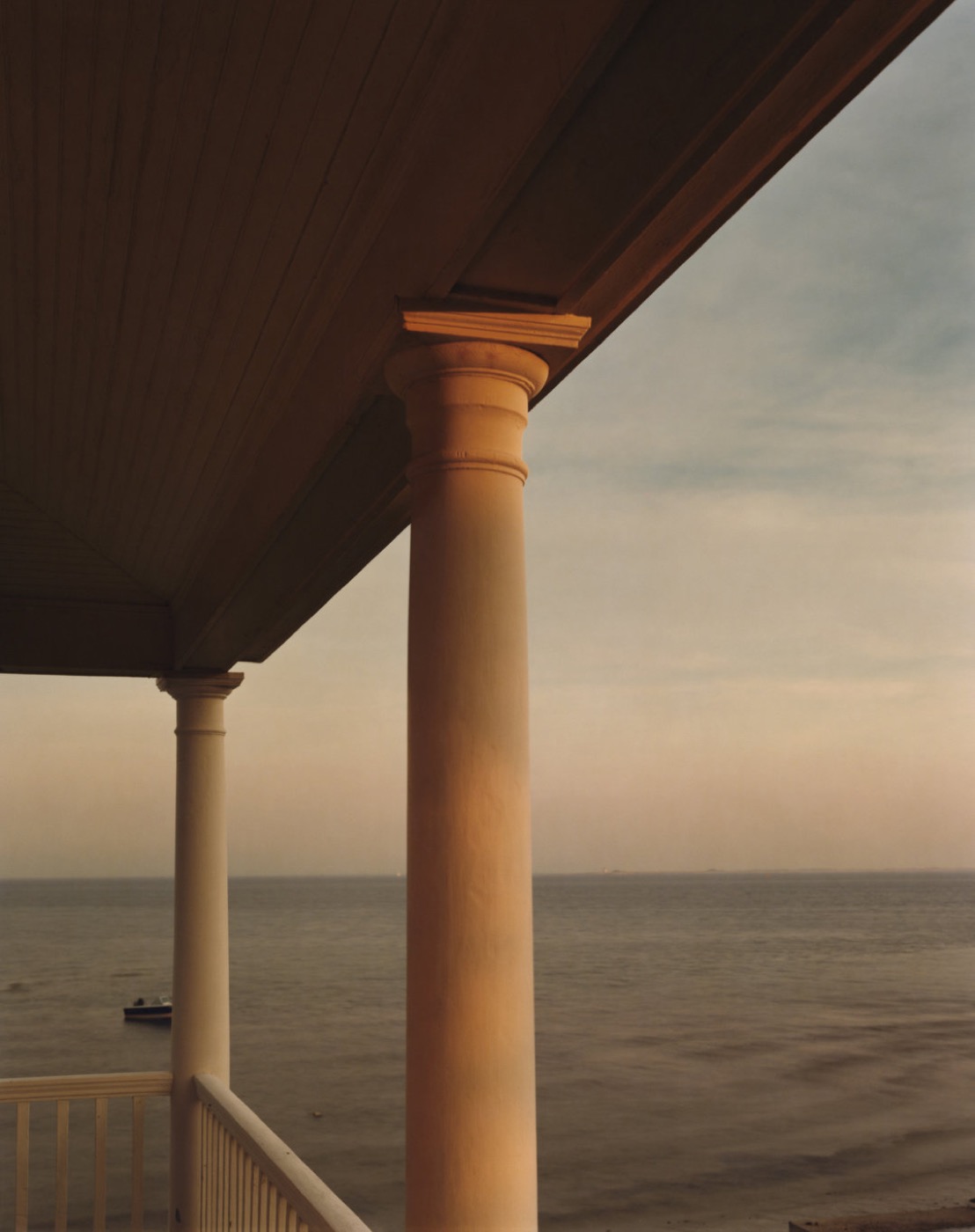 Gold Column, Provincetown, Massachusetts, 1977.A single painted column catches the last gold of the day, and beyond it the sea dissolves into a sky of rose and pale grey, a lone boat resting on water gone perfectly still.
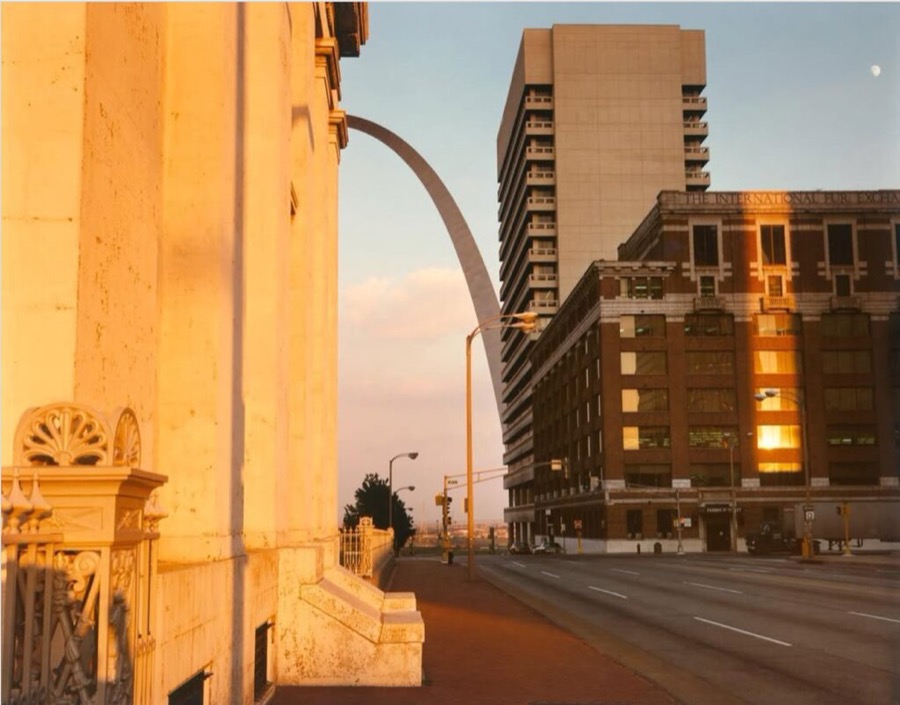 Moon and Arch, 4th and Market, St. Louis, Missouri, 1977.The steel arch springs out of the ground and vaults up beyond the top edge of the frame, caught here in the middle of a leap it will never finish for the eye.
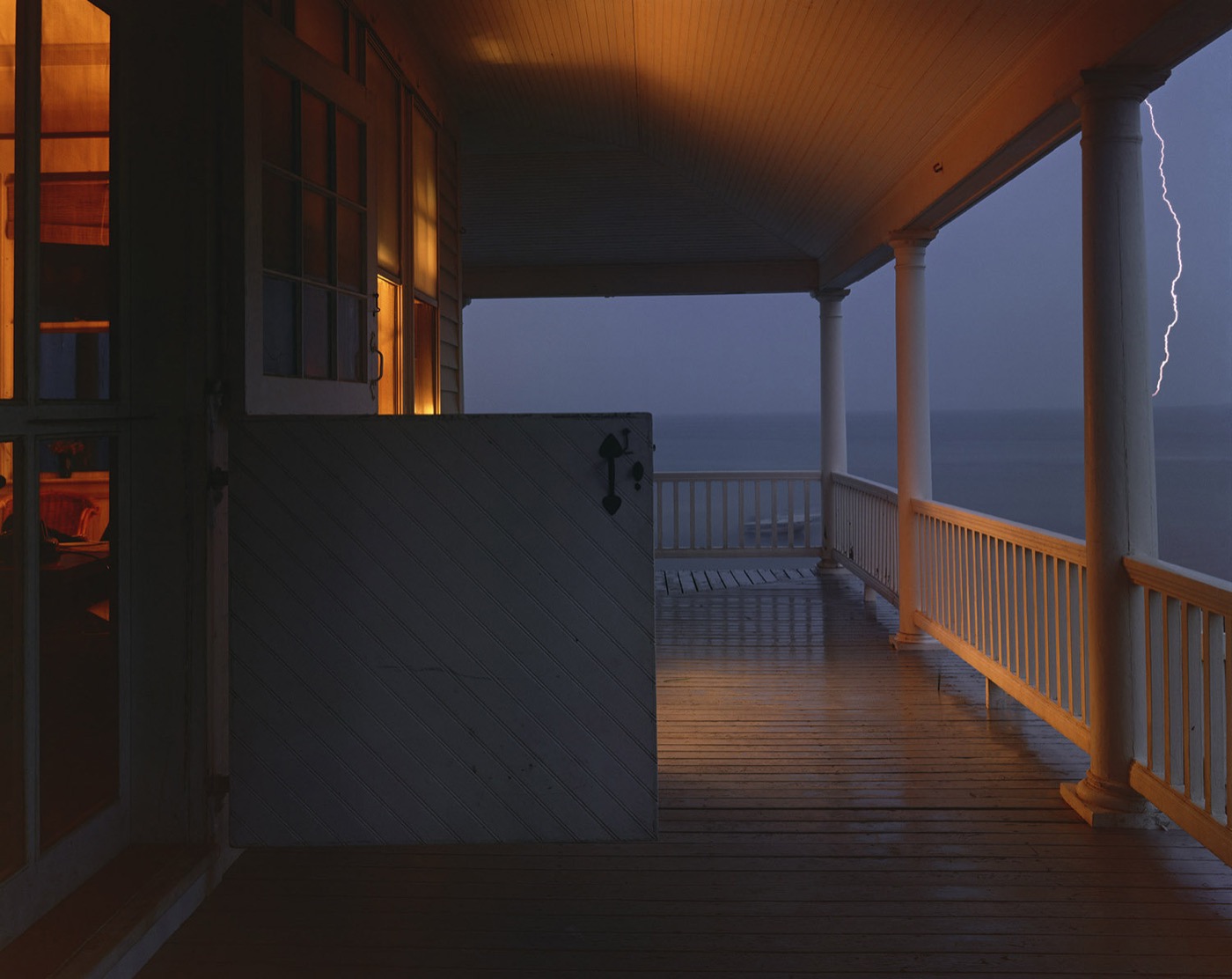 Porch, Provincetown, 1977.Leaning out toward the dusk, the porch opens its long throat of fir planks and lets the eye walk down it.
 Red Interior, Provincetown, Massachusetts, 1977.Provincetown after dark, a row of identical cottages strung along a sandy lot at the edge of the dunes.
 10th and St. Charles, St. Louis, Missouri, 1978.Two cars, caught mid-climb, noses tipped up at exactly the angle of a swimmer about to dive or a dog begging for a biscuit.
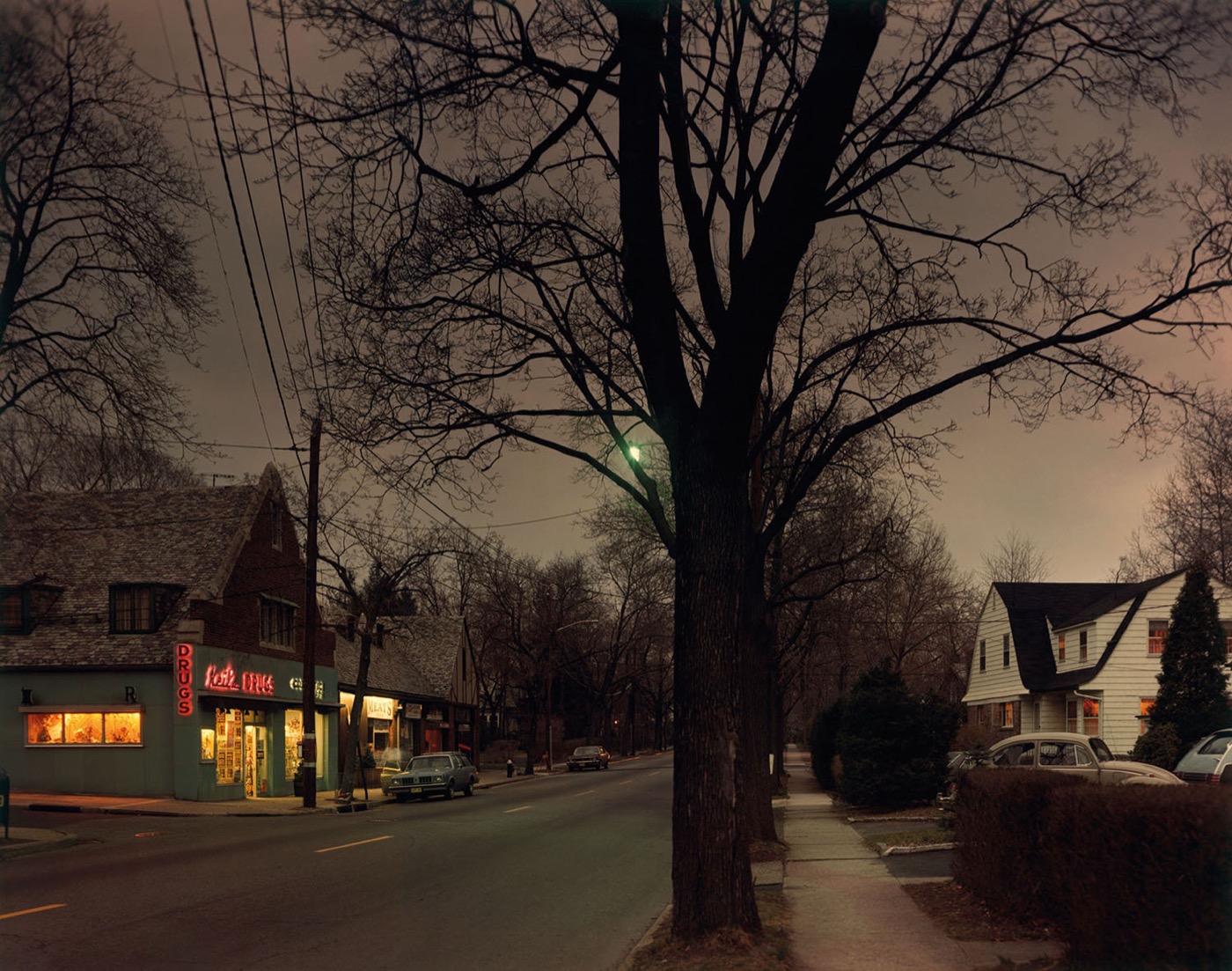 Dusk, New Jersey, 1978.A bare tree stands almost dead center, and this is the whole problem the picture sets itself.
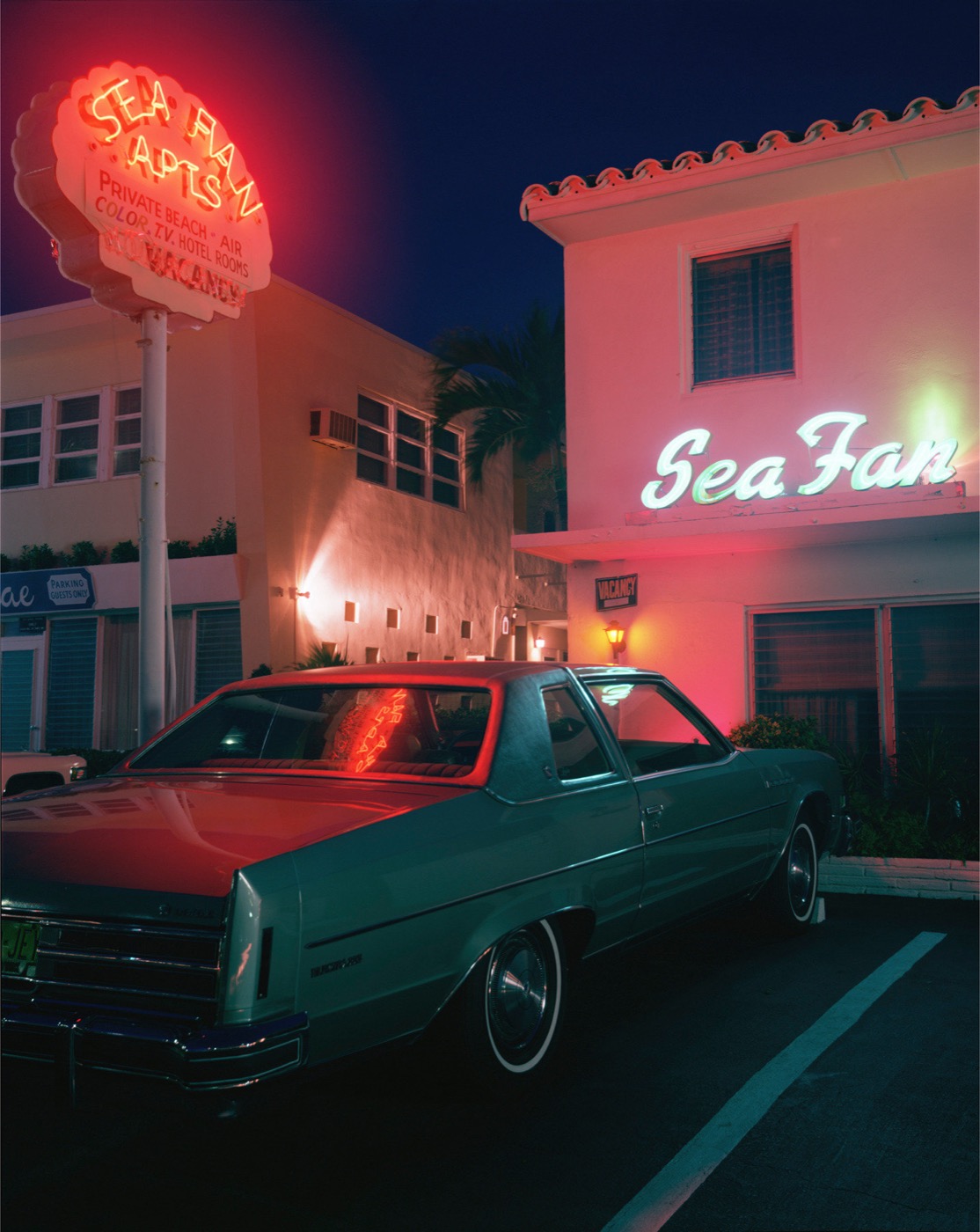 Florida, 1978.The cursive "Sea Fan" sign is rewriting itself across the windshield of the sedan at the curb, its loops of neon migrating in miniature onto the dark glass, so that the parked car carries the motel's…
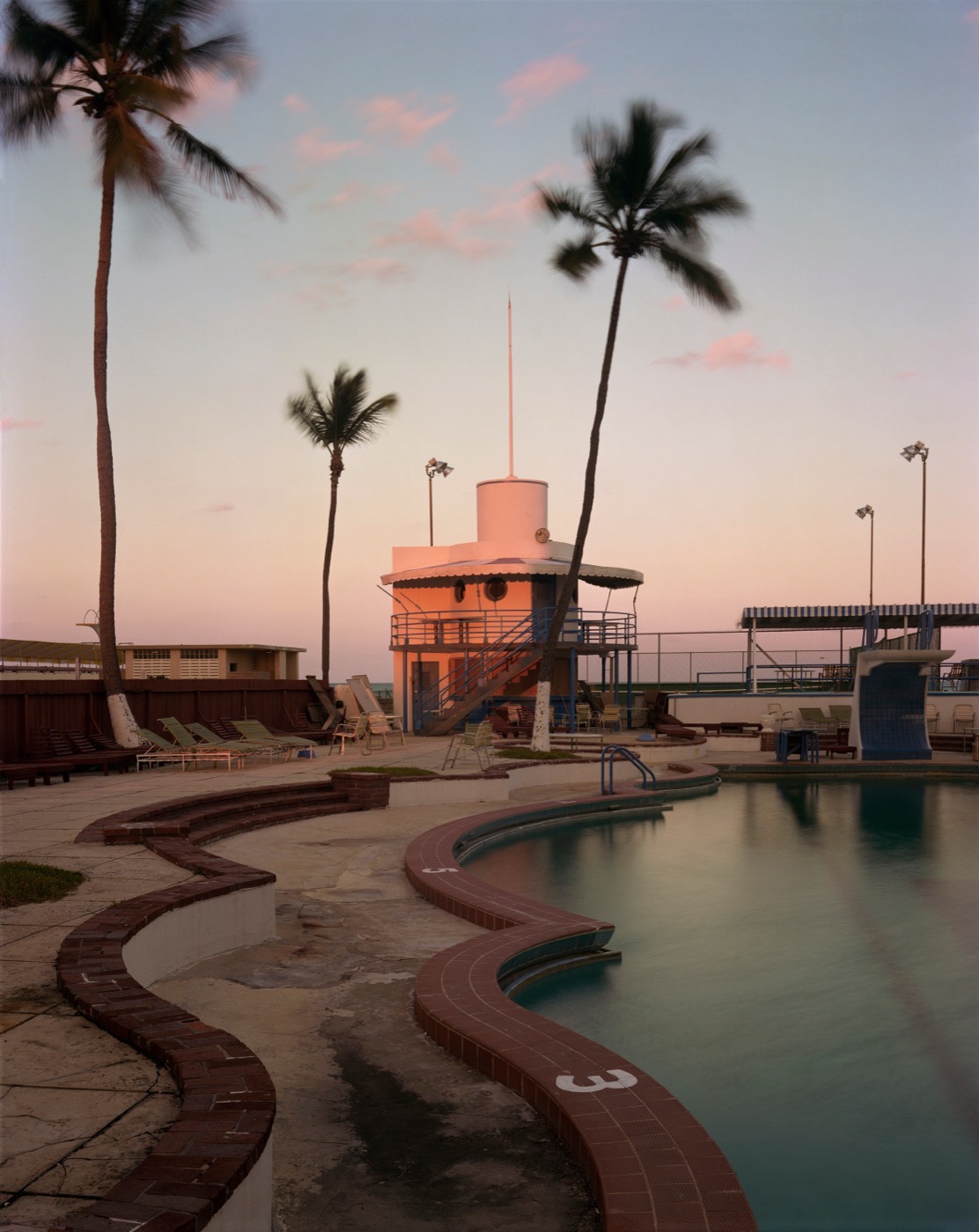 Miami Beach, Florida, 1978.How long does it take a colour to settle?
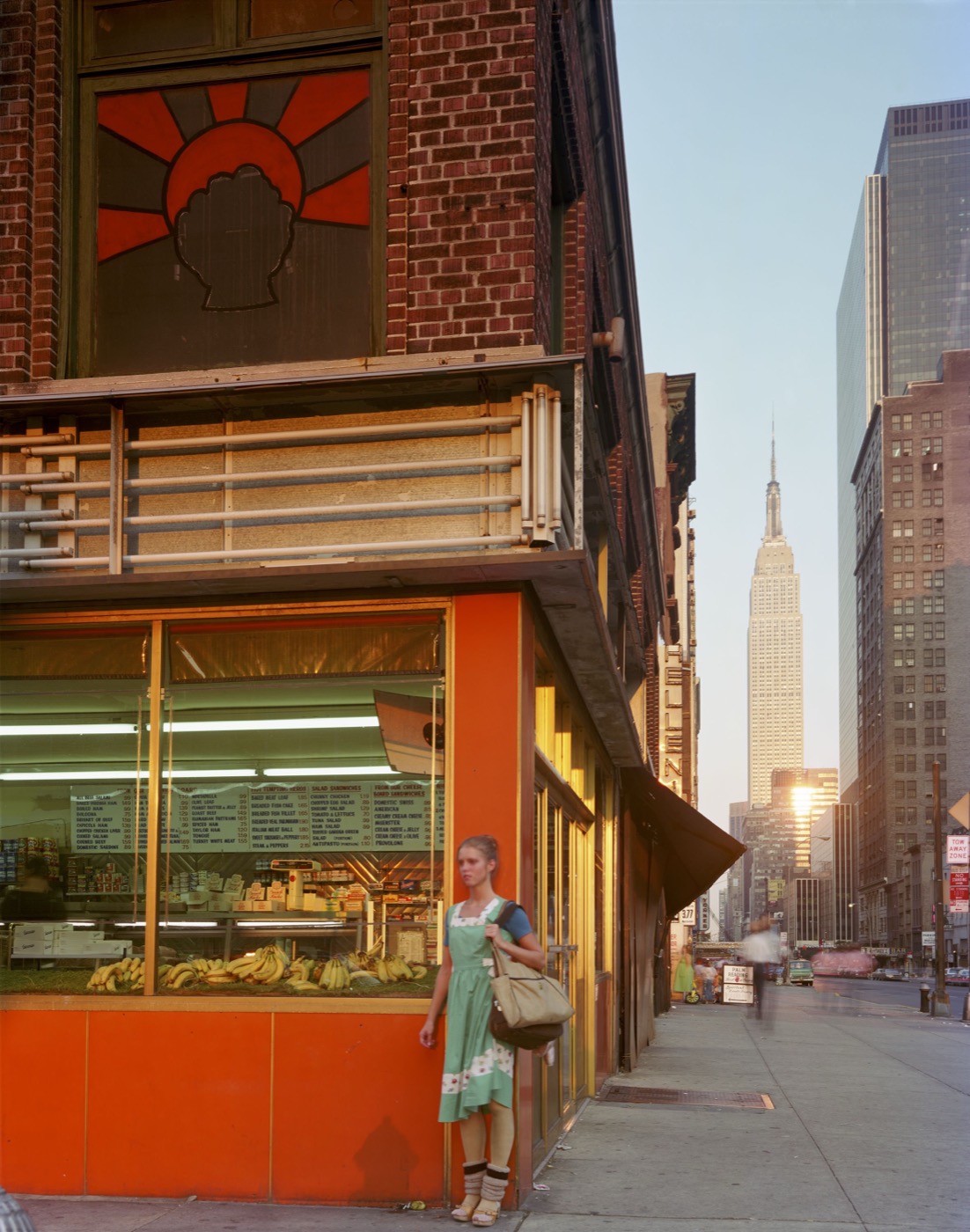 New York City, 1978.Joel Meyerowitz’s “New York City, 1978,” from the Empire State series, is a quiet marvel of atmosphere and composition.
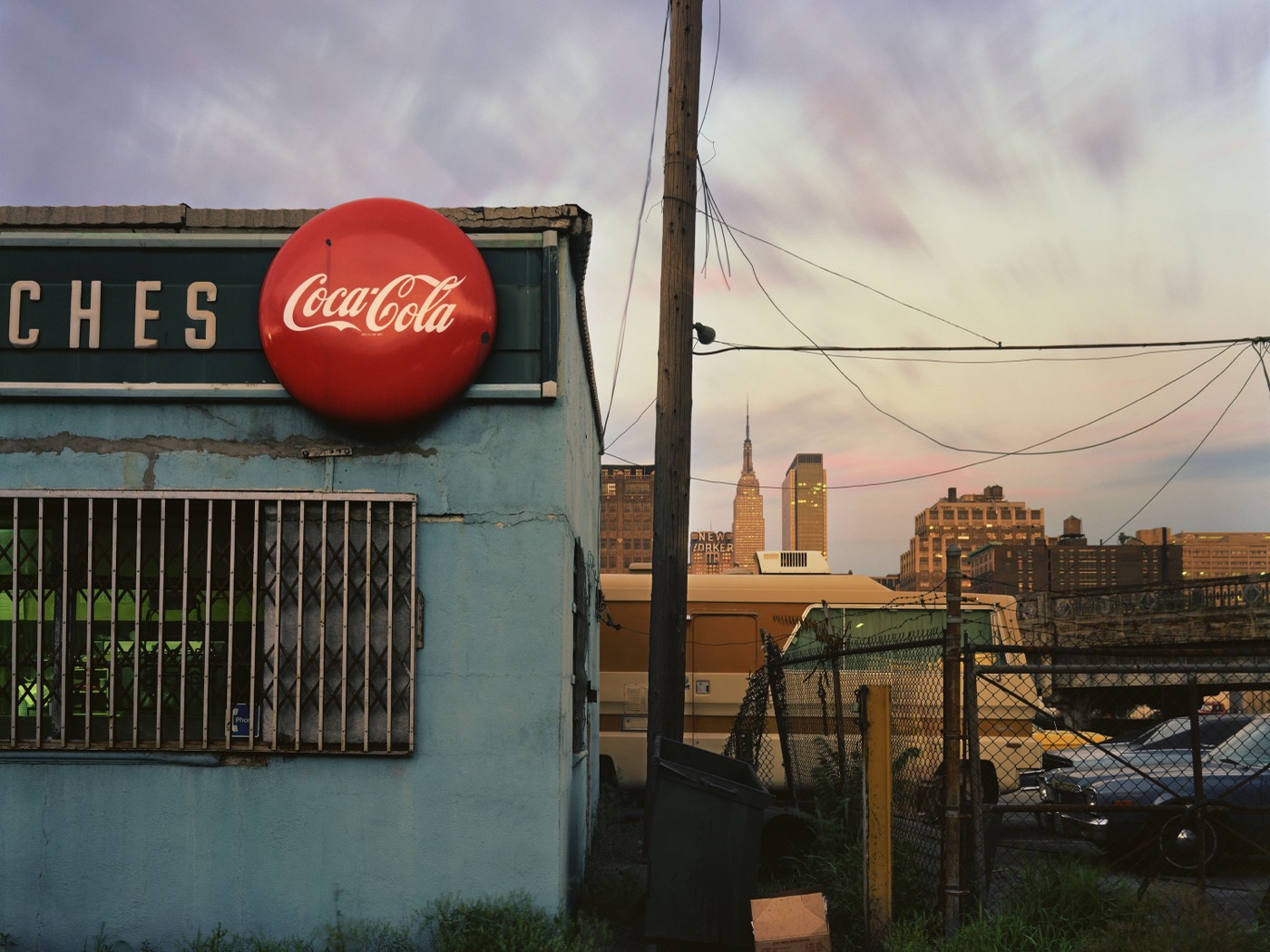 New York City, 1978.In the summer of 1978, photographer Joel Meyerowitz transformed the overlooked underbelly of Manhattan into intimate studies of urban light and shadow.
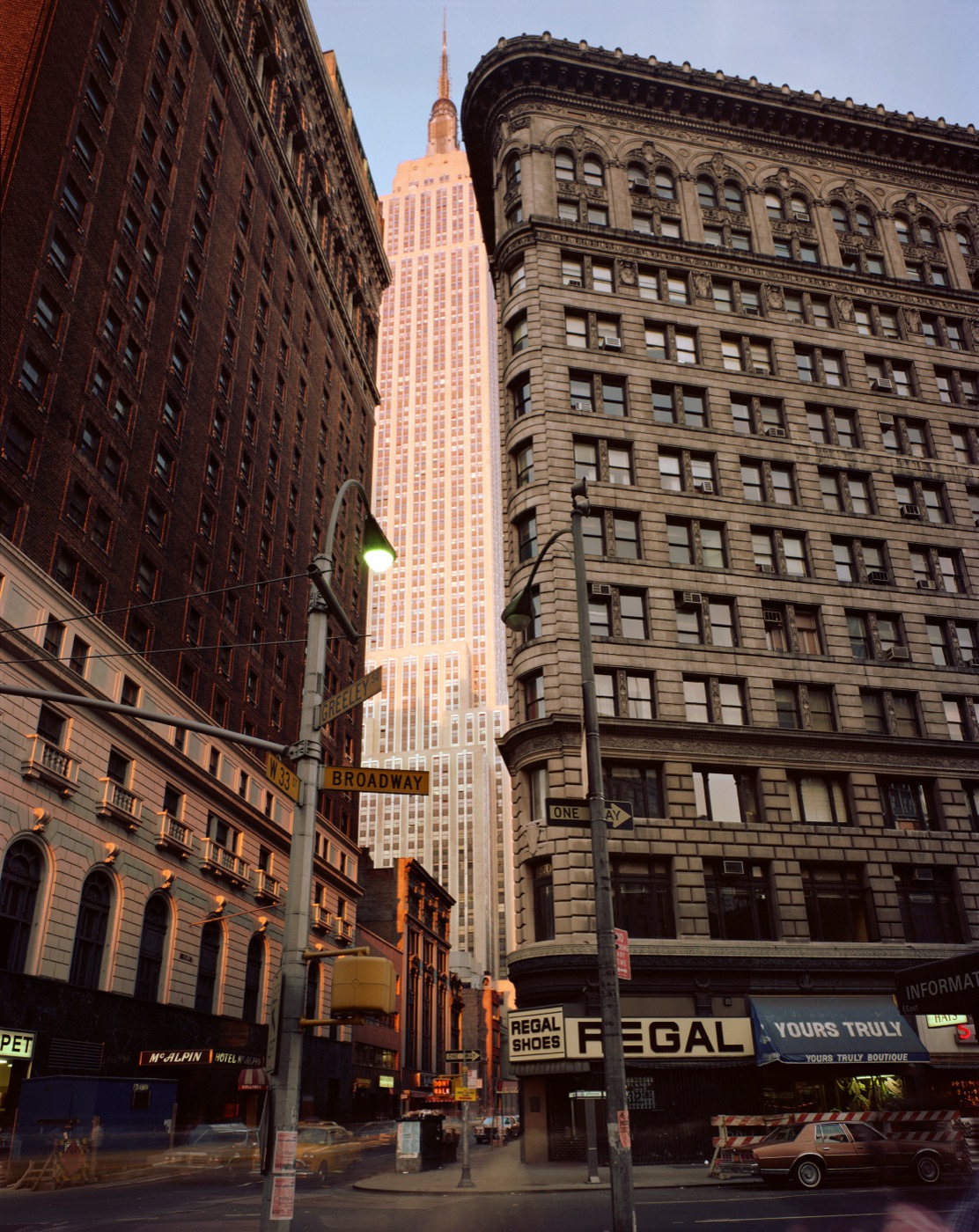 New York City, 1978.The Empire State Building is here pinned into the narrow slot between two older masses of masonry, its summit caught in a clear, late wash of sun while everything beneath it cools into shadow.
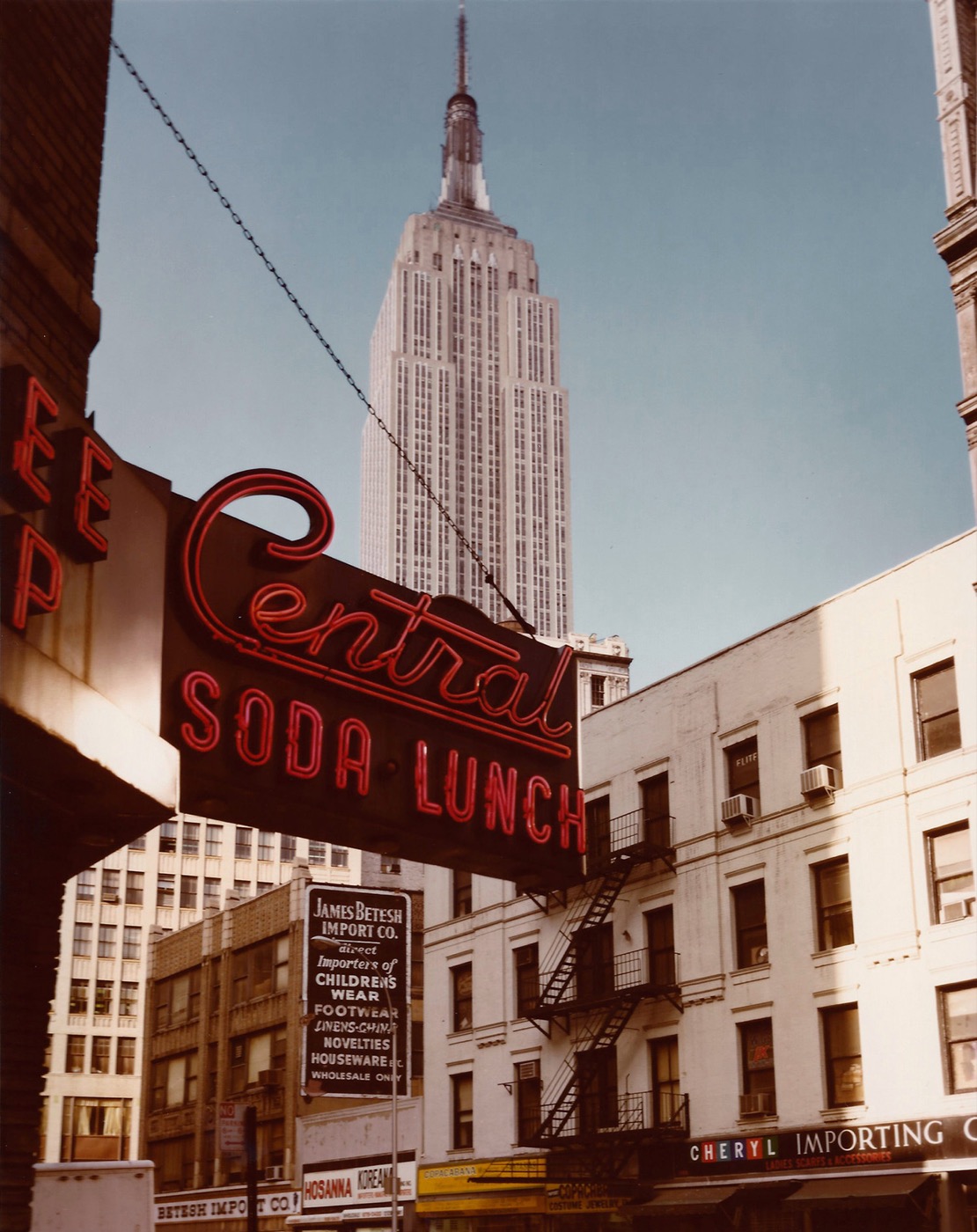 New York City, 1978.By 1978 the Empire State Building had long stopped being news; it had become weather, a fact of the sky one walked beneath without raising the head.
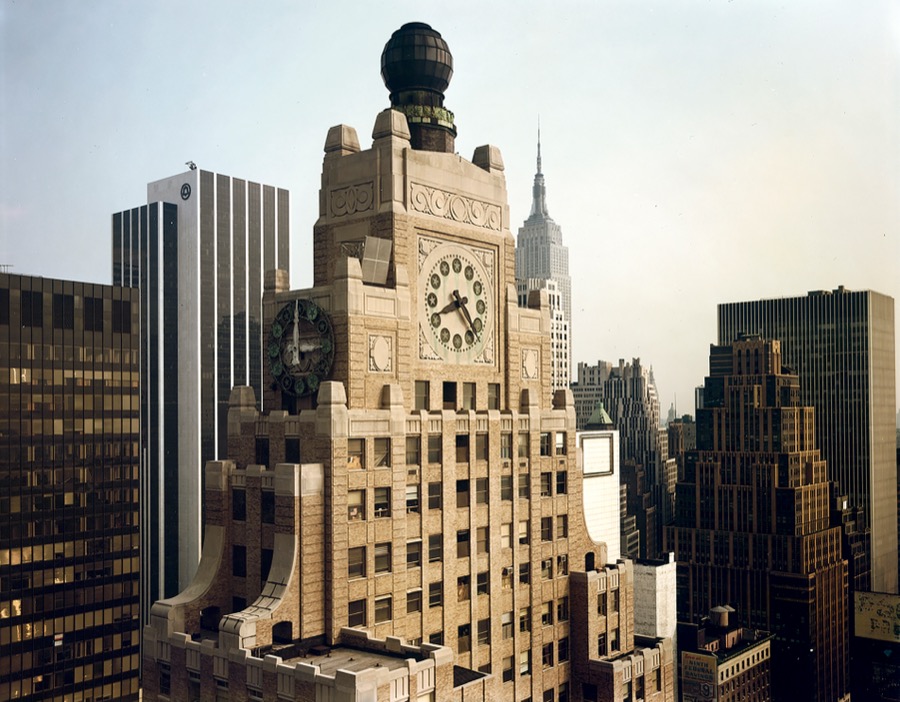 New York City, 1978.From high above the street, a tower of pale stone rises through the middle of the frame in stepped setbacks, crowned by a dark globe of glass panes on a copper pedestal streaked with green.
 St. Louis, McDonald's, Two Arches, 1978.The franchise had begun to promise that America could taste the same everywhere, and here is its liturgy in enamel: OVER 25 BILLION SERVED, the number recited beneath two golden arches that rise like…
 St. Louis, Missouri, 1978.The paint here is a whole vocabulary of wear.
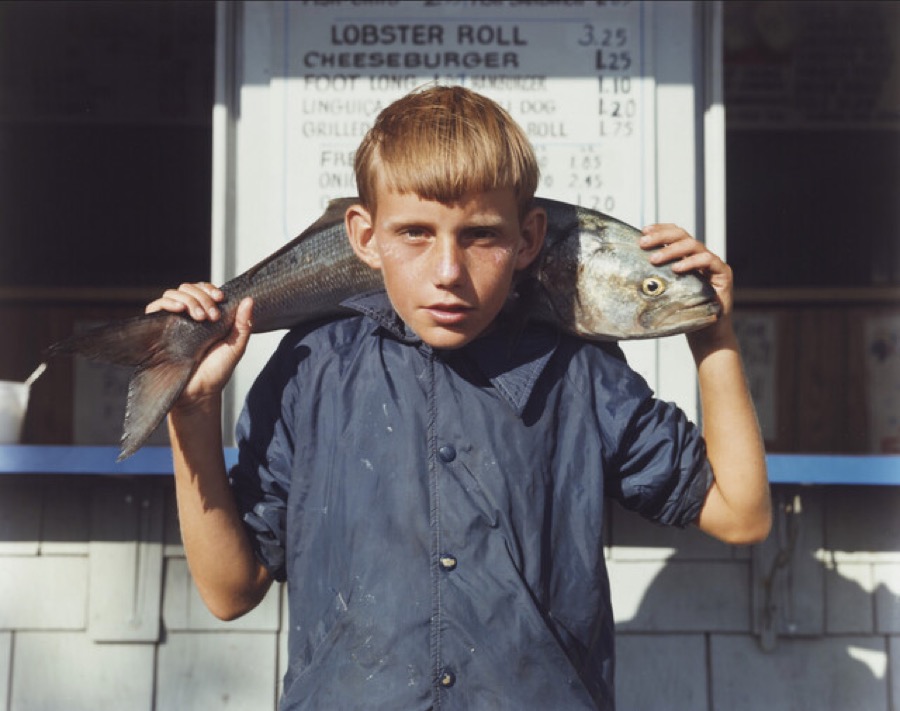 Boy with a Bluefish, 1980.We never see the water, the boat, or the moment the fish was pulled from the surf; all of that is kept off-frame, behind us or already over.
 Doorway to the sea, 1982.Every lit interior at dusk is a small promise made to whoever stands outside in the cooling air.
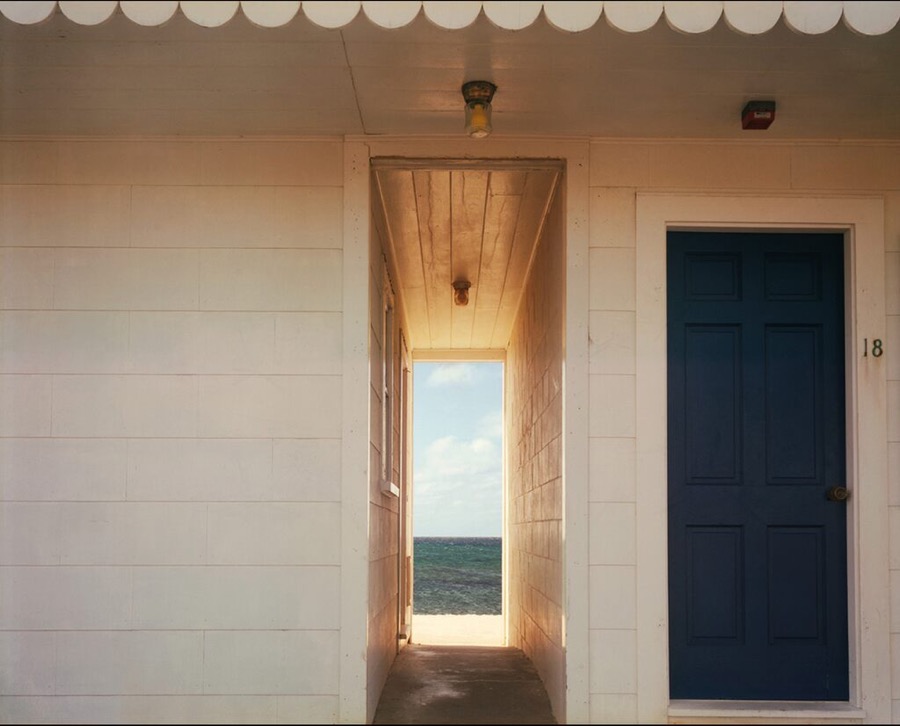 Doorway to the Sea, Provincetown, 1982.Stand at the front of this Provincetown motel and the architecture does the composing for you: a pale cream facade, a scalloped awning valance running along the top like a paper doily, and a navy…
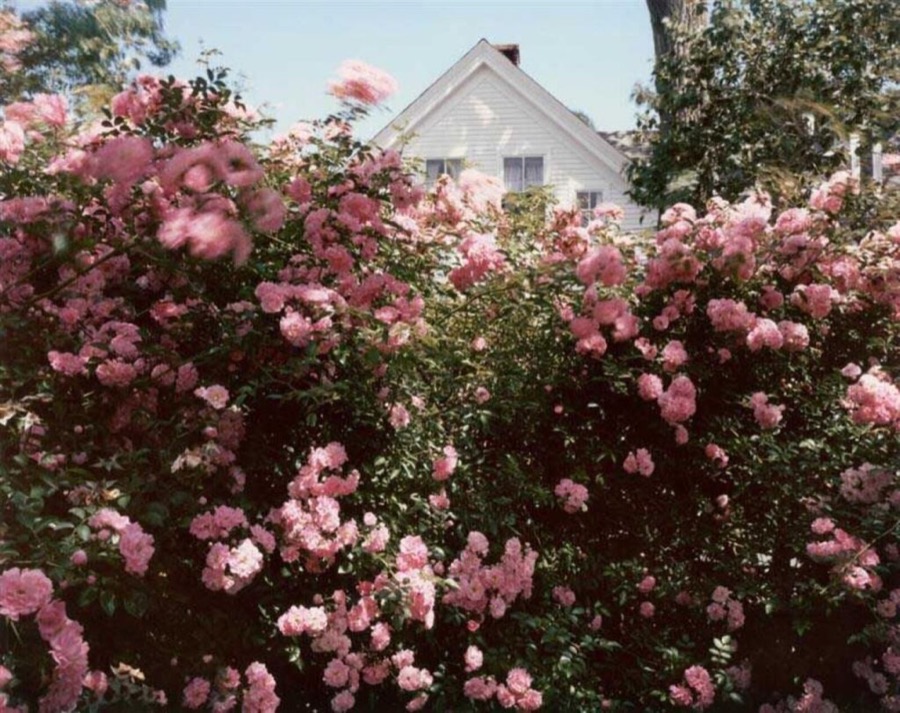 Cape Cod Roses, 1983.How much pink can a photograph carry before it tips into sentiment?
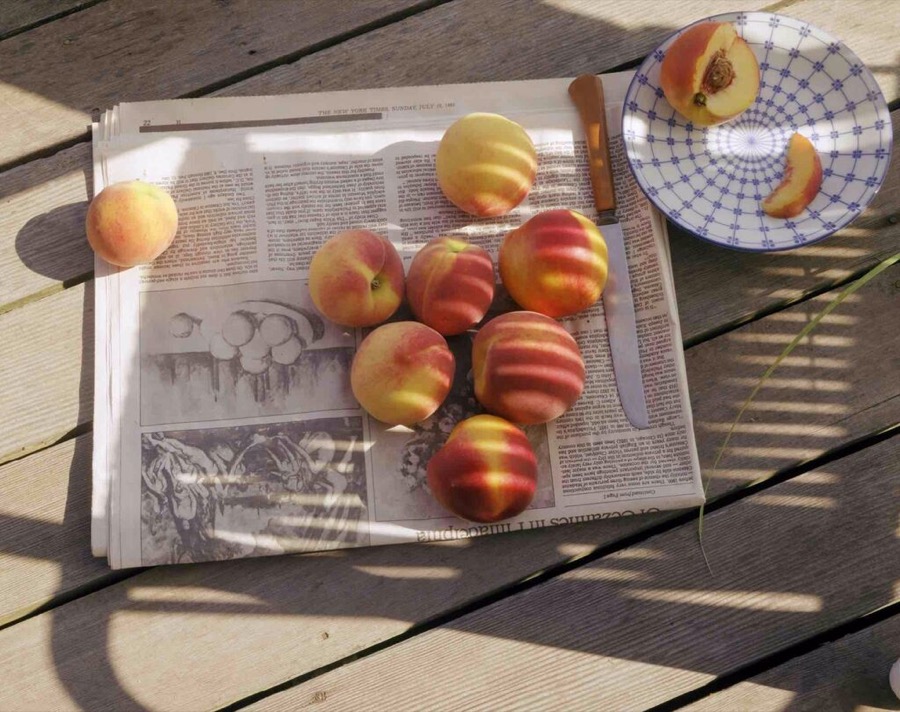 Cape Light, Peaches, Provincetown, Massachusetts, 1983.Someone has laid the afternoon out to be looked at.
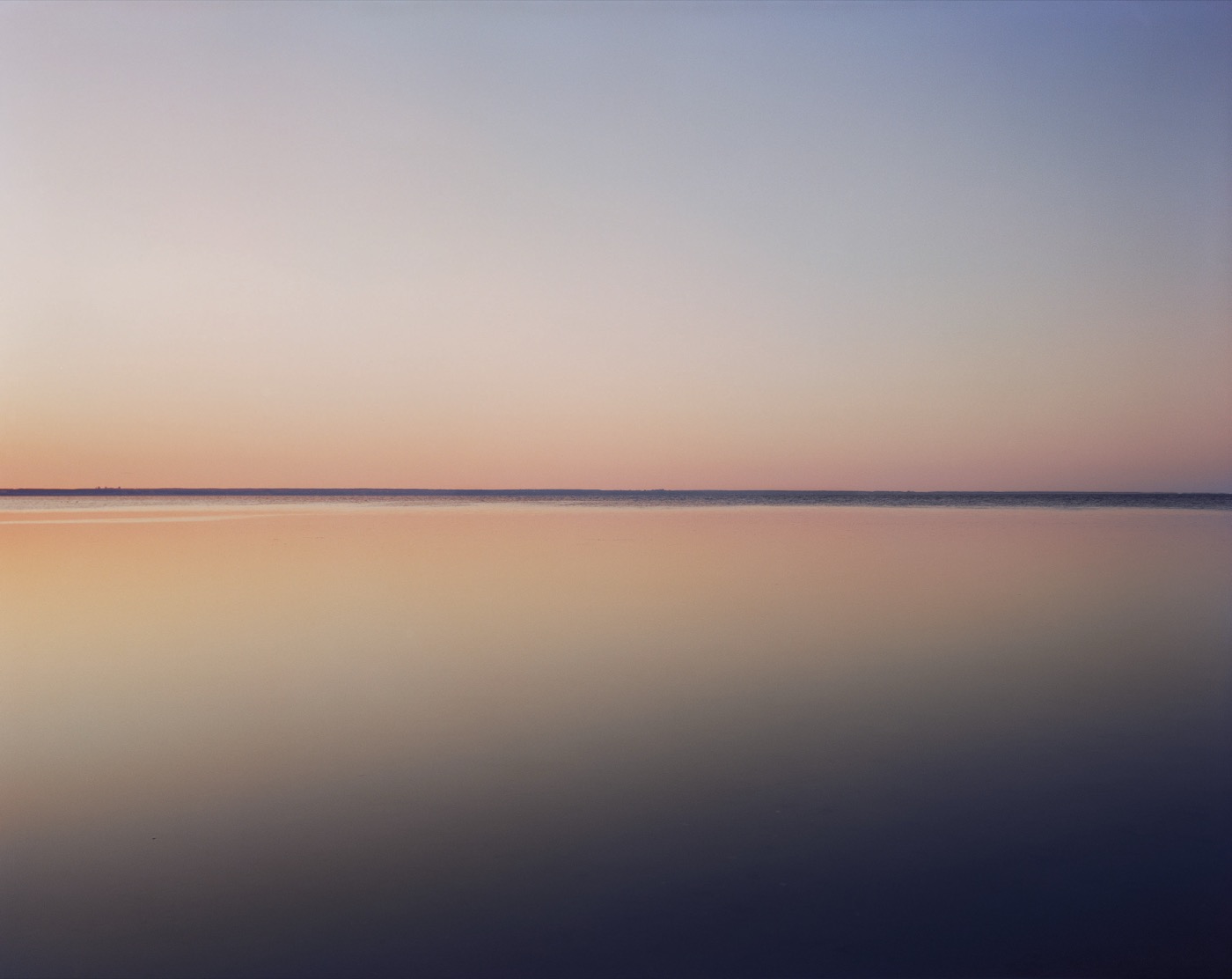 Bay / Sky Provincetown, Massachusetts, 1984.Colour does all the structural work here, and it does so with no edge to lean on.
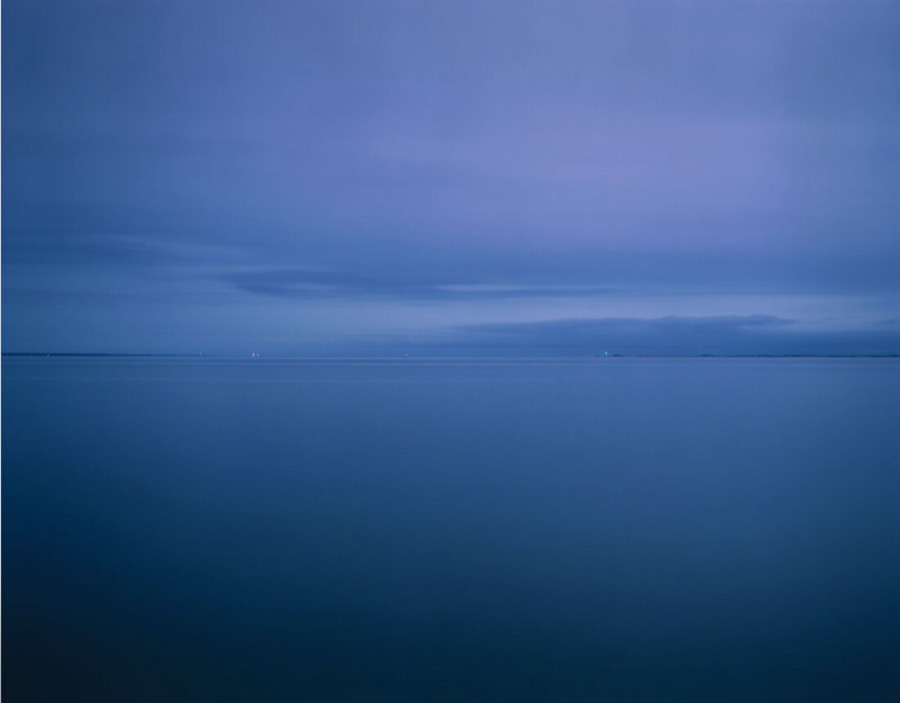 Bay/Sky, Provincetown, Massachusetts, 1984.The horizon sits low, barely a third of the way up the frame, and everything above and below it dissolves into variations of a single blue: violet-tinged cloud banks stacked in the sky, a flat…
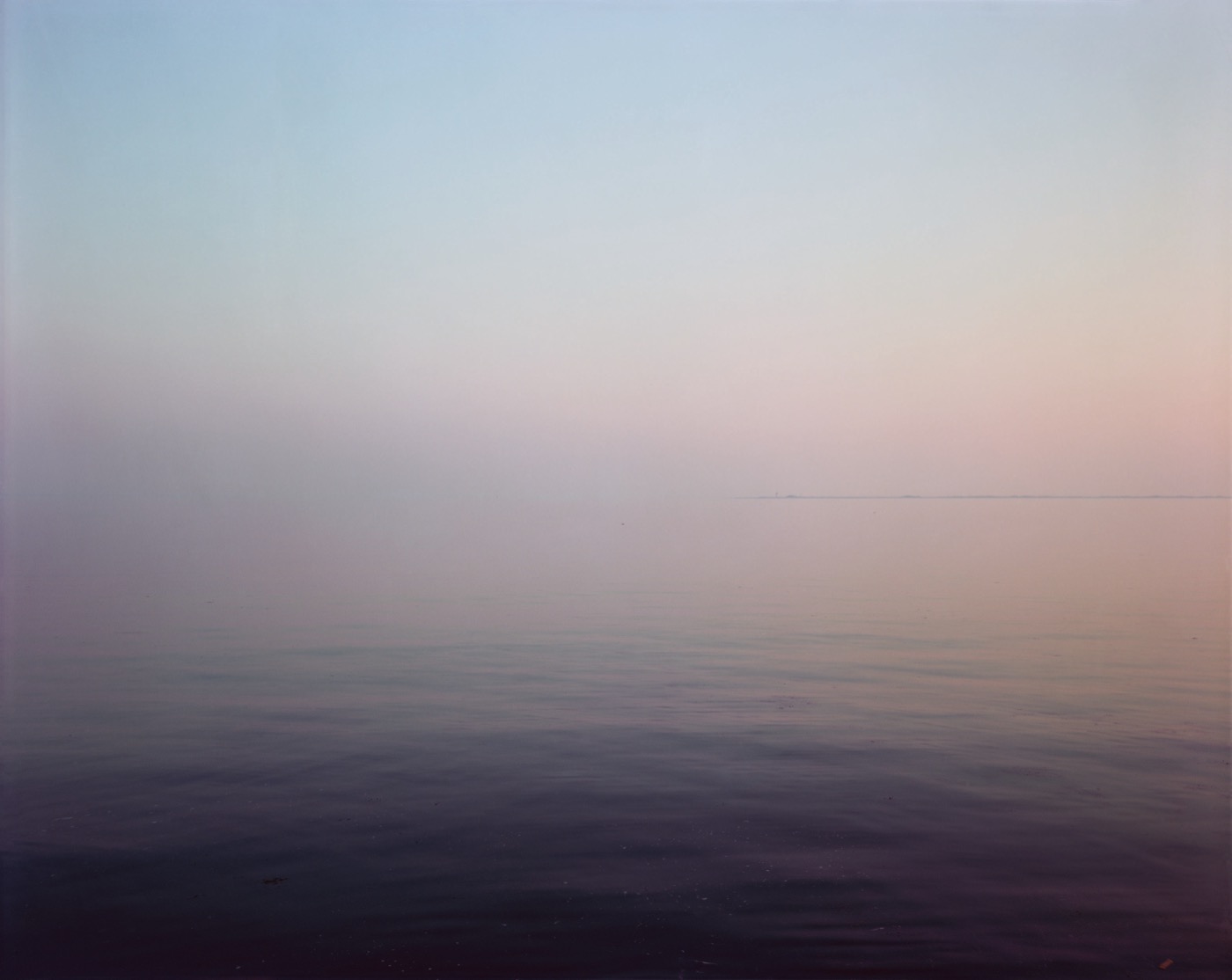 Bay / Sky, Provincetown, Massachusetts, 1985.What this picture withholds is its own subject.
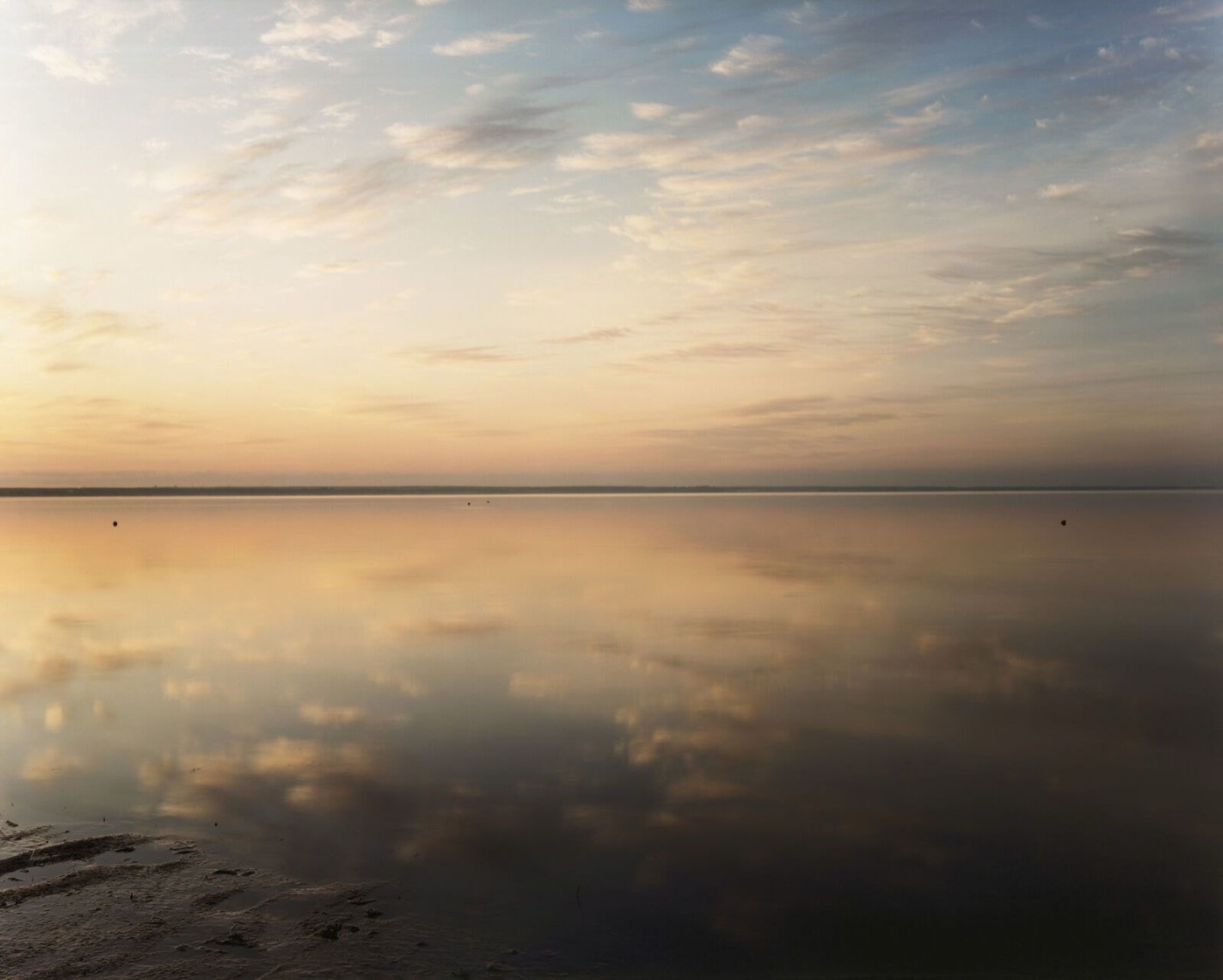 Bay / Sky, Dawn, Provincetown, Massachusetts, 1986.There are mornings so still that the world seems to be holding its breath before consenting to begin.
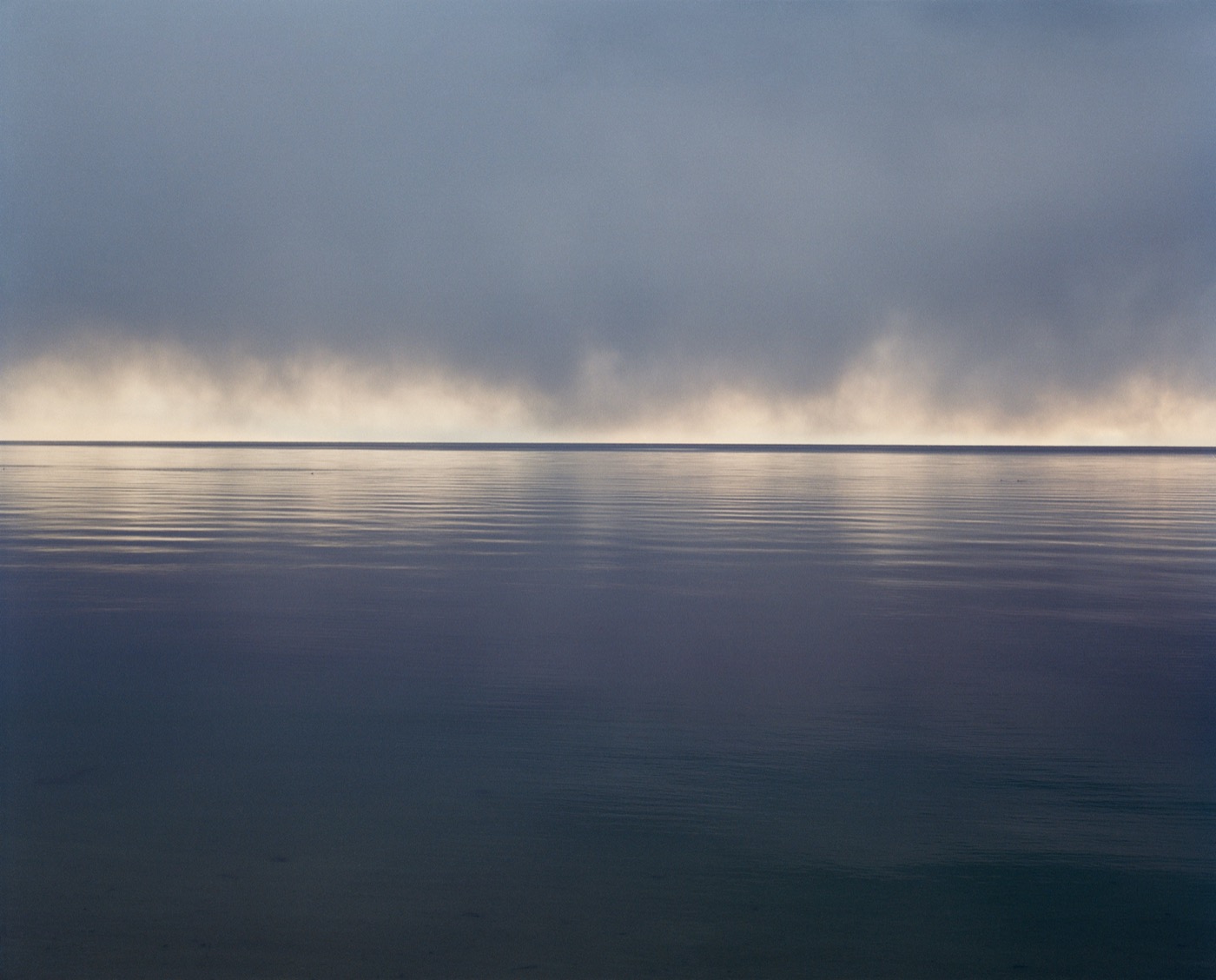 Bay / Sky, Late Afternoon, Lifting Storm, Provincetown, Massachusetts, 1993.In 1976 Joel Meyerowitz set down the Leica he had carried through New York for fifteen years and climbed up to Cape Cod with an old 8x10 Deardorff view camera.
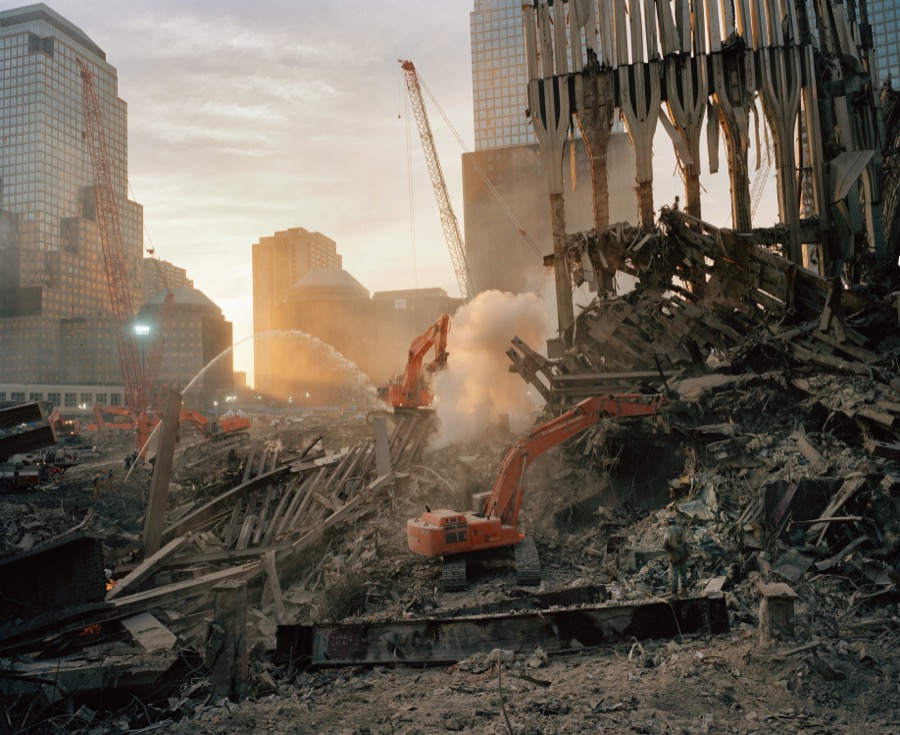 Inside the Pile, Looking West, New York City, 2001.Lower Manhattan, looking west, the ground itself has become a quarry of what stood here.
 New York, 2001.Dusk settles over lower Manhattan, and what should be a skyline reads instead as a wound: a mound of blackened debris fills the foreground, its silhouette jagged and low, while behind it a cloud of…
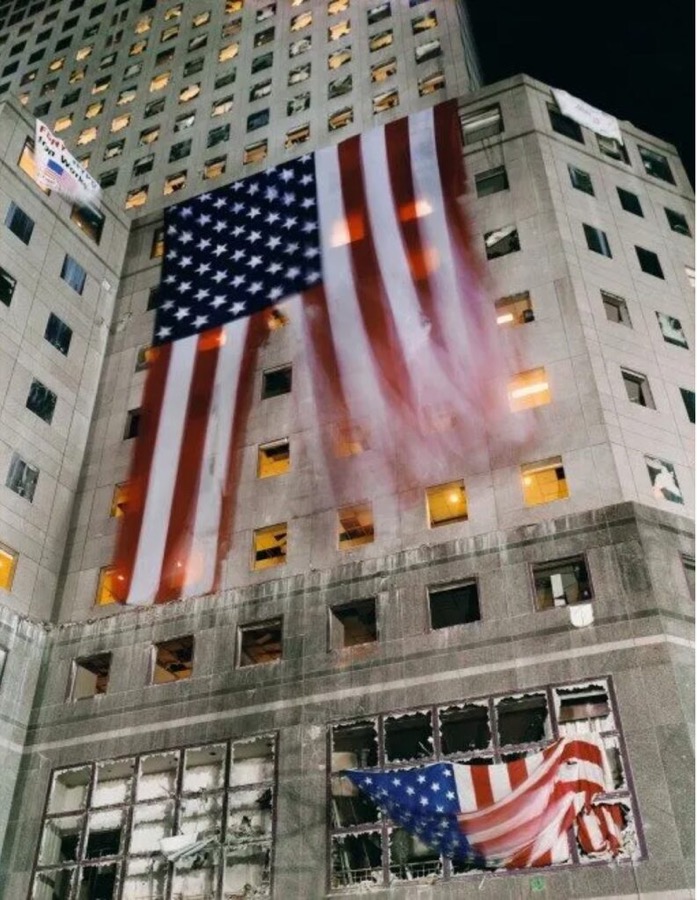 World Trade Center, 2001.Low in the frame, wedged into a row of blown-out windows, a second flag hangs torn and soot-darkened, far smaller than the great banner above it and easy to miss.
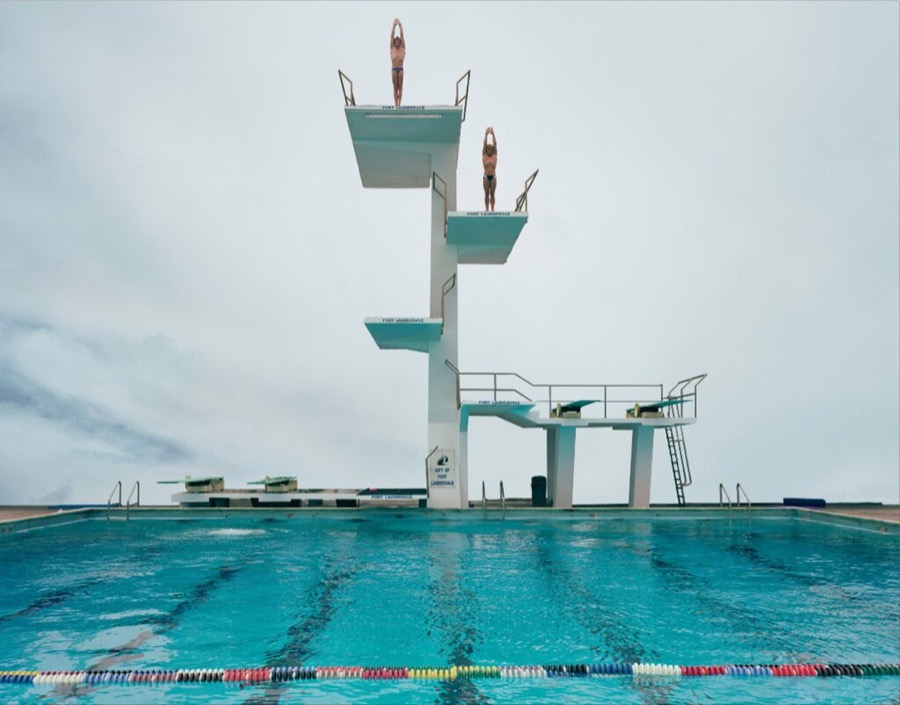 The Elements: Air/Water, 2007.Aqua and chalk: the whole picture lives between the turquoise of the pool and the milky grey of an overcast sky that has all but erased the horizon.
 The Elements: Air/Water 24 (Rising Diver - Male), 2007.Rising, breaking, climbing the blue — a body has just torn upward out of the water and the photograph keeps it suspended there, half made of flesh and half made of foam.
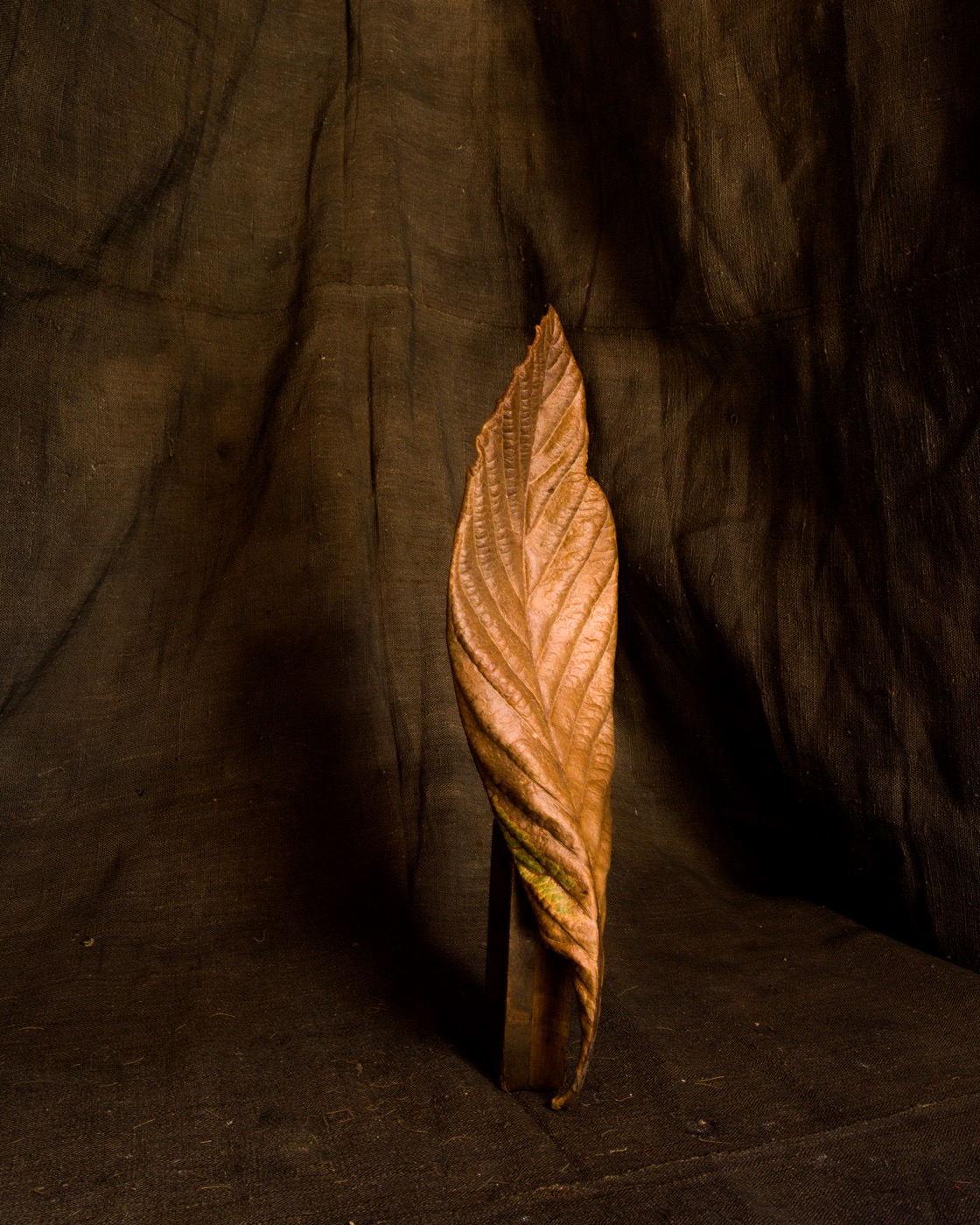 Teatrino, 2012.The thing leans. That's what gets me first — the leaf hasn't been pinned or floated or pressed flat under glass, it's been stood up on its own dried stem and tilted ever so slightly back against the…
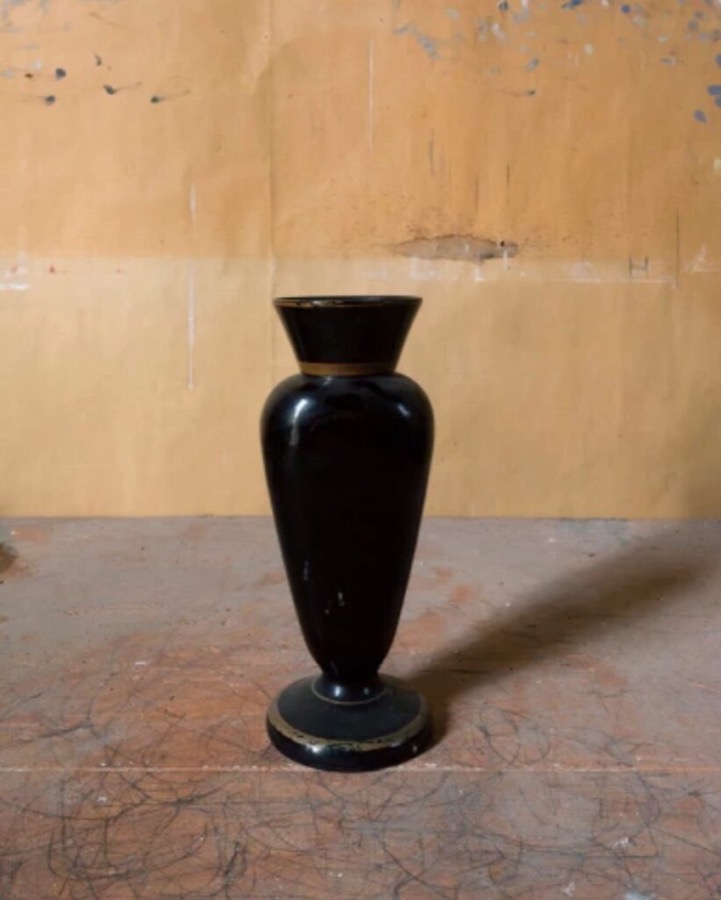 Morandi's Objects, 2015.In this room the light is the weather of a painter’s mind: soft, sourceless, falling from the left just enough to lay a faint shadow of the vase across the table and no more.
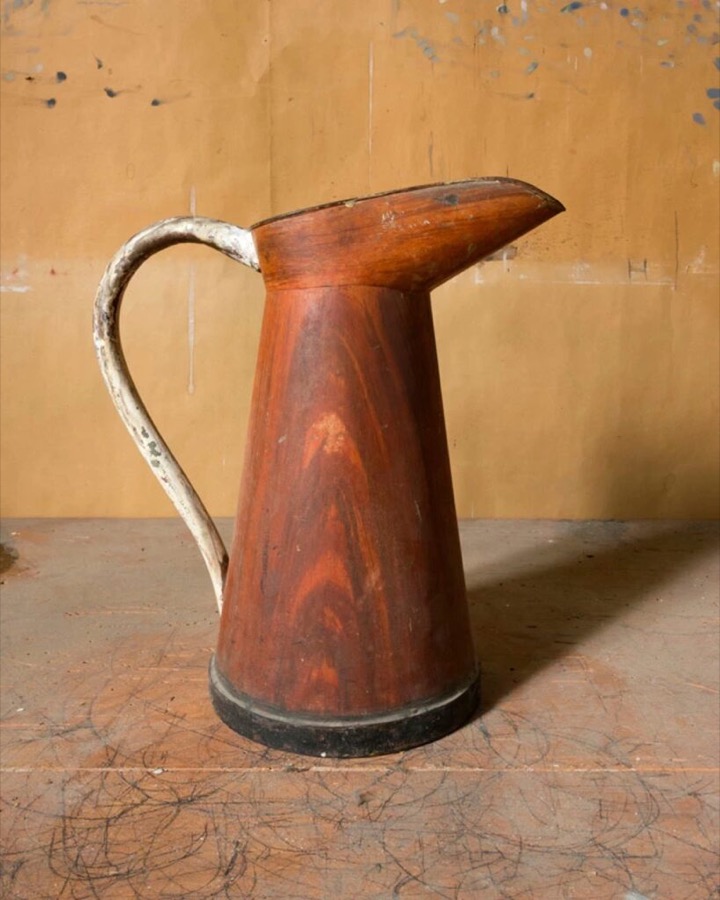 Morandi's Objects, 2015.A tall jug stands alone on a scarred table against an ochre wall.
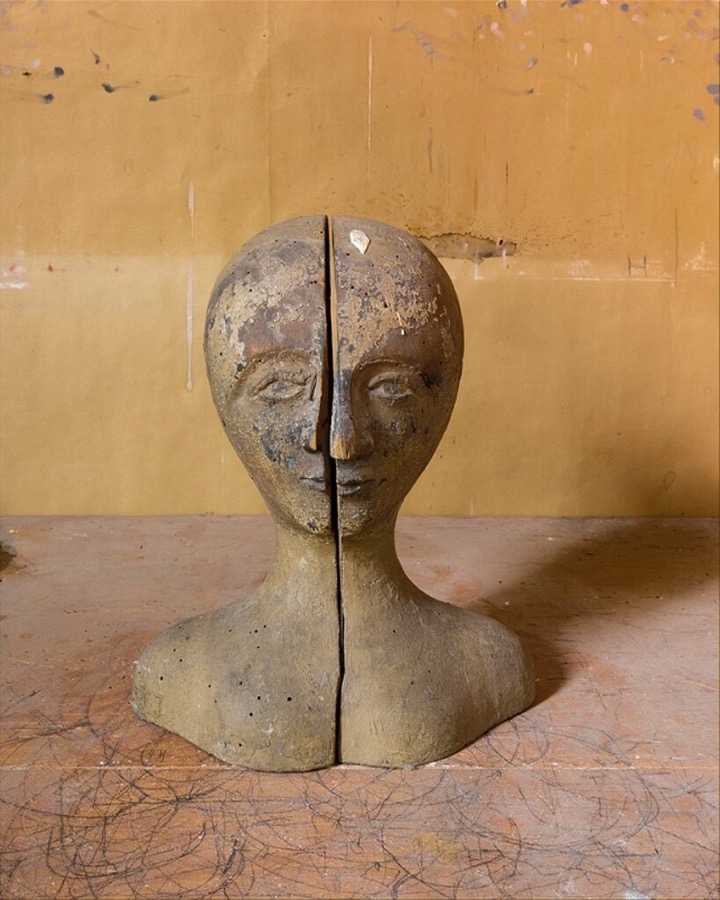 Morandi's Objects, 2015.A head modelled in pale clay sits on the table facing us: a smooth cranium, shallow eyes, a small closed mouth, a bust ending in a rounded shelf of shoulders.
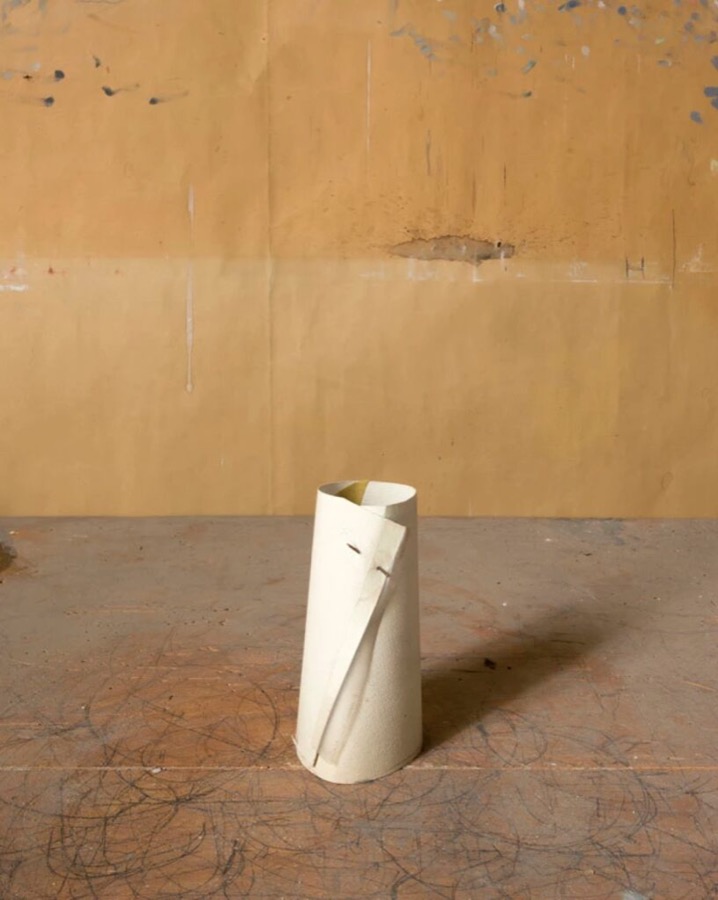 Morandi's Objects, 2015.A small cream-coloured vessel stands near the bottom of an otherwise empty frame.
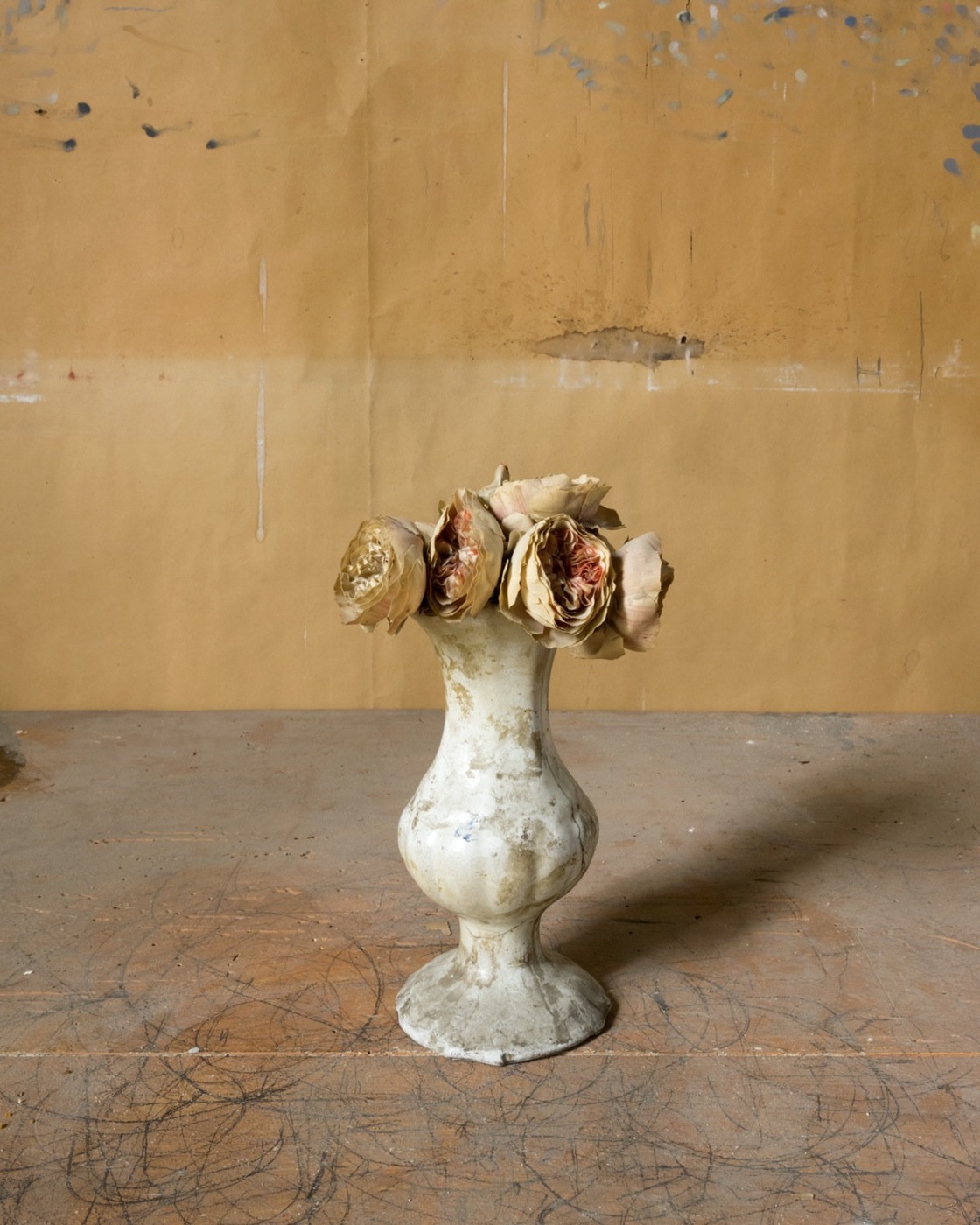 Morandi's Objects, Flowers in Vase, 2015.What is a photograph obliged to keep? Here the answer is the tabletop, covered in faint pencil arcs, the loops a hand made marking where things had stood, and the camera reads them as plainly as it…
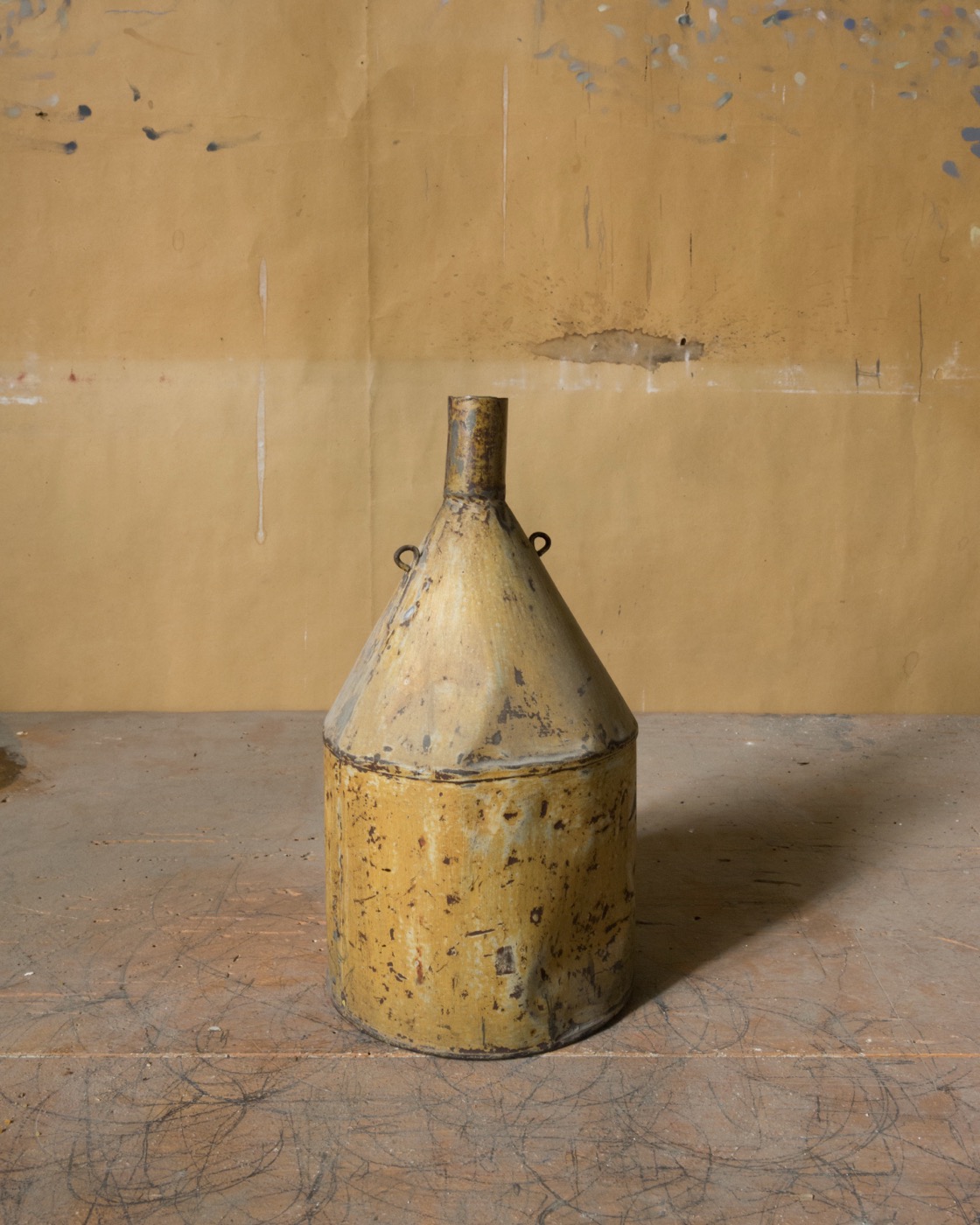 Morandi's Objects, The Last Object, 2015.What does it mean to call an object the last one?
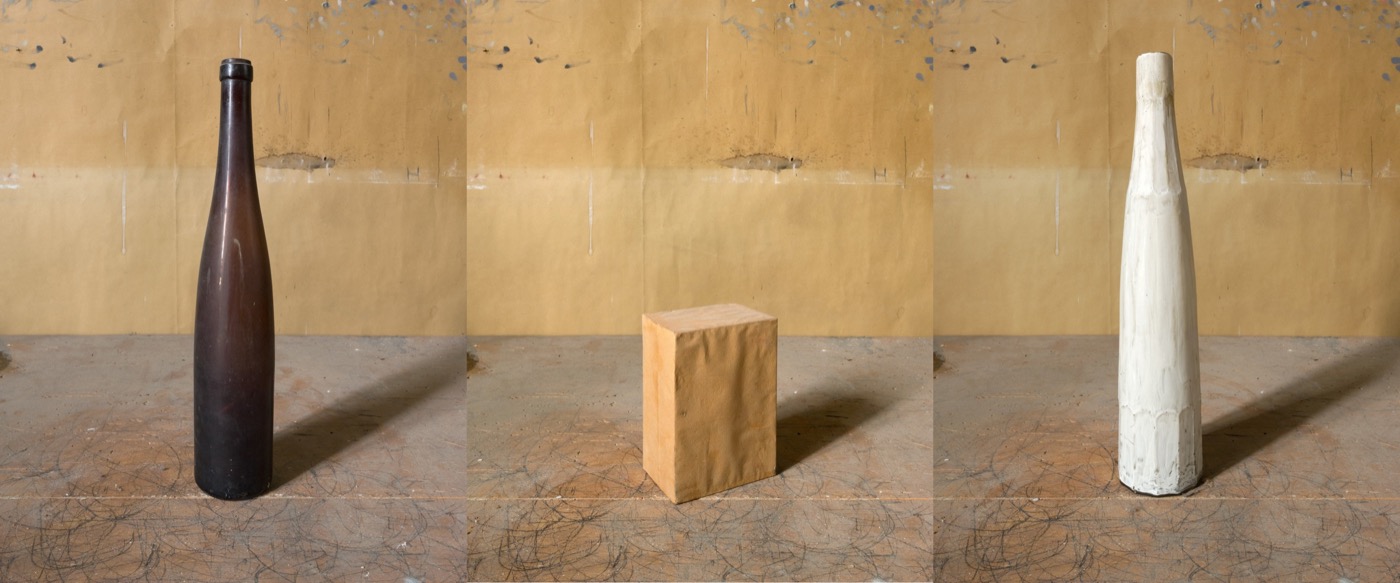 Morandi's Objects, Triptych One, 2015.Set this beside Morandi's own paintings and the lineage is plain — and plainly mischievous.