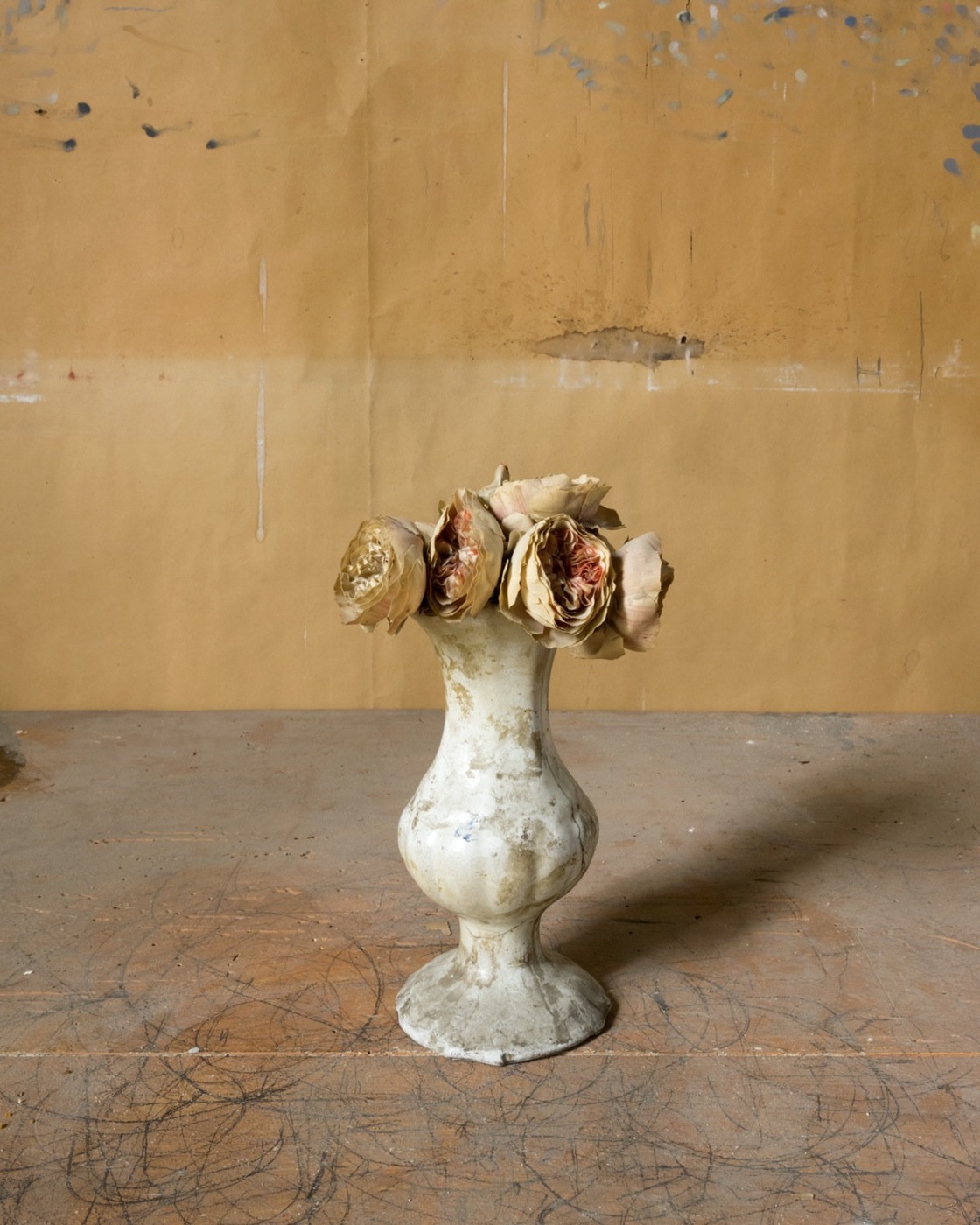
Joel Meyerowitz American, b. 6/3/1938
Edition of 10
Edition of 10
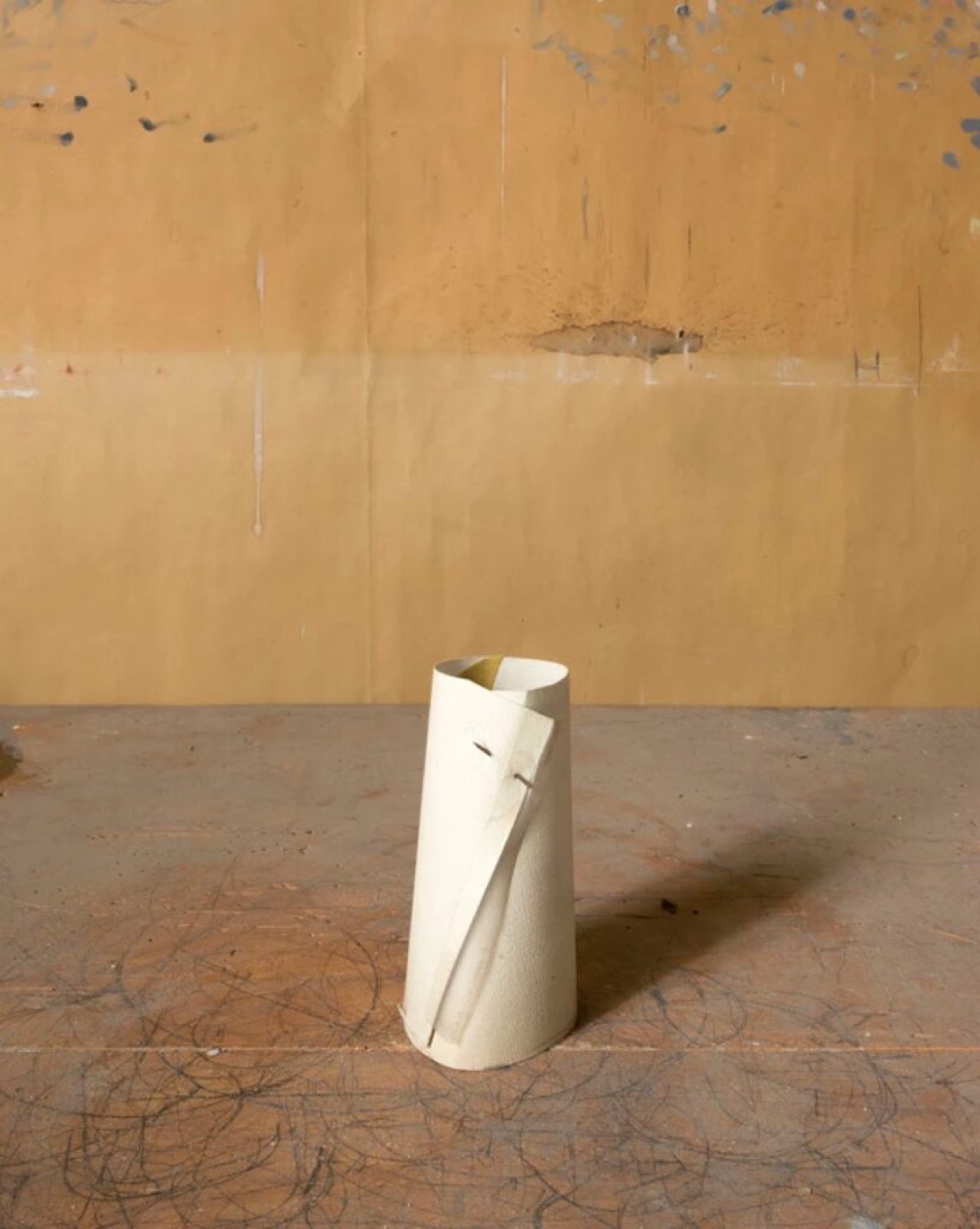
A small cream-coloured vessel stands near the bottom of an otherwise empty frame. It is a cylinder, very slightly conical, its side split and folded over on itself; a shadow leans away from it to the right. Above and around it: the ochre wall with its drips and patched repairs, and the great scratched expanse of the tabletop. The object occupies perhaps a twelfth of the picture. Everything else is room.
To photograph a thing is to declare it worth attention, and here the emptiness is how the declaration gets made. This is an unremarkable pot, chipped, not old enough to be an antiquity and not fine enough to be a treasure, and the framing has been arranged so that we cannot look anywhere else. The photograph confers the importance. It does not find it lying there.
Though importance had of course been conferred once already, by a painter who set this pot in front of himself for years. The photograph inherits that authority and quietly doubles it: we are looking at a modest object made significant by having been looked at, twice, by two people with unusually good eyes. The subject, in the end, is attention itself, and its power to promote almost anything into an image worth owning.