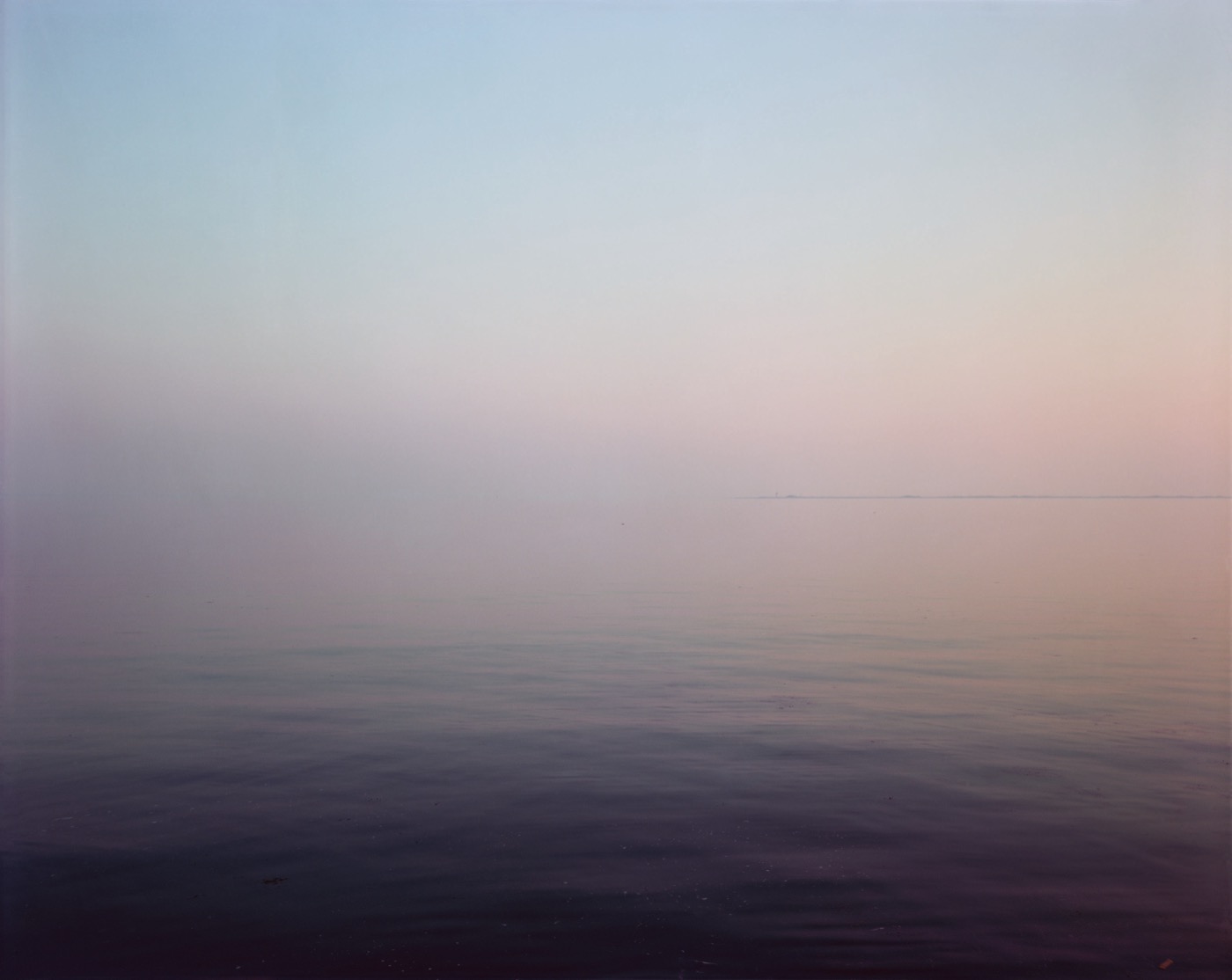
Joel Meyerowitz American, b. 6/3/1938
Edition of 20
Edition of 10
Edition of 5
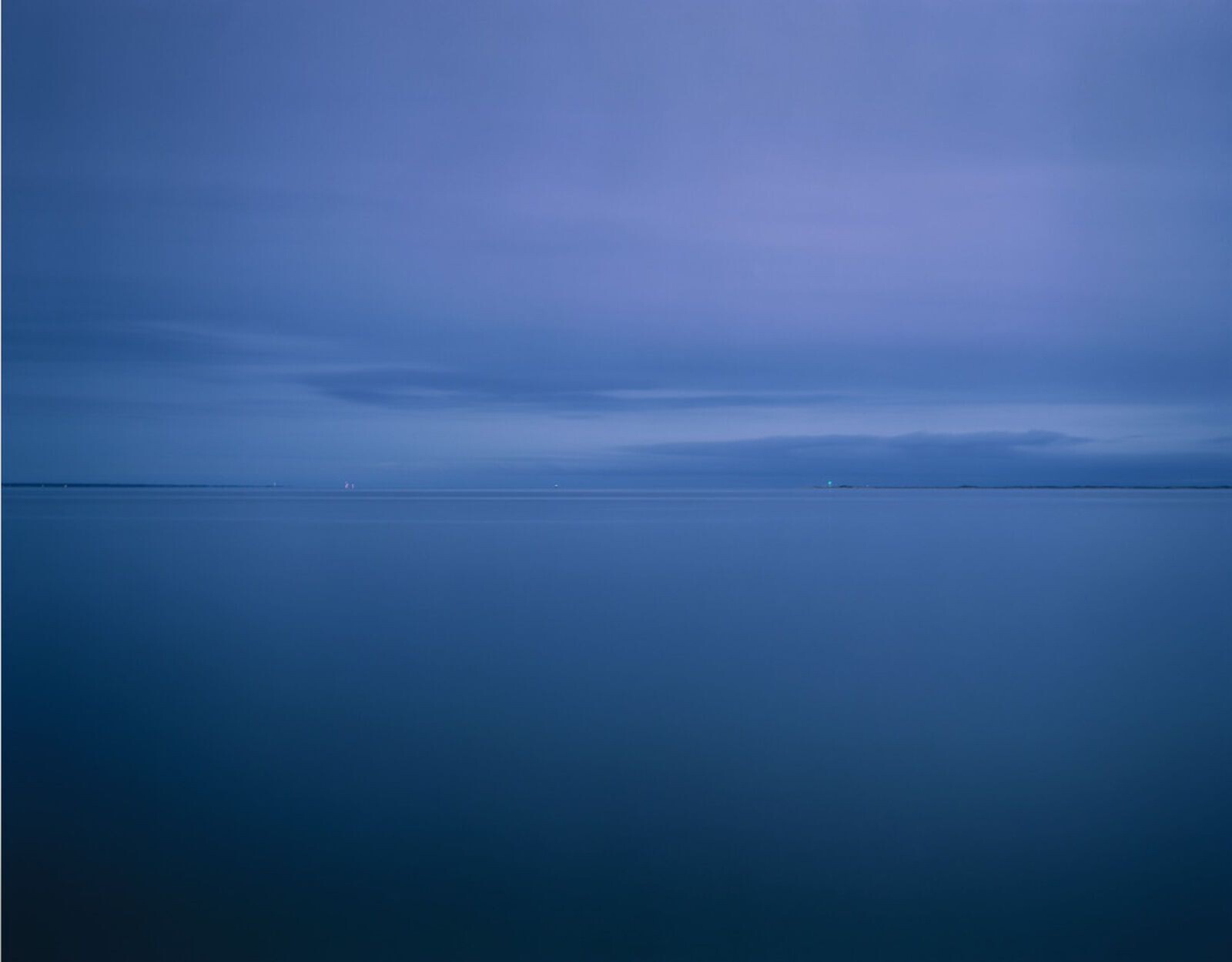
The horizon sits low, barely a third of the way up the frame, and everything above and below it dissolves into variations of a single blue: violet-tinged cloud banks stacked in the sky, a flat, unbroken bay reflecting that same color back with barely a ripple to disturb it. Only a scatter of tiny lights along the far shore, pink, white, one faint green, breaks the near-total absence of incident, marking the presence of a town without describing it.
This is one frame from a body of work built on repetition and patience: Meyerowitz returning to the same strip of water and sky at Provincetown across seasons and hours until the view becomes less a place than a register of atmospheric change, blue by blue. Seen on its own, the photograph reads as pure color field; seen as part of the series it belongs to, it becomes a single measurement in a much longer study of how little a landscape needs to hold attention.
What makes the picture succeed is its refusal to supply a subject beyond light and water. There is no boat, no figure, no structure to anchor a narrative, only the evidence of a long exposure smoothing the bay's surface into something closer to glass, and a handful of lights standing in for all the human activity the frame has otherwise excluded.