Joel Meyerowitz American, b. 6/3/1938
76.2 x 101.6 cm / 30 x 40 in
121.9 x 152.4 cm / 48 x 60 in
Umbrella edition: 25 prints in total, shared across the three sizes
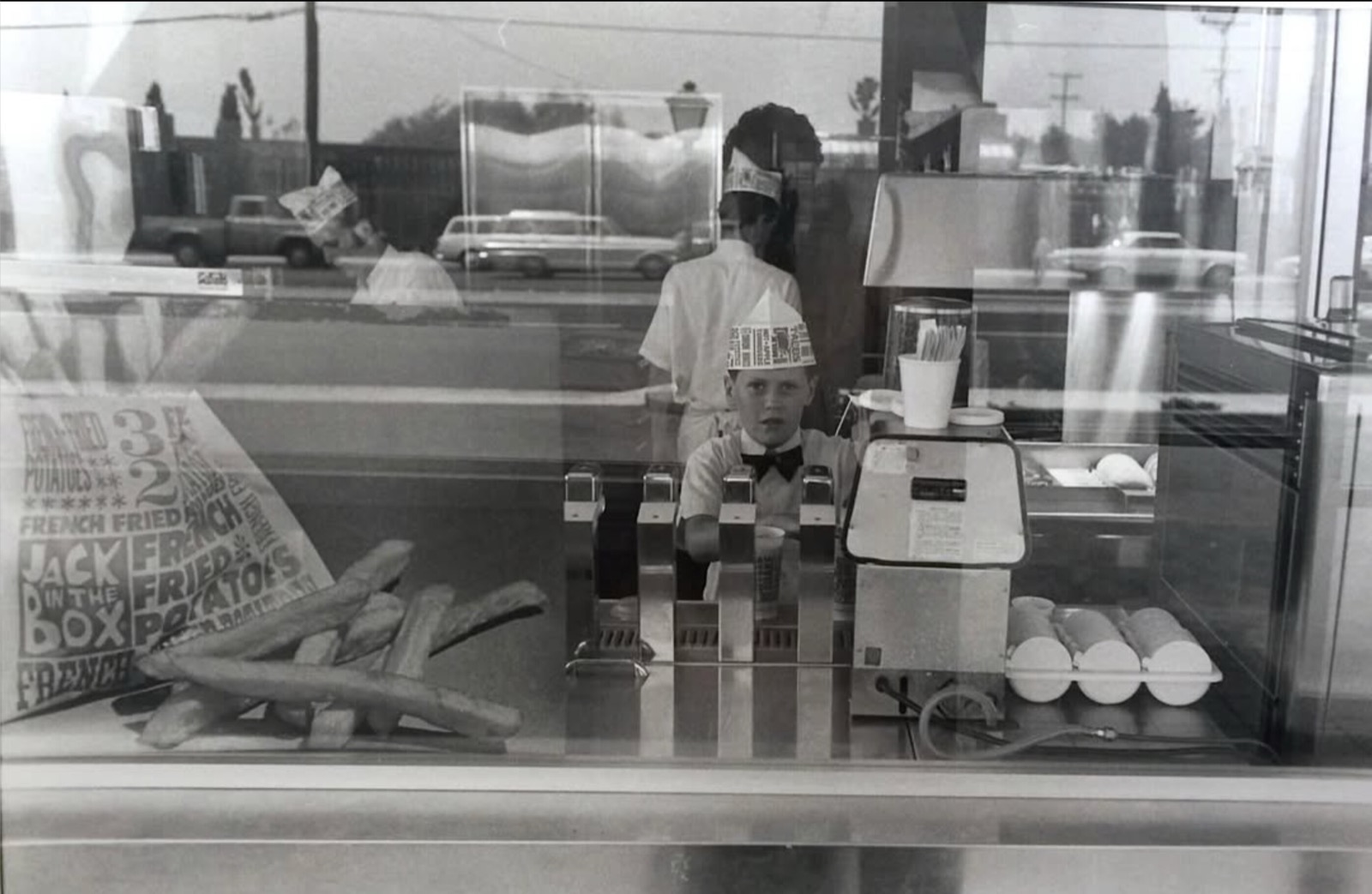
Everything in this picture happens on a single plane of glass. Behind it, a boy in a folded paper hat stands at the counter of a drive-in, hands resting on the dispensers, looking straight out at the camera. On the same surface, a California street arrives as reflection: a parked pickup, two sedans sliding past, a telephone pole standing exactly where a doorframe should be, pale sky above them. The hand-lettered offer of french fried potatoes, three for two, floats between the two worlds and belongs to both at once.
Meyerowitz has not composed a scene so much as found the place where two of them are forced to share one rectangle. The window does the montage; the camera only has to agree to it. What holds the picture together is the boy's face — the one thing in the frame that refuses to become a surface. He is looking back, aware of being looked at, and that steady, faintly wary expression cuts through the traffic crossing his chest. Around him the props of a new kind of American eating are set out with a clerk's neatness: paper cups, a tray of buns, the chrome of the machines, a second worker in the same paper hat.
This is the argument street photography makes at its best: that the world will arrange itself if you stand in the right place and are quick enough to accept the offer. Nothing has been staged, and nothing needed to be. The negative holds every layer at once, and printing it later is a sequence of decisions about how much reflection to let win against the interior, how much of that afternoon to let cross a boy's face. What survives is not one moment but several, fused by glass and light, and held there until someone judges it worth pulling back into the world as an object.
