Joel Meyerowitz American, b. 6/3/1938
Edition of 10
Edition of 10

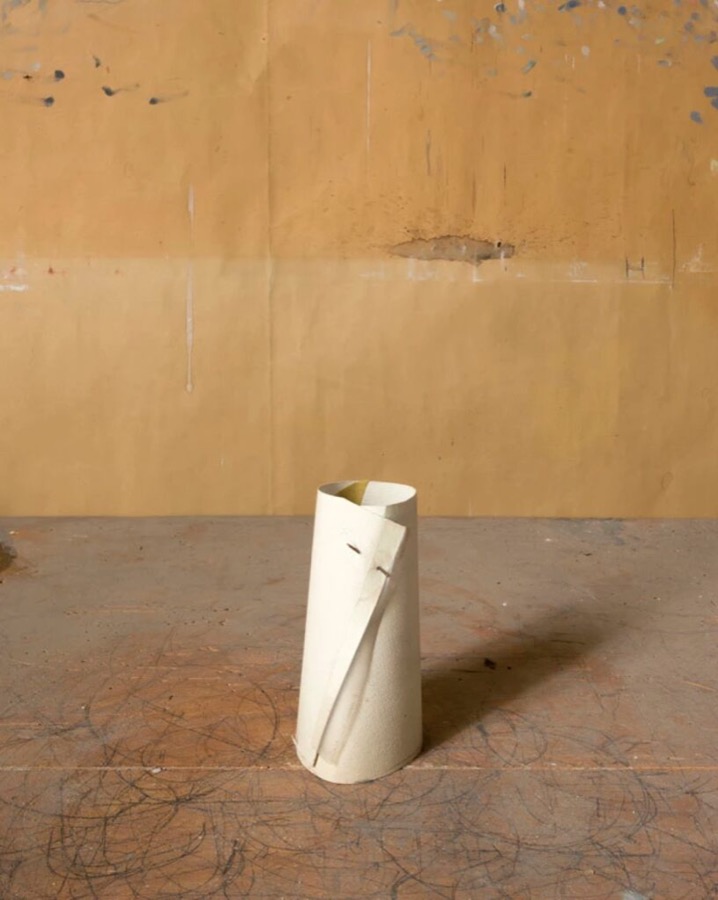
A head modelled in pale clay sits on the table facing us: a smooth cranium, shallow eyes, a small closed mouth, a bust ending in a rounded shelf of shoulders. It has split. A single crack runs from the crown straight down through the brow, the nose and the throat, dividing the face into two halves that no longer quite agree — one darker, one paler, the nose broken back to a stub along the seam.
Photography and this object are in the same line of work. Both hold on to a likeness after the person has gone; both do it imperfectly; both go on aging quietly in the dark. The head has stood in a studio in Bologna for decades taking up dust and damp, and the crack is only time doing to plaster what time does, more slowly, to a print.
And now there is a second copy of it. The photograph has taken this fragile, split thing and made a version that can hang in Madrid or New York while the original stays on its table — a version that will certainly outlive the plaster. The chain runs: a person, a modelled head, a painter's motif, a negative, a print on a wall. Each link keeps a little less of the original and lasts a good deal longer.