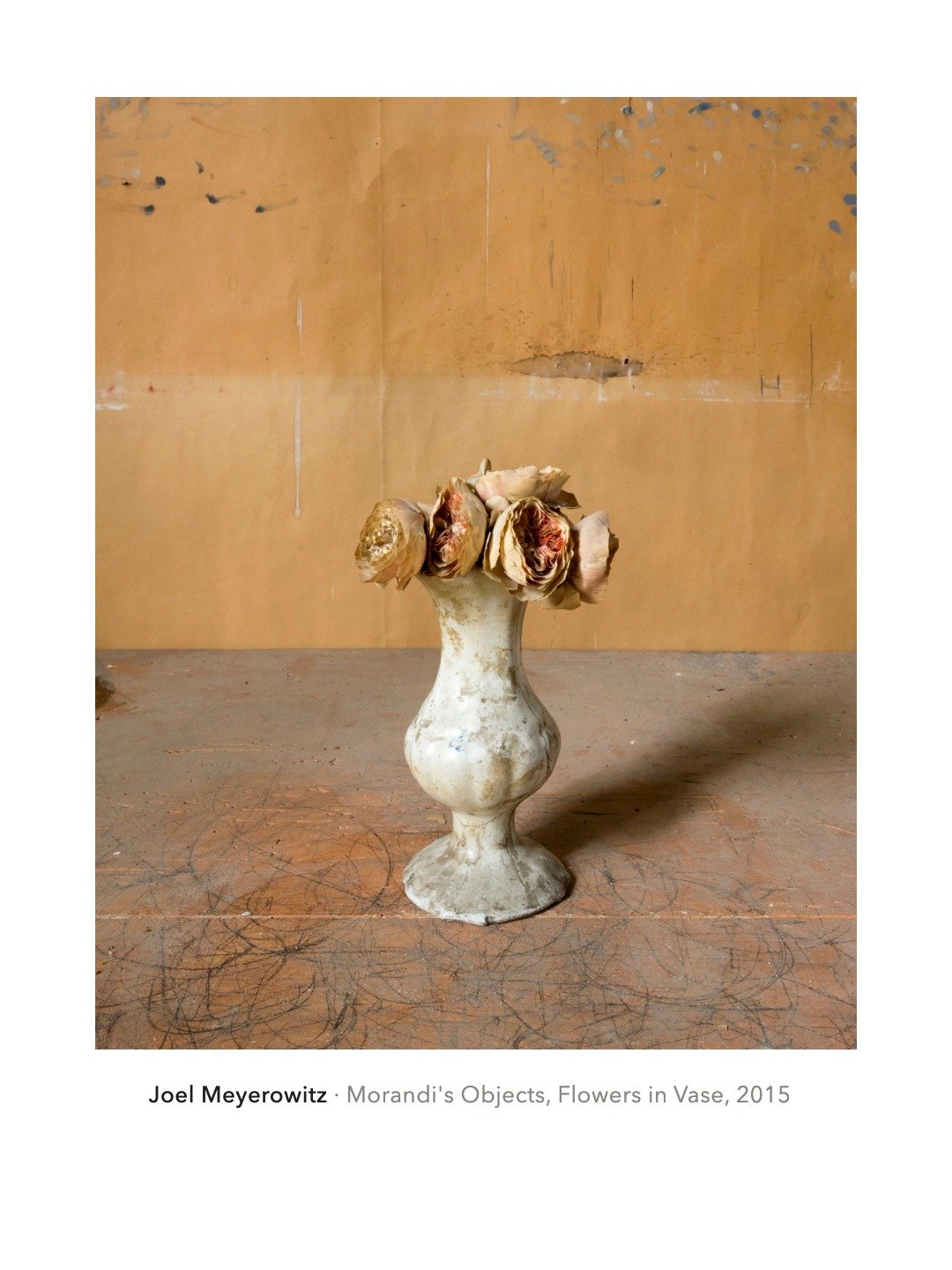
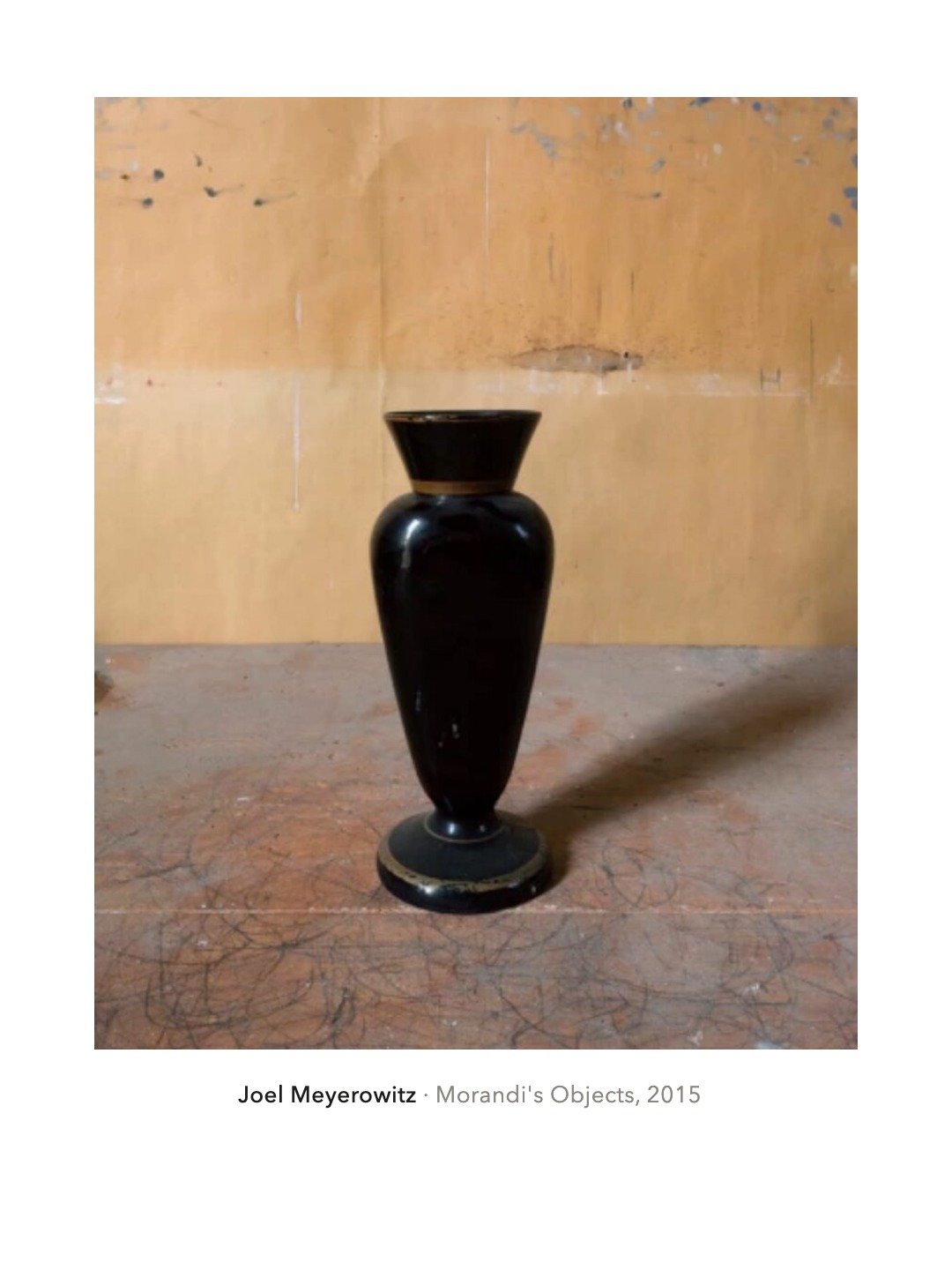
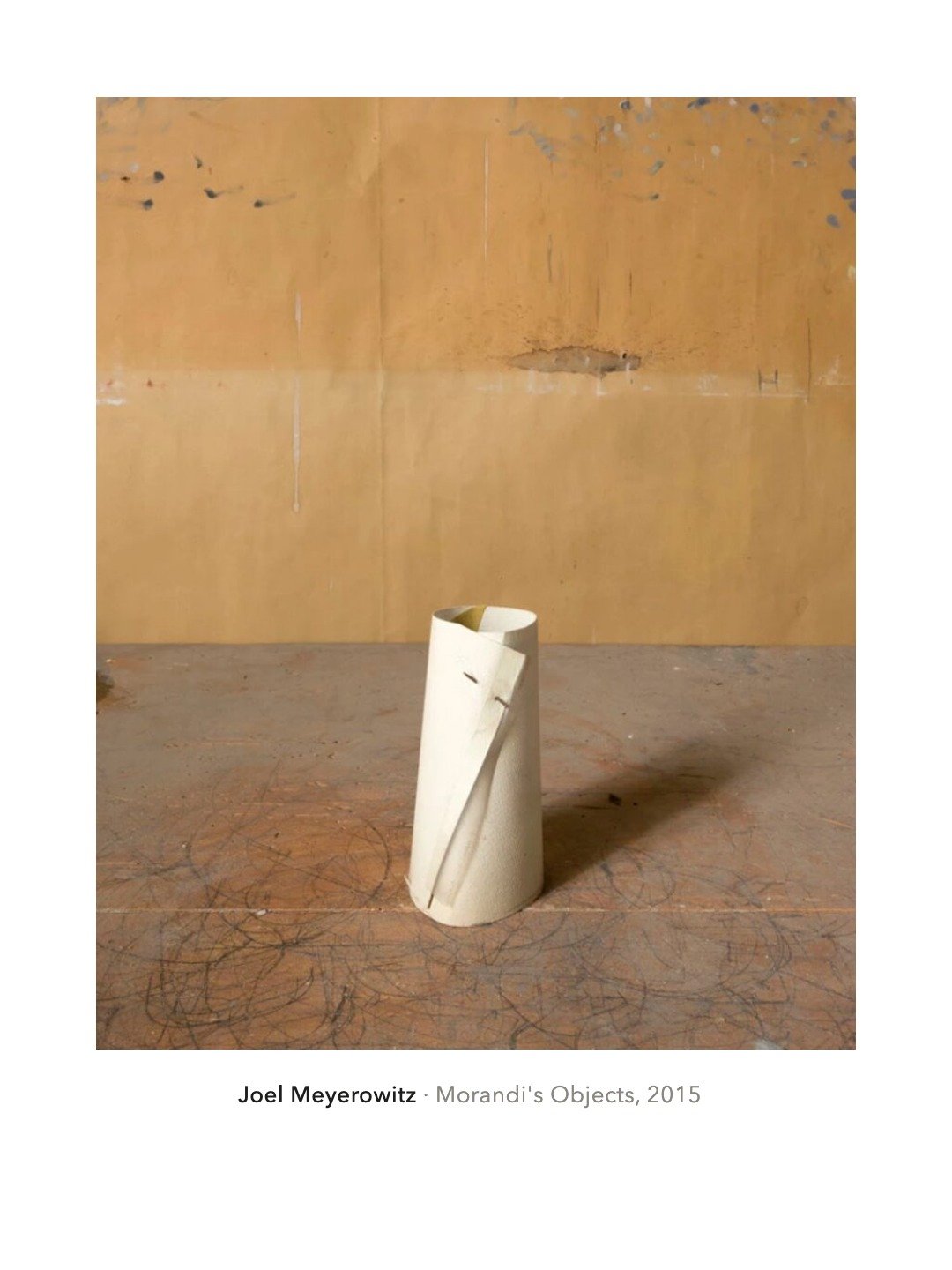
Giorgio Morandi painted the same bottles, boxes and jugs for decades in one room at number 36, via Fondazza, in Bologna. About fifty years after he died, in the spring of 2015, Joel was let into that room.
He ended up photographing some three hundred of the painter's objects, one at a time, each one set on Morandi's own table.
Look at the table. Those loops of graphite are the painter's own: he drew around his arrangements so that every object could be put back in exactly the same place. The table is a record of decisions, and the camera reads it as plainly as it reads the jug standing on top of it.
"I was trying to stay open in my response, so that if there was a flicker of recognition — that something in the object was animated — I would get it."
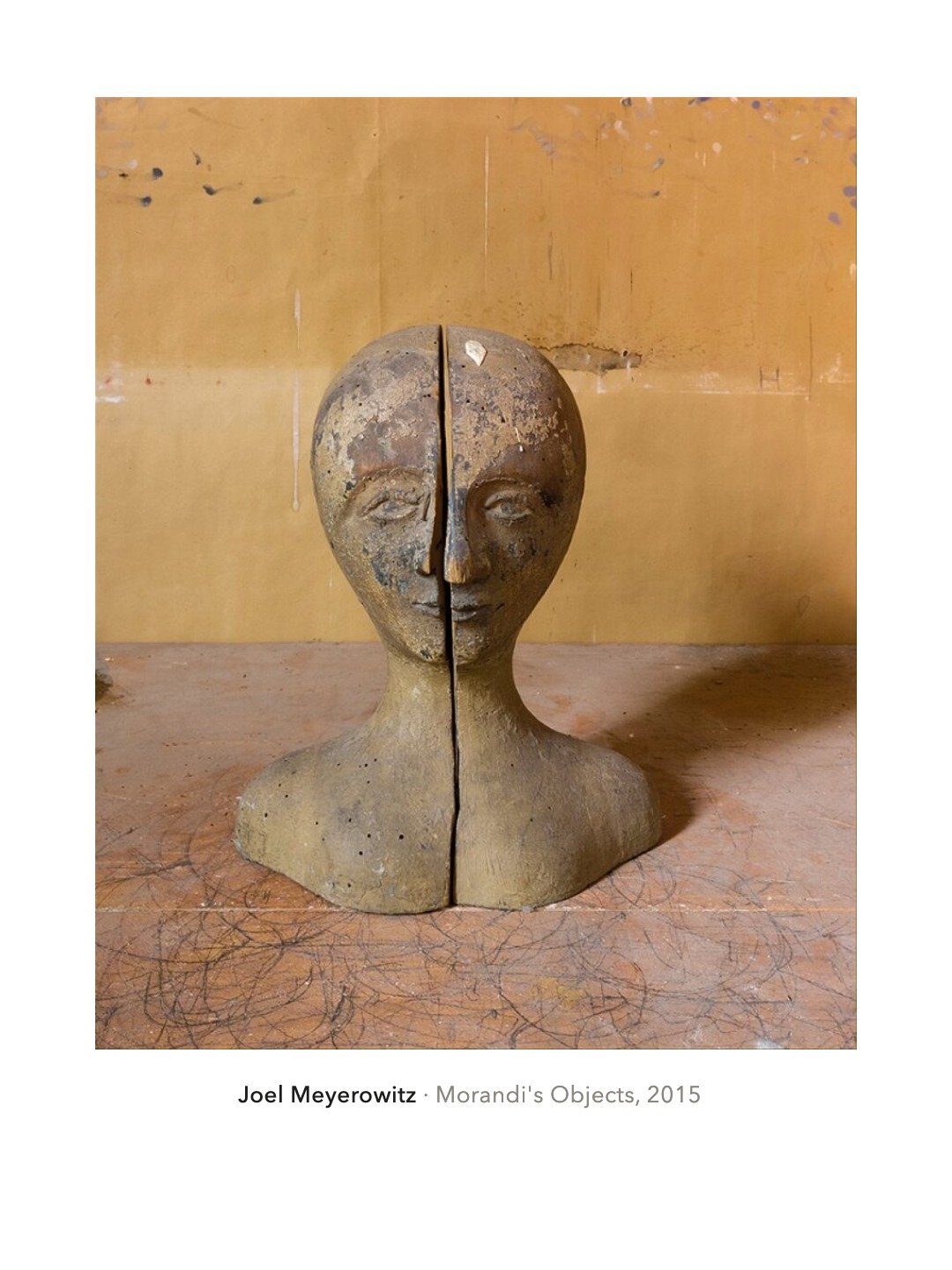
A chipped pot takes up perhaps a twelfth of the frame and everything else is room: the photograph does not find the importance lying there, it confers it, on a thing a painter had already spent years looking at. A clay head is split from the crown through the brow and the nose, and photography and that object are in the same line of work — both hold on to a likeness after the person has gone, both do it imperfectly, both go on ageing quietly in the dark. And one vessel stands alone, "The Last Object", where Morandi would have crowded a small congregation, under the even studio light of Bologna that the painter taught a century to love.
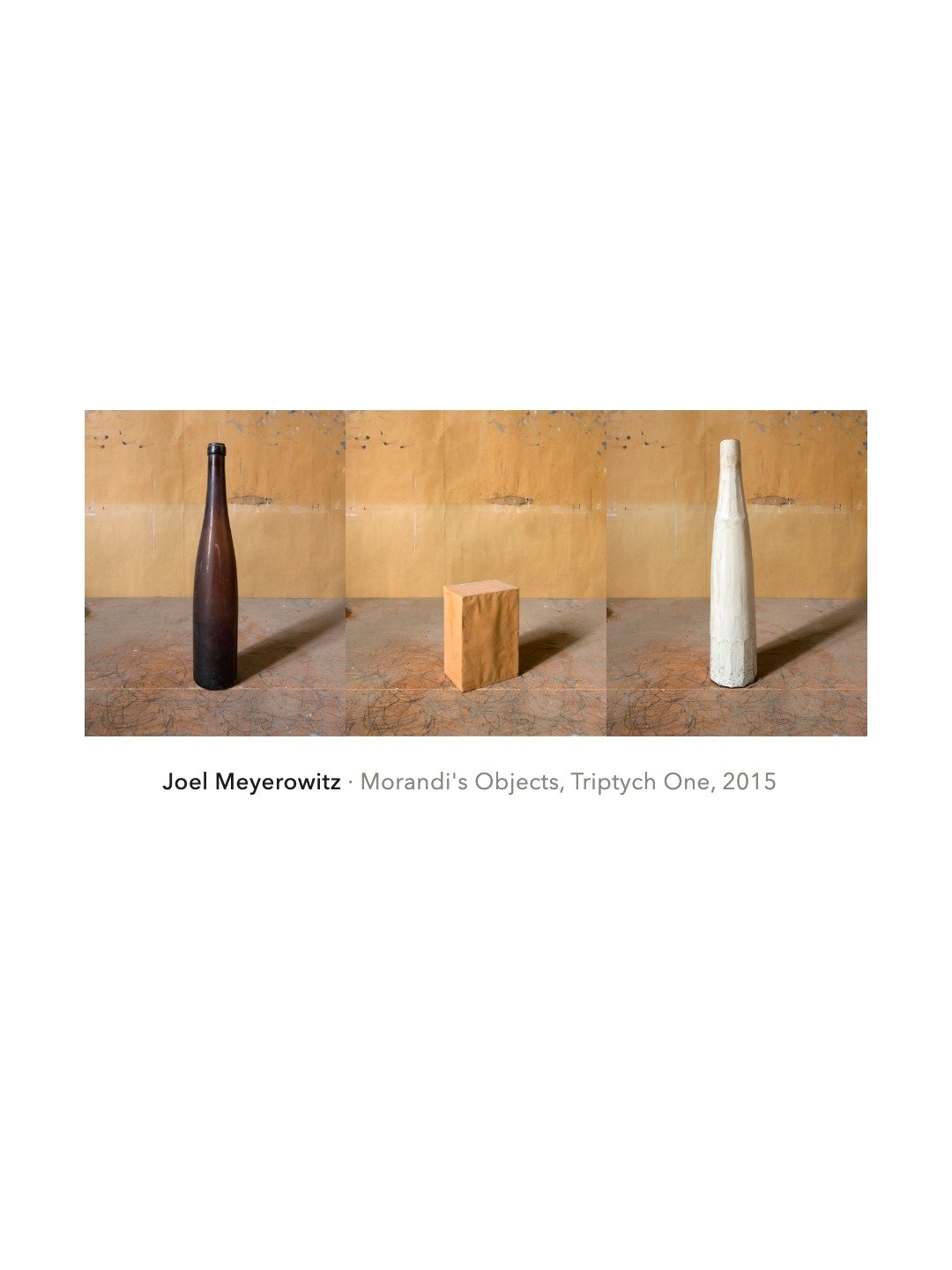
The chapter ends on a triptych: three of his actual objects, pulled apart and given a panel each, like saints in an altarpiece. Three solos where Morandi wrote chords.
Every photograph in this chapter can be ordered through the gallery. Click on any photograph to see its technical details and availability.