He raised his camera, and a police officer reminded him that this was a crime scene and that no photographs were allowed. What he understood is the whole of this chapter: no photographs meant no history.
So he found a way in. He kept coming back until he had built strong links with the firefighters, the policemen and the construction workers on the site, and they were the ones who let him through. He became the only photographer given unimpeded access to Ground Zero, and the Museum of the City of New York then engaged him officially to make an archive of the destruction and the recovery. A selection of it has since travelled to more than two hundred cities in sixty countries.
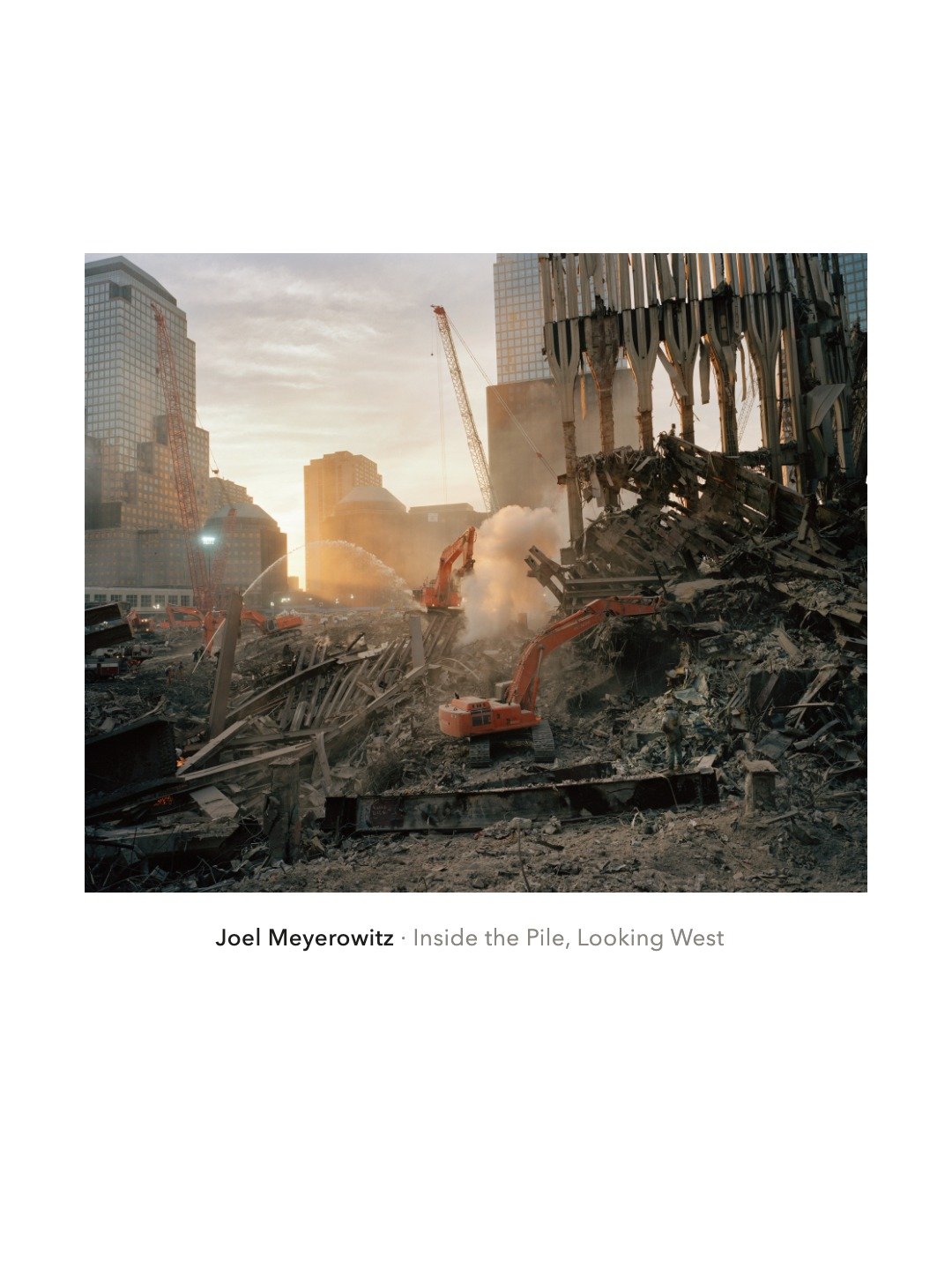
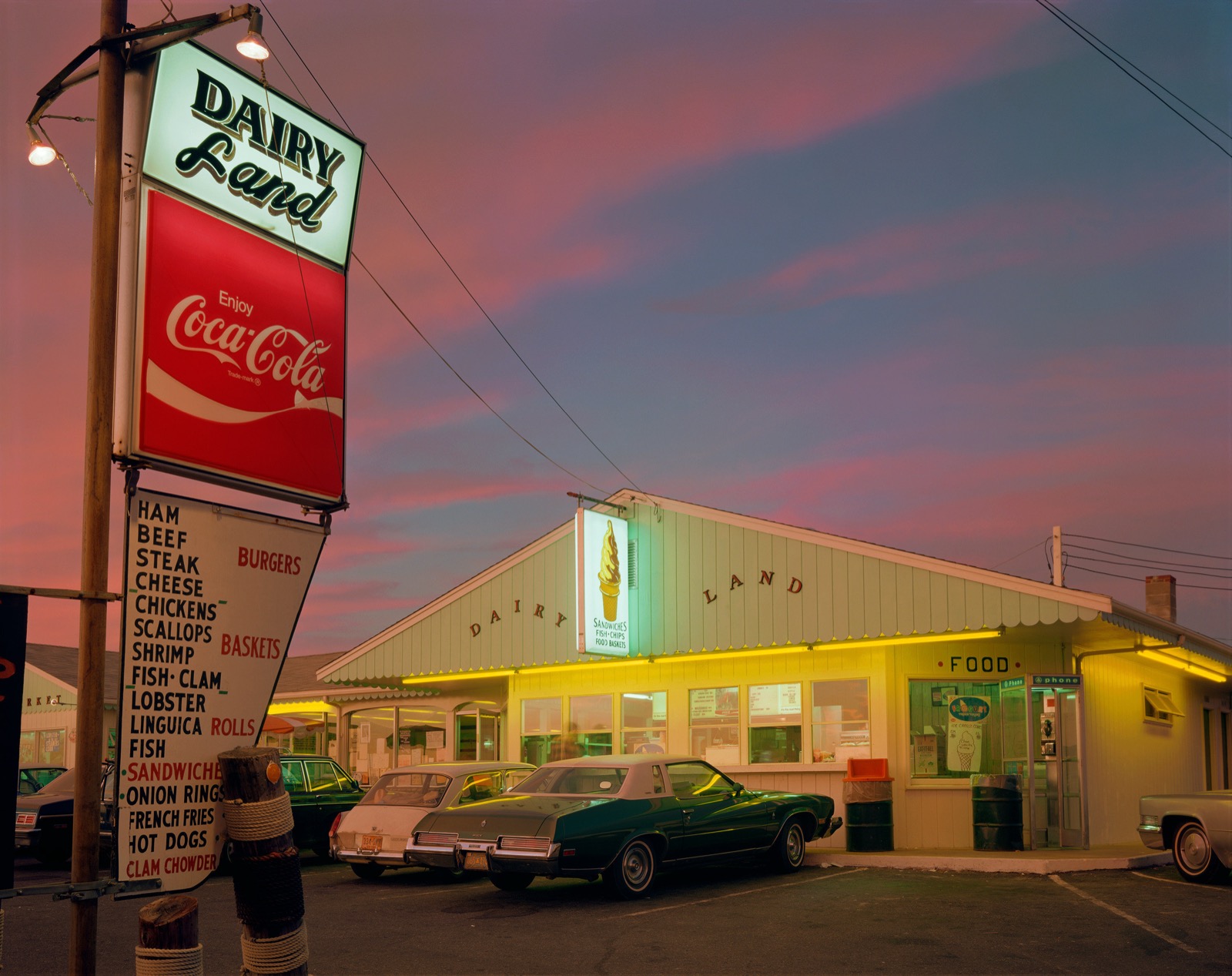
He carried both cameras in: the large format camera on its tripod, the one from Cape Cod, for the pictures that had to hold still, and a 35mm so that he could move. Everything the last seven chapters have been about, in the same place at the same time.
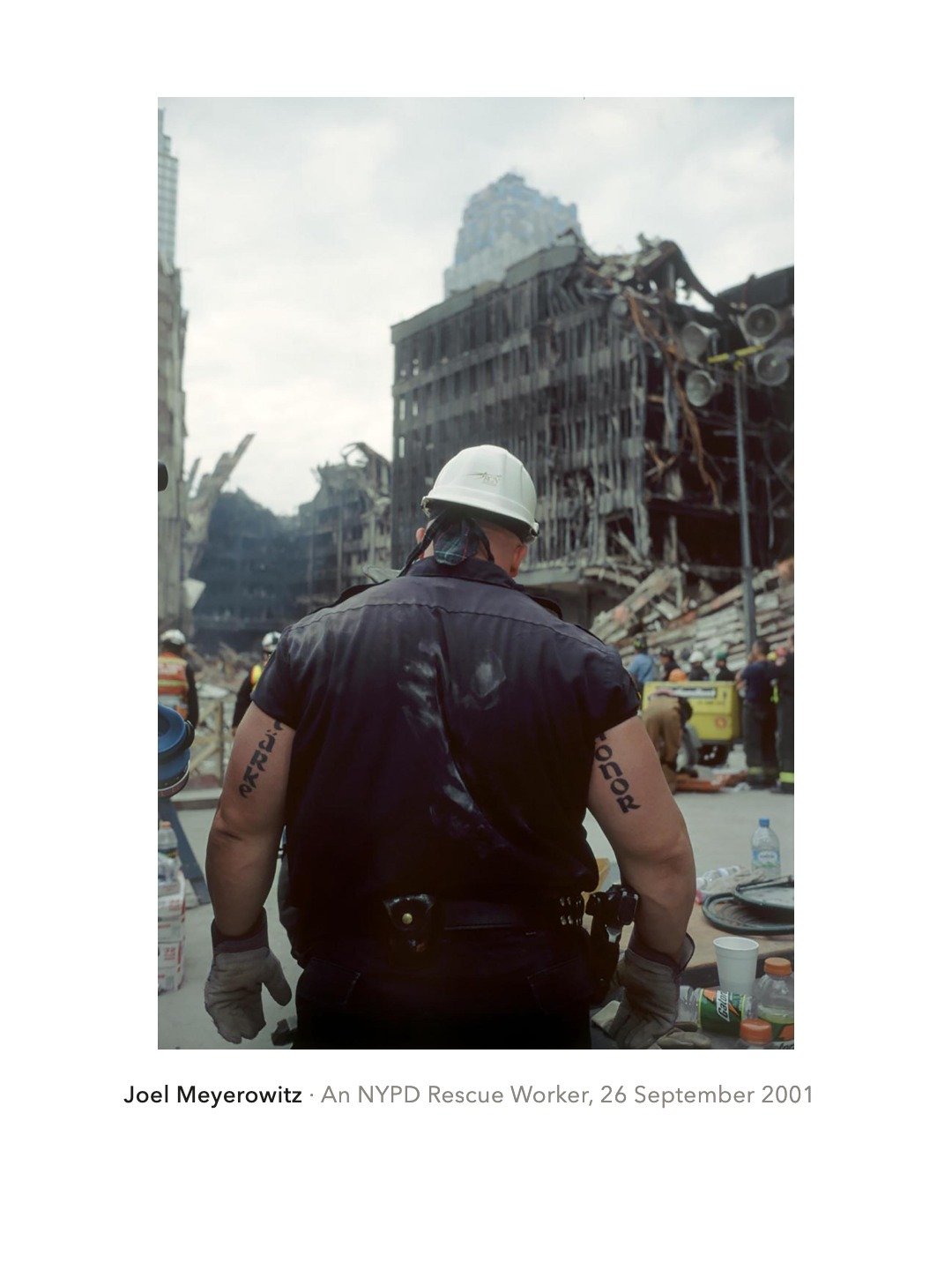
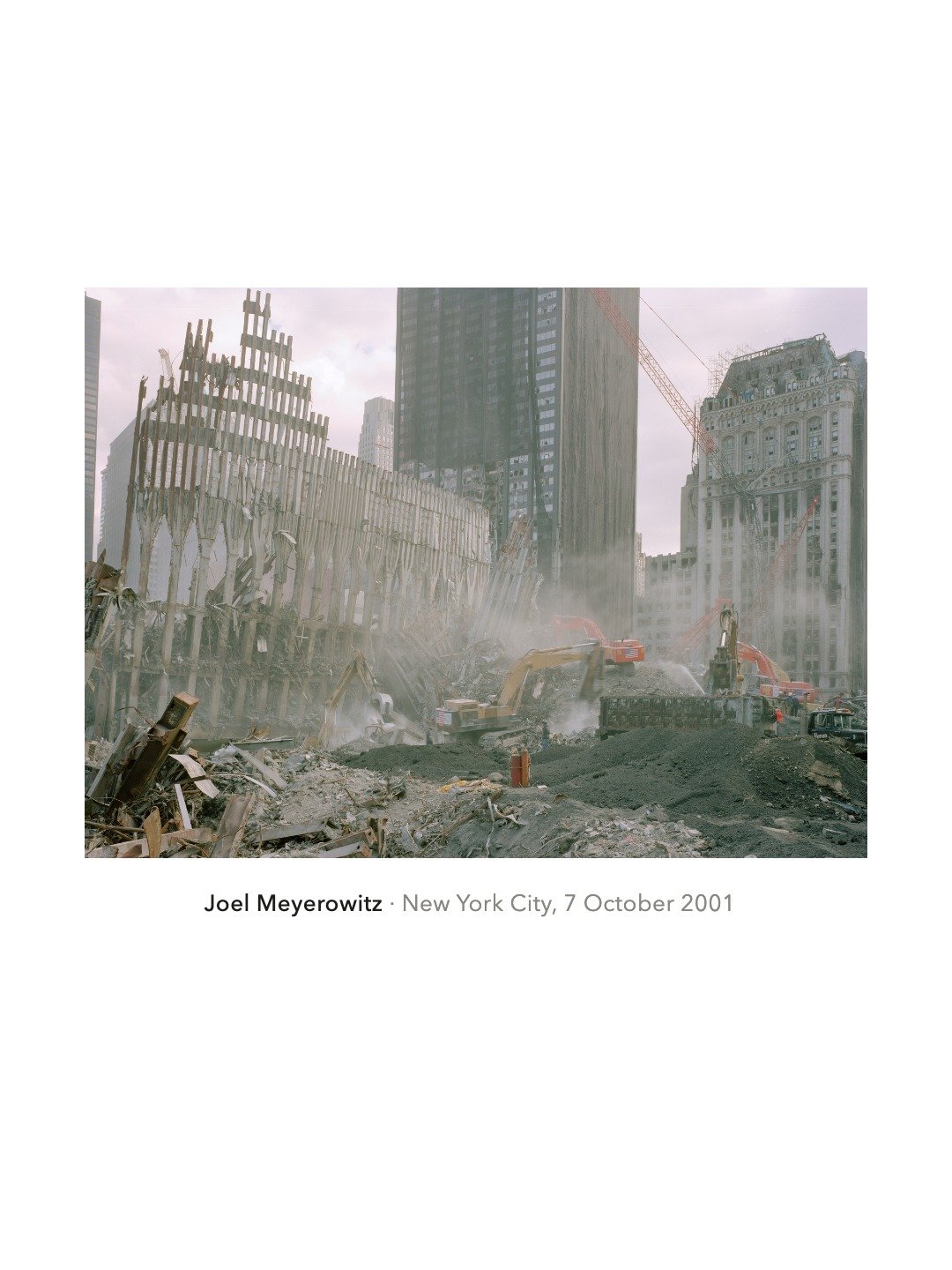
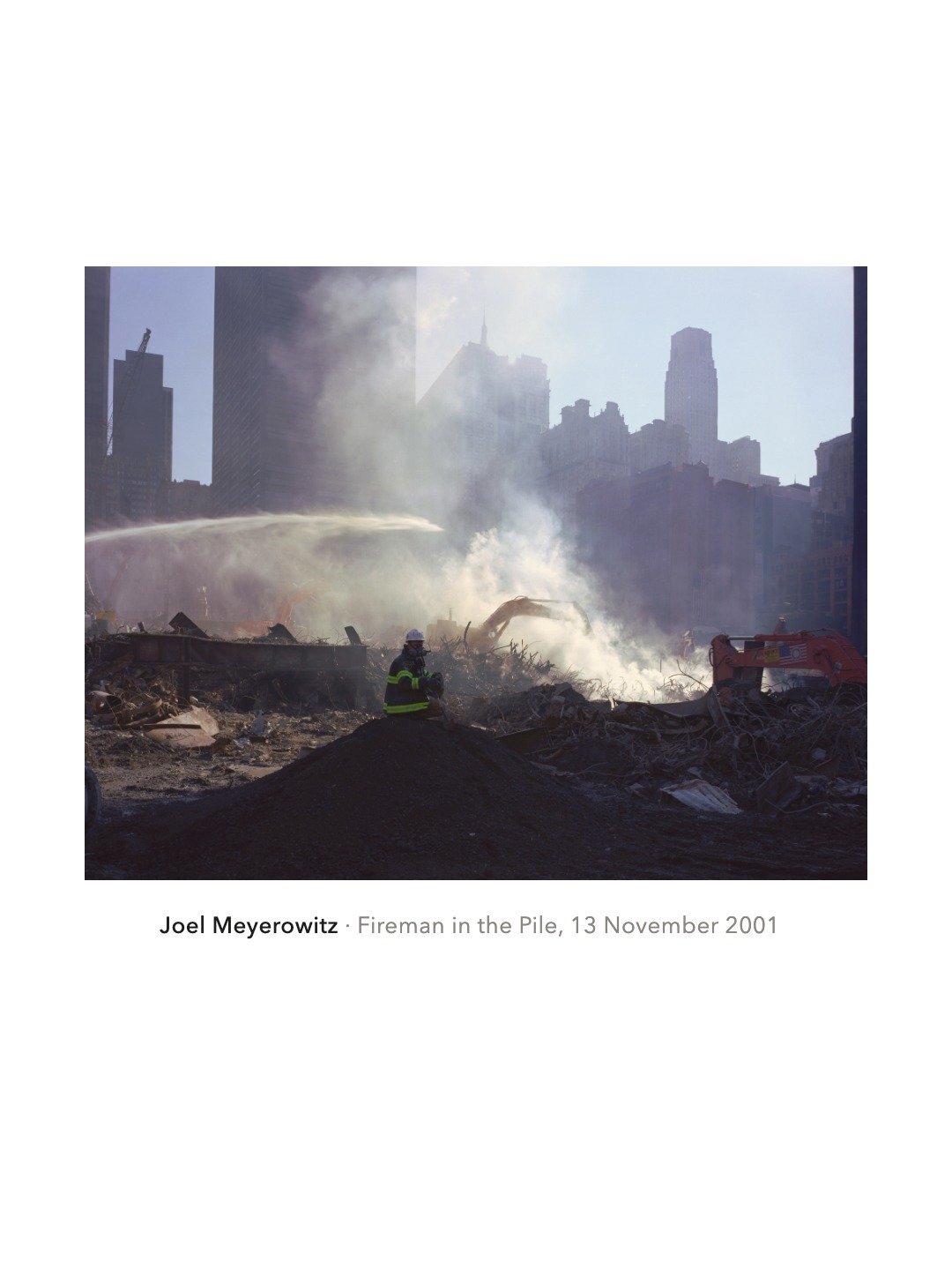
And he kept going back. 26 September. 7 October. 24 October. 13 November. Then a winter, and then 16 February, and a young man carrying a hydraulic hose turns his head to look at the camera. The dates came with the files from the studio.
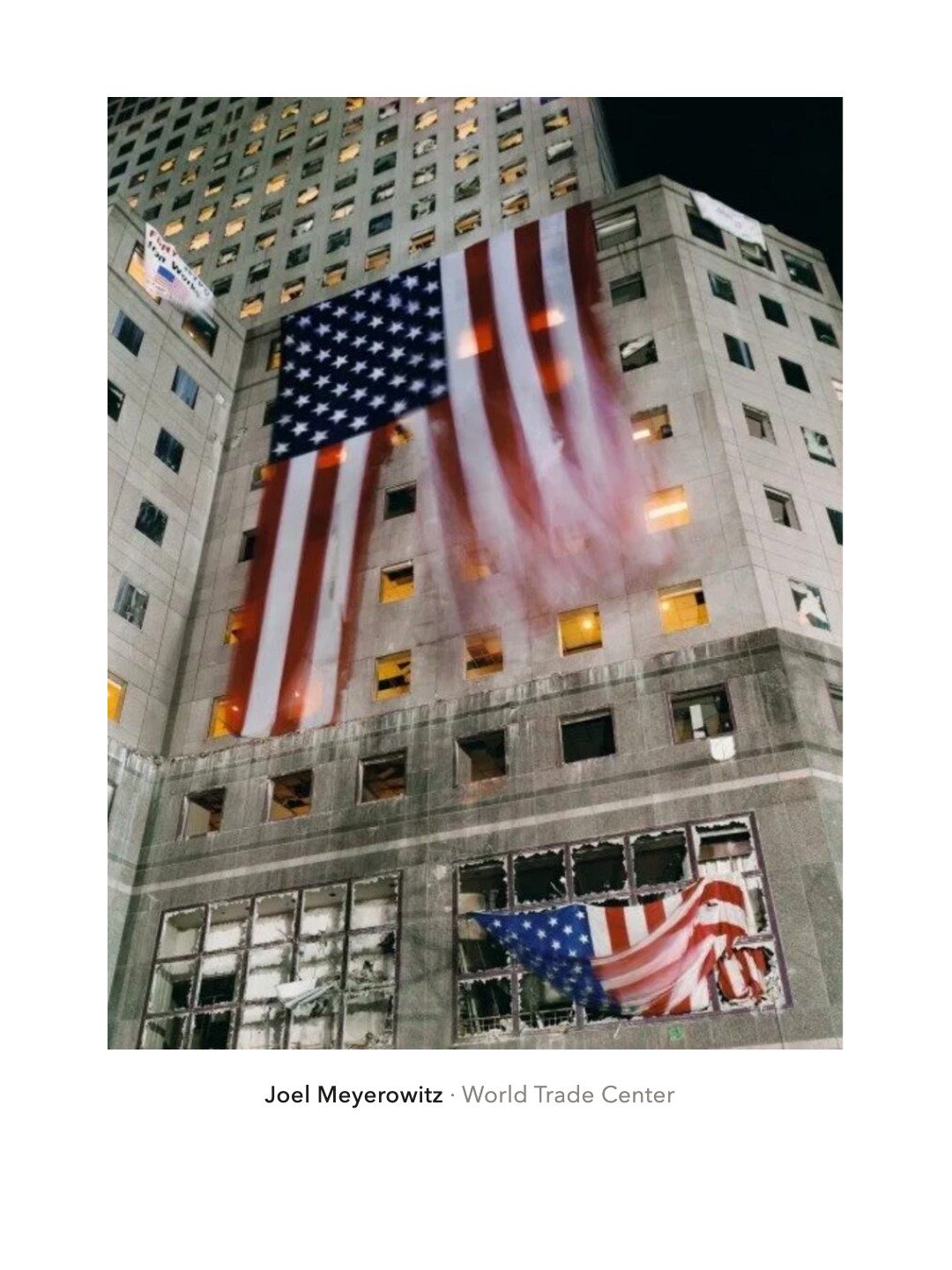
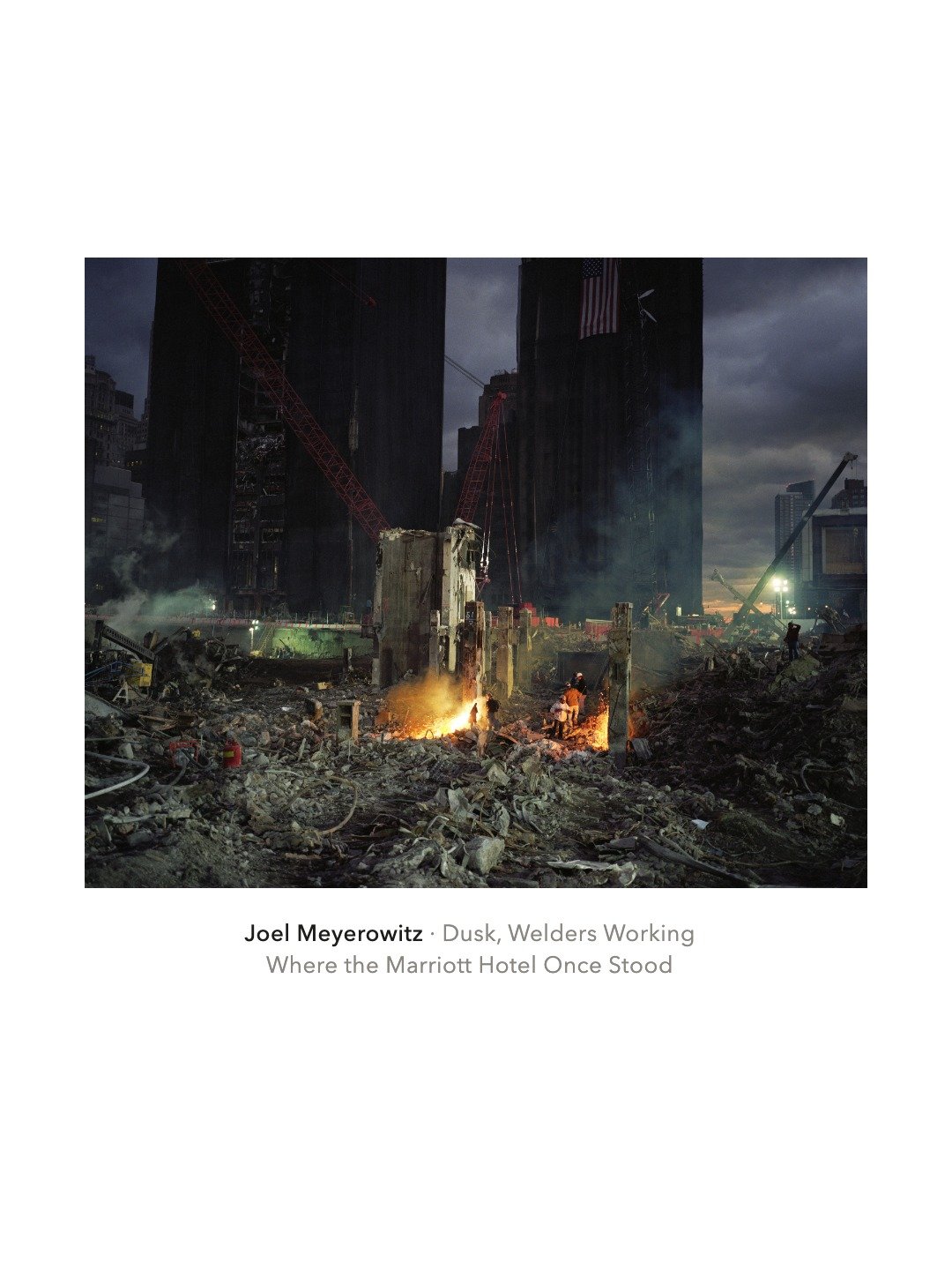
Look lower in "World Trade Center". Under the enormous flag hung down the facade there is a second one, small, torn and darkened with soot, wedged into a row of blown-out windows. Somebody climbed into that wreckage and tied it there by hand.
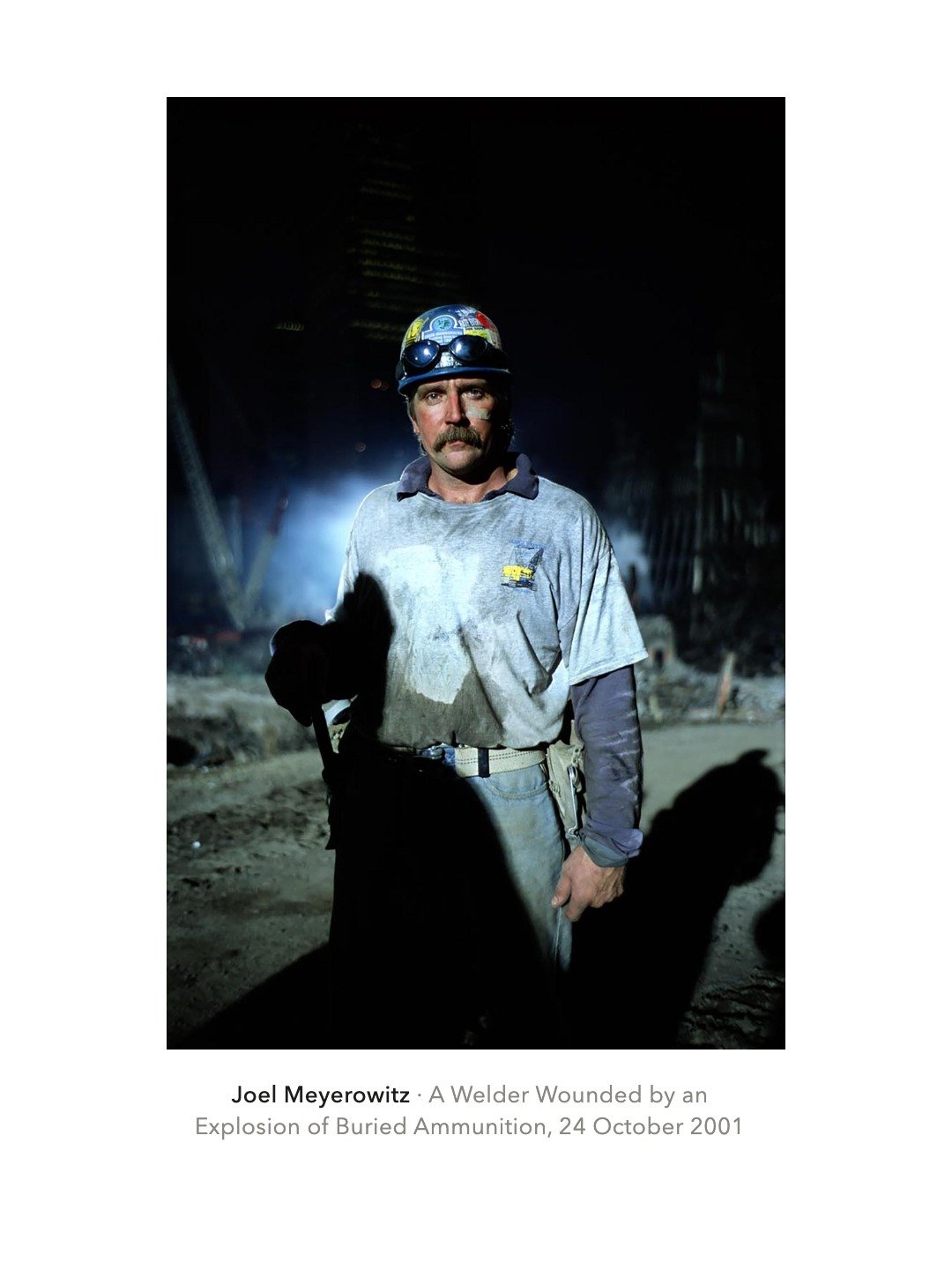
A rescue worker seen from behind. A welder hurt by ammunition buried in the customs building. A fireman leaning on a shovel. A young man with a hose. He got in through the people, and the archive he made is of the people.
Every photograph in this chapter can be ordered through the gallery. Click on any photograph to see its technical details and availability.