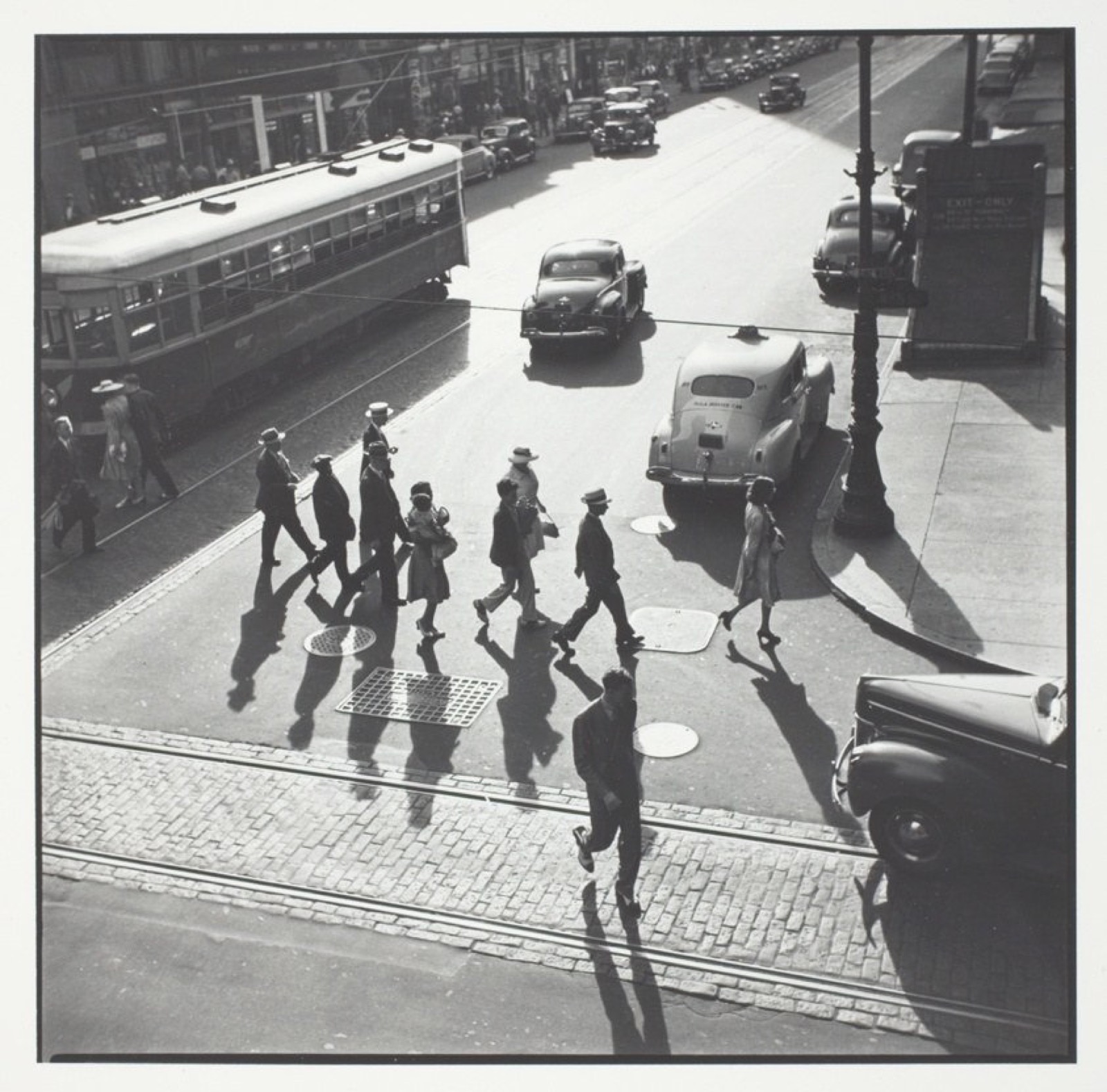
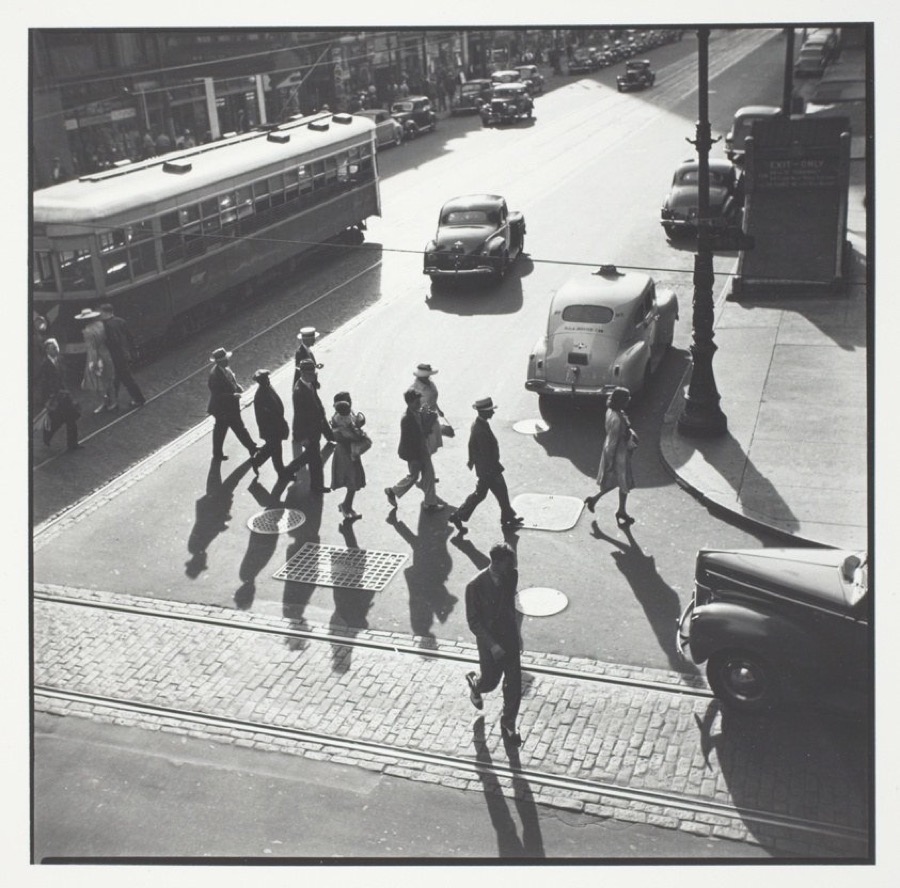
 Philadelphia, 1937.Faurer made this picture from above, and the elevation changes everything.
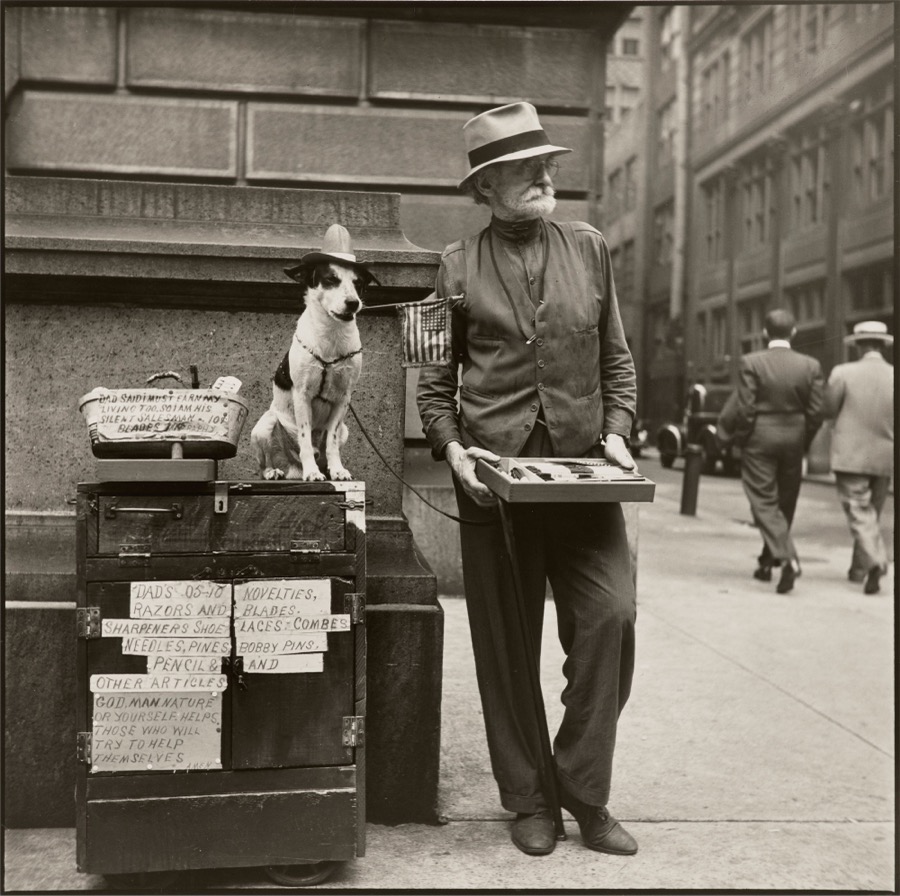 Silent Salesman, Philadelphia, 1937.On a Philadelphia sidewalk, against the cut stone of some bank or courthouse, an old man has set up his entire economy: a battered trunk lettered by hand with the goods he sells—razors, blades…
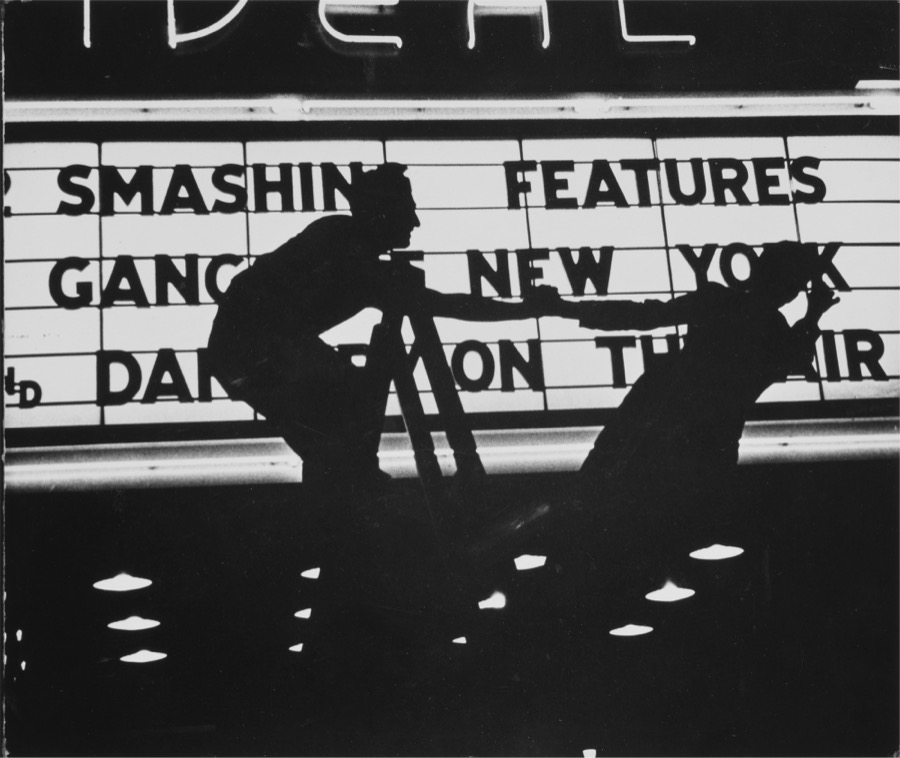 Ideal Theatre, Philadelphia, 1938.Reaching across the lit grid of the marquee, two silhouettes pass a letter between them, hand to hand, as if completing a word the spectator will never finish reading.
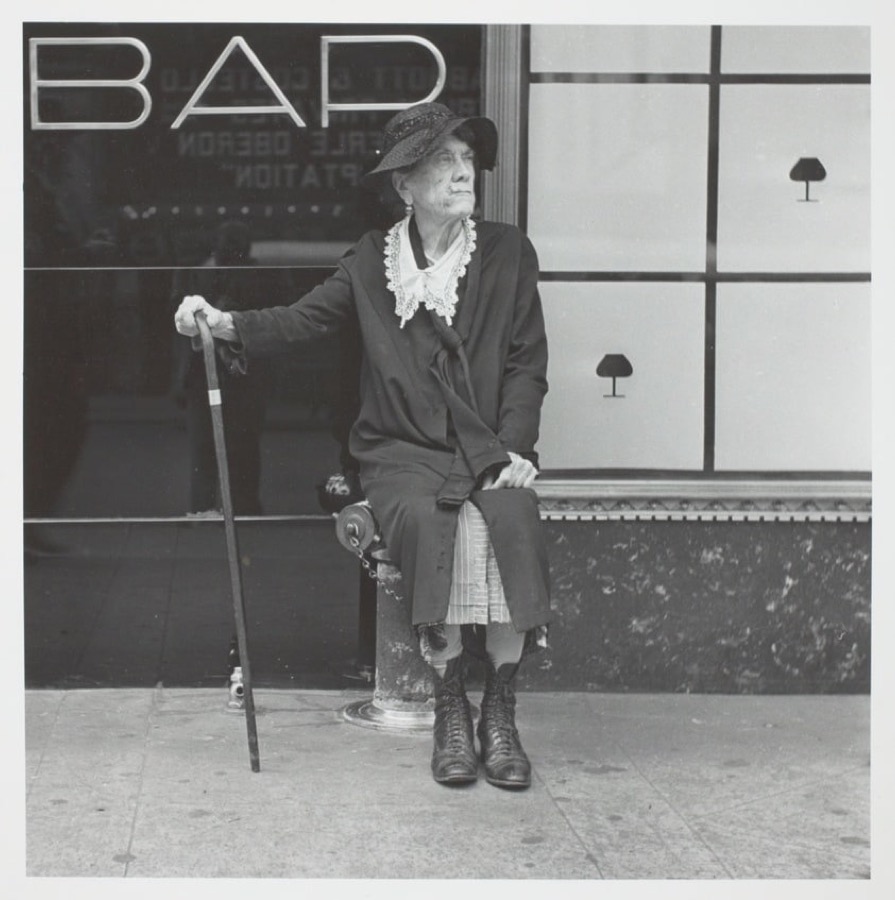 Longchamps Restaurant, 42nd and Lexington Avenue, New York City, 1946.The greys here behave like nothing the eye expects of a city street.
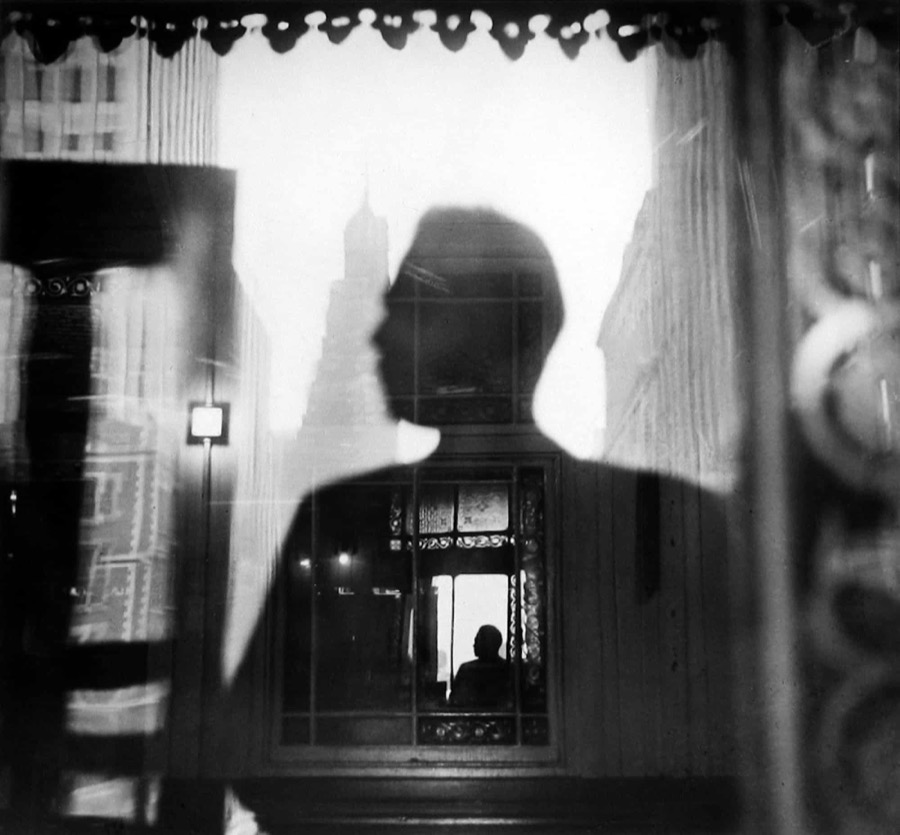 Self-portrait, 42nd Street and 3rd Avenue El Station Looking Toward Tudor City, New York, 1946.His own face is the thing he refuses to give us.
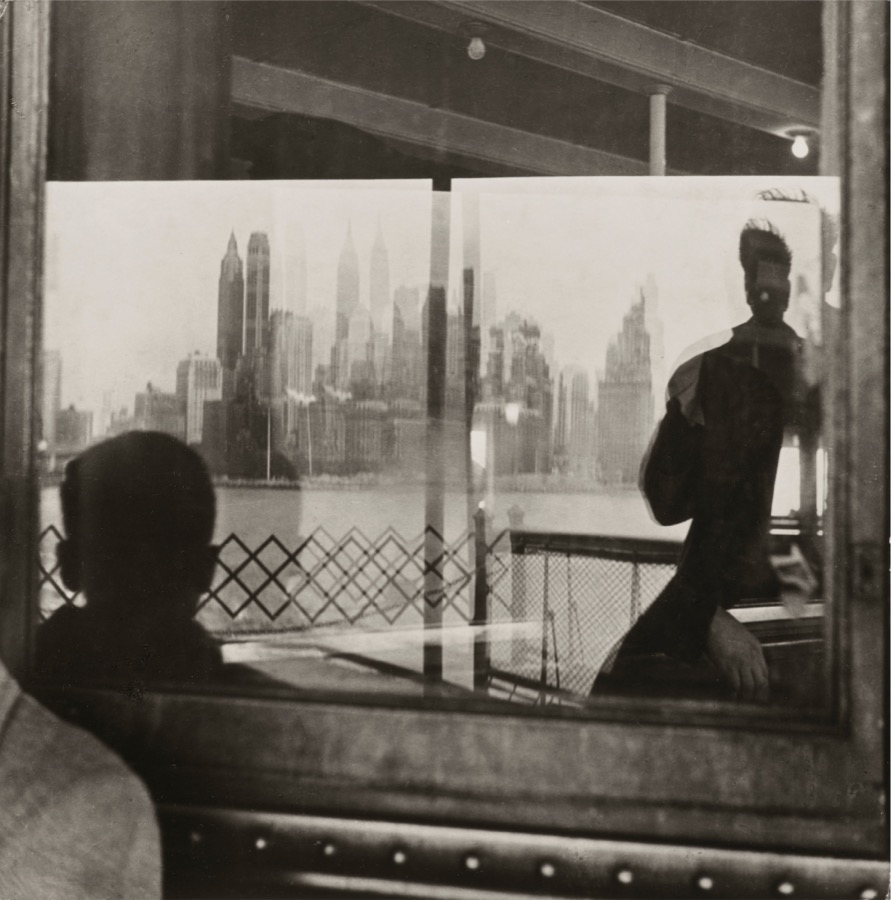 Staten Island Ferry, New York, 1946.How many pictures are folded into this one?
 14th Street, Horn & Hardart, New York City, 1947.What is the young man in the leather jacket protecting himself from?
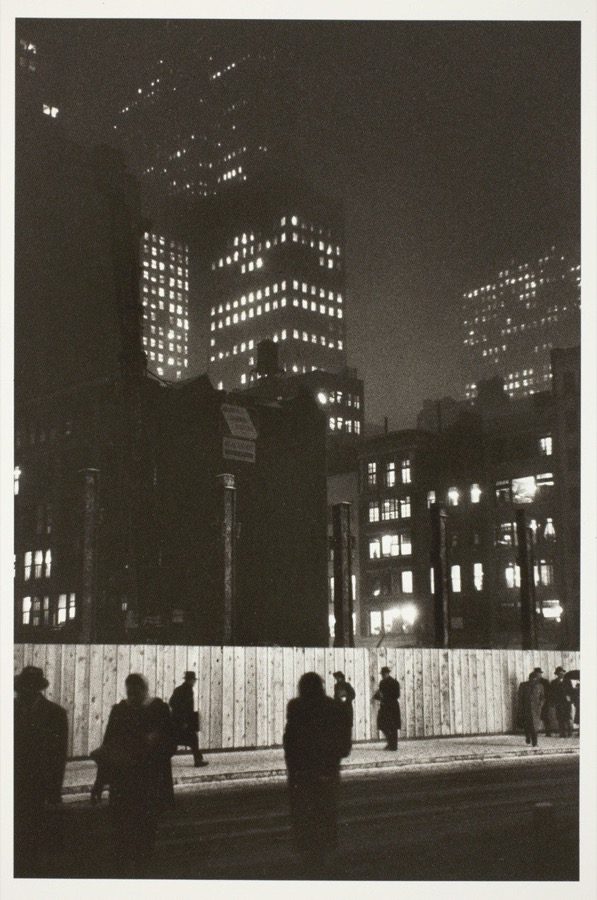 New York City, 1947.Stieglitz turned this same Manhattan skyline into a hushed cathedral; Faurer drags the night picture back down into the street, into the body.
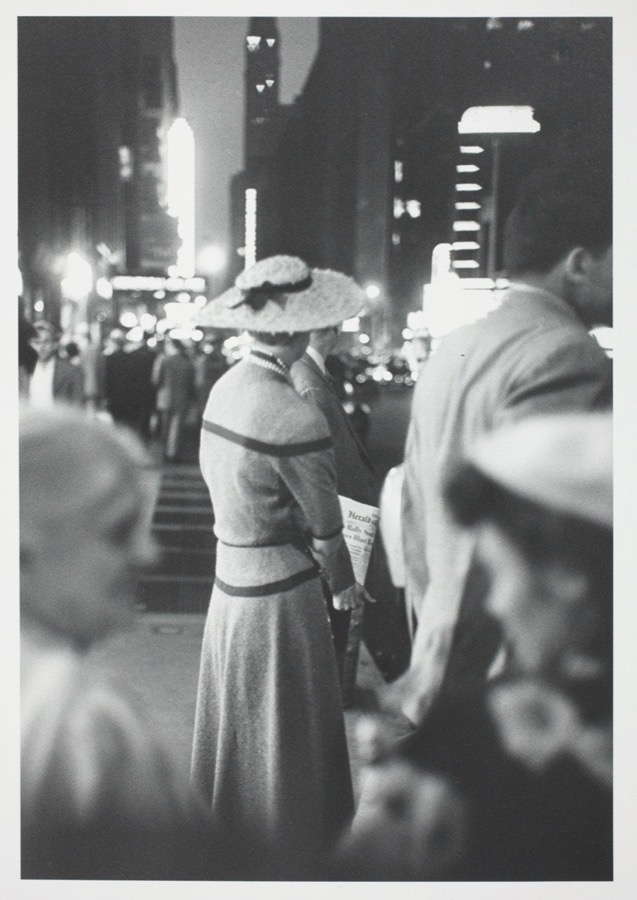 New York City, 1947.Midtown at night, the marquees burning, a woman pauses at the centre of a crowd that will not hold still for her.
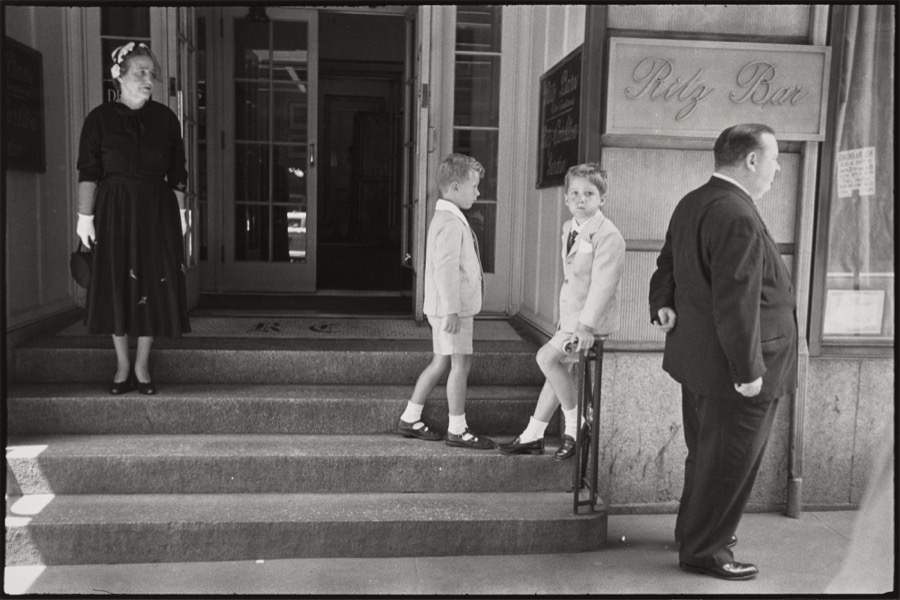 New York City, 1947.Postwar New York, 1947, in its uniform of decorum: outside the Ritz Bar, on broad stone steps, a small ceremony of class and childhood plays itself out for Faurer's camera.
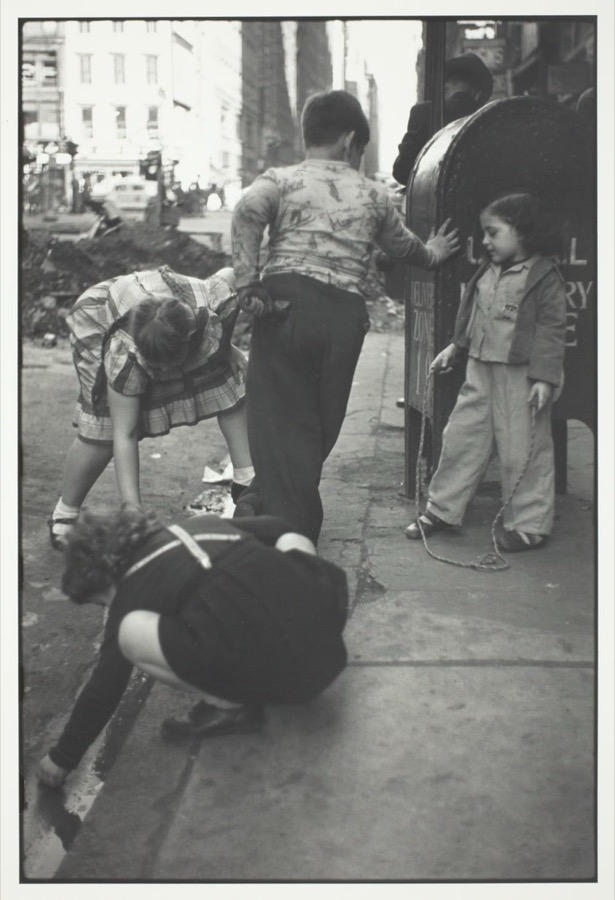 Playground, New York City, 1947.Four children improvise a playground out of a torn-up midtown block, stooping and reaching across the bare pavement.
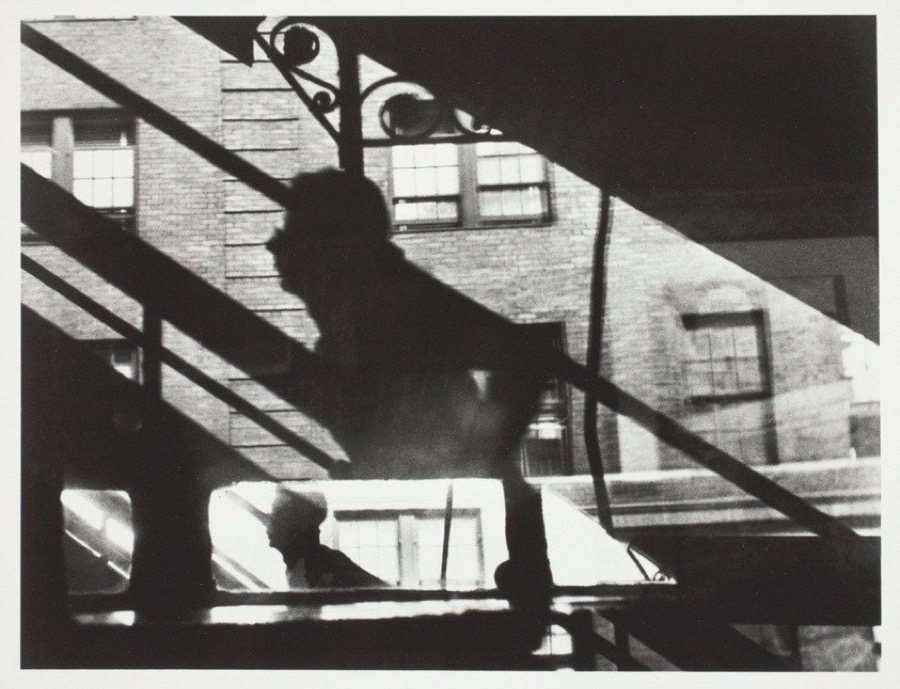 Win, Place, and Show (3rd Avenue El), New York City, 1947.A photograph can be staged without a studio, and Faurer proves it here by treating a tenement backyard as a set already built for him.
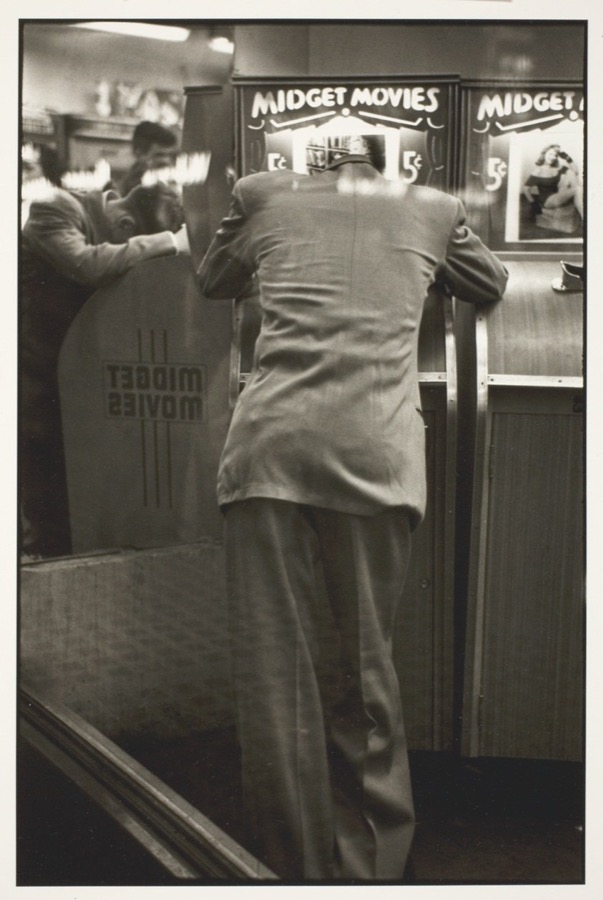 42nd Street, New York City, 1948.Why would a grown man surrender his head to a coin-fed box on 42nd Street?
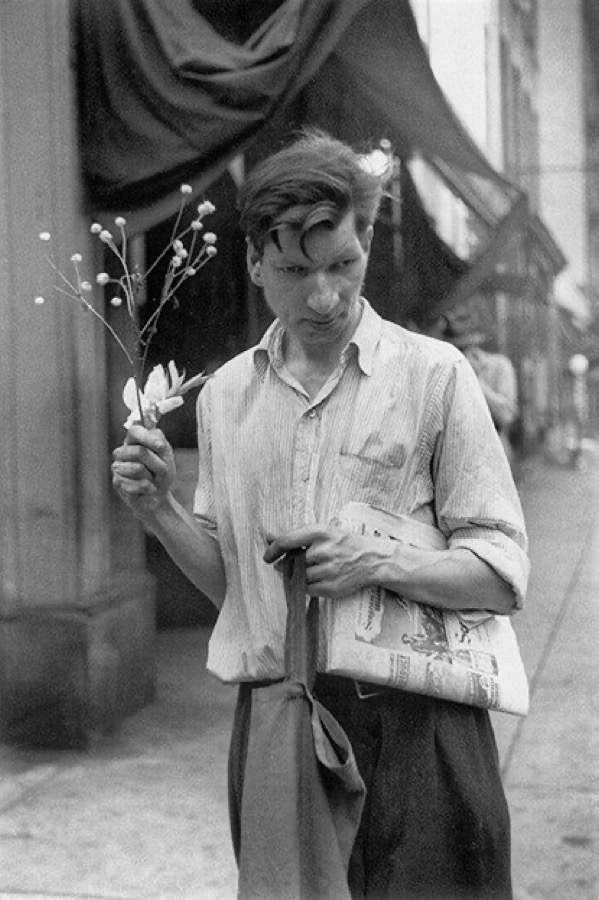 Eddie, New York City, 1948.A man can hold tenderness and ruin in the same two hands.
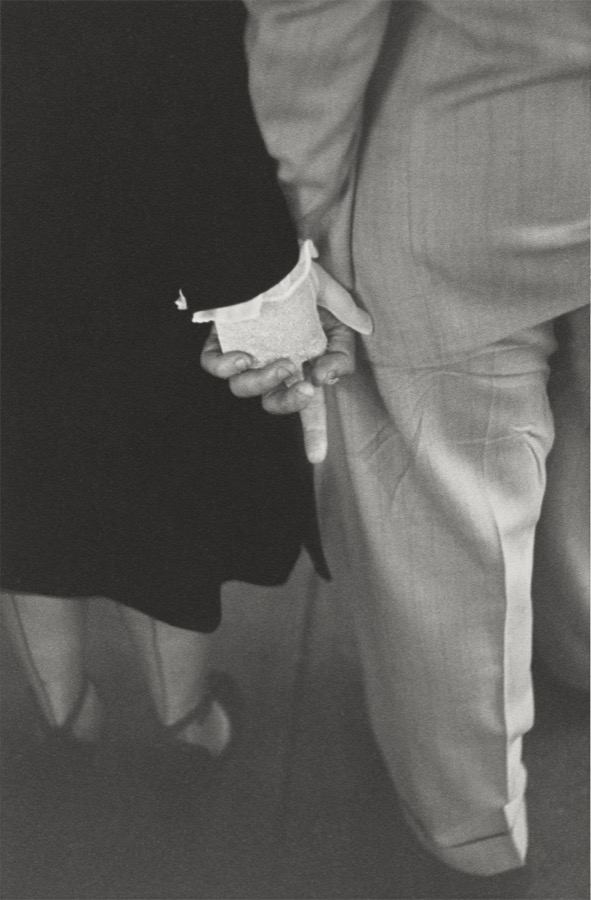 Freudian Hand Clasp, New York City, 1948.Smooth pale gabardine, the nap of a man's summer trousers, fills the right half of the frame and catches the light along each crease and pleat.
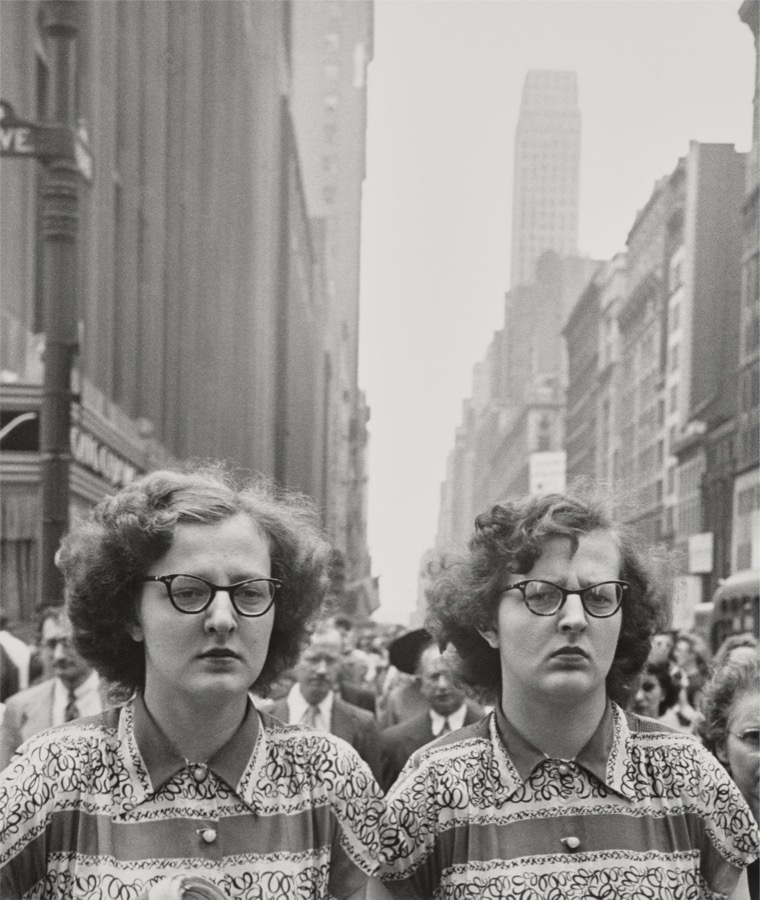 New York City, 1948.Whether they dressed alike on purpose is the one thing the two women refuse to give up.
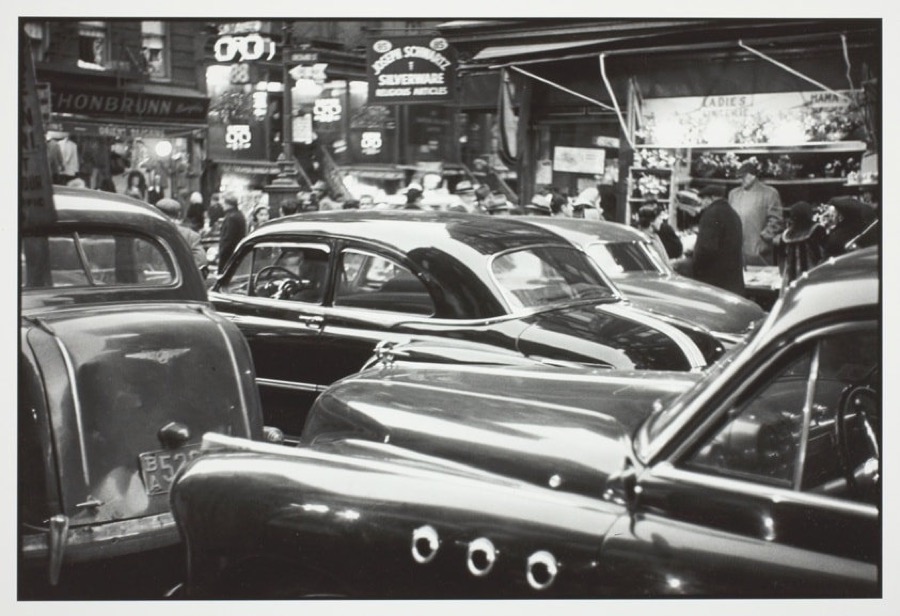 Orchard Street, New York City, 1948.Set this beside the orderly street pictures of the period and it refuses their good manners.
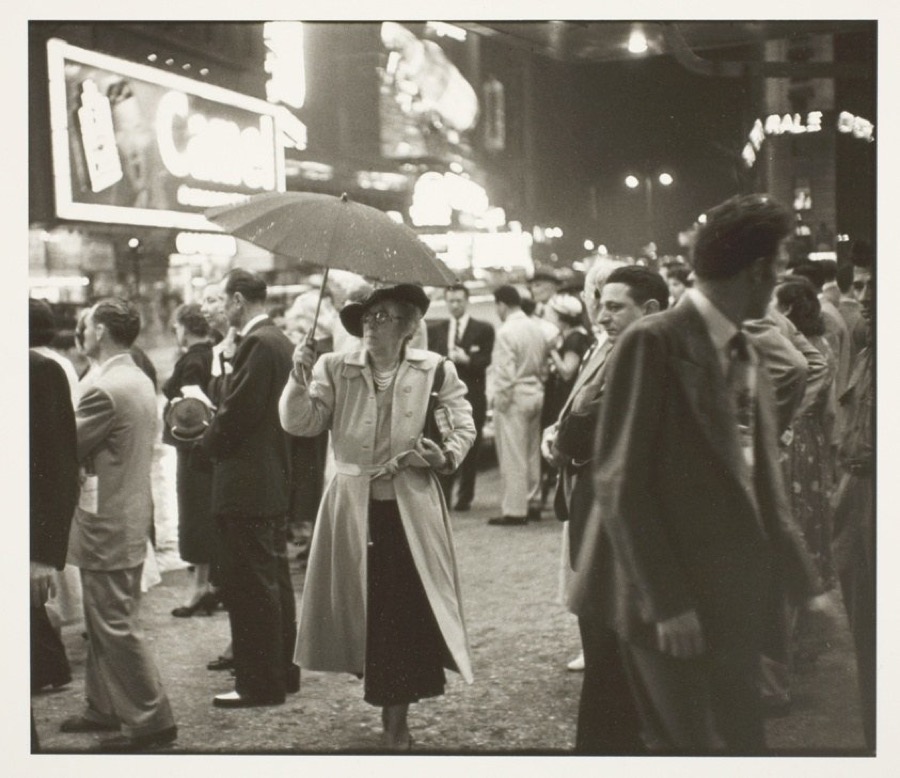 Times Square, New York, NY, 1948.Times Square at night, and Faurer drops us into the thick of it, shoulder to shoulder, the way you actually move through that crowd—jostled, half-turned, never given a clean line of sight.
 Union Square, New York City, 1948.Looking down, through a rain-streaked pane and the slatted reflection of an awning, Faurer turns the act of watching into the picture's whole proposition.
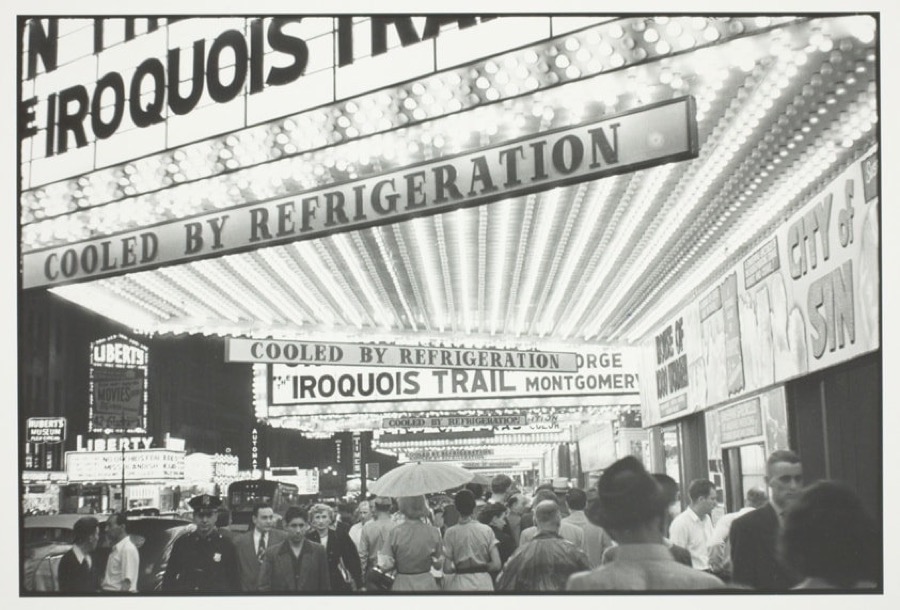 Indian Summer New York City, 1949.What the marquee will not say, it repeats: COOLED BY REFRIGERATION, twice, three times, banner after banner, while the films themselves — IROQUOIS TRAIL, CITY OF SIN, a blur of LIBERTY — recede to…
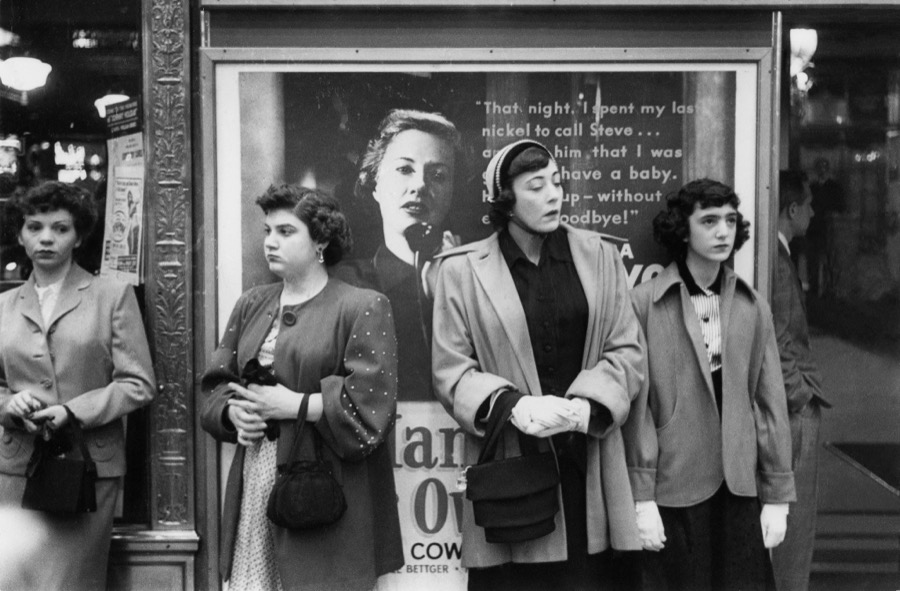 New York City, NY, (women in front of billboard), 1949.Waiting is what their bodies are doing — four women standing in a row against a lit theatre lobby in 1949, handbags clasped at the waist, faces turned in four different directions, none of them at…
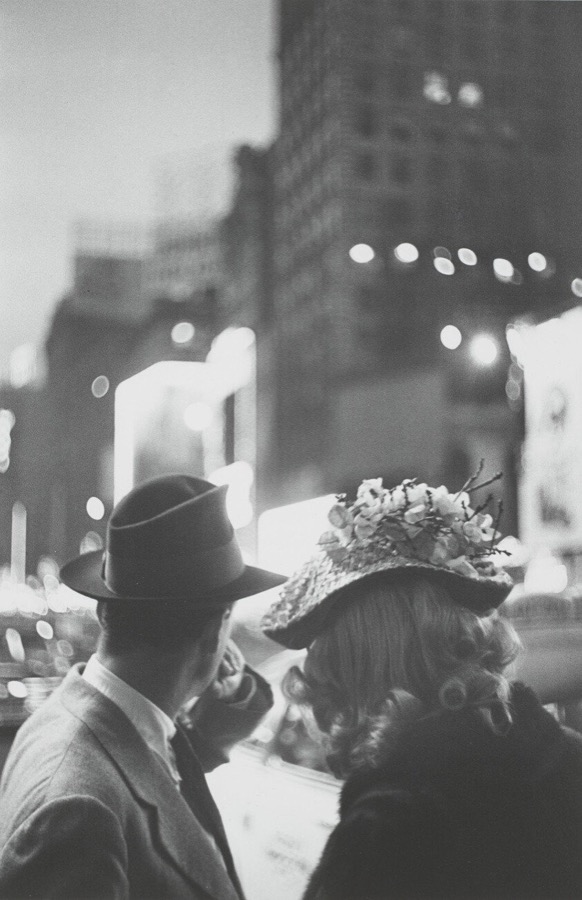 New York, New York, 1949.Somewhere in midtown, at night, two people stand close together with their backs to us.
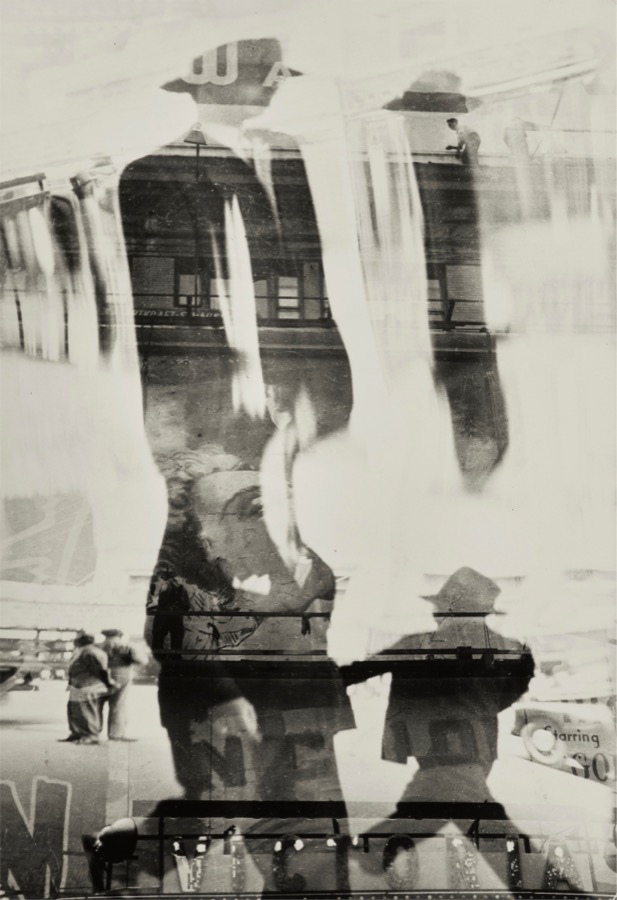 Rat Race, New York City, 1949.Several frames are pressed into a single negative here, the method Faurer turned to in 1949 once he had begun to distrust the lone, legible exposure as a way of recording a crowded, commercial city.
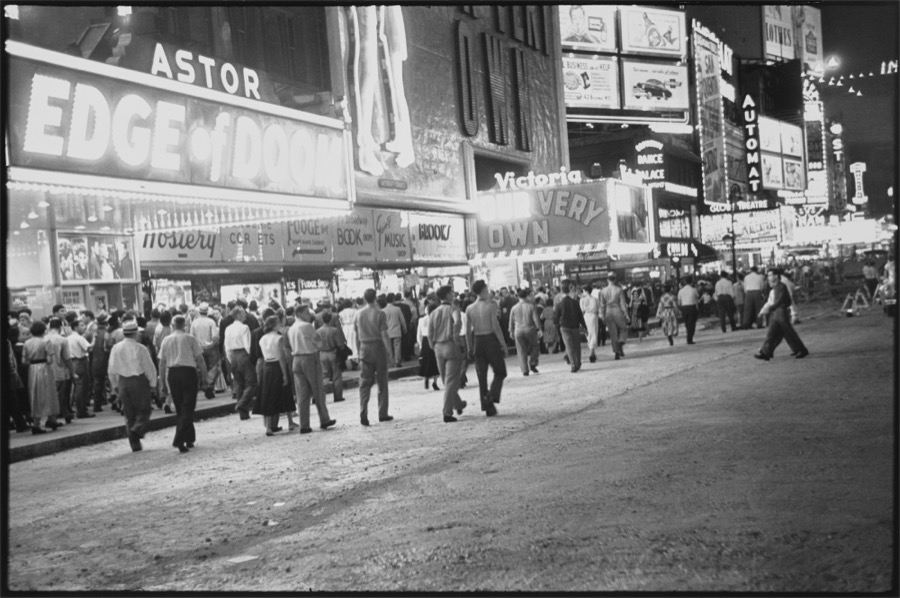 Repaving Times Square, New York City, 1949.Gravel and broken asphalt fill the entire foreground, a torn dark field of rubble where Times Square is being repaved, and above it the marquees burn white—ASTOR, EDGE OF DOOM, Victoria, the Automat…
 Untitled, New York City (woman stroking man's head), 1949.Tenderness, on a city street at night, almost always looks like surveillance from the wrong angle.
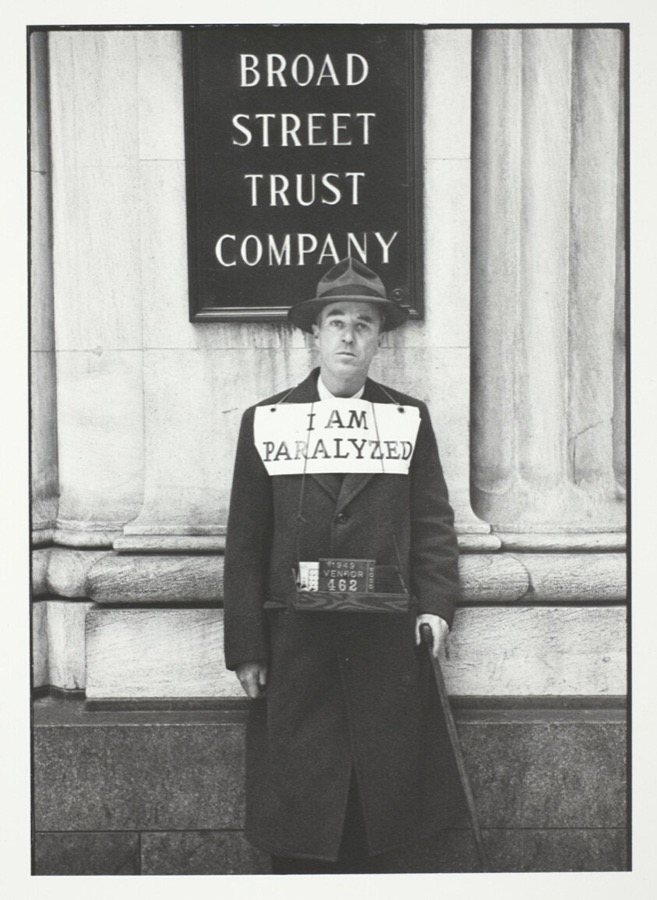 Untitled, Philadelphia, PA, 1949.A typed placard reading I AM PARALYZED recalls the frontal portraits Walker Evans made of men against signage, and the lineage is plain enough, yet Faurer turns the convention toward something blunter.
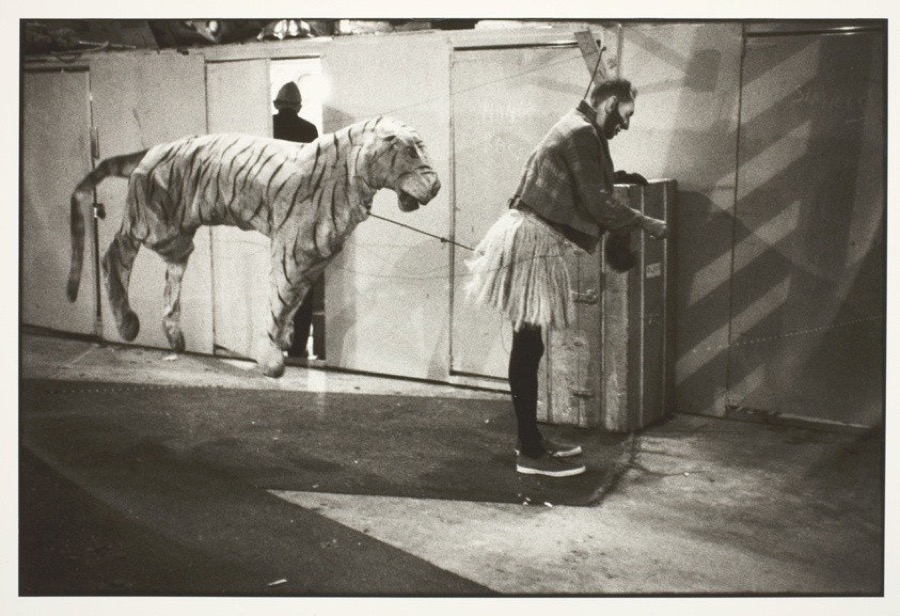 Barnum and Bailey Dressing Rooms, New York City, 1950.Bending over a steamer trunk in a tutu, a circus performer rummages for something while a papier-mâché tiger leaps frozen at his back, and the whole improbable scene holds the stillness of a…
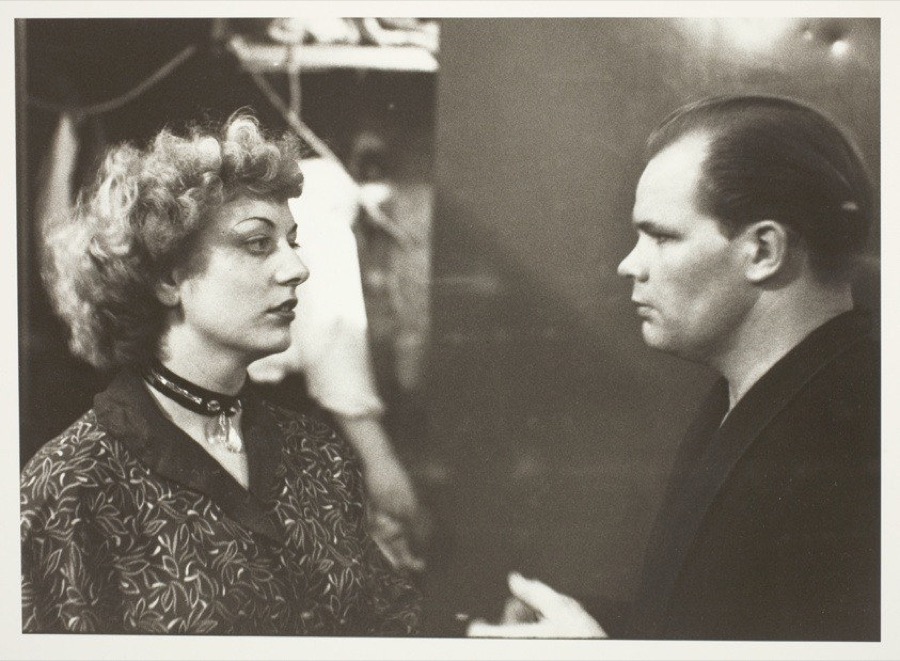 Barnun & Bailey, Circus Performers, Old Madison Square Garden, New York, NY, 1950.Two faces, held in profile a breath apart, withhold as much as they reveal.
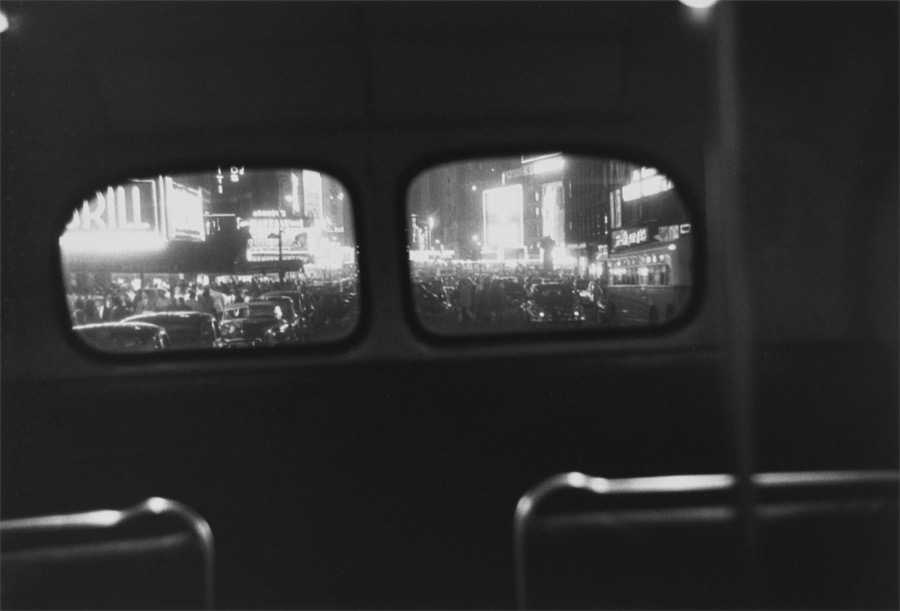 Bus number 7, New York, 1950.How do you photograph desire for a city from inside a moving box?
 Garage, Park Avenue, New York, 1950.A row of parked sedans stands in near-total darkness.
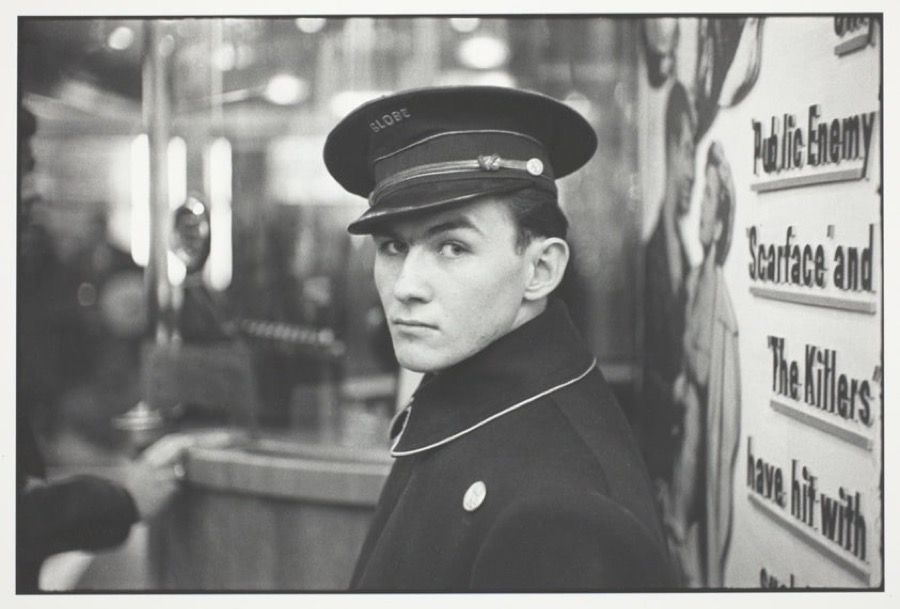 Globe Theatre, New York City, 1950.GLOBE, stitched in pale thread across the band of his cap, names both the theatre and the lineage this usher enters: Faurer's gallery of solitary young people, framed close, looking back at the lens…
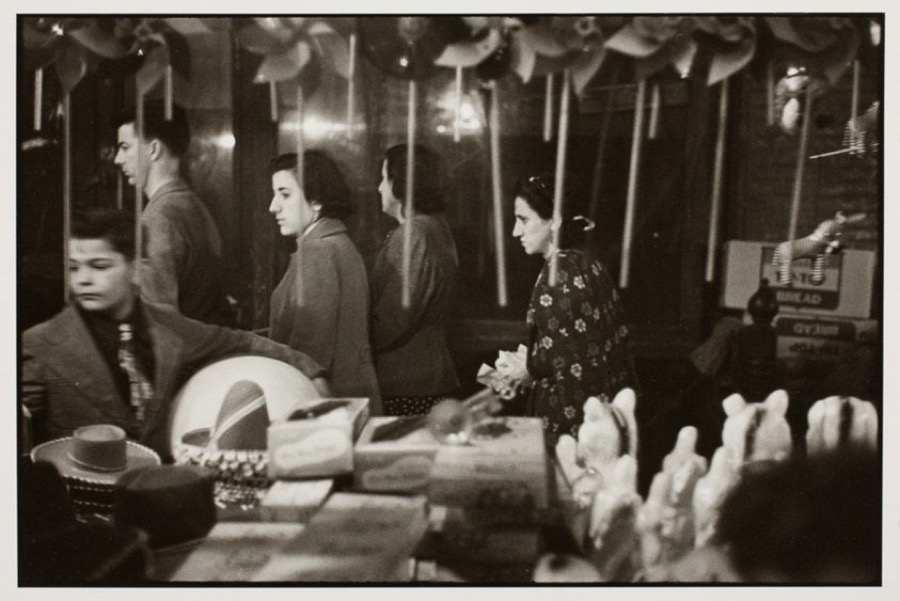 San Genaro Festival, New York City, 1950.A feast-day stall on a New York street at night, the San Genaro festival in 1950, is the ground on which Faurer assembles a small crowd of faces.
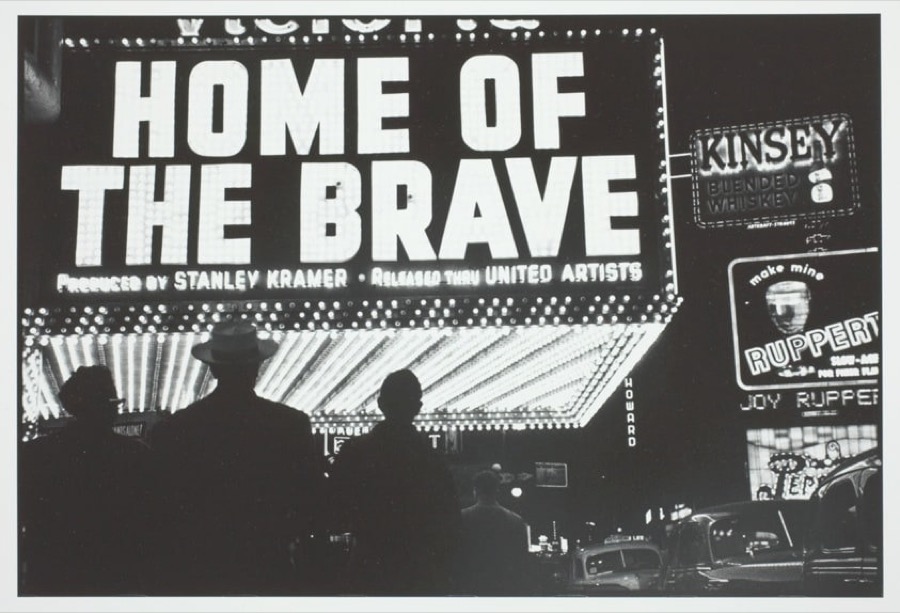 Times Square USA, (Home of the Brave), 1950.By 1950 Stanley Kramer's Home of the Brave had reached Times Square, and Faurer photographs its marquee at the instant the title became, for him, found language.
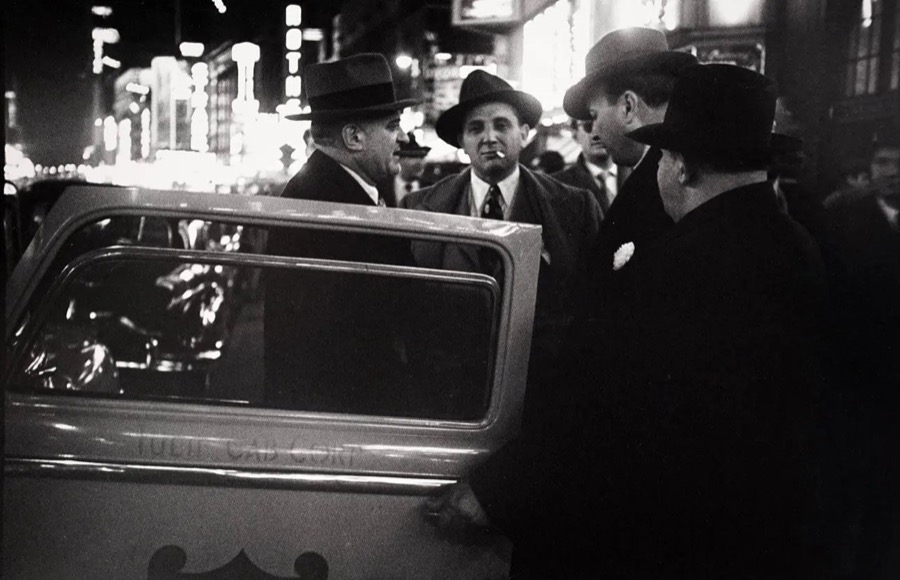 Untitled, New York City (four men with cab door), 1950.Four men in overcoats and felt hats stand around the open rear door of a taxi at night.
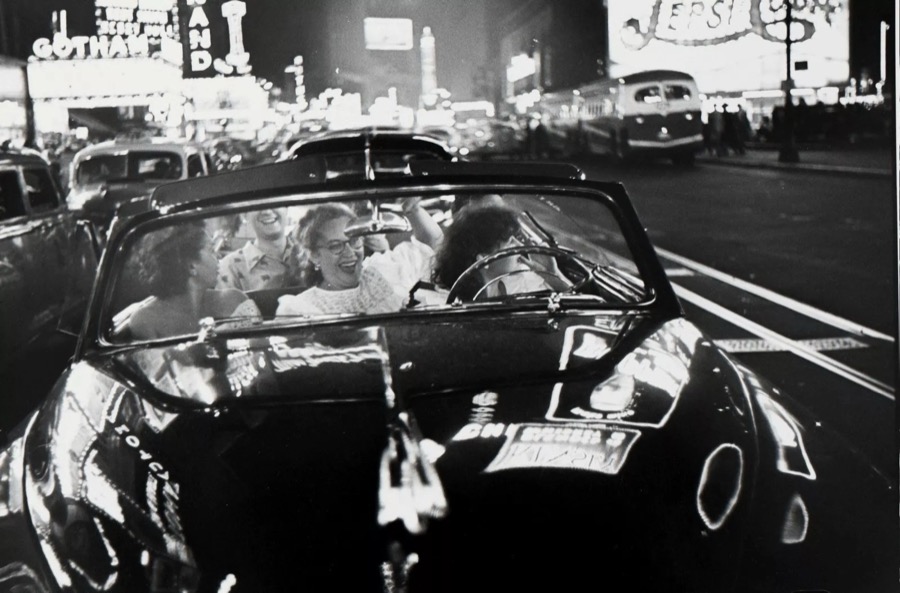 Untitled, NYC, (three girls in black car - joyride), 1950.Black lacquer and white neon: the photograph's whole texture lives in that collision.
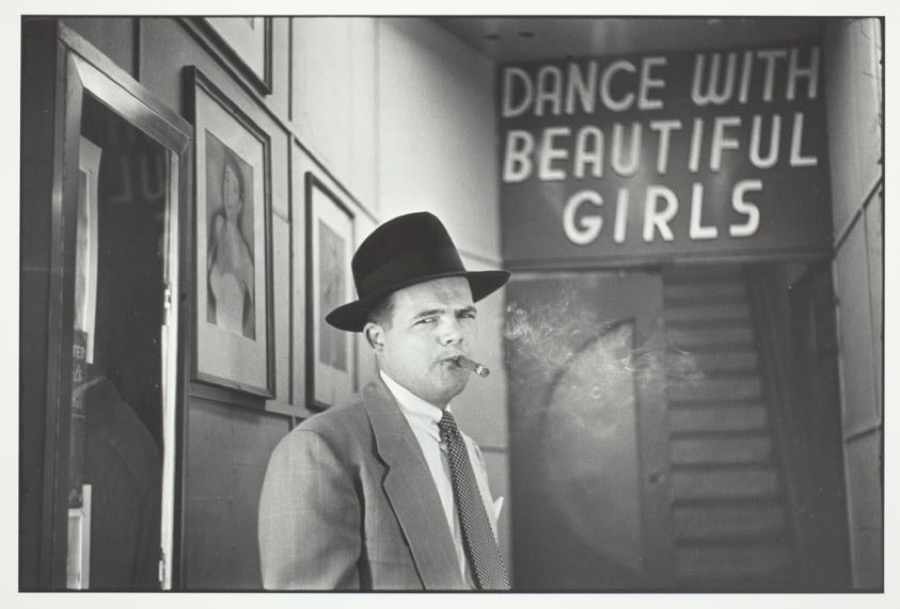 Social Patron, New York City, 1951.Is the man the subject, or is the sign? A heavyset figure in a dark hat and light suit stands at the entrance of a dance hall, a cigar clamped in his mouth, a plume of smoke drifting off into the…
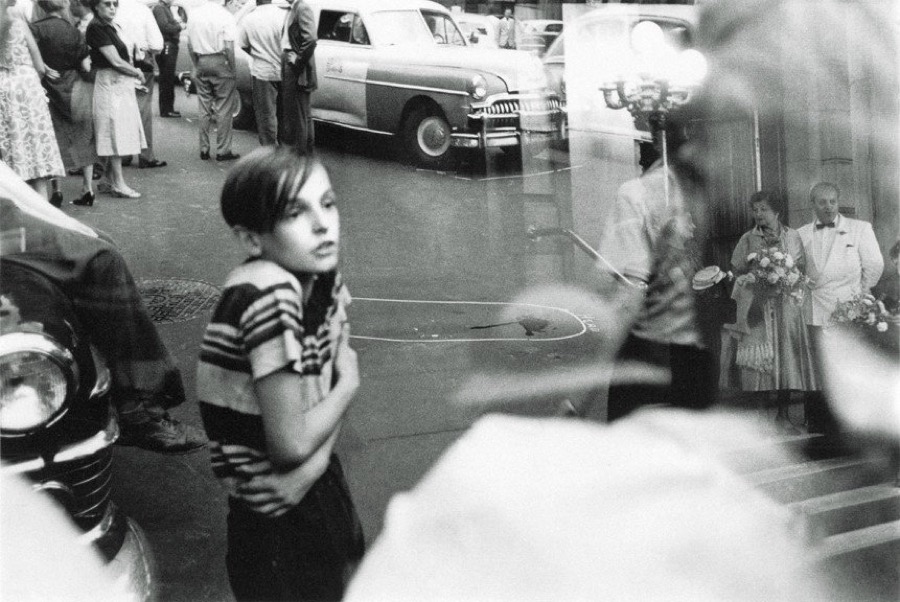 Accident, New York City, 1952.A loop of chalk on the pavement turns the 1952 street into a stage where everyone is both spectator and cast, and Louis Faurer's "Accident" holds exactly that confusion.
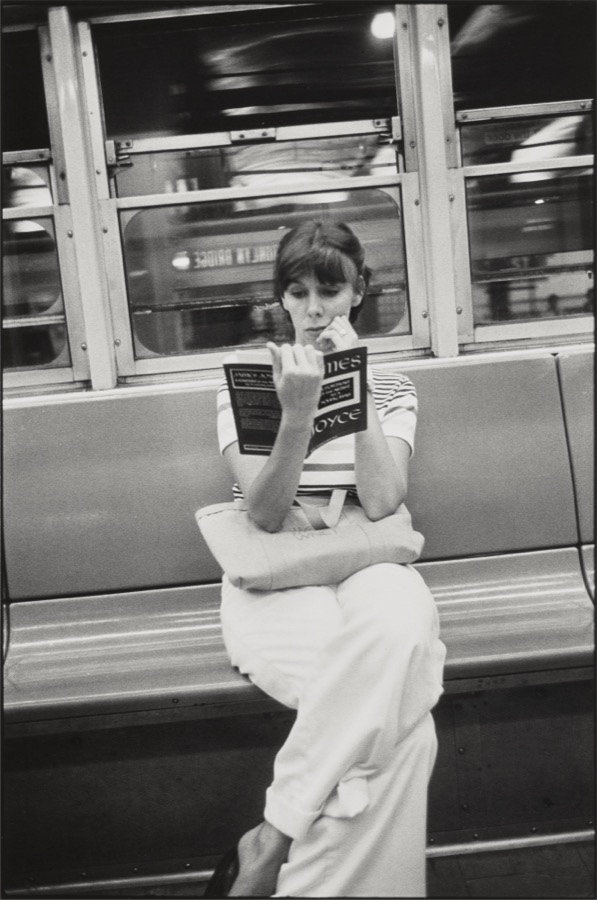 Untitled, New York City, (woman reading on subway), 1973.White trousers, a striped top, a canvas tote settled across the lap like a small white pillow—Faurer dresses this 1973 subway car in soft, summer tones, and the whole picture turns on that pale calm.