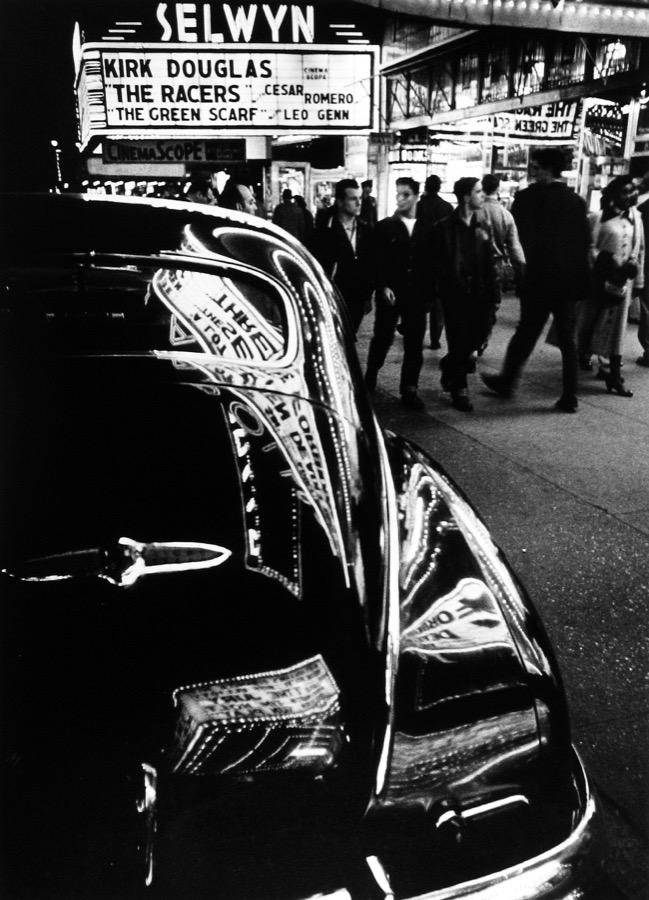
 Selwyn, 42nd Street, New York, 1955.The first thing you notice isn't the people but the car — a vast black flank of bodywork swelling up from the lower left, hogging half the frame like a beached whale that has somehow swum onto 42nd…
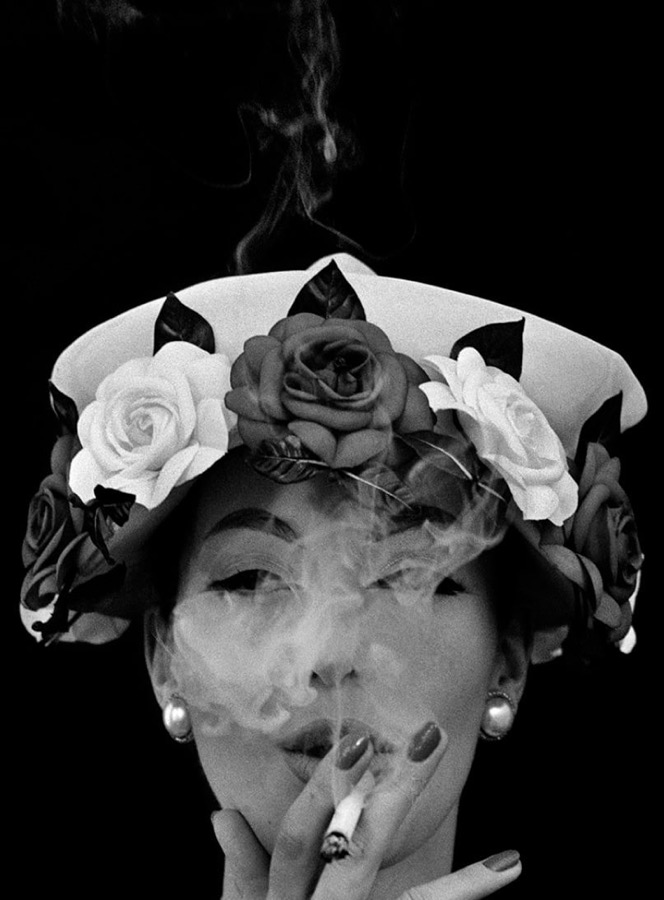 Hat and Five Roses, Paris (Vogue), 1956.She wears the hat like a confession. A wide, upturned brim banded with roses—one creamy white blossom at the left, a fat dark bloom dead center, another pale one at the right, with smaller buds and…
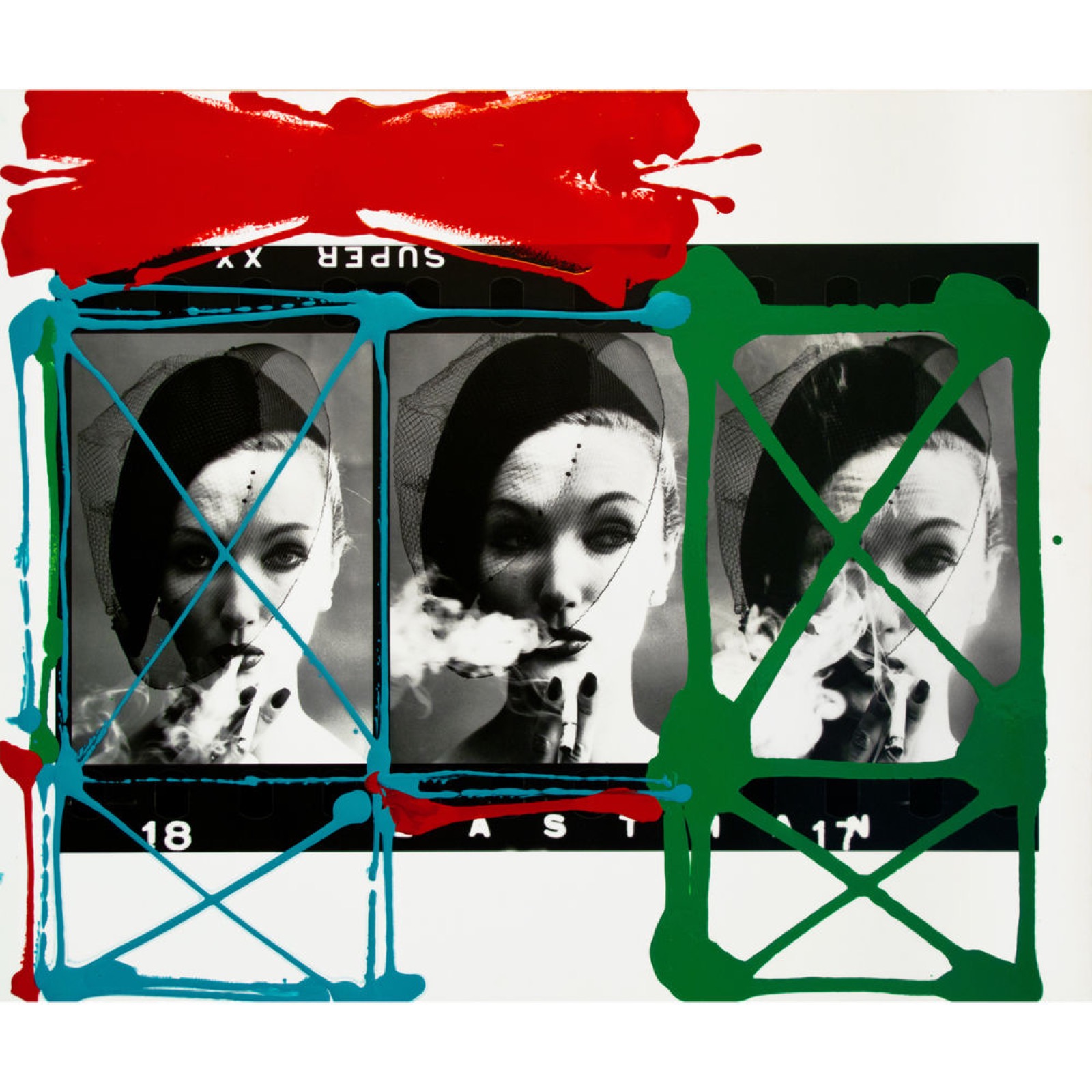
 Smoke + Veil x 3, Paris (Vogue), 1958.Three takes of the same instant sit side by side, lifted straight from the strip of film: the perforations, the reversed "SUPER-XX" lettering, the "EASTMAN" rebate and the frame numbers 18 and 17 are…
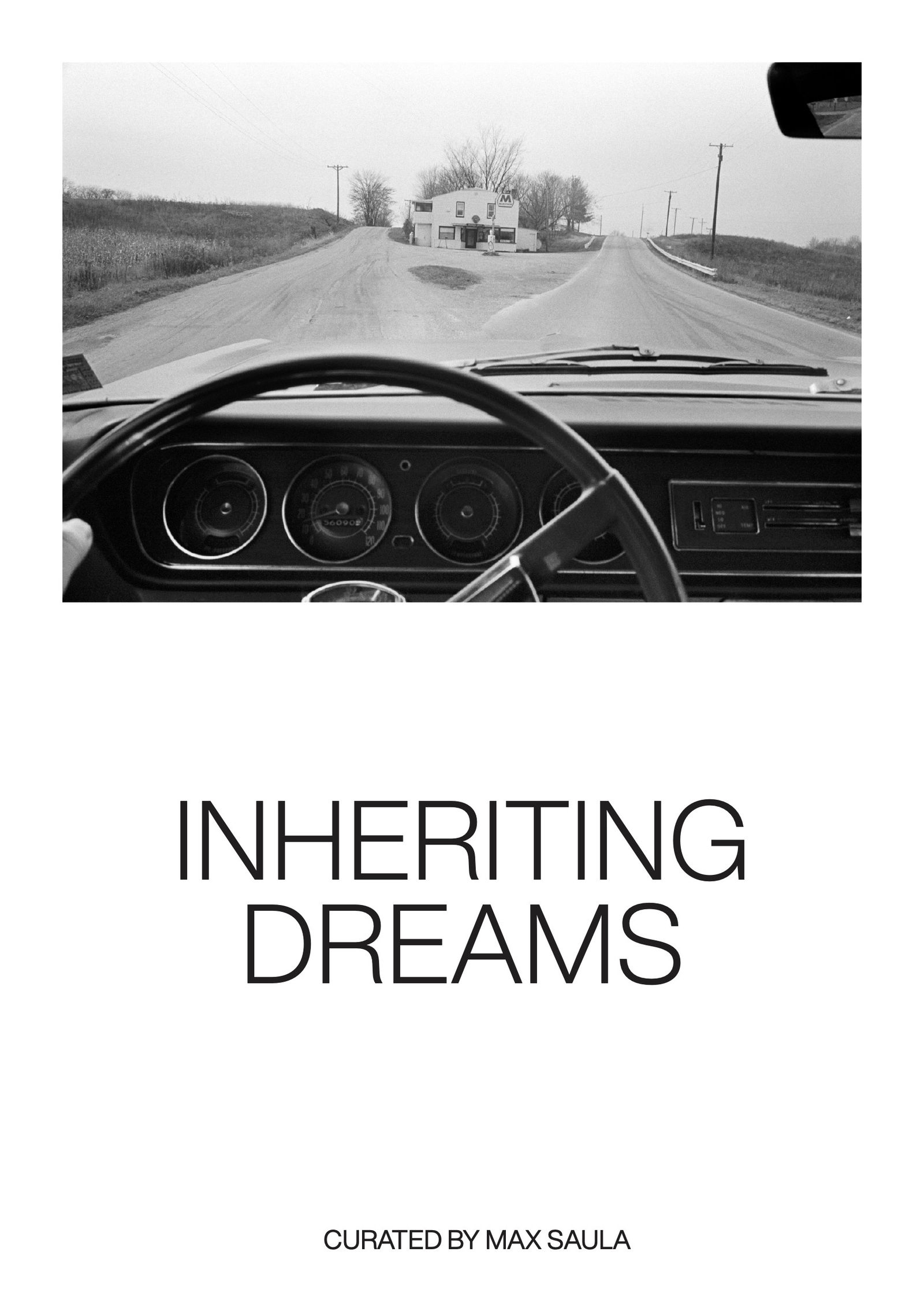
Inheriting Dreams: Curated by Max Saula
Essay by Christian Caujolle11 September – 7 November 2025We are delighted to announce our upcoming exhibition: "Inheriting Dreams", curated by Max Saula, the nineteen-year-old son of the gallery's founders.Read more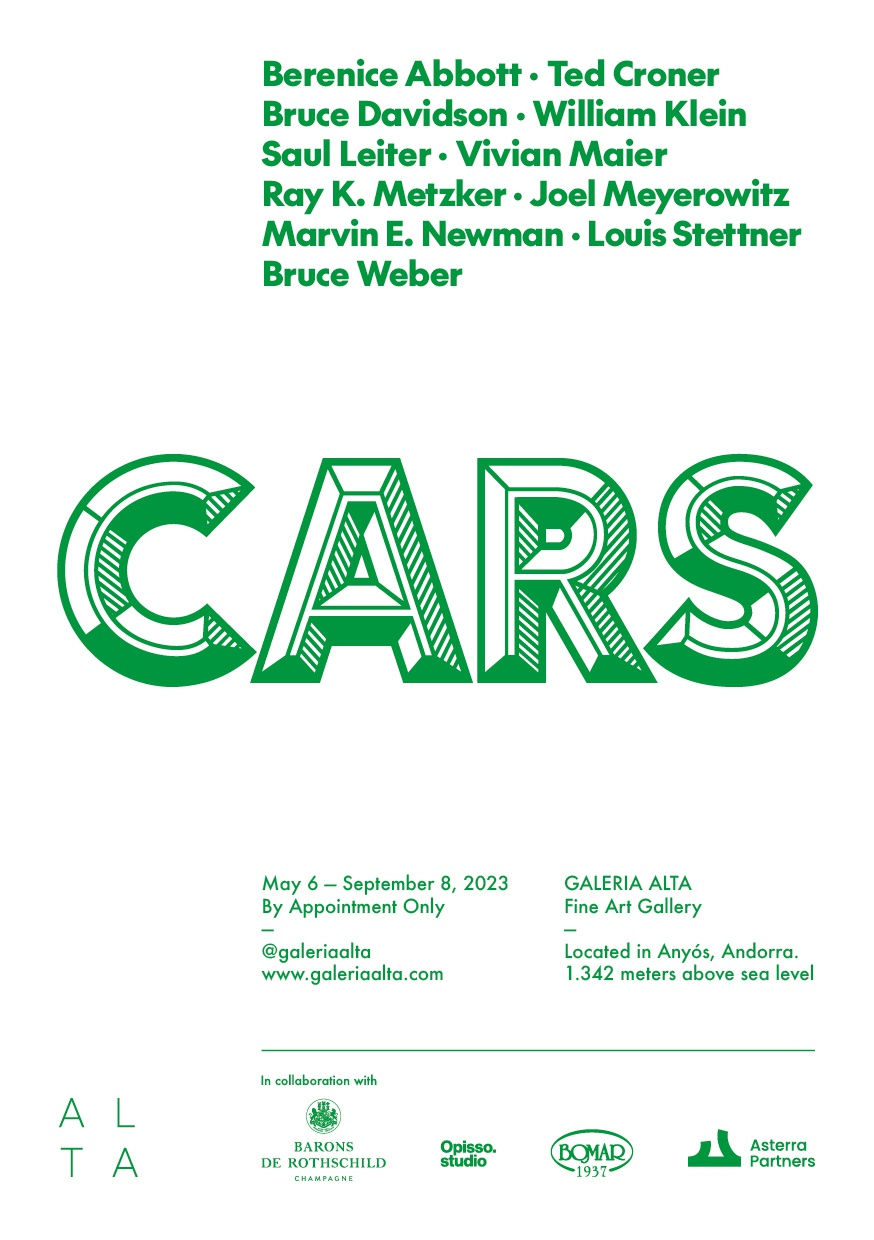
Cars and Photography
6 May – 26 September 2023Galería Alta is pleased to present a collective exhibition around the theme “Cars” and Photography.Read more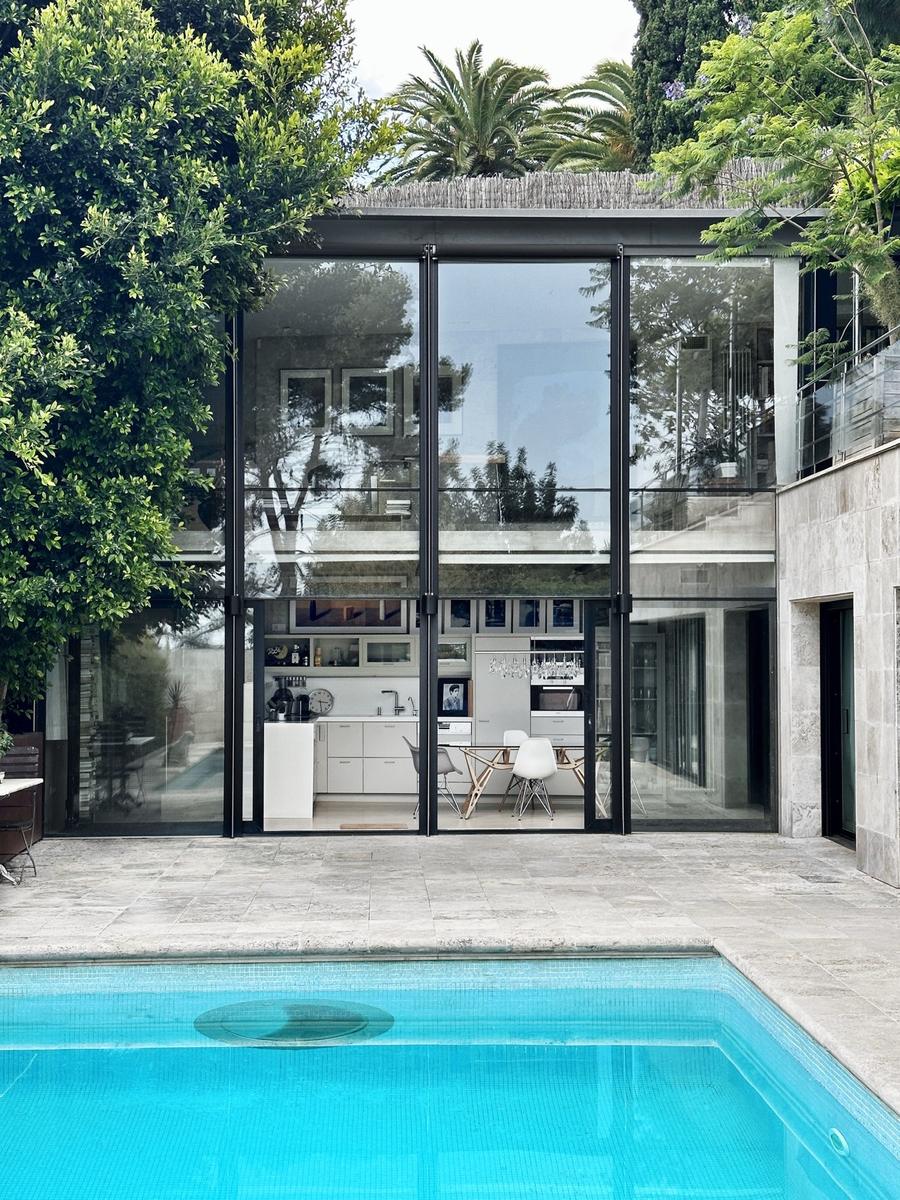
On Tour in Barcelona 2023
Spring 20236 – 9 June 2023You are cordially invited to our upcoming private exhibition in Barcelona: Tuesday, June 6 - Friday, June 9, 2023. 12 p.m. - 8 p.m. On view will be a selection...Read more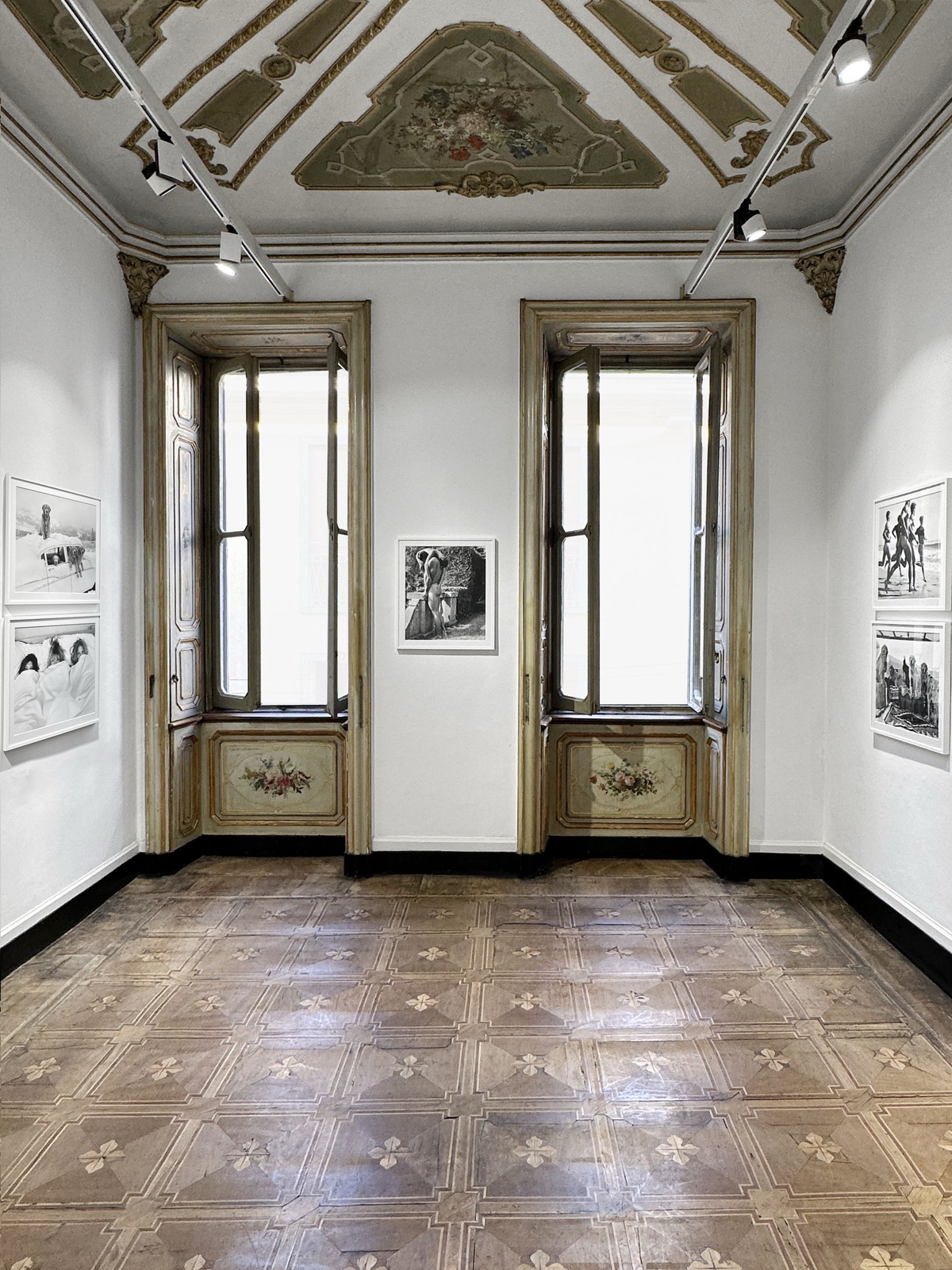
On Tour in Milano 2023
Spring 20239 – 12 May 2023You are cordially invited to our first private exhibition in Milano. We will welcome you at our italian home, the headquarters of Doppiaa: Via della Spiga 1 - 20121 Milano.Read more
On Tour in Paris 2022
Winter 202210 – 12 November 2022It is Alta’s 1st anniversary and we would like to invite you to celebrate with us in Paris : November 10, 11 and 12, 2022. From 10 a.m. to 8...Read more
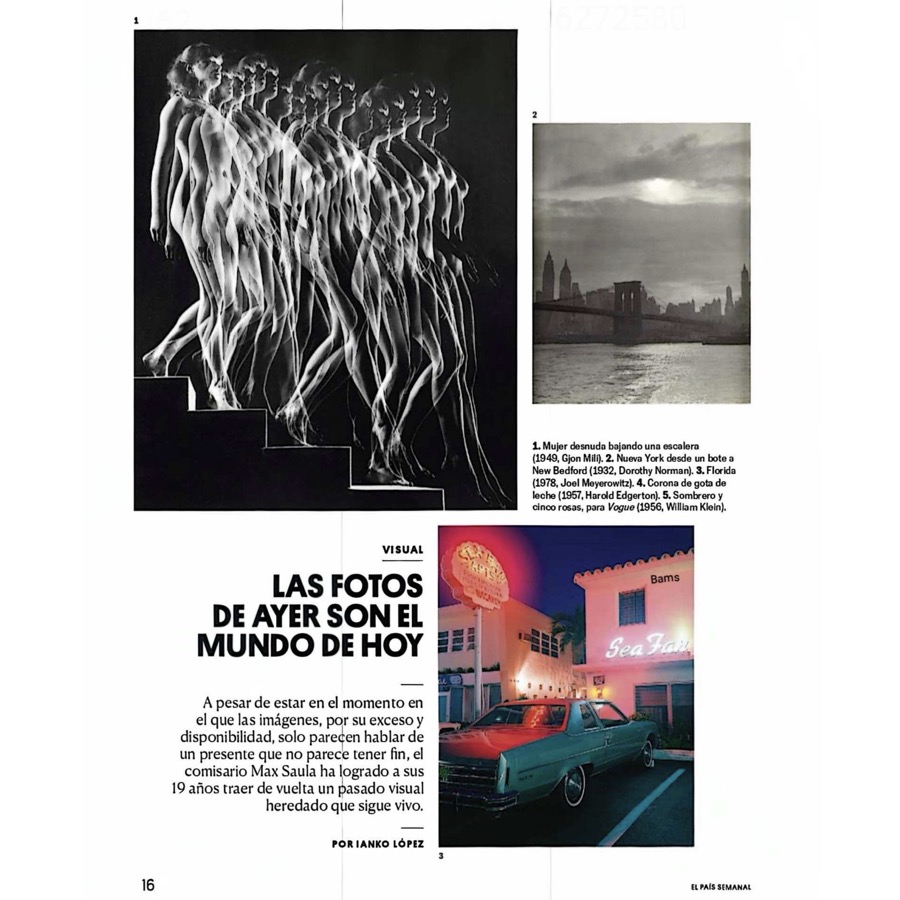
Yesterday's photographs are today's world
Ianko López, El País SemanalSeptember 2025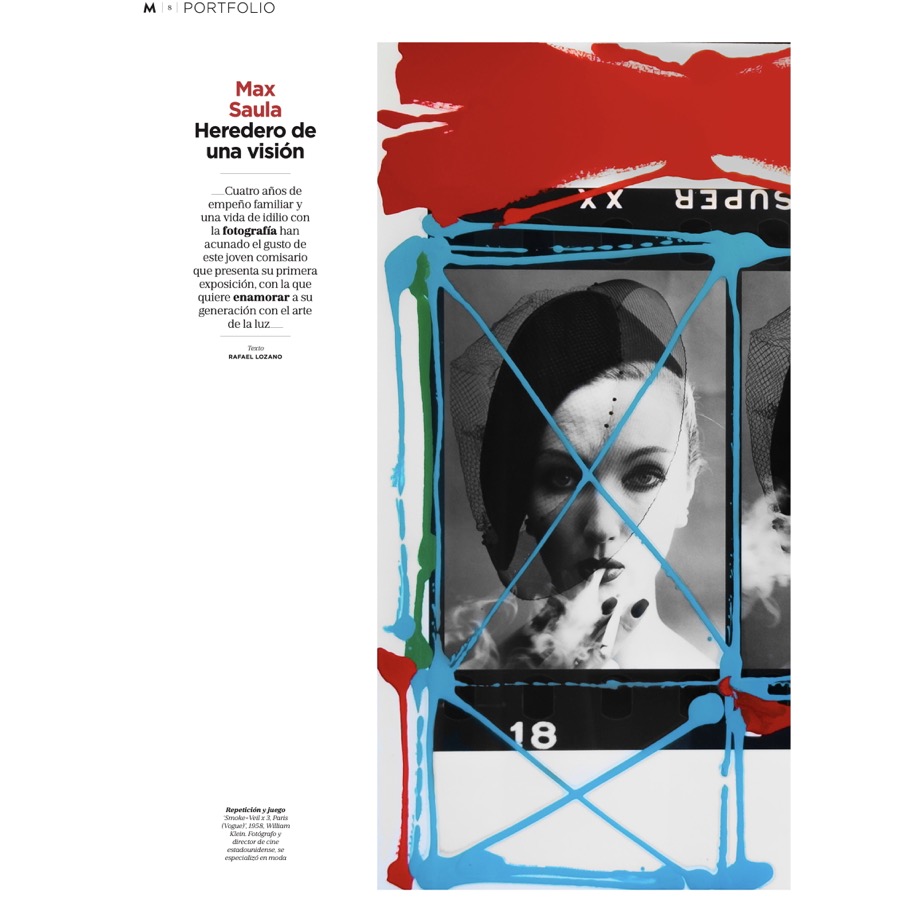
Max Saula: Heir to a vision
Rafael Lozano, La VanguardiaSeptember 2025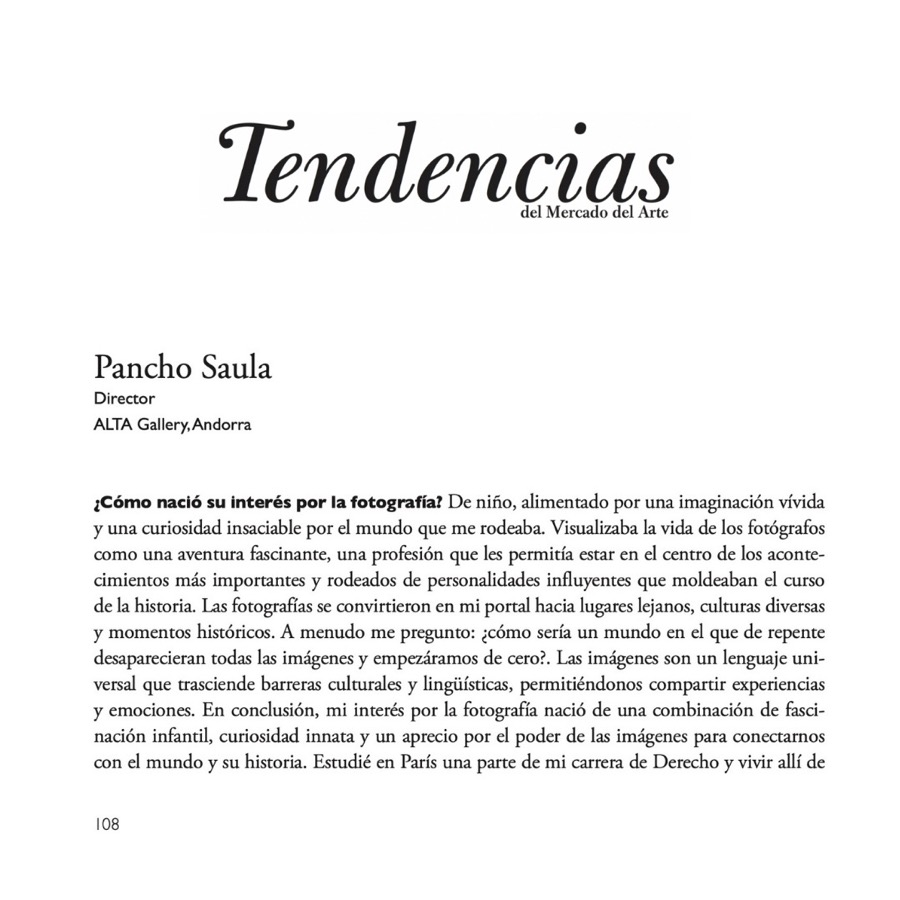
Coleccionar Arte Contemporáneo - Fotografía
Vanessa García-Osuna, Tendencias del ArteMarch 2025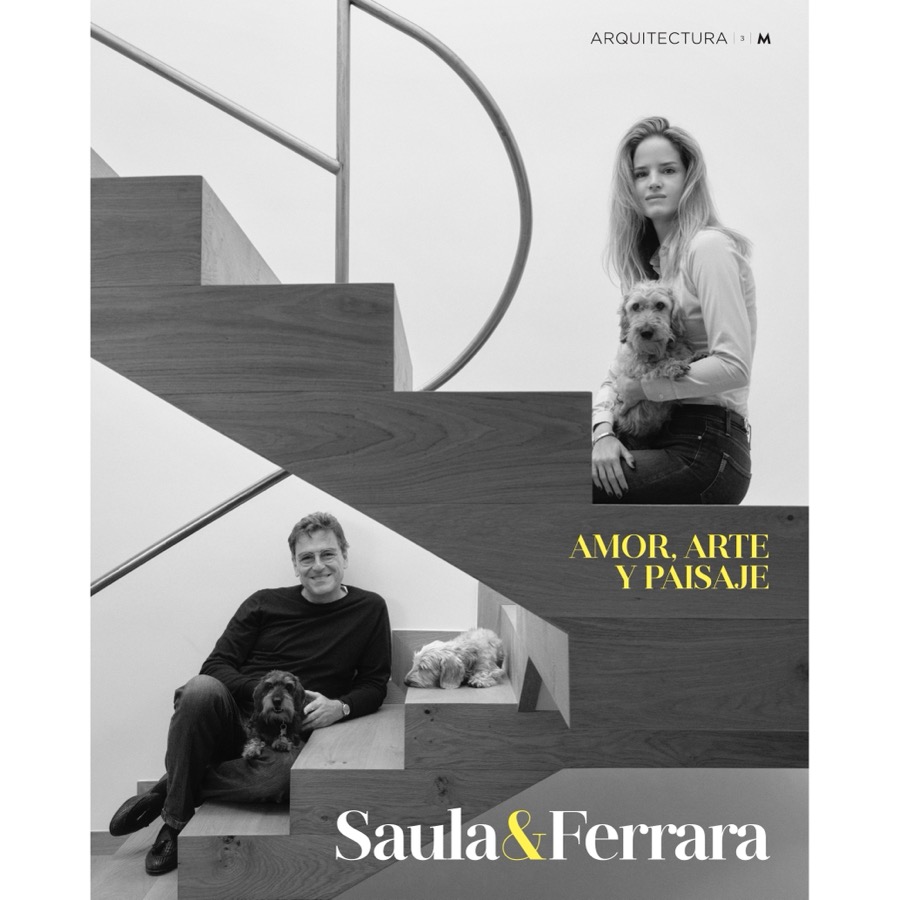
Saula & Ferrara
Felip Vivanco, photographs by Txema Yeste, La Vanguardia MagazineNovember 2024
Automóviles, naves espaciales, obras de arte
Felip Vivanco, La VanguardiaSeptember 2023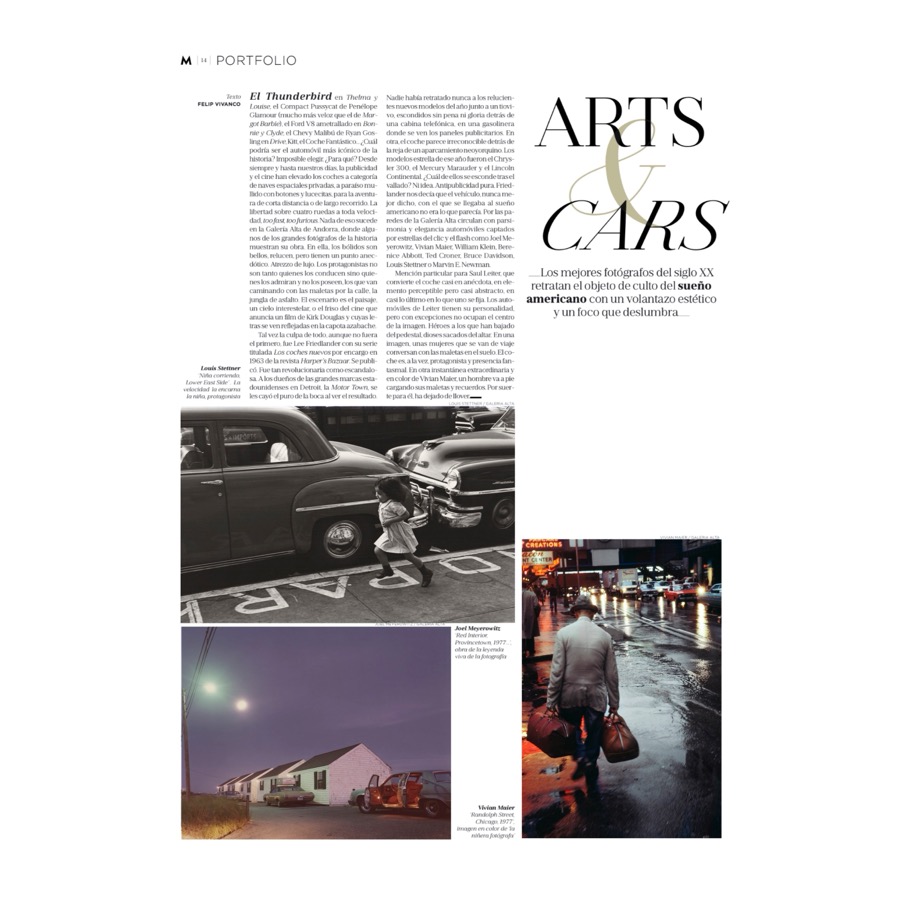
Arts & Cars
Felip Vivanco, La VanguardiaSeptember 2023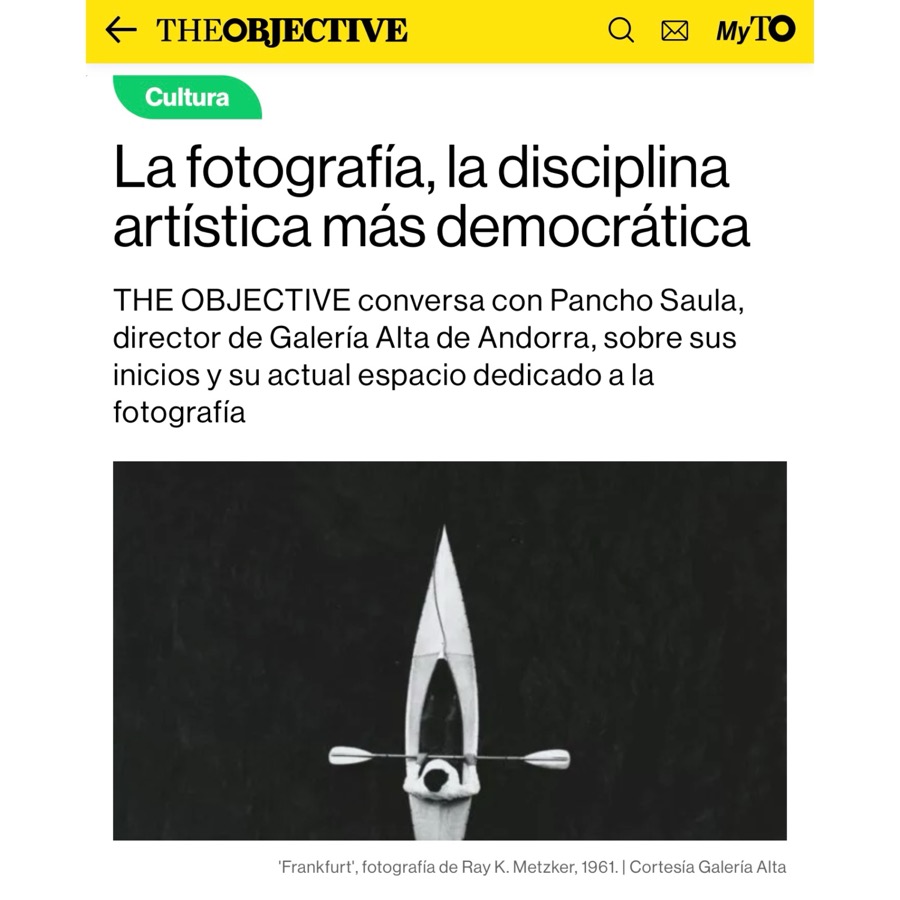
La fotografía, la disciplina artística más democrática
Fátima Poppe, The ObjectiveMarch 2023
William Klein (b.1928) was born in New York City. After graduating early from high school, he began studying sociology at the City College of New York. In 1946 he joined the U.S. Army and was stationed in Germany, where he won his first camera in a poker game. After relocating to Paris in 1948, he continued his studies at the Sorbonne with the assistance of the G.I. Bill. At the time, his focus was abstract painting and sculpture. After studying with the French artist Fernand Léger, Klein's early career breaks came from two exhibitions in Milan, where he was discovered by the architect Angelo Mangiarotti. They began to collaborate when Mangiarotti asked Klein to recreate once of his abstract paintings on the rotating room dividers of a Milanese apartment-his first commissioned work. It was the experience of documenting these panels in motion that lead him to reconsider photography.
In 1954, Alexander Liberman-then the art director of American Vogue-asked to meet with Klein after seeing his kinetic sculptures in the Paris group show, Le Salon des Réalitiés Nouvelles. Subsequently, Vogue published his photographs of Dutch barns, reminiscent of Mondrian, soon after their meeting. Thus began his foray into fashion photography, as well as his well-known photographic essays on various cities. Shooting for Vogue during a brief return to New York , Klein let loose on the city, taking fashion photography in a whole new direction. He captured the beautiful and the grotesque all within wide-angle and telephoto shots. Taking models out of the studio and onto the streets, his revolutionary techniques pioneered a new vision.
Widely acknowledged as a significant innovator in the history and design of the photo book, Klein published his first book Life is Good and Good For You in New York in 1956, which won the Prix Nadar the following year. Capturing the rough and tumble of daily life, Klein's brutally honest images caused a major sensation. Three more books were published, each with photography from a different city, Rome in 1958-59, followed in 1964 by Moscow and Tokyo (reissued in limited edition in 2014 by Akio Nagasawa Publishing).
In 1958, Klein began to explore the moving image, creating his first Pop film, Broadway by Light, in 1958. He went on to produce feature films and documentaries including a satire about the fashion world, Qui-?tes Vous Polly Maggoo? (1966); Far From Vietnam (1967); Muhammad Ali, The Greatest (1969); and The Little Richard Story (1980). His last film to date, Messiah (1999), reveals on an epic scale a summary of the themes present throughout his artistic career.
The recipient of numerous awards, Klein was honored with a Commander of Arts and Letters in France in 1989, the Medal of the Century by the Royal Photographic Society in London in 1999, the International Center of Photography Infinity Award for Lifetime Achievement in 2007, and the Outstanding Contribution to Photography Award at the 2012 Sony World Photography Awards. Works by William Klein are included the collections of many institutions, including The Metropolitan Museum of Art, The Museum of Modern Art, and the Whitney Museum of American Art in New York; the J. Paul Getty Museum in Los Angeles; and the Centre Pompidou in Paris.