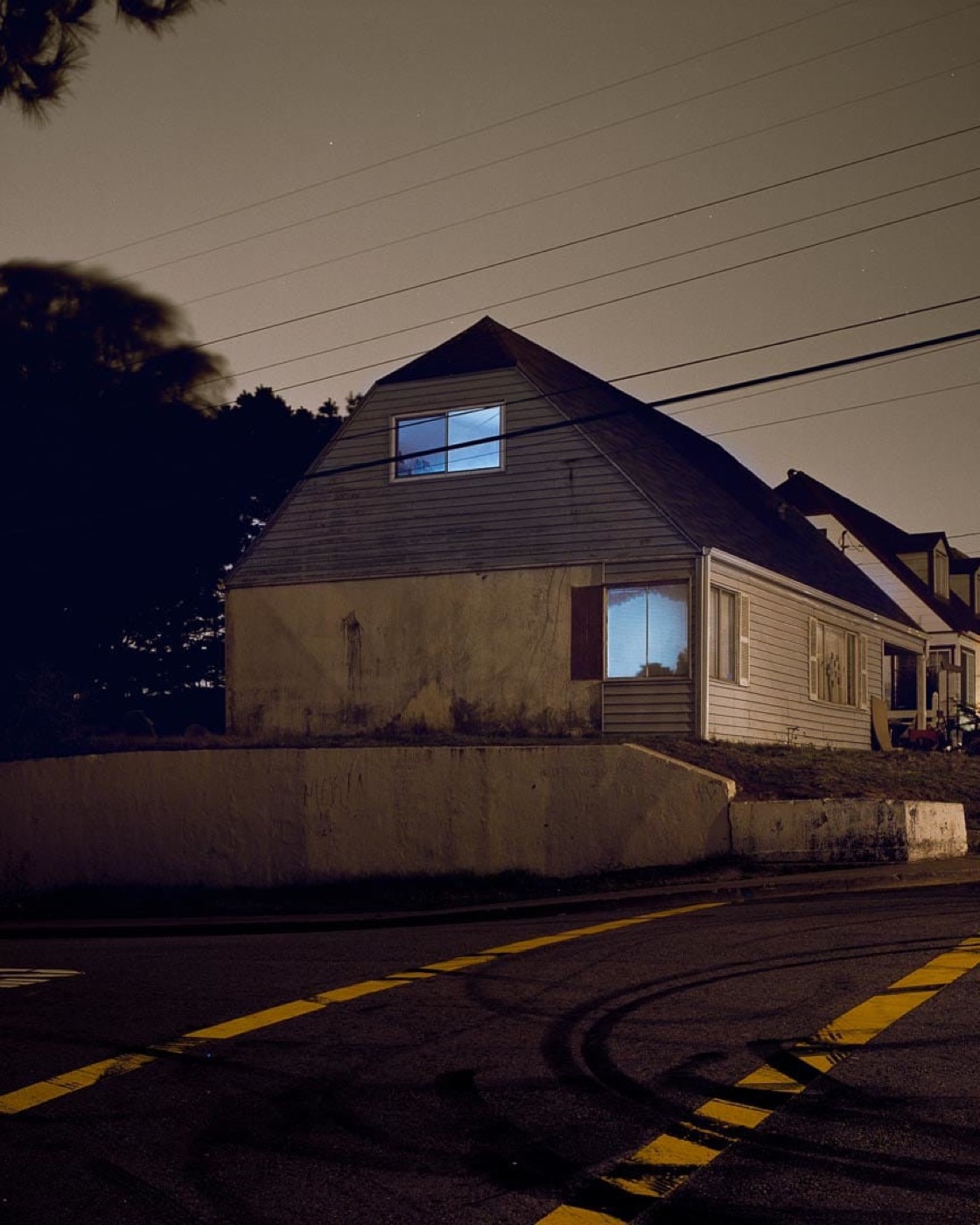
Todd Hido American, b. 1968
Edition of 10 + 3 AP
Edition of 5 + 1 AP
Sold Out
Edition of 3 + 1 AP
Edition of 1 + 1 AP NFS
Sold Out
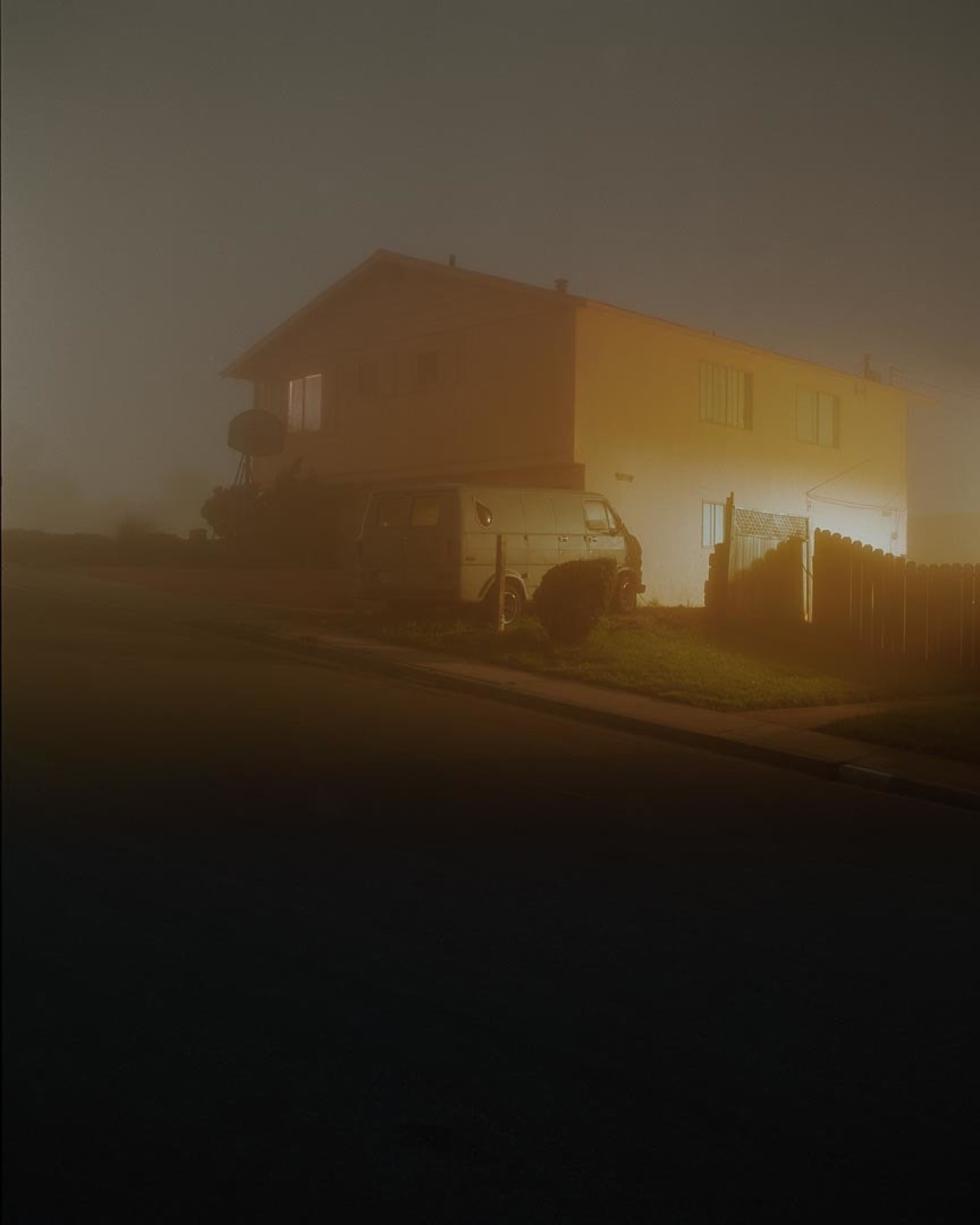
Fog has taken the street and turned every light in it to sodium. A two-storey house glows through the murk, its far wall washed a saturated yellow by a source hidden behind the fence at the right, its nearer face falling to a dull rose. A white van sits under the overhang, close against the wall. A small dish is fixed to the left flank of the house; a picket fence and a thin strip of lawn run to the pavement, and the road in the foreground goes entirely to black.
Hido photographed this in 1998, at the end of a decade in which the American suburb had been described mostly through daylight and irony. He works instead at night and in weather, using exposures long enough that the fog itself becomes the subject and the house is reduced to the light it leaks. What might have been a survey of tract housing becomes a study of atmosphere, in which the architecture is barely legible and the mood is unmistakable.
The lineage matters. There is a long American habit of photographing the ordinary house as a way of asking what the country promised and what it delivered, running from the Farm Security Administration through the New Topographics of the mid-seventies. Those photographers worked in flat light and kept their distance. Hido keeps the subject and abandons the detachment. The house here is not evidence in an argument about land use. It is a place where the light is on, seen by someone who did not go in.