Todd Hido American, b. 1968
Edition of 10 + 3 AP
Edition of 5 + 1 AP
Sold Out
Edition of 3 + 1 AP
Edition of 1 + 1 AP NFS
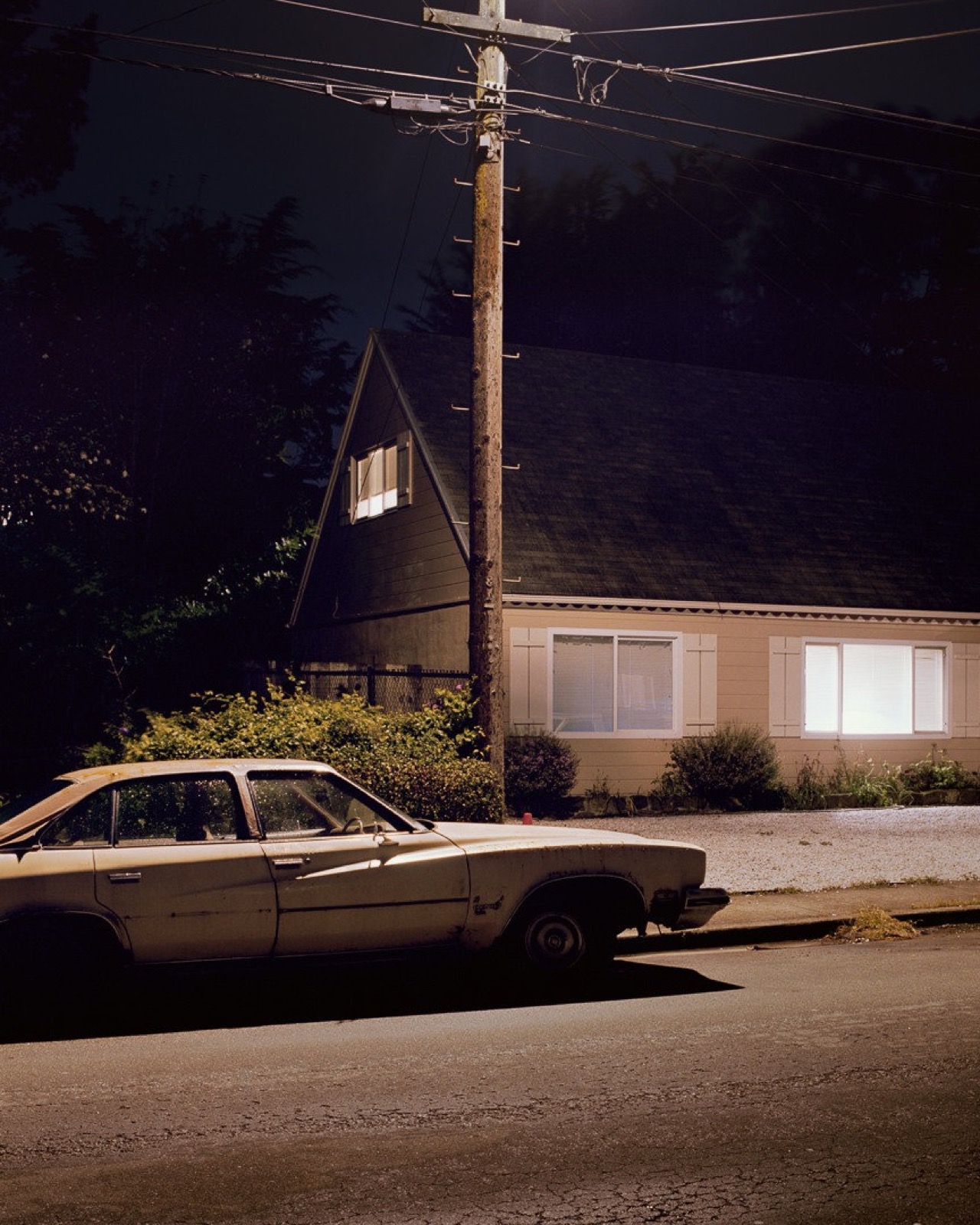
A pale sedan is parked at the kerb, its flank dented above the rear wheel, one hubcap gone, the body flattened by a light that comes from somewhere off frame. Behind it a utility pole rises through the whole picture, studded with climbing pegs, its crossarm throwing wires in four directions against a blue-black sky. The house beyond has a steep gable with one small lit window set into it, and along the ground floor two more windows, the right one glowing hard white through slatted blinds.
Almost every element here belongs to the least photographed category of American landscape: the pole, the wires, the kerb, the car nobody would pose beside. Hido made this in 1997 and gave that ordinary run of street the long exposure normally reserved for architecture worth admiring. The picture is not ironic about it. It simply extends to the vernacular the attention that photography has always reserved for the significant.
This is where photography's real history is, and it has never been in museums. It is in the millions of images made of exactly such houses, by residents, for no audience beyond the family, valued for who lived there rather than for who made them. What Hido does is stand in the position of that anonymous maker and stay longer. The result carries the desire that runs through the whole vernacular archive: not to make a picture, but to hold on to a place that is under no obligation to remain.
