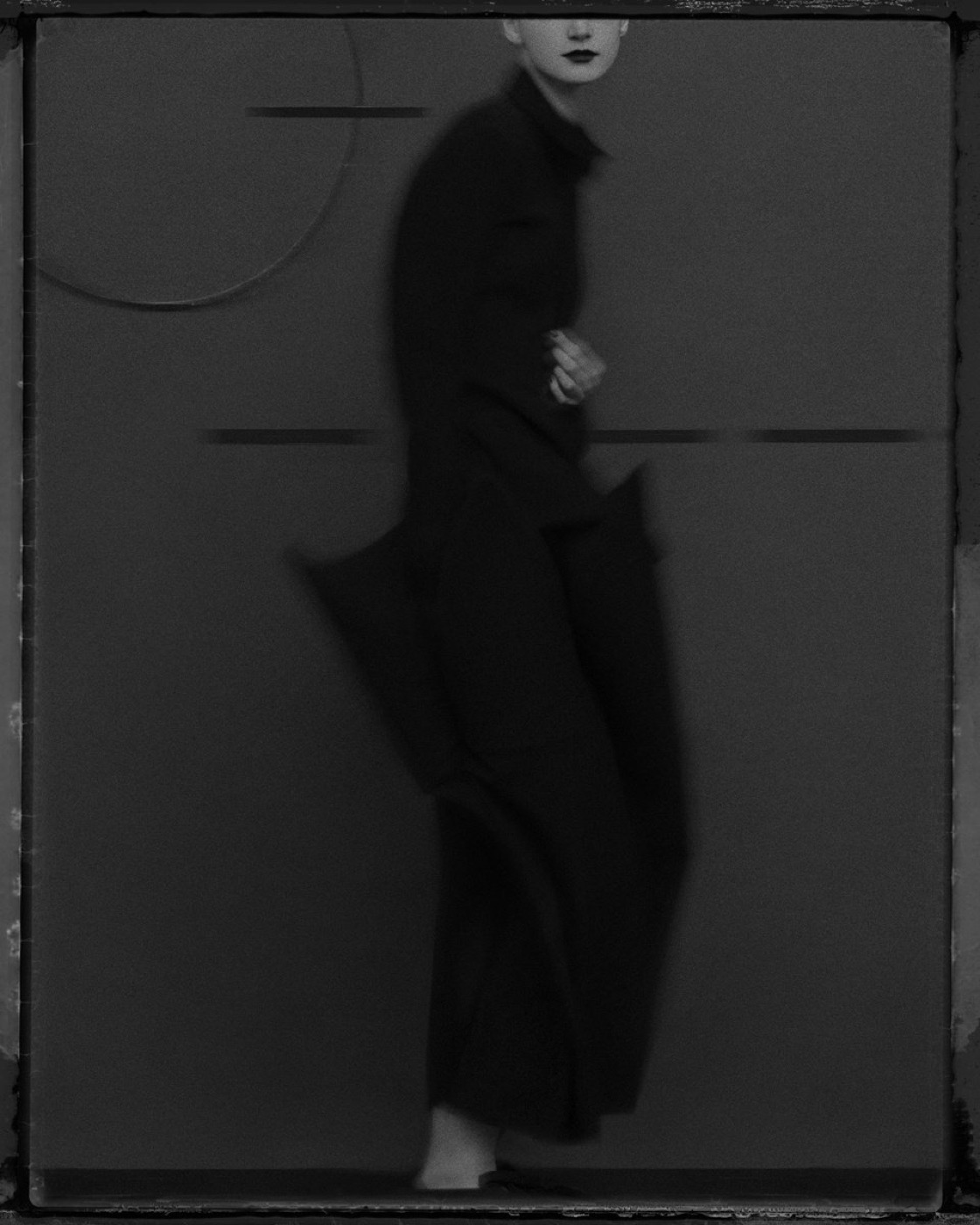
Sarah Moon French, b. 1941
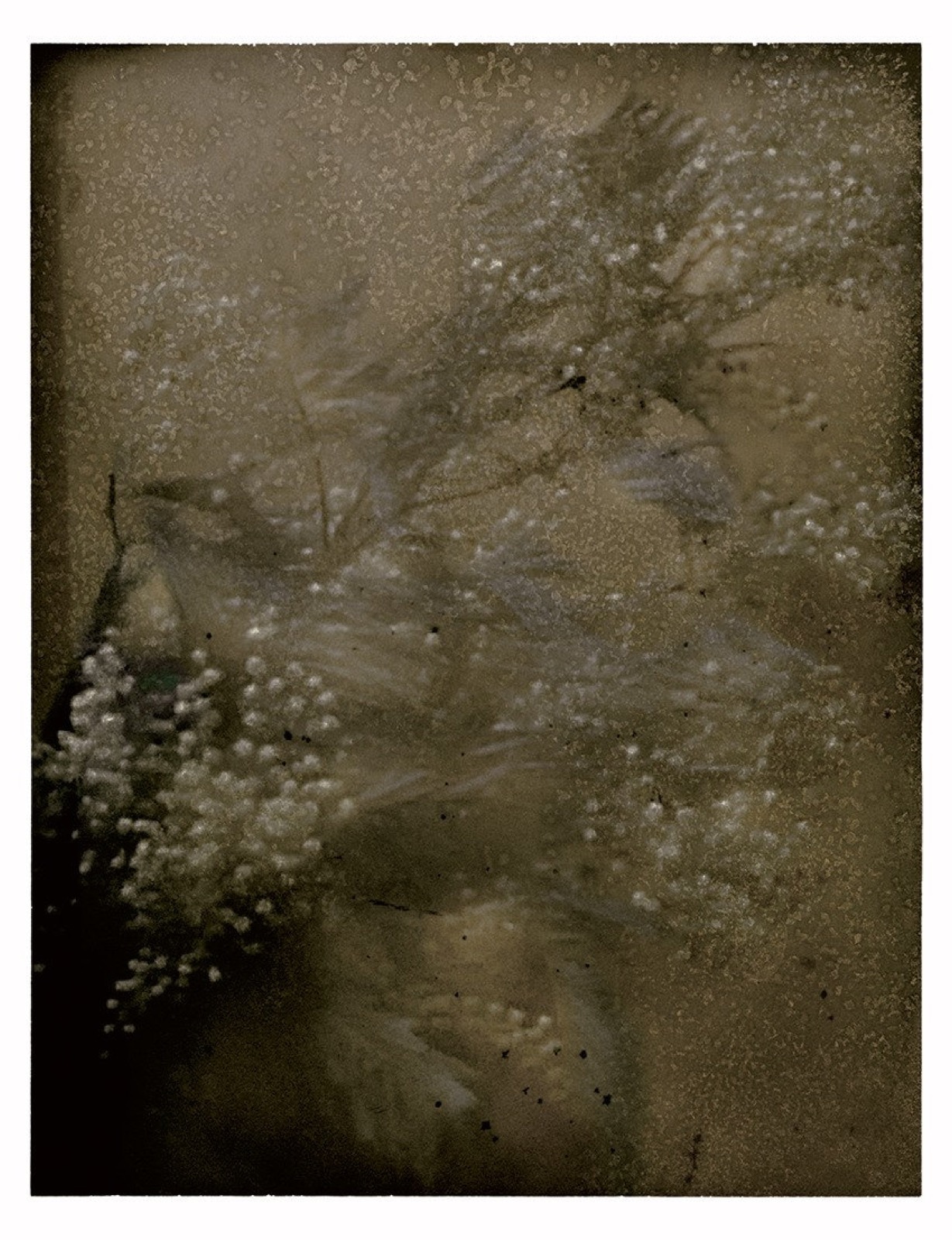
Mimosa, in sepia, coming apart. Sprays of small round blossoms lean in from the left and from the top, and each blossom is a pale dot in a haze of grain. The feathery leaves are there in outline only. Beyond them the background is nothing at all, an even warm brown. The print carries its own weather: ragged dark borders, blooms of tone, black specks scattered across the surface like grit.
There is no green in this and no yellow either, which for a mimosa is a considerable subtraction. The flower that is famous for being the first thing to turn yellow at the end of winter has been printed in a narrow range of browns, so all that survives of it is the shape of the clusters and the way they hang.
Moon has photographed flowers for decades and rarely photographs them in good condition. What she is after is the moment a still life stops being an arrangement and becomes the memory of one, and she gets there by damage: soft focus, coarse grain, an emulsion allowed to fail at the edges. The mimosa in this print is not in the act of dying. It has been gone for some time, and the photograph is what is left of it.