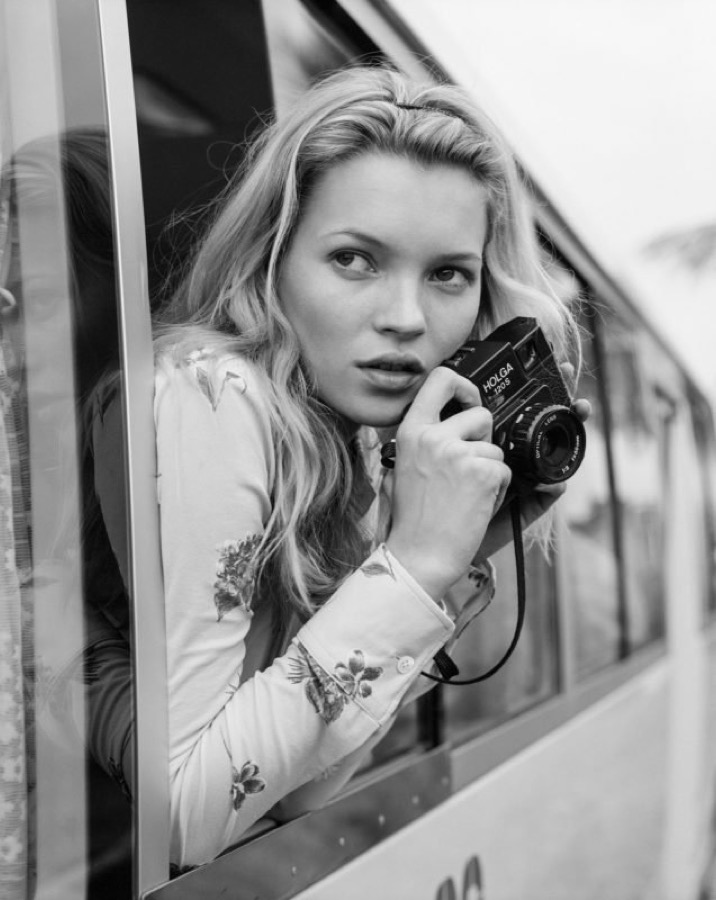
Bruce Weber American, b. 29/3/1946
Edition of 15
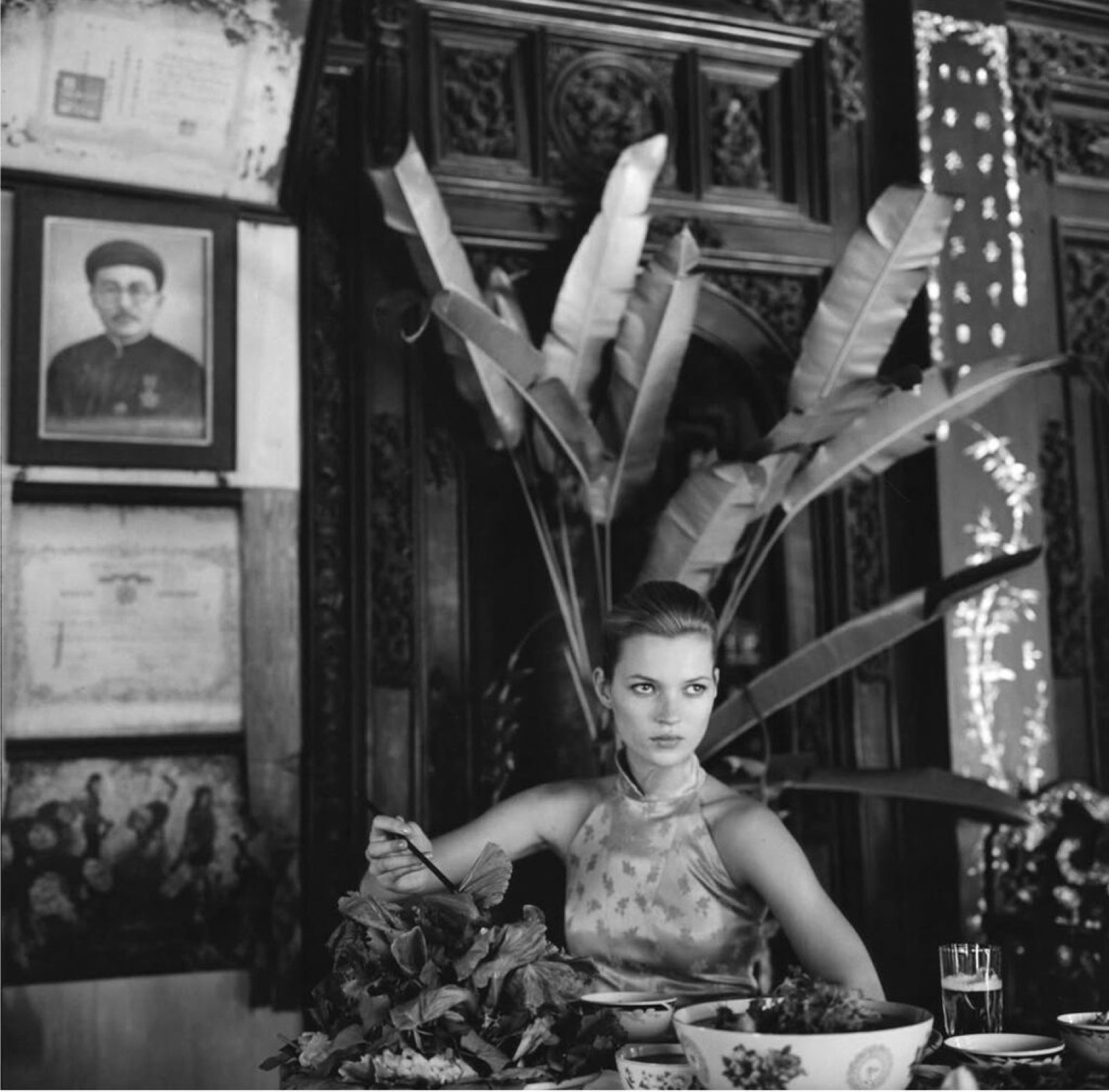
A dining room in some grand old Chinese house: carved panels going black with age, a framed photograph of a man in a cap and round glasses with his medals catching what light there is, and beneath him the certificates a family hangs to say who they have been. Kate Moss sits at the table in a sleeveless silk cheongsam, floral, high at the throat. She holds a pair of chopsticks lightly, mid-gesture. In front of her are porcelain bowls, cut flowers, a glass of beer at the edge of the frame. Behind her a bird-of-paradise plant opens its long leaves so that they rise directly out of her head, a headdress nobody arranged.
Everything in the room belongs to someone else. The man in the photograph, the diplomas, the carving, the small strings of lights: these are another family's proofs, and she has been placed among them in a dress that is also a costume. What keeps the picture from being a joke about tourism is her face. She does not perform the room. She looks back at Weber with the flat, unhurried attention of someone who has been looked at professionally since she was a girl, and who has decided that this will pass too.
I keep returning to the two portraits in the frame. The patriarch on the wall, fixed in his dignity, was photographed to be remembered by his own people. The young woman below him is being made, that afternoon, into an image for strangers to want. Between them sits a whole argument about what a picture is for, and about how easily a self can be borrowed, worn for an hour and given back. She wears it beautifully. That is the trouble, and also the pleasure.