Bruce Weber American, b. 29/3/1946
Edition of 10
Edition of 5
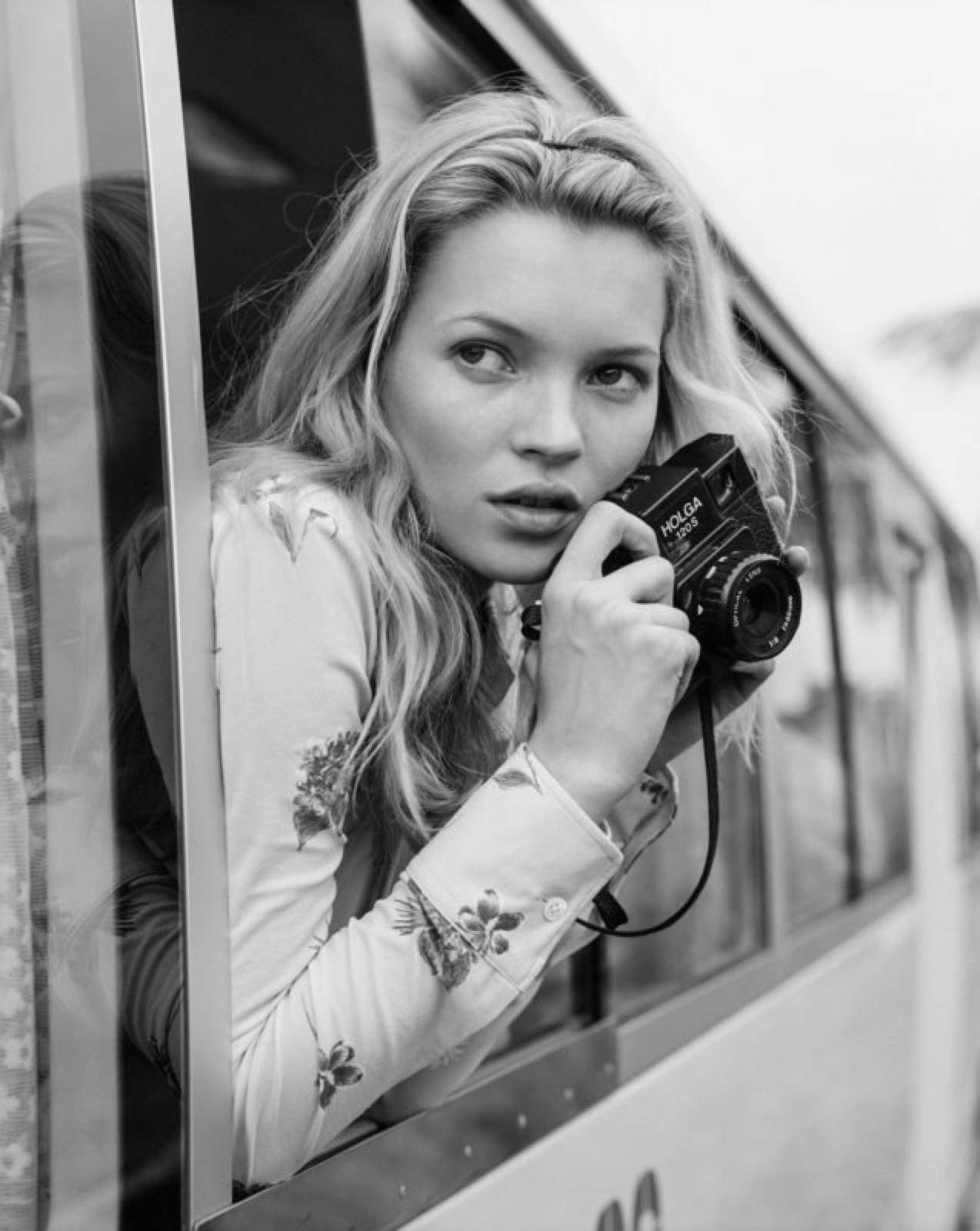
Hand the most photographed woman of her generation a cheap plastic camera, point her back at us, and what does the picture become? Kate Moss leans from a train window in Vietnam, a black Holga pressed to her chin, its toy lens and stamped lettering turned toward the viewer, and for once the model is the one taking aim. The floral sleeve, the loose blonde hair, the parted lips are all in place, yet the usual direction of looking has quietly reversed. The question hangs unanswered.
Weber stages the reversal without insisting on it. She does not lift the Holga to her eye; she holds it low, near the mouth, so that the gesture stays ambiguous, half snapshot, half caress. Her gaze meets the lens directly, cool and unhurried, while a faint reflection in the window glass doubles her against the carriage interior, a second face ghosting the glass. The picture is about photographic looking itself, dressed as a fashion editorial and shot on the far side of the world.
This kind of self-aware image, the photograph that knows it is a photograph, became central to the fashion picture in these years, and Weber was among its most fluent practitioners. He had spent two decades shaping how the camera framed desire and youth, and here he lets his subject borrow the instrument. The gelatin silver print keeps the whole thing tender and slightly grainy, the soft daylight, the floral cotton, the plastic camera, rendered with equal seriousness, none more precious than another.
