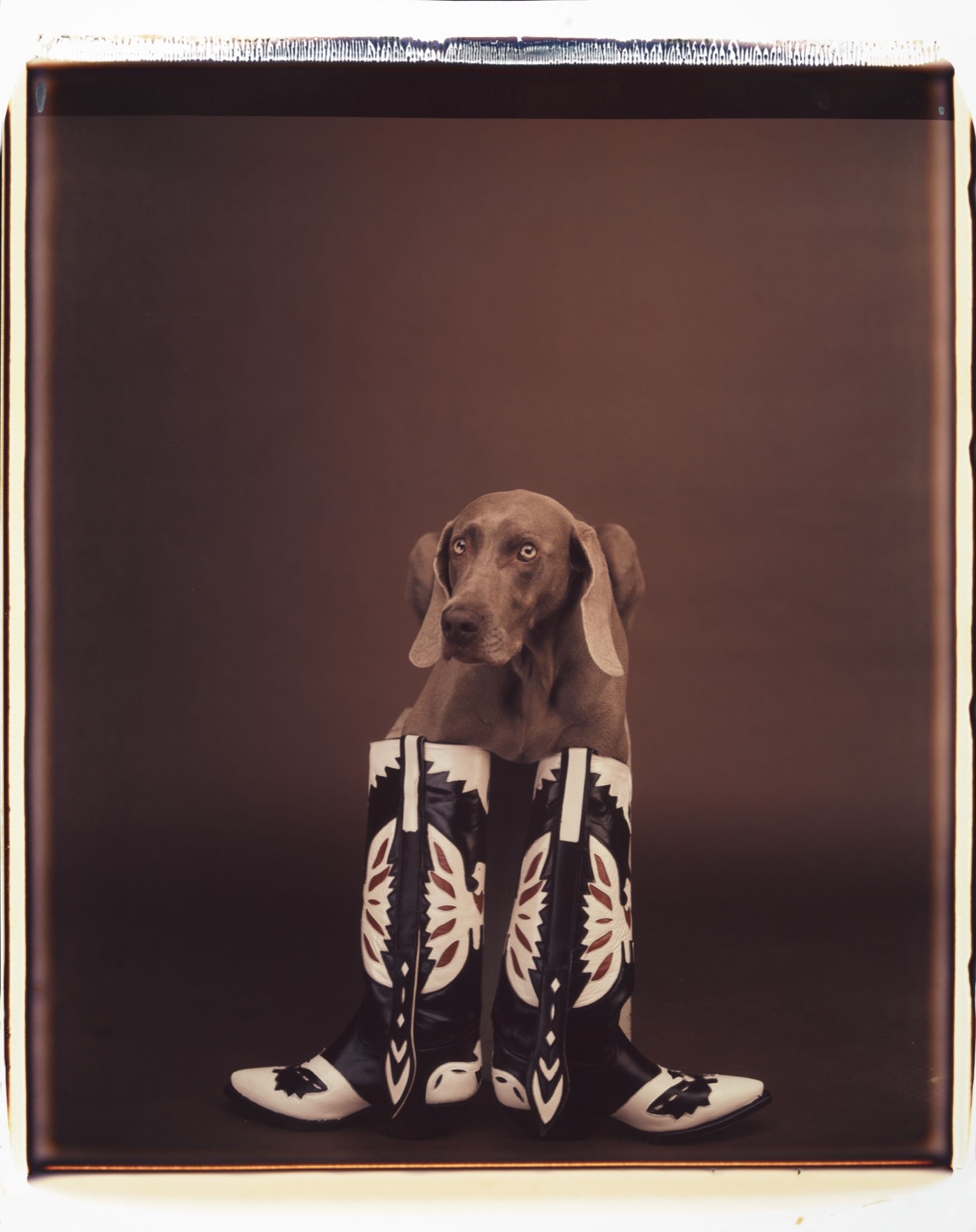
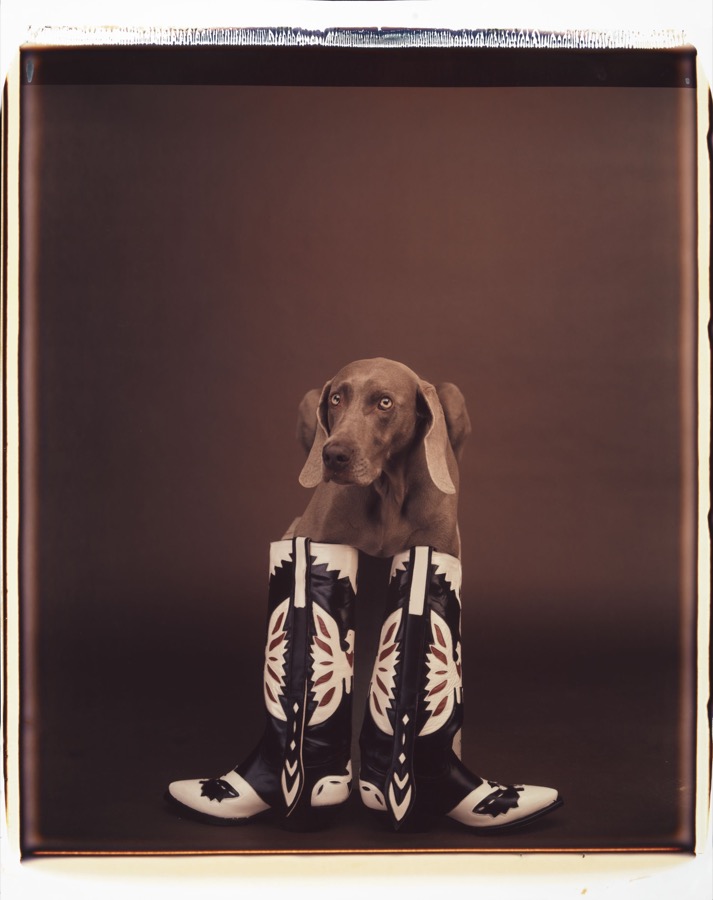
 Untitled, 1989.Consider what this thing actually is before you read its joke.
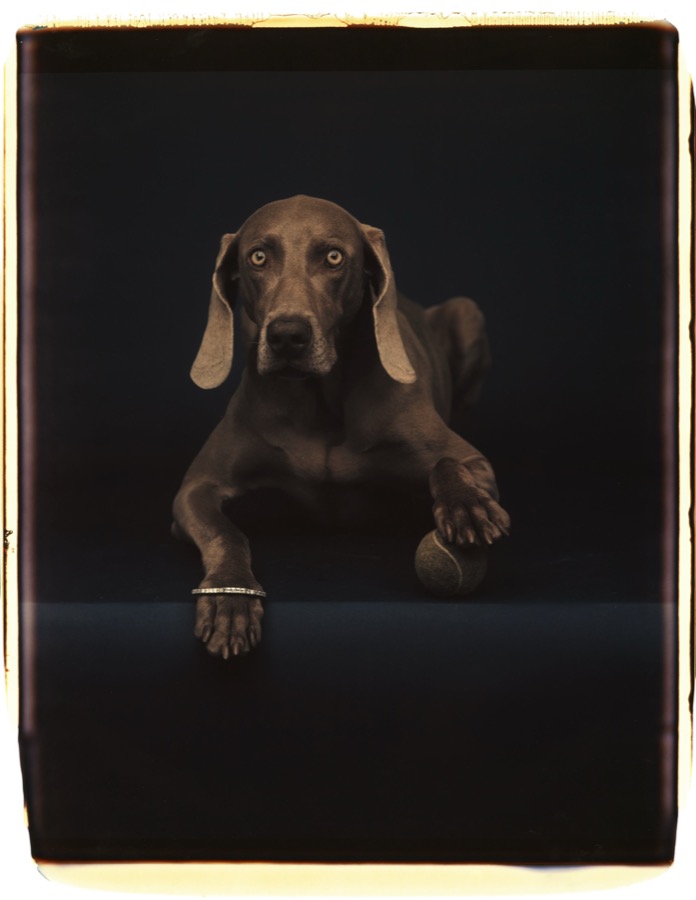 Ball base, 1990.What can a dog be said to own? This Polaroid proposes two answers.
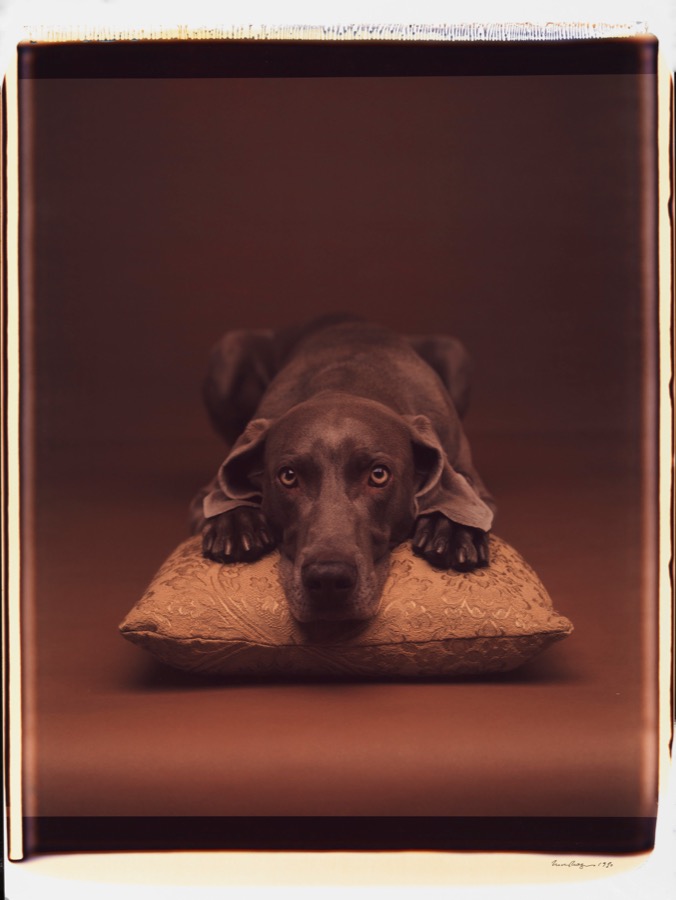 Untitled, 1990.This 1990 William Wegman Polaroid captures instant photography at its artistic peak, when the revolutionary medium achieved full technical and creative potential.
 Untitled, 1990.Two Weimaraners sit side by side on a warm brown studio ground, front legs straight, chests out, in the posture dogs adopt when somebody has told them to.
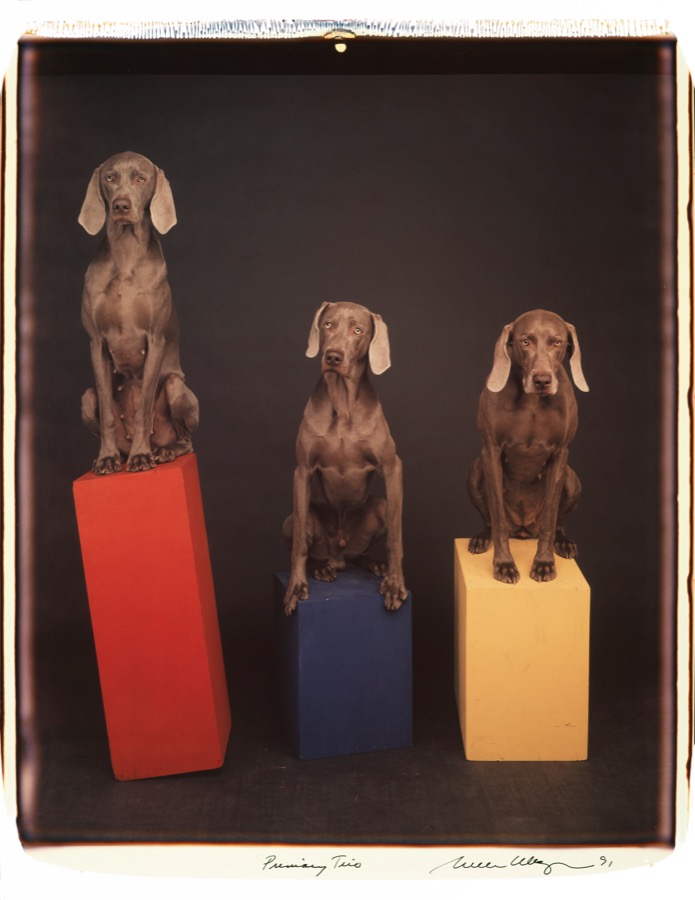 Primary Trio, 1991.The red plinth stands tallest, the blue a notch lower, the yellow lower still, so that the three Weimaraners step down across the frame like a chart of something — a podium, a bar graph, a colour…
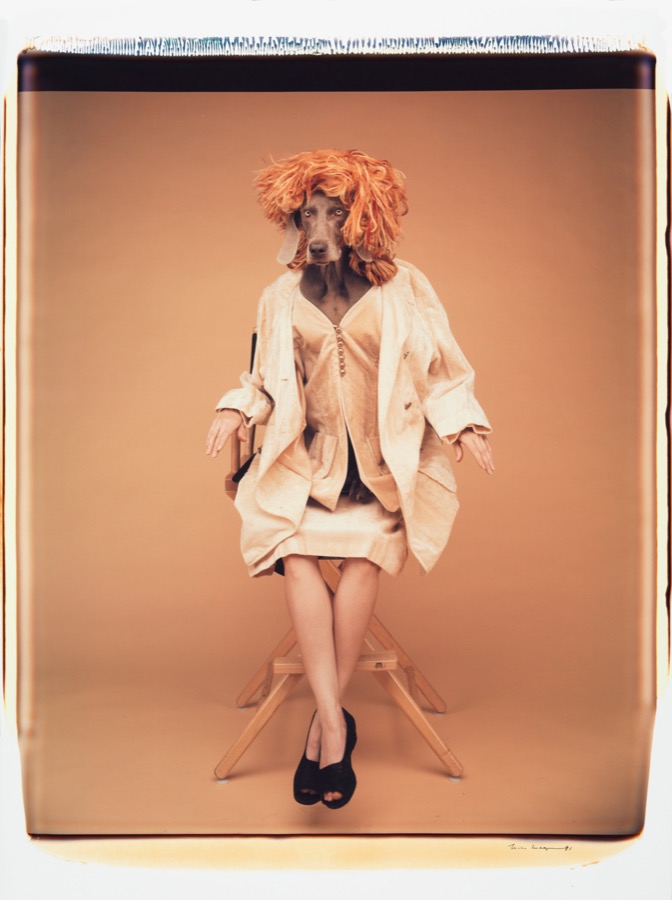 Sitting Tall, 1991.William Wegman’s Sitting Tall, 1991, captures a rare moment of composed stillness held within the luminous surface of a unique color Polaroid.
 Untitled, 1991.Start at the ragged edge, where the emulsion lifted as the print was peeled.
 Untitled, 1991.A Weimaraner balances on a child's bicycle at the edge of a painted sea, a patterned towel slung over one shoulder, gazing off down the empty beach with the calm dignity of a holidaymaker who has…
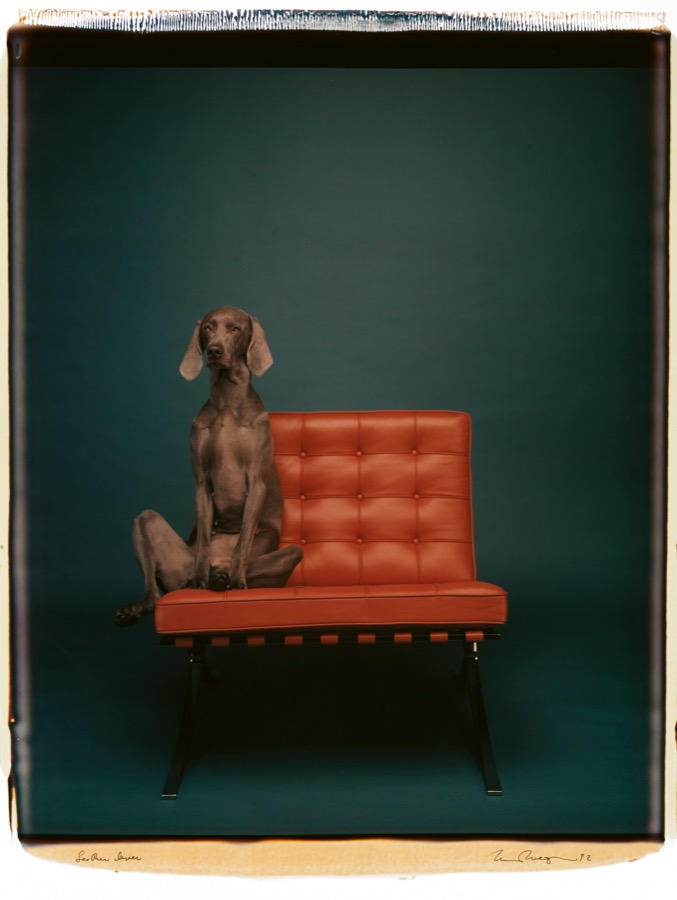 Leather Lever, 1992.William Wegman’s Leather Lever, 1992, is a quietly theatrical image in which humor, control, and elegance meet with complete ease.
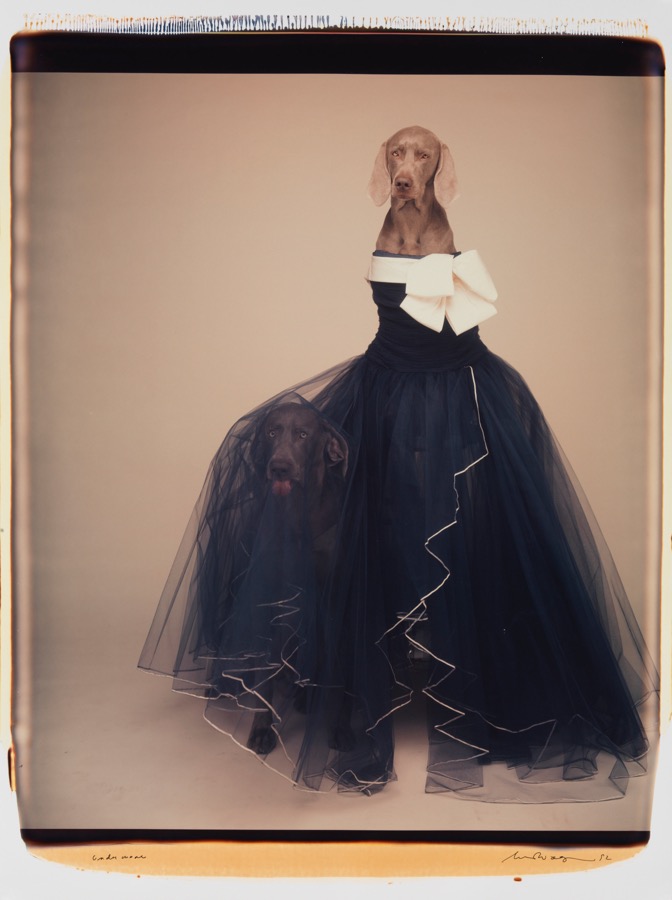 Underwear, 1992.It takes a second to find the second dog.
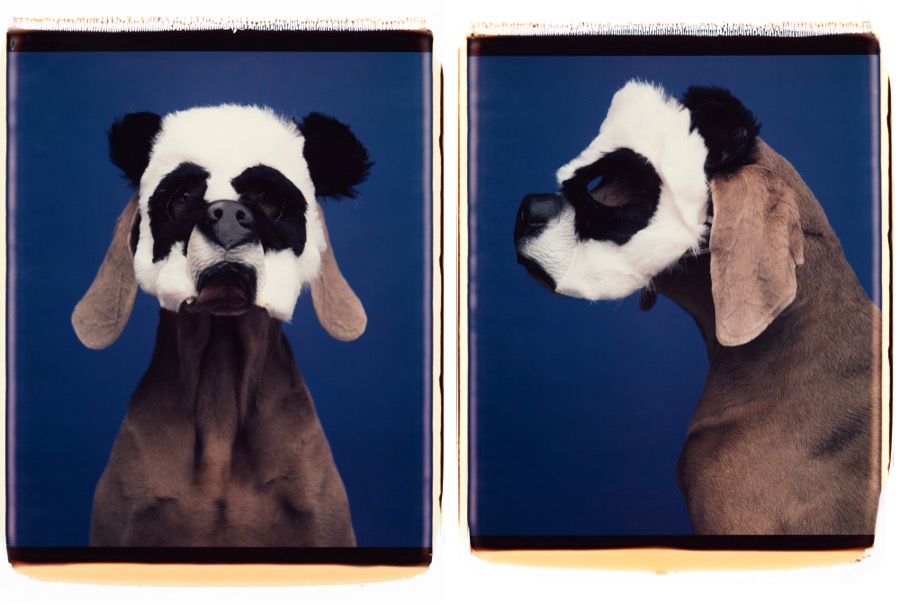 Animalque, 1994.What the dog will not give us is its face.
 Charmer, 1994.Drape a head in a glittering veil against a field of black and the whole inheritance of devotional portraiture stirs: a Flemish Madonna, a saint emerging from gilded shadow, the haloed face out of…
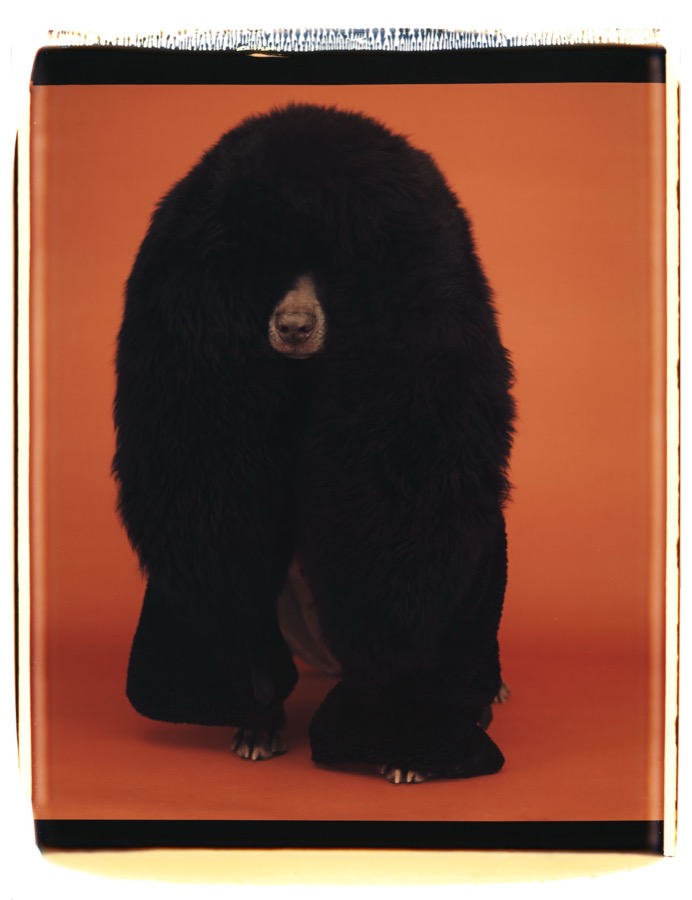 Chow, 1994.There is a lineage of pictures in which the figure vanishes beneath drapery and the cloth becomes the subject—the swallowing folds of a Zurbarán monk, the black sheen of a Sargent gown—and this…
 Coming About, 1994.The summer of 1994 belonged to the late analog century, when the grandest instrument of instant photography — the room-sized Polaroid with its twenty-by-twenty-four-inch sheets — could still be…
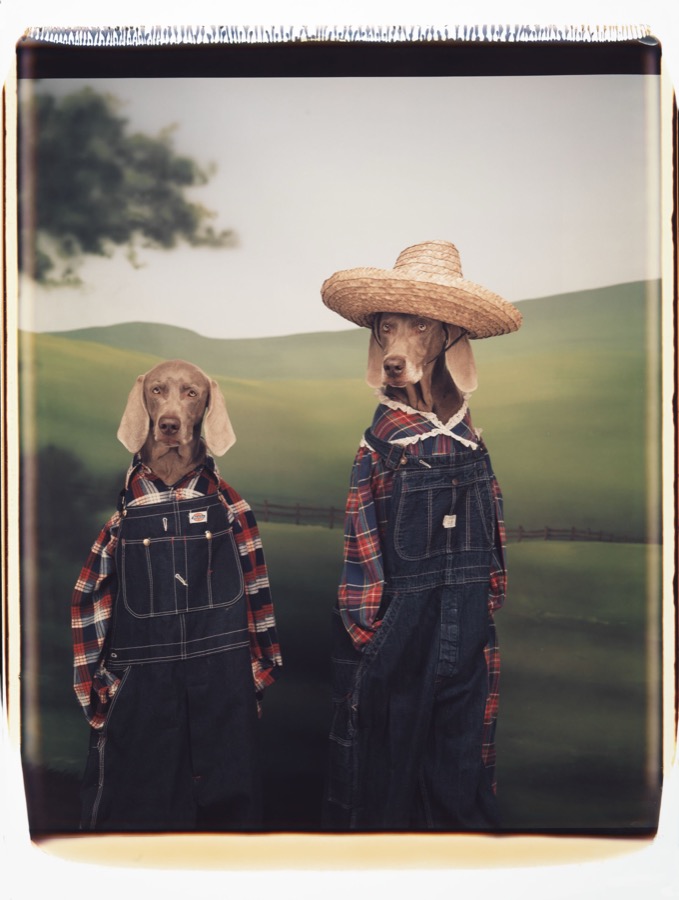 Farm Hands, 1994.The hills behind them never existed as hills.
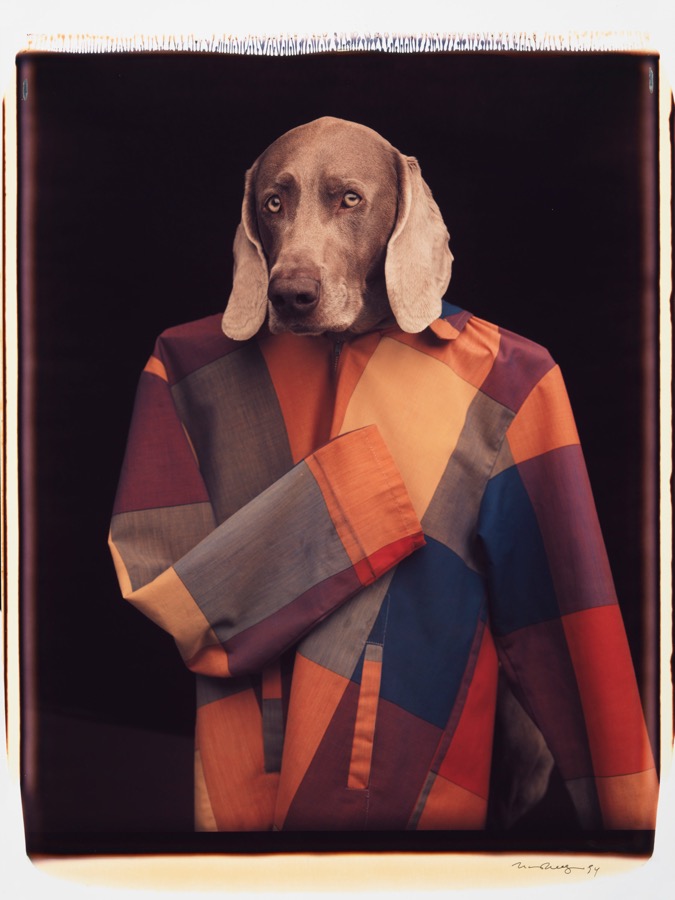 Untitled, 1994.A costume is an argument about who someone is.
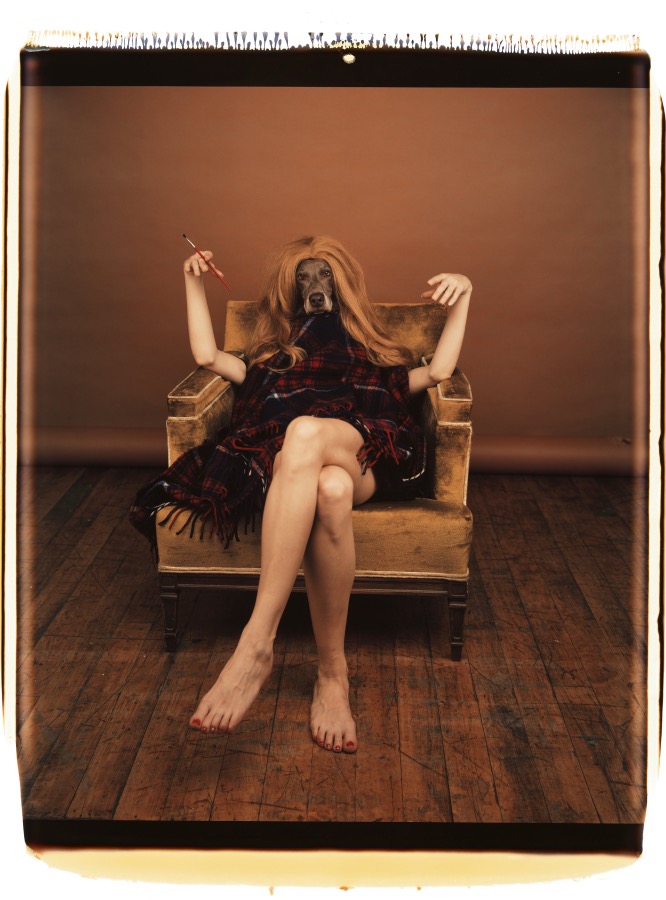 Untitled, 1994.Gold velvet, worn to a sheen at the arms; red and black tartan, heavy with fringe; the auburn cascade of a long wig — these surfaces carry the picture before any reading of it begins.
 Break Out, 1995.Start with the color, because there is hardly any: a field of warm ivory, scorched at top and bottom where the Polaroid chemistry frays into a burnt fringe, and two Weimaraners in that expensive…
 Entertainer, 1995.The microphone is the giveaway. Not the wig, though the wig is doing heroic work — a curtain of golden hair parted dead-centre, falling past the shoulders of a gown the colour of weak tea — and not…
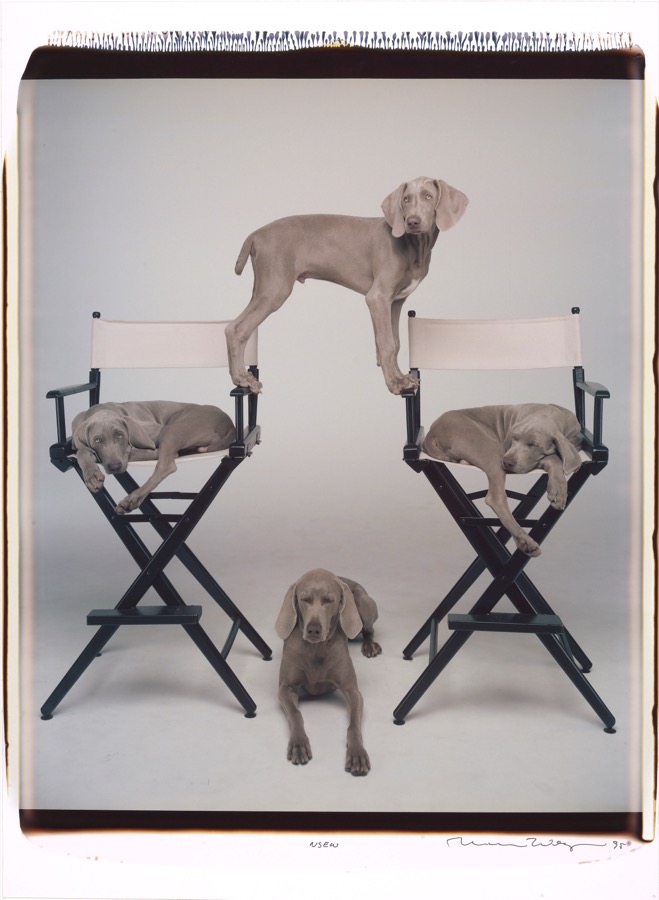 NSEW, 1995.The director’s chair belongs to the iconography of command: canvas, black frame, the seat from which pictures are ordered into being.
 Marlowe, 1996.William Wegman’s “Marlowe” (1996) exemplifies the artist’s mastery with the legendary Polaroid 20×24 camera, representing both technical innovation and conceptual depth in contemporary photography.
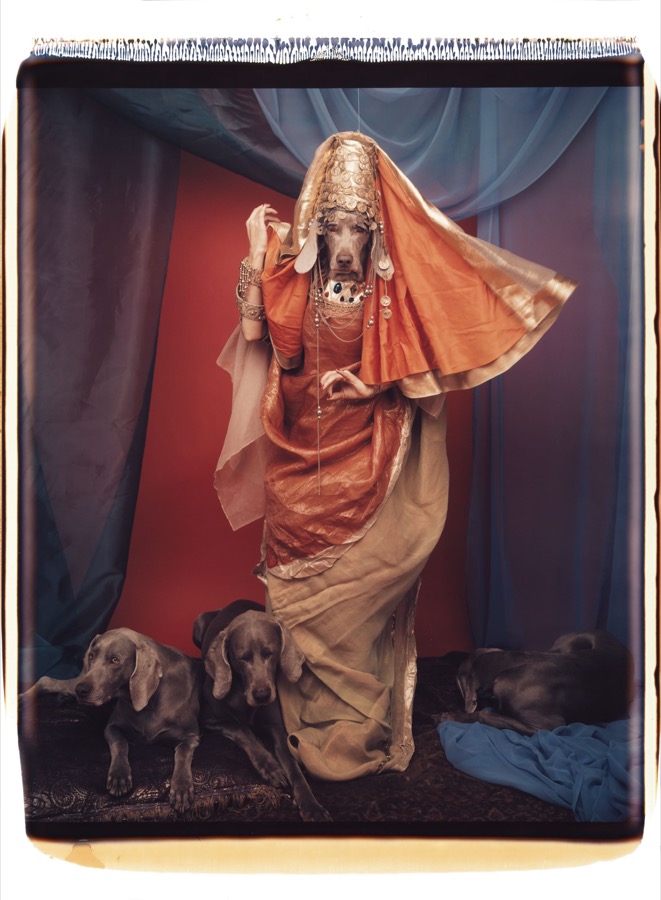 Salome, 1996.Travesty, performed with enough conviction, becomes a form of devotion.
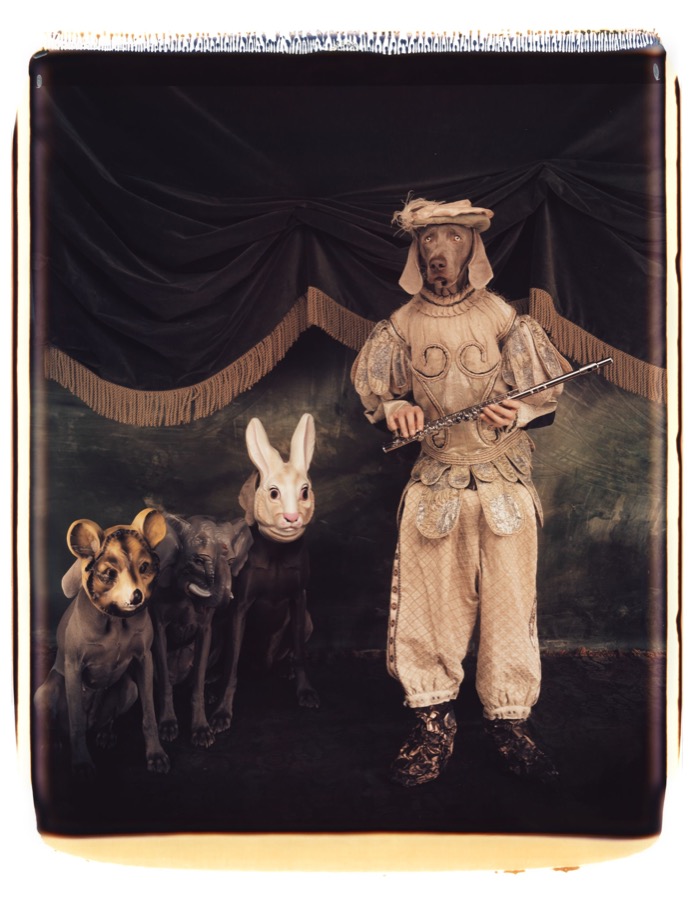 Tamino with Magic Flute, 1996.Long before he became beloved for his dogs, William Wegman was a conceptual artist of the 1970s, making deadpan videos and photographs that probed the absurdities of language and image.
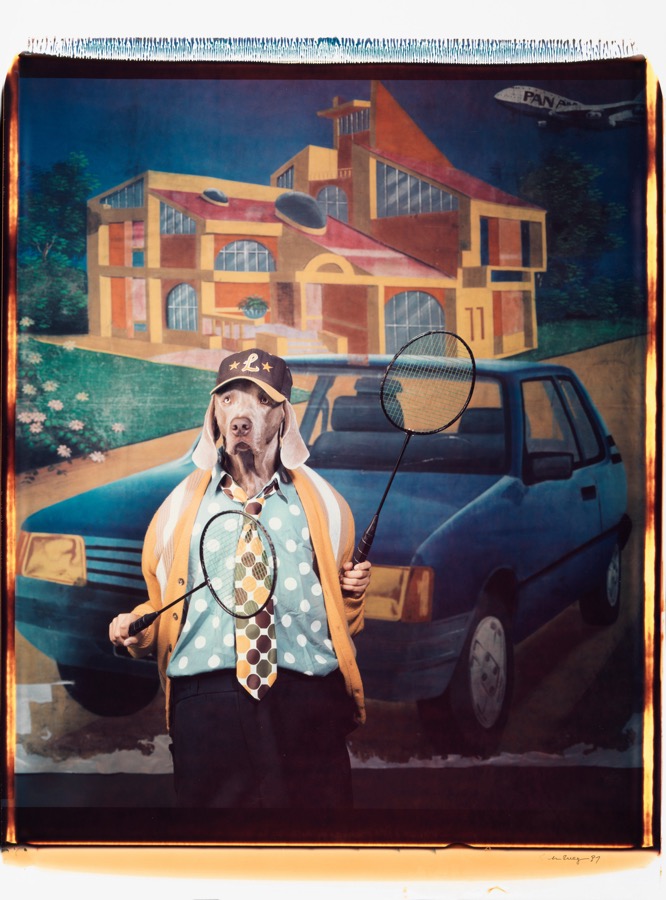 Untitled, 1997.The backdrop belongs to an era already dissolving as the shutter opened: a Pan Am jumbo banking over a Memphis-pastel villa, a hatchback parked on a hand-painted lawn, the whole scene a postcard of…
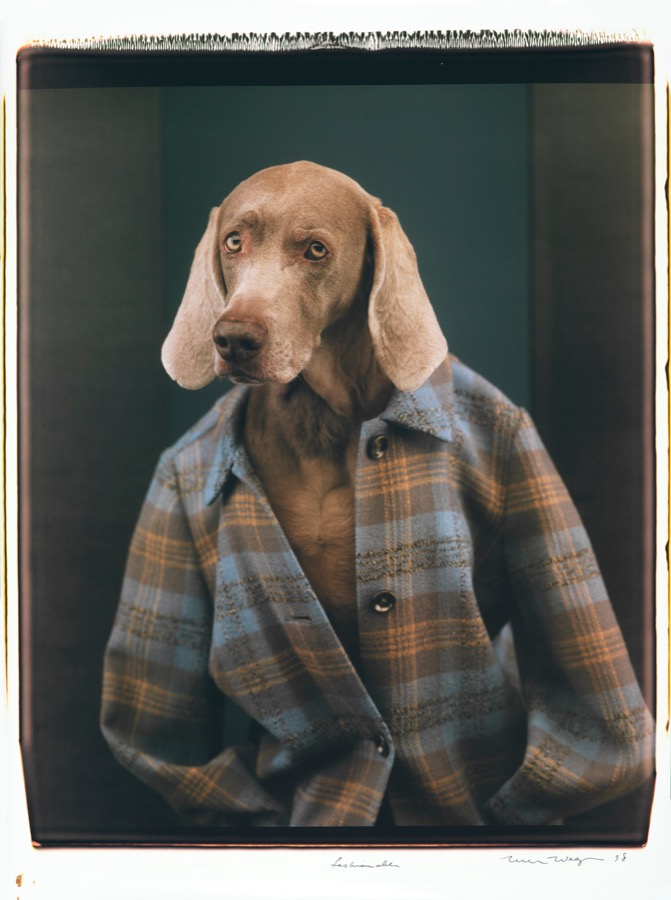 Fashionable, 1998.A Weimaraner sits facing us in a blue-grey and tan plaid jacket, collar open, buttons down the front, its forelegs inside the sleeves so that the whole garment hangs the way it would on a person.
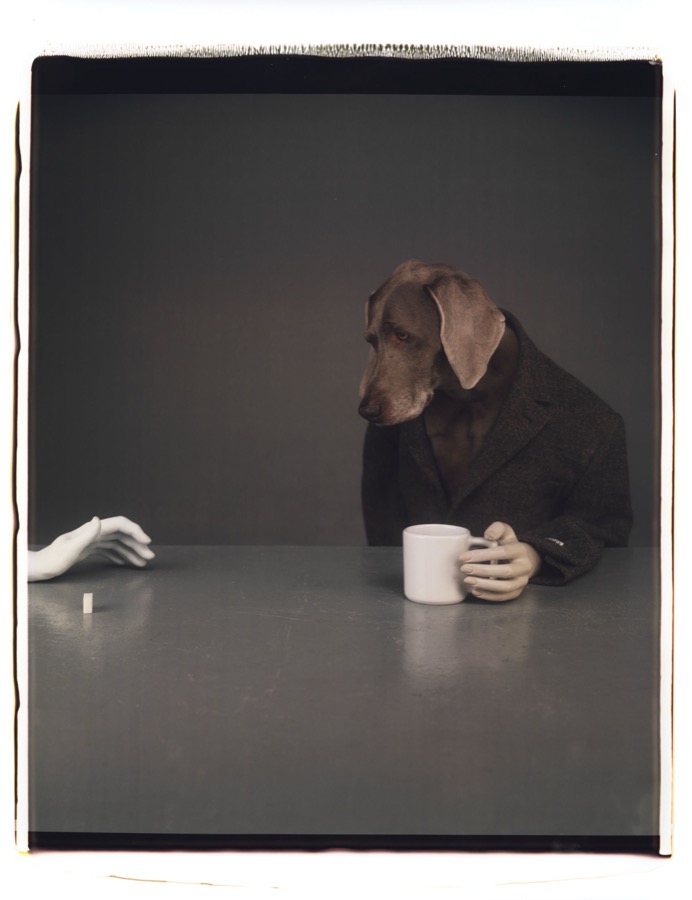 One Lump, 1999.Everything on this table has been arranged for a scene that never quite arrives.
 Untitled, 1999.This unique 20 x 24 inch Polaroid from 1999 captures a brief, theatrical encounter between William Wegman’s camera and his beloved dog Battina, also known as Batty, transformed into an improbable…
 Untitled, 1999.Look first not at the dog but at the ragged top edge of the picture, where the emulsion has bled into a torn fringe and the dye has run thin.
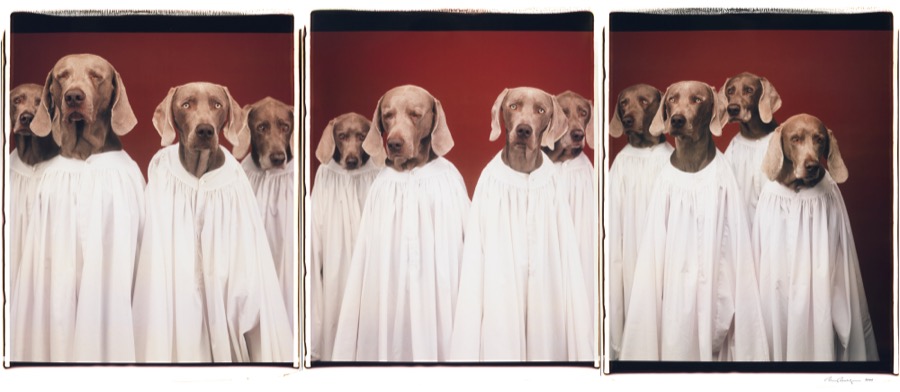 Choristers II, 2000.You almost hear it before you understand it: a choir mid-anthem, mouths in various states of song, some heads tilted back with eyes closed in the rapture of a held note, others fixed wide and alert…
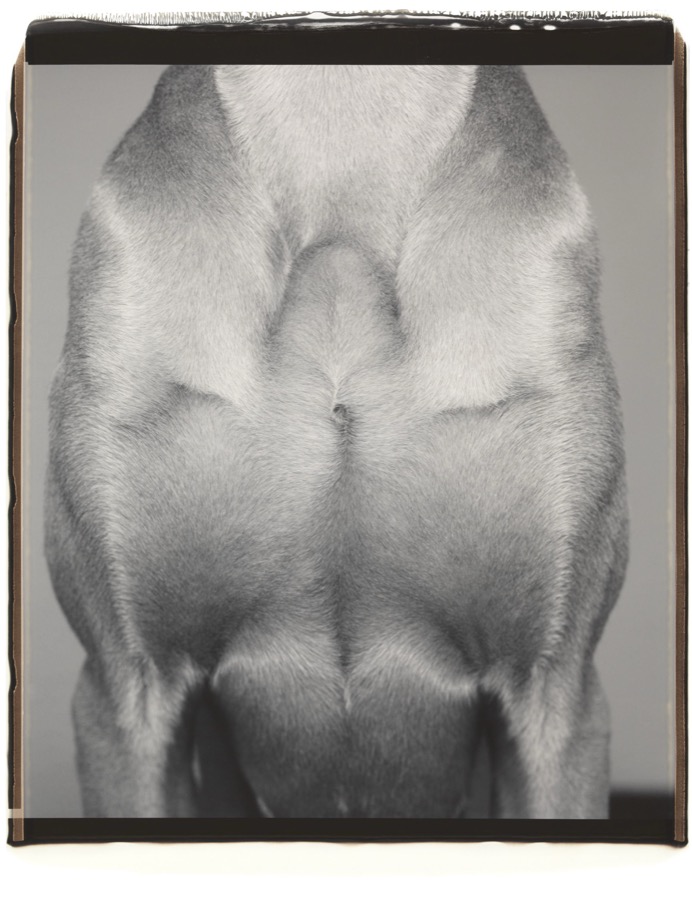 Façade, 2000.No face, no eyes, no famous mournful gaze: what the picture refuses is precisely the thing we came for, and in its place stands the broad grey back, the twin haunches meeting along a central seam…
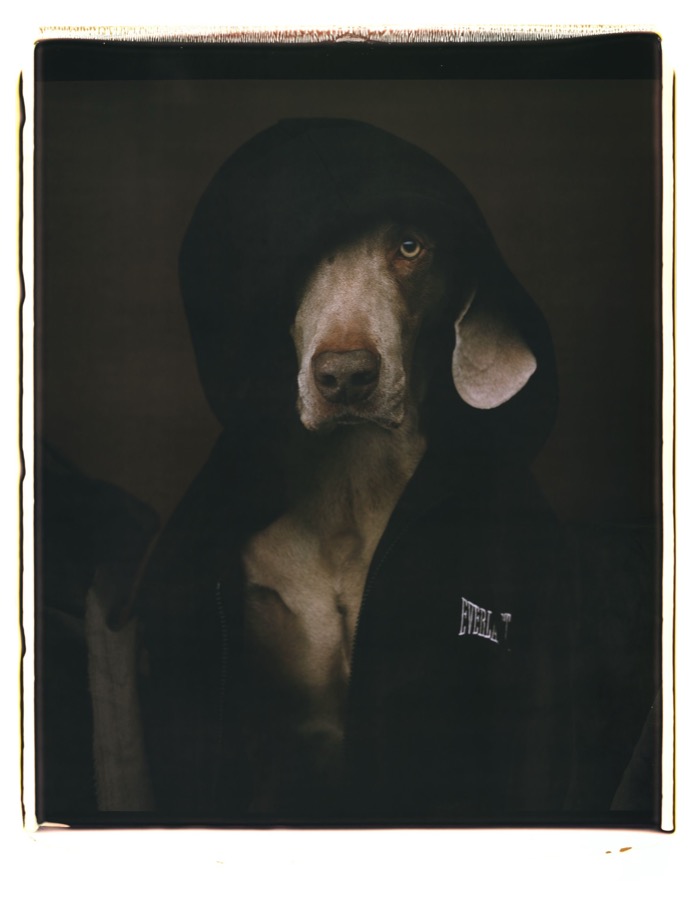 Everlasting, 2001.A Weimaraner in a black hooded boxing robe, the hood up and pulled forward so that only the long muzzle and a single eye catch the light.
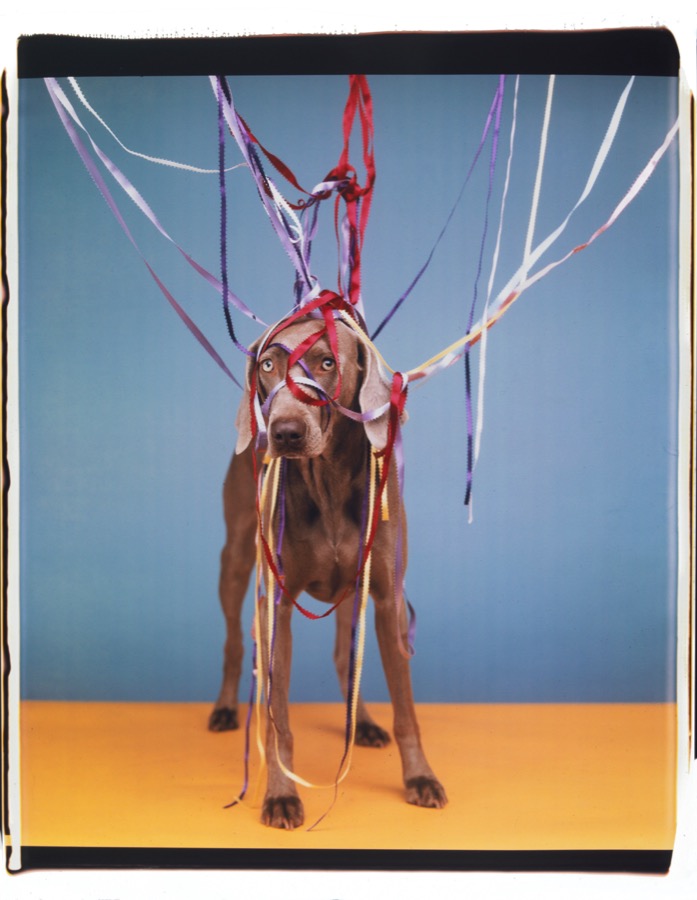 May pole, 2002.Back in the studio again, on that orange sweep of floor against a flat cornflower wall, we find the no-place where Wegman stages all his best theater.
 Room Tone, 2003.Photography is, before anything else, a negotiation with darkness, and this picture pushes the negotiation almost to its breaking point.
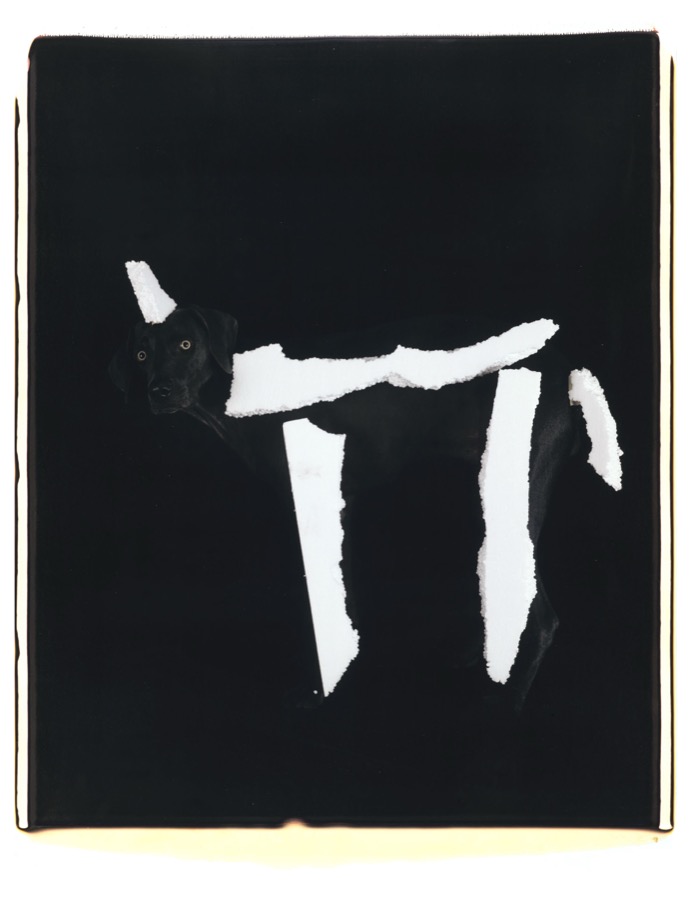 Early Dog, 2004.A dog reduced to a sign: that is what survives here.
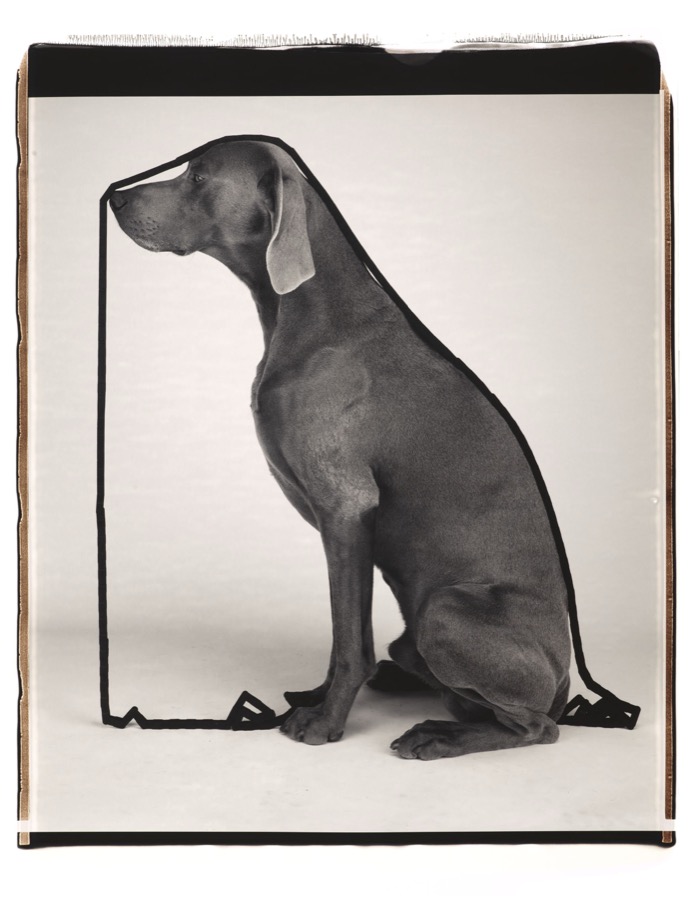 The Line About, 2004.Two dogs share this picture, and only one of them is alive.
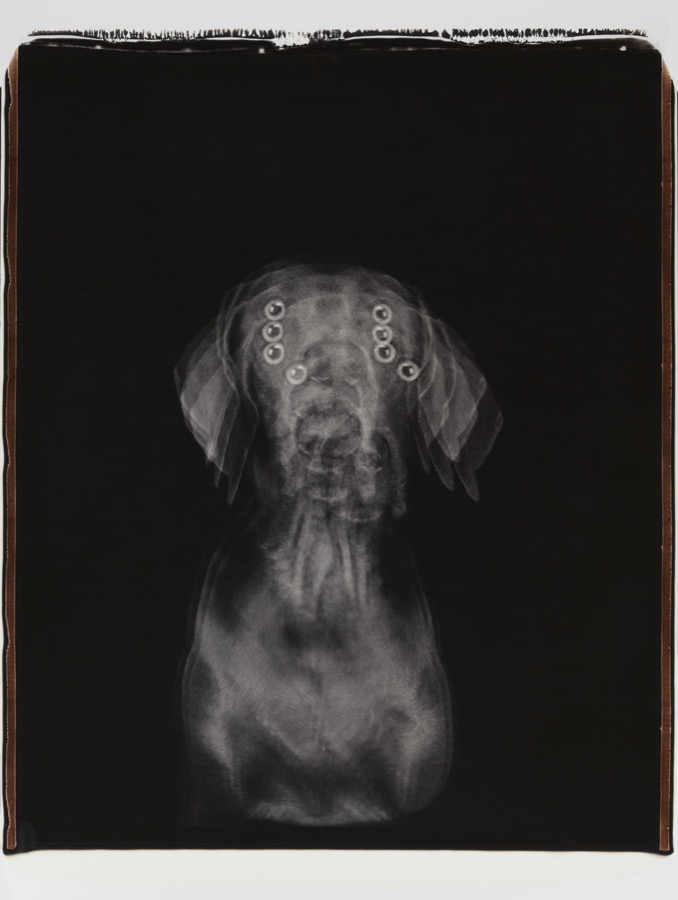 Untitled, 2005.Count the eyes. There are more than two: small glass spheres, seven or eight of them, clustered in bright arcs across the muzzle and brow where a single pair belongs.
 Catch, 2007.Who threw the hand? A gray dog sits wrapped in blush satin on a white plinth, gripping a plaster hand crosswise in its mouth with the settled pride of a retriever who has done exactly what was asked.
 Lucia de Lammermoor, 2007.It's the paws that get you. Not the veil, not the black wig sliding off the dome of that long Weimaraner skull, not even the bridal satin — but the two red latex hands, splayed open at the end of the…
 Penny the Poodle, 2011.Two copper pom-poms cuff the front ankles, matched puffs set just above the slim grey paws, and it is these small flourishes, more than the enormous auburn mane, that name the fiction: this…
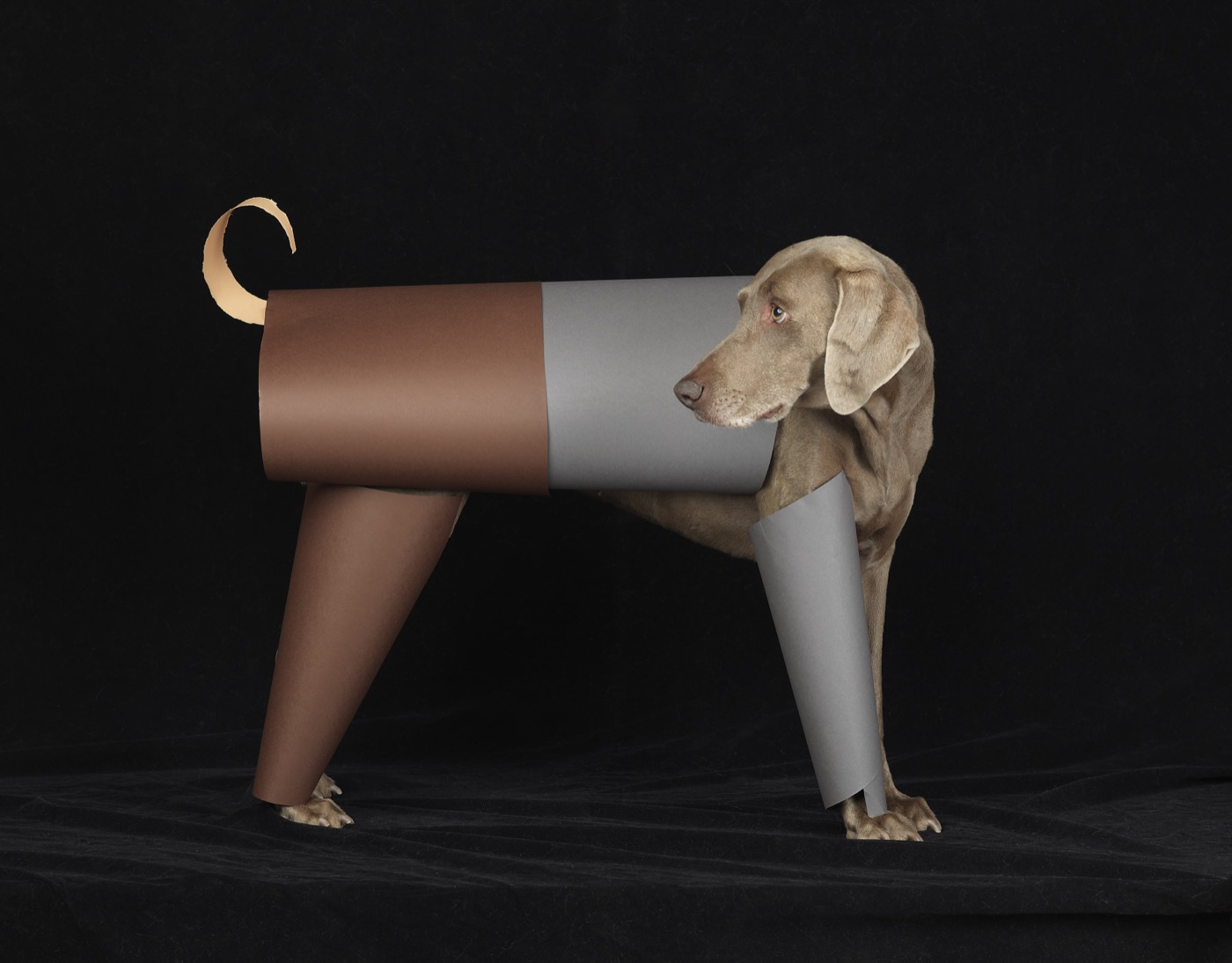 The Toy, 2011.In an era that stamps out its playthings by the million, identical and glowing, here is a toy built patiently by hand from rolled construction paper: a silver cylinder for the barrel, a rust-brown…
 Ski Patrol, 2017.We stand directly in front of a skier posed against a deep oxblood wall, close enough to count the stitches in the Fair Isle cap.