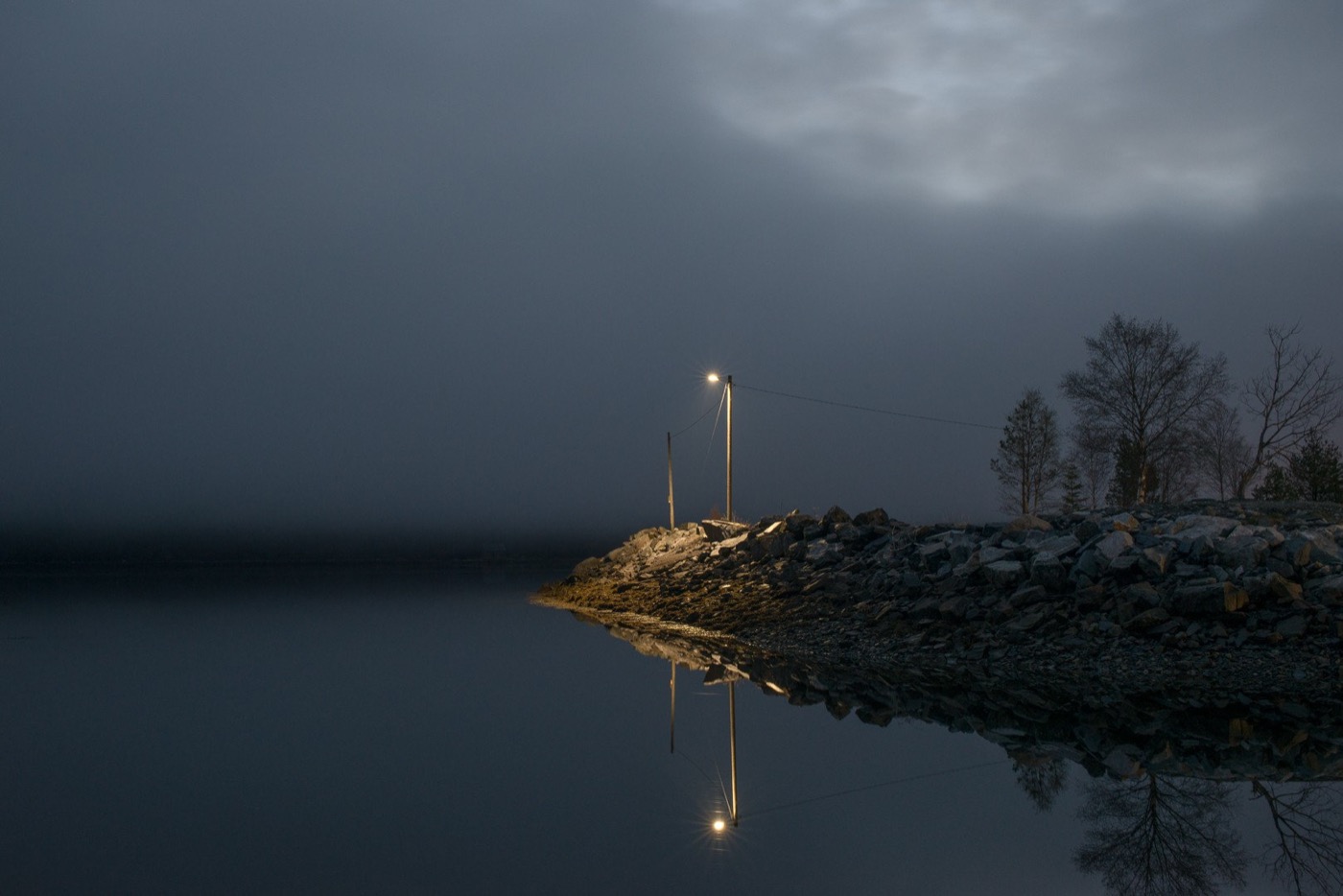
Todd Hido American, b. 1968
Edition of 10 + 3 AP
Edition of 5 + 2 AP
Edition of 3 + 2 AP
Edition of 1 + 1 AP NFS
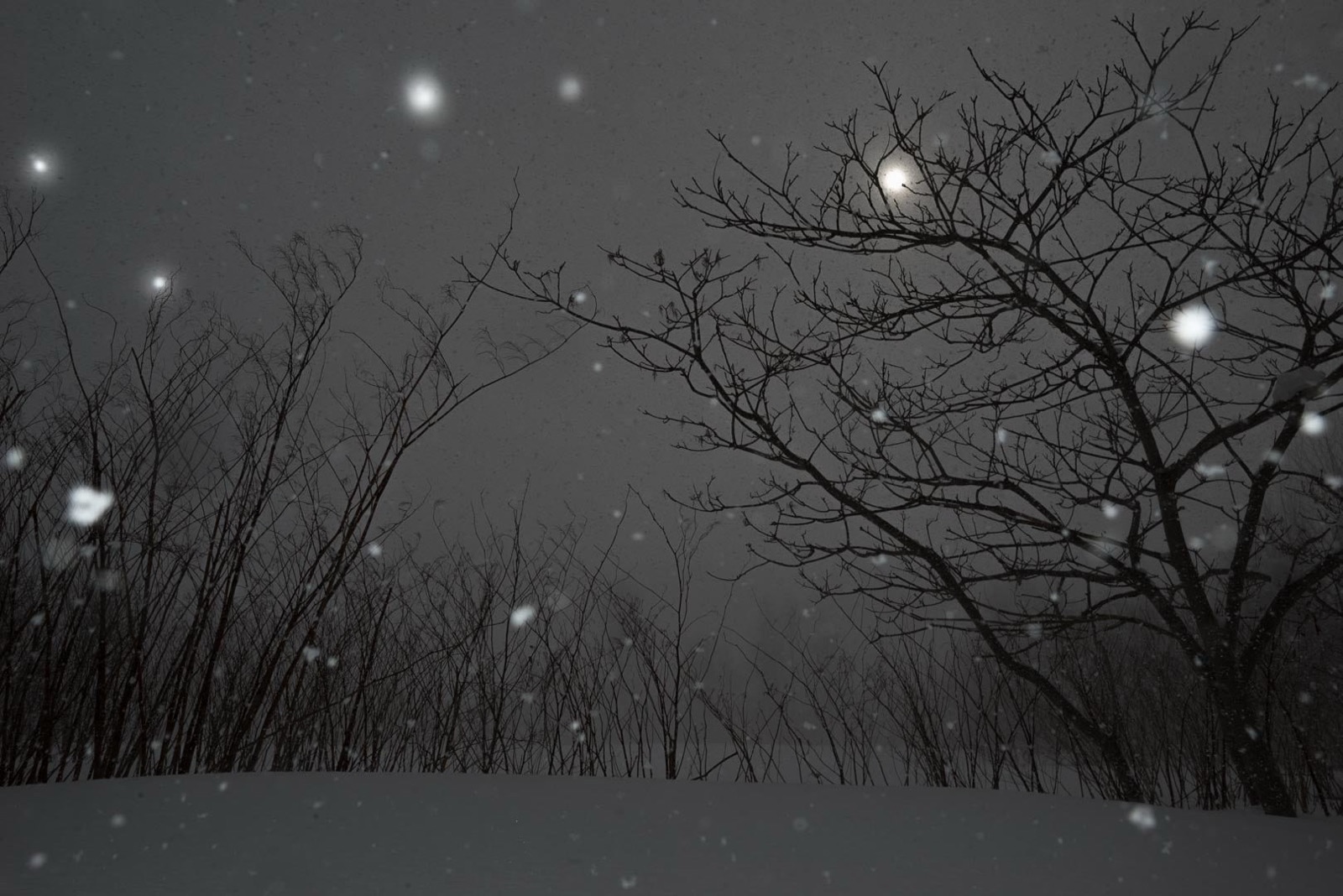
Night, snow falling, bare trees. A large tree fills the right of the frame with its branches spread against a grey sky; thin saplings and scrub run along the left. Snow covers the ground in one smooth unbroken bank across the bottom. And between the camera and the wood, caught by the flash and much too close to be in focus, the falling flakes have come out as soft bright discs scattered right across the picture.
Those big pale discs are worth being clear about, because they look like something else. They are not distant lights and they are not lamps in far windows. They are snow, a few feet from the lens, lit by the same burst that lit the trunks. A flash at night does this: it promotes whatever happens to be in the air to the brightest object in the photograph, and there is no way to shoot into weather without it happening.
Which leaves the picture doing two things at once. There is a wood in a snowstorm, cold and black and grey and entirely legible. Laid over it there is a scatter of pale spheres that belong to no depth at all, an accident of equipment sitting on the surface like dust on glass. Hido kept both. The photograph is a night in a wood, and it is also a record of the machine that was pointed at it, and it declines to tidy either one away.