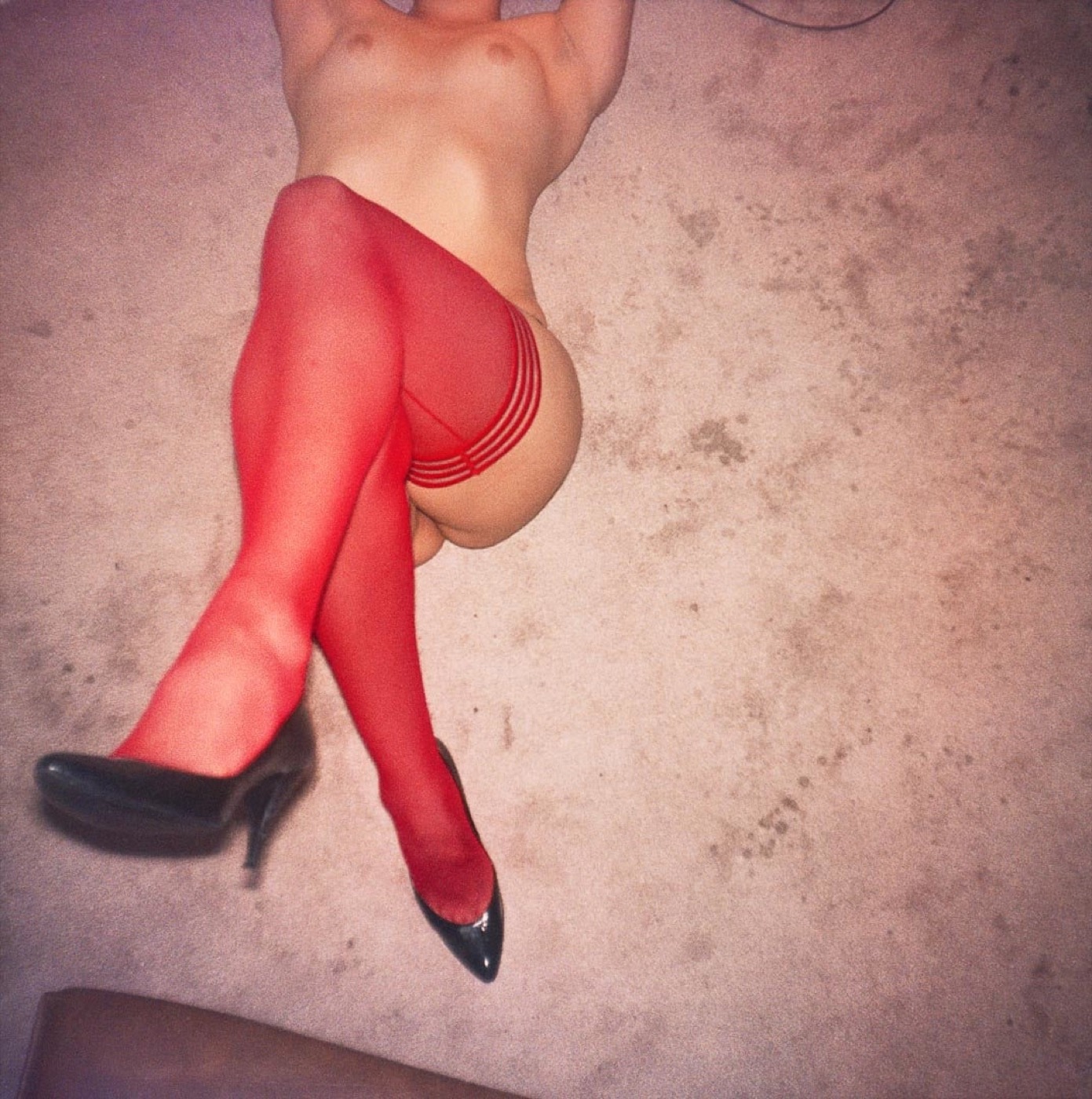
Todd Hido American, b. 1968
Edition of 10 + 3 AP
Edition of 5 + 2 AP
Edition of 3 + 2 AP
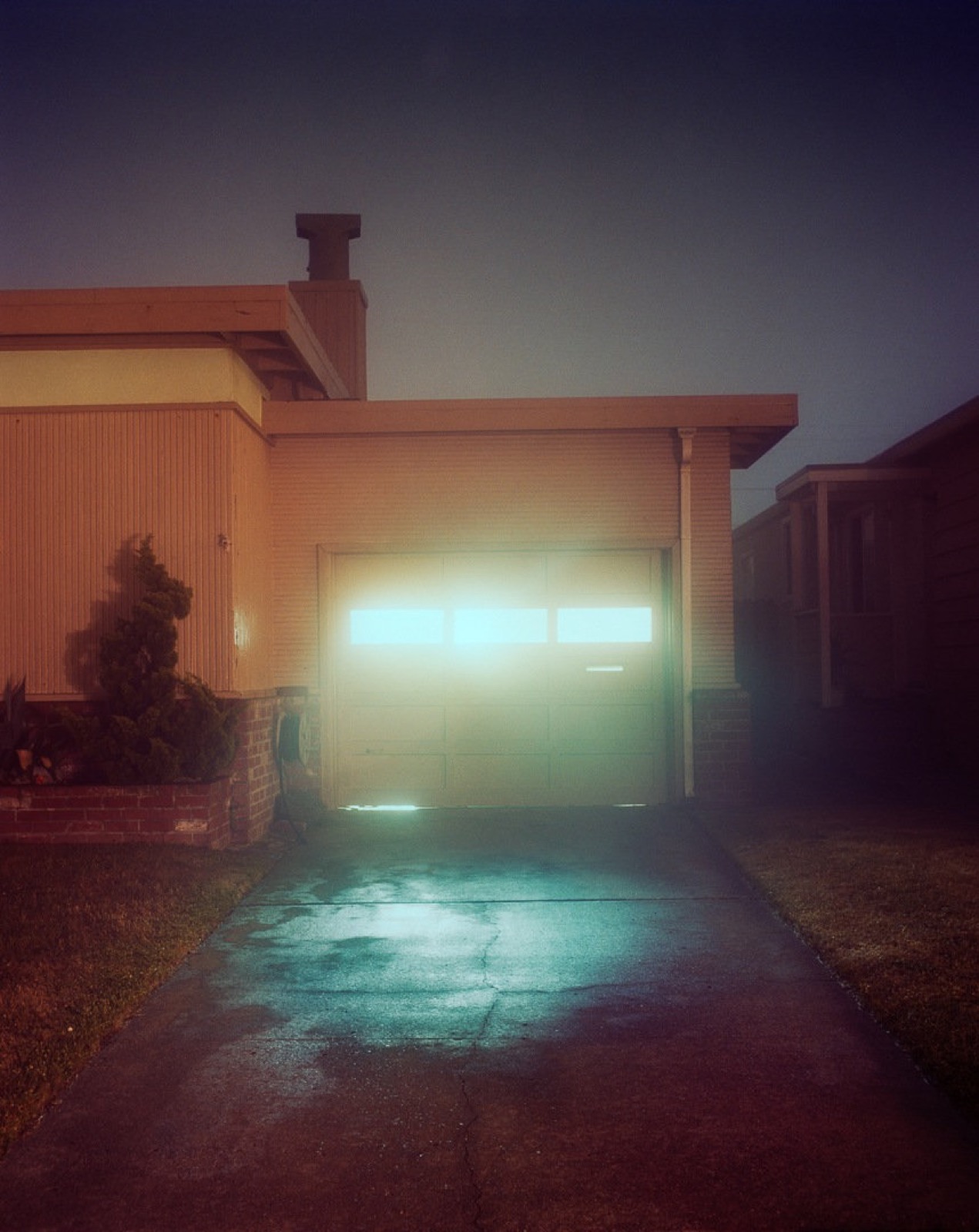
A single-storey house at night with its garage door shut. Behind the three small windows set into the door a light is on, and it is the wrong colour: a hard blue-white, cold as a fridge, against a house lit warm peach by the street. It comes through the windows in three bright bars, escapes under the door in a thin strip, and lies out across the wet concrete driveway in a pool of cyan that runs nearly to our feet. A clipped conifer stands in a brick planter at the left. The neighbour's house is dark.
Two temperatures in one frame. The siding, the planter and the shingled eave are all sodium-warm and thoroughly domestic. Whatever is behind that door is not. Nothing in the photograph accounts for the difference, and that is the entire mechanism: a garage light is the most ordinary object in America, and at this hour, in this weather, at this colour, it becomes the only lit room on a street where everybody else has gone to bed.
Hido never opens the door. He has been photographing lit windows from the kerb for thirty years and the discipline has always been the same: get close enough to establish that somebody is awake, stop well before finding out who. The wet drive, the dark neighbour, the shrub trimmed into a cone — all of it is arranged so that one rectangle of cold light has the picture to itself. What is actually going on in there is, in all probability, a chest freezer.