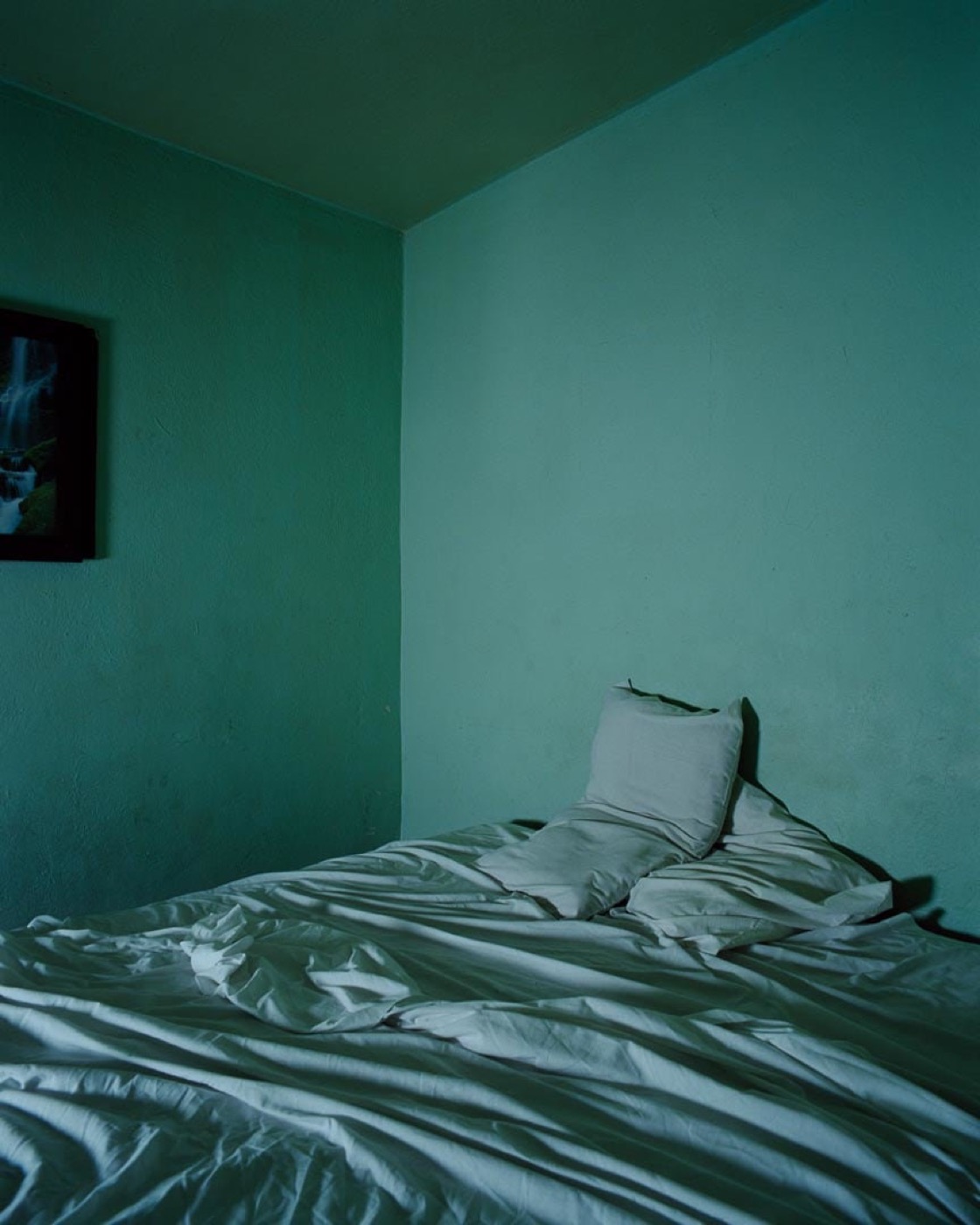
Todd Hido American, b. 1968
Edition of 10 + 3 AP
Edition of 5 + 1 AP
Sold Out
Edition of 3 + 1 AP
Sold Out
Edition of 1 + 1 AP NFS
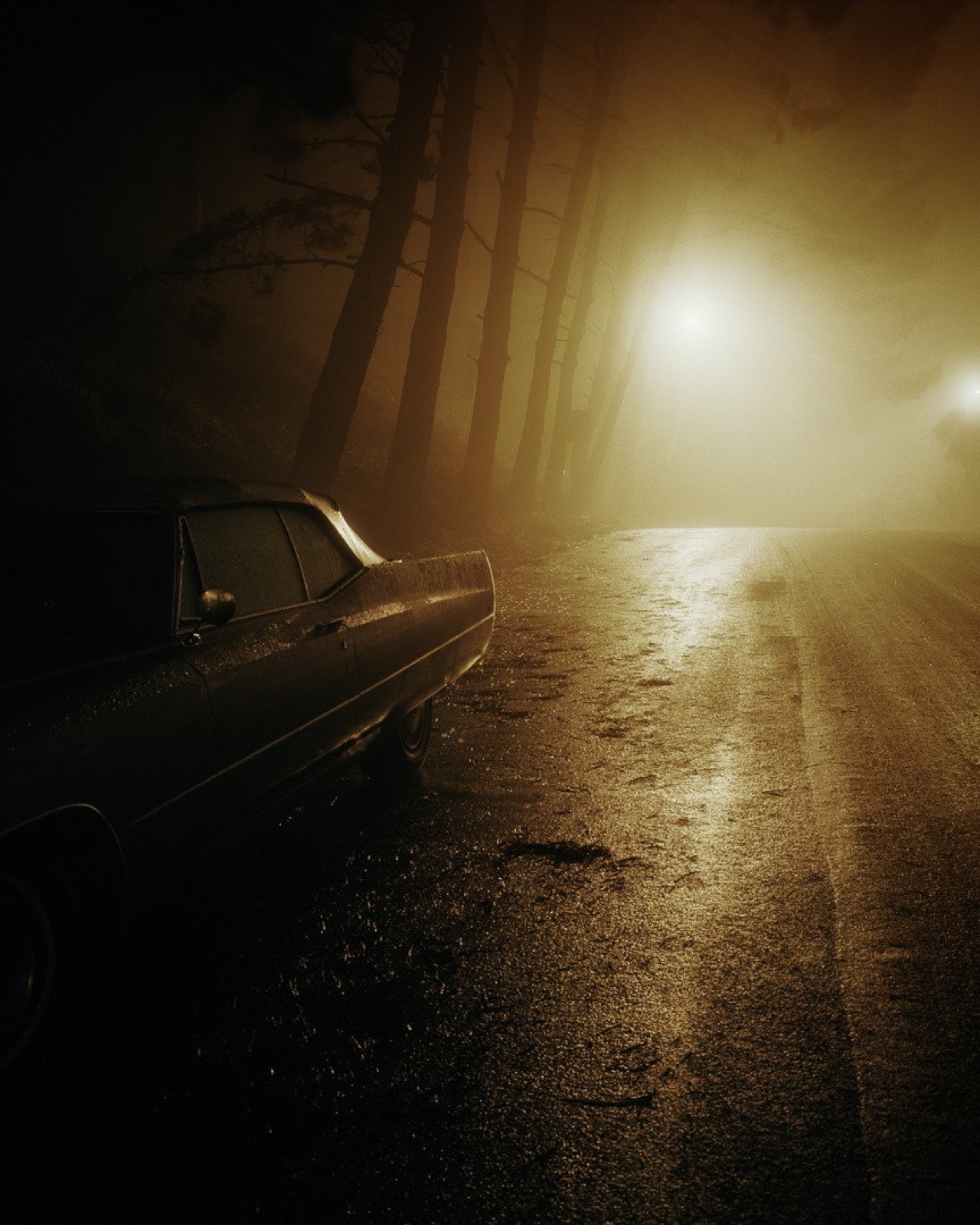
A big American sedan is parked on the verge of a wet road at night, facing away, and the picture gives us its flank and rear quarter and nothing else. Everything to the left is nearly black: the car, the trunks of tall pines going up out of the frame, the bank behind them. Everything to the right is on fire. Somewhere down the road a single light is burning through fog, and the fog has taken it and spread it until half the photograph is one soft gold sheet with a road running into it.
The exposure has gone on long enough for the fog to become a solid. You cannot see the source and you cannot judge the distance, and the painted centre line, wet and catching, is the only thing here that promises the road goes anywhere at all. Hido works from a parked car with the engine off, and this is what that produces: a report on how much of a place a windscreen and a slow shutter will let through.
The car is the problem the picture sets. It is parked, it looks empty, and it is close enough that whoever left it cannot have gone far. In a photograph with a light at the end of it, a car abandoned on the shoulder stops being scenery. Hido has spent a career making American roads at night look like the five minutes before something, and the trick is that nothing in the frame ever says so. It is a car, a road, some pines and more fog than anybody needs.