Todd Hido American, b. 1968
Edition of 10 + 3 AP
Edition of 5 + 1 AP
Edition of 3 + 1 AP
Edition of 1 + 1 AP NFS
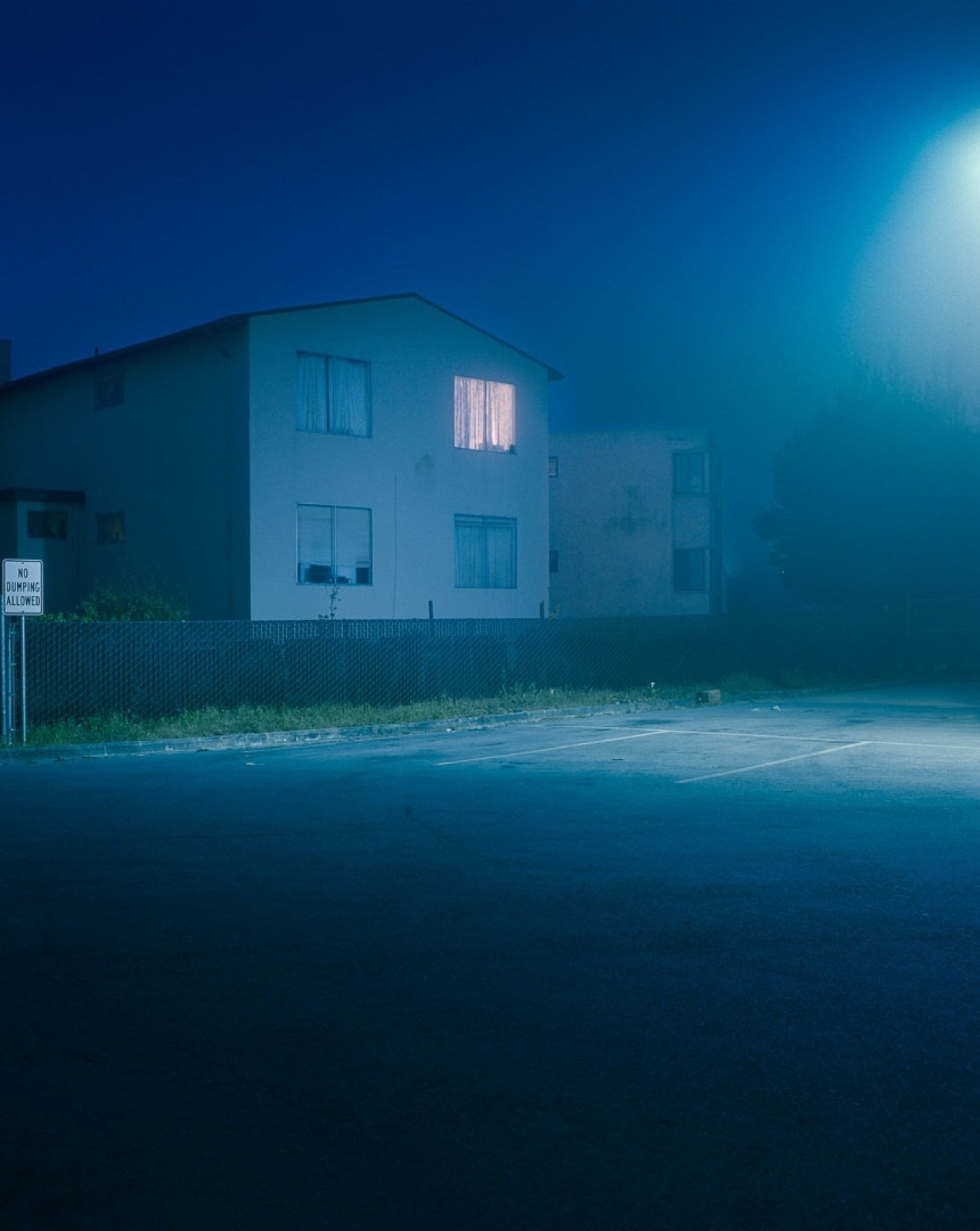
A white apartment block sits behind a chainlink fence in heavy fog. One upper window glows orange through a drawn curtain; the rest are grey or dark, and a second building recedes to the right. In front, an empty car park fills the lower half of the frame, its white bays freshly painted and unoccupied. A streetlamp at the right edge blows out into a blue-green flare that colours the entire top of the picture. At the left, a small sign reads NO DUMPING ALLOWED.
Everything in this 1999 photograph is found, and everything in it looks directed. The single lit window sits almost exactly where a set designer would place it. The empty bays lead the eye. The lamp supplies a colour cast no filter would dare. Hido belongs to a generation that learned to make the world hold still and perform, and his method here is patience rather than production.
That matters for how these pictures function now. A staged tableau announces its own artifice and lets the viewer off. This one does not: it offers all the pleasures of a constructed image while remaining, technically, documentary. The sign in the corner is the tell. No art director would have kept it, and no photographer working this way could bear to lose it.
