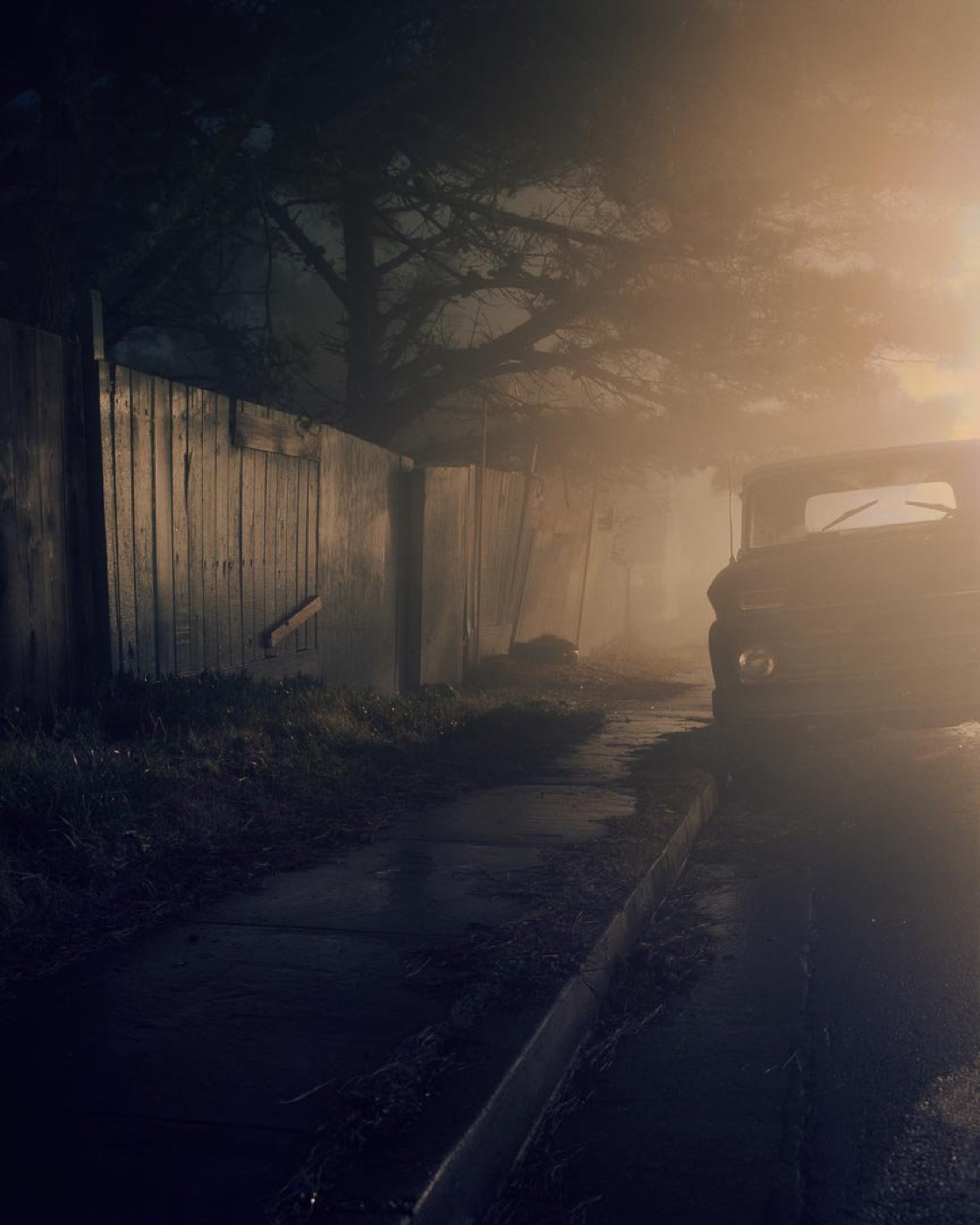
Todd Hido American, b. 1968
Edition of 10 + 3 AP
Edition of 5 + 1 AP
Edition of 3 + 1 AP
Edition of 1 + 1 AP NFS
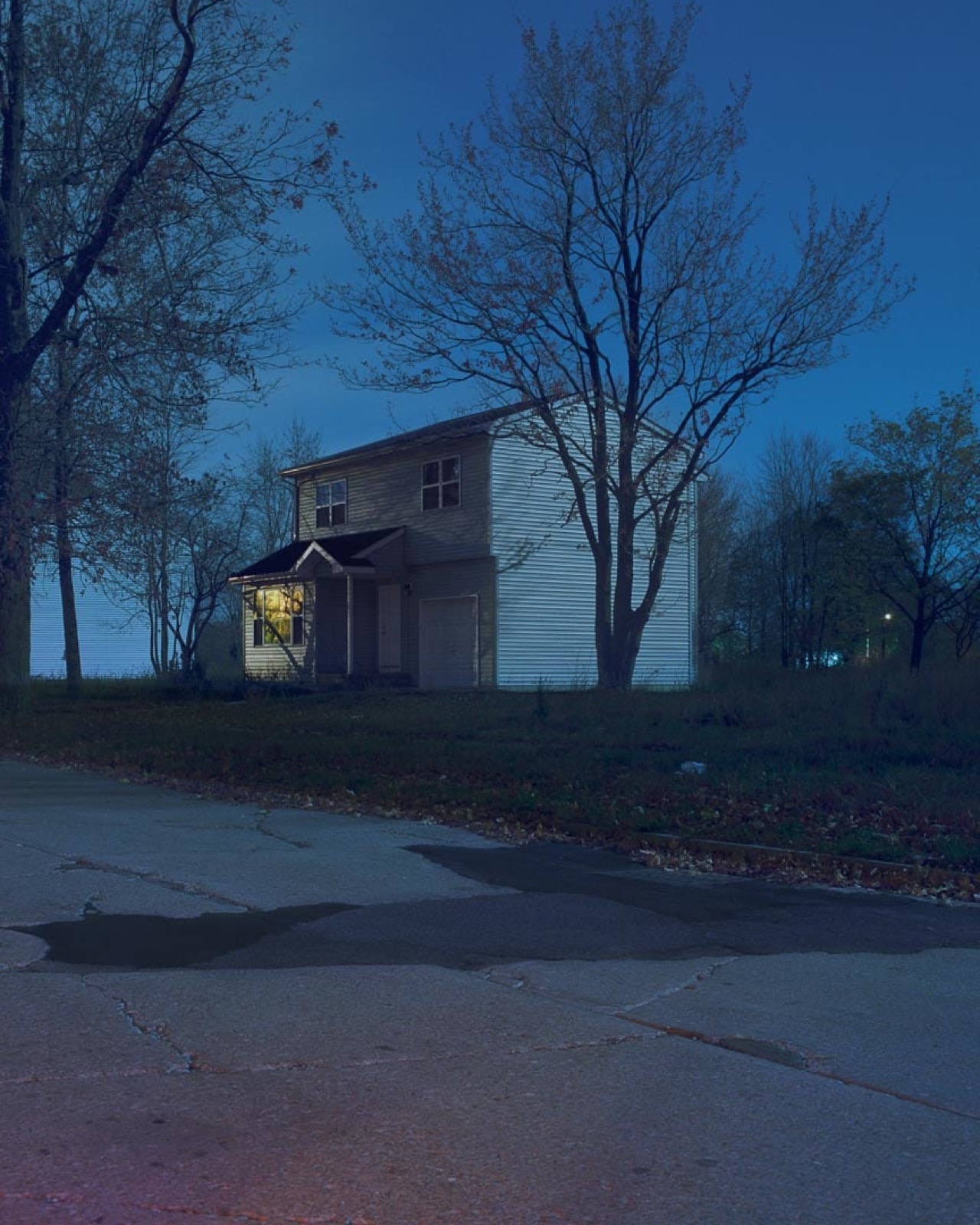
A white two-storey house stands alone on a cleared lot, its siding pale against a sky still holding the last blue of the evening. Bare trees rise on either side, one directly through the middle of the facade. Under the small porch roof a single window is lit, warm and yellow, curtains drawn back. Every other window is dark. In front, cracked asphalt runs the full width of the frame, patched and stained, with dead leaves gathered along the seam where it meets the grass.
One lamp on in a house that size. I know that arithmetic. It means somebody is in the front room and nobody is upstairs, and that the rest of the rooms are being kept rather than lived in. Hido made this in 1999, and what he found is the particular loneliness of a house that outlasted the family it was built for, still heated, still paid for, holding one person in the corner nearest the door.
I keep returning to the asphalt, which is the loudest thing here. It is wide enough for cars that no longer come, and its cracks have been filled and refilled by someone who cared about the property long after there was anyone left to impress. That is the part of American domestic life that gets photographed least and felt most: the maintenance of a stage after the cast has gone. The light in that window is not warmth. It is a person keeping their place.