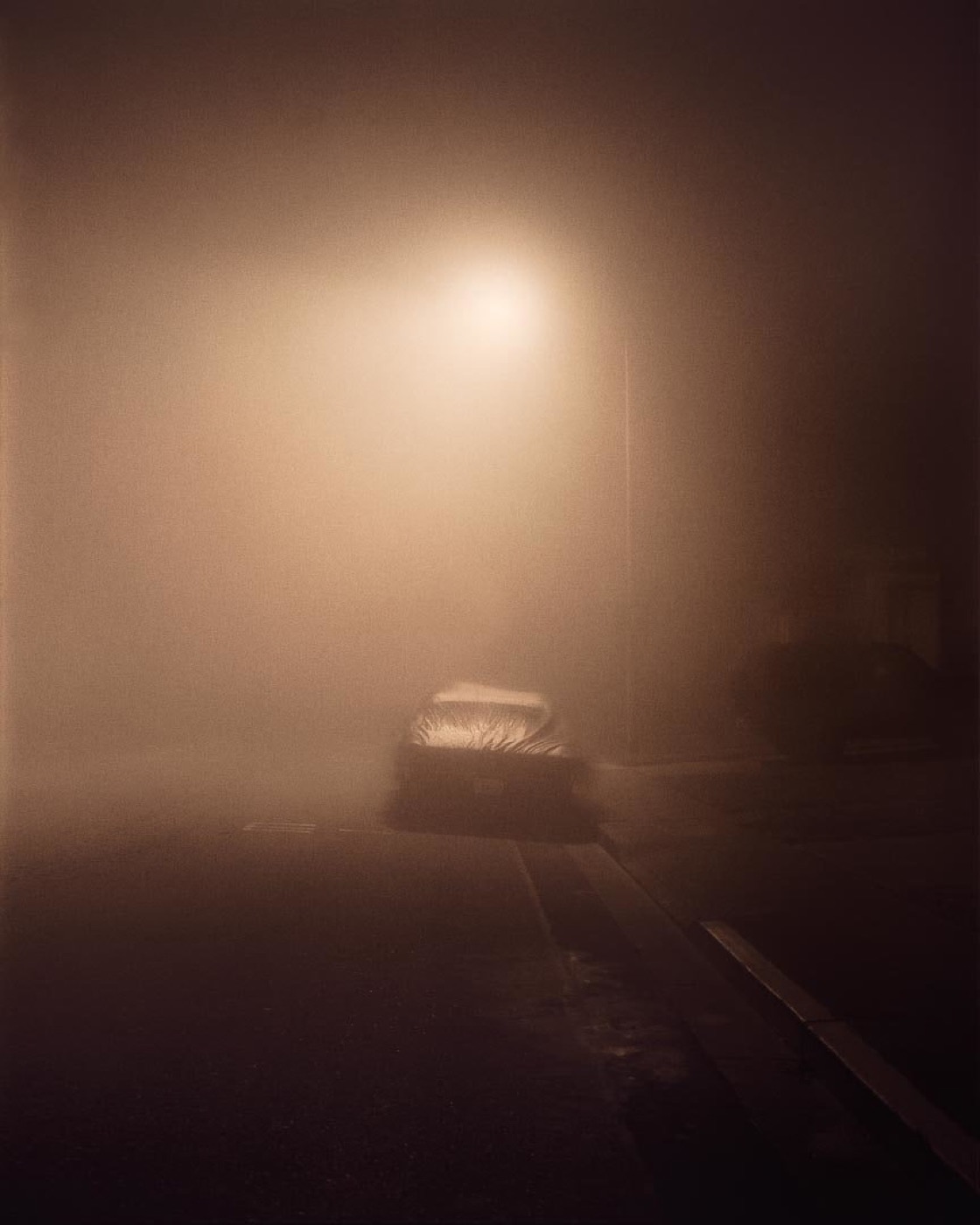
Todd Hido American, b. 1968
Edition of 10 + 3 AP
Edition of 5 + 1 AP
Edition of 3 + 1 AP
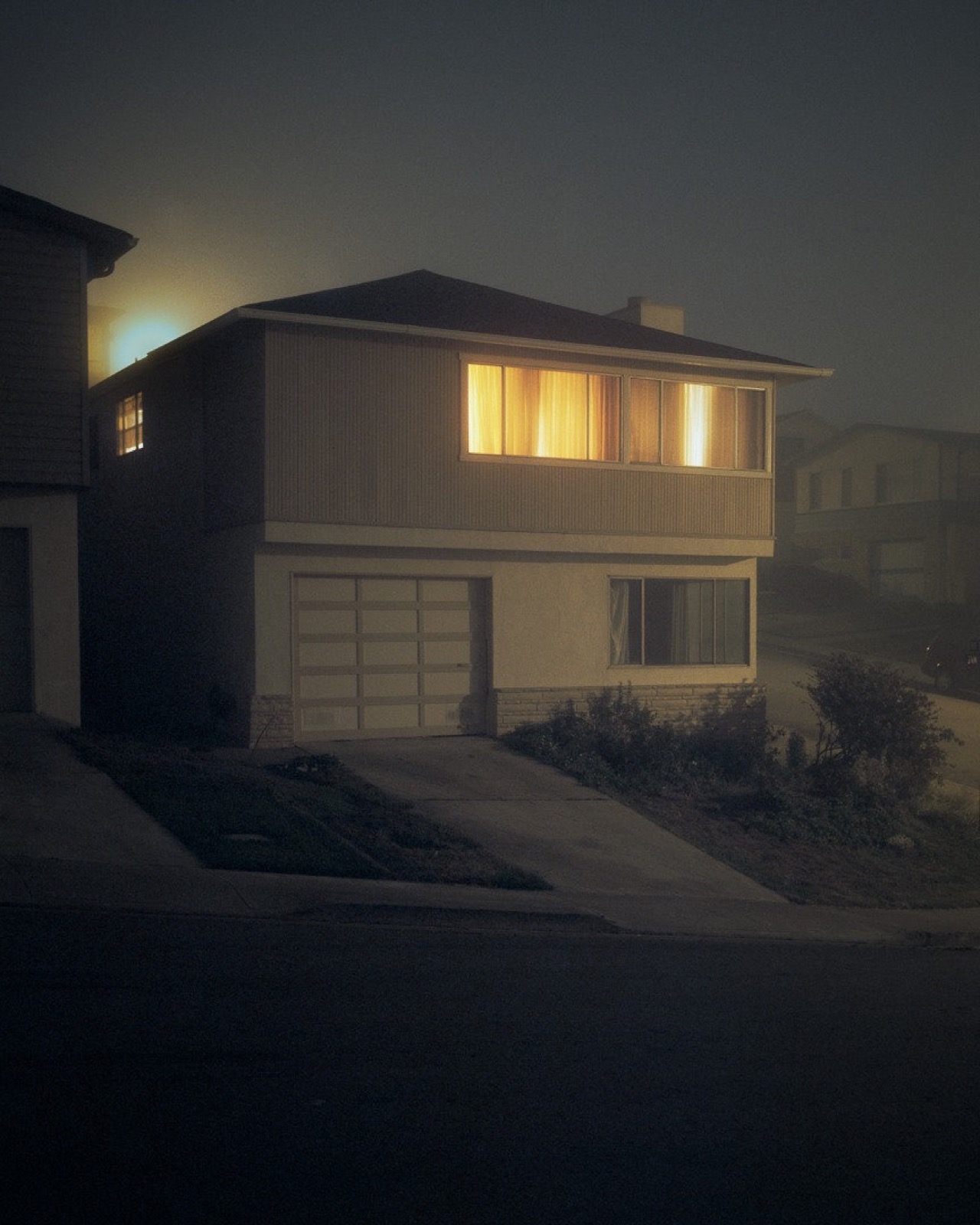
A two-storey house sits at the top of its own driveway, upper floor clad in narrow vertical boards, and behind the wide upstairs window a curtain burns orange in vertical strips of light. A smaller window glows on the neighbouring house at the left. The garage door is white and panelled; the concrete drive runs down to a road that is nearly black. Fog thickens everything beyond, so that a further house at the right and a car parked past it are more suggestion than fact.
I walk at night, and this is what walking at night gives you: the inside of other people's evenings, rationed out through glass. The curtain is doing the work here. It admits that someone is home and refuses to say more. Whoever drew it was not thinking of me, and yet the gesture has ended up addressed to the street, to anyone passing, to a photographer who stopped his car and stayed long enough for the film to gather what the eye could not.
There is a question I cannot get past in pictures like this one, made in 1996 in the California suburbs. What entitles the person outside to the warmth of the person inside? The house is not a subject; it is a stranger's shelter, and the fog has made it available to me without its consent. I keep looking anyway. Perhaps the honest thing is to say that the picture is not about the family upstairs at all. It is about the man on the pavement, and about how much of another life he is willing to take.