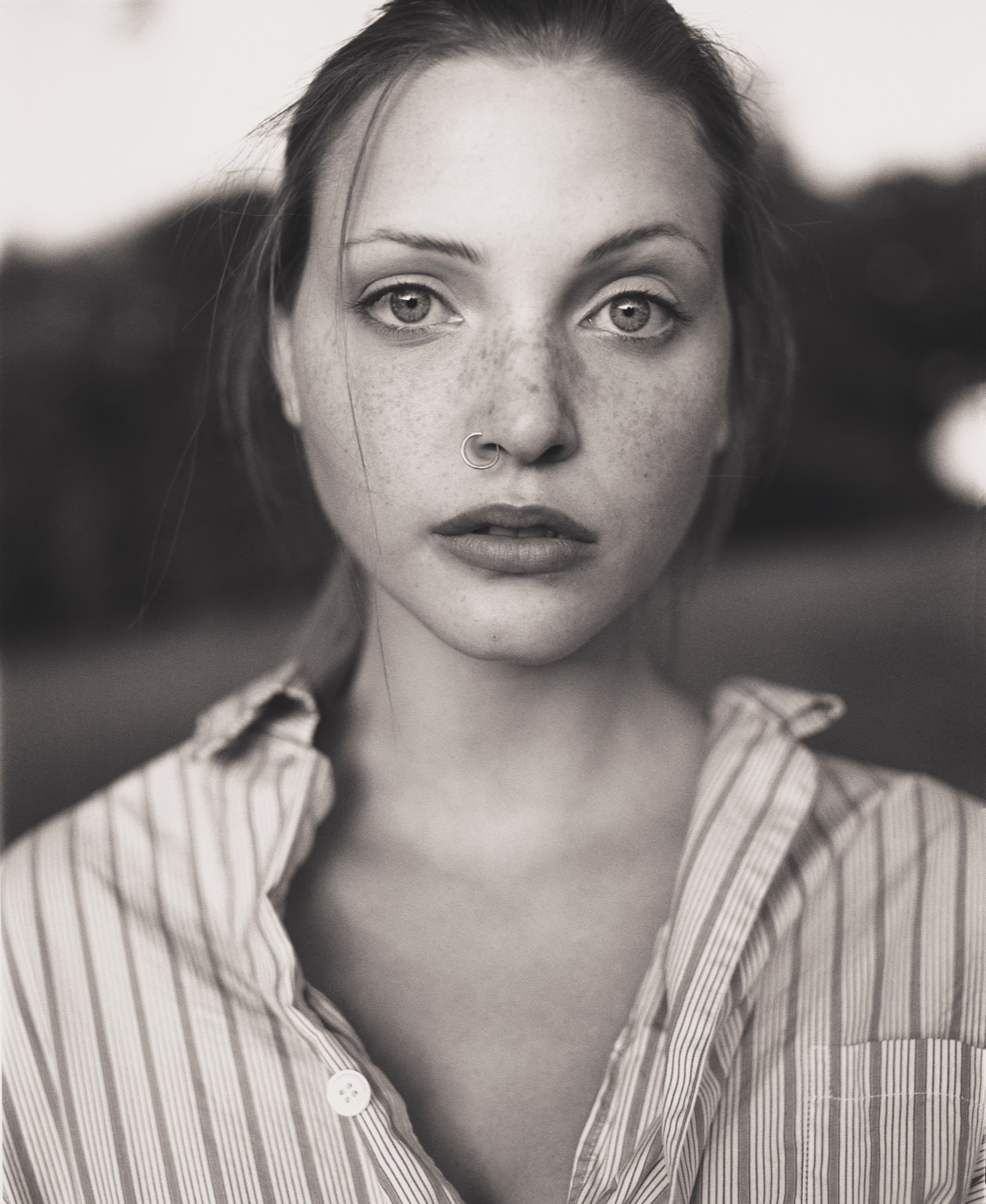
Steven Meisel American, b. 5/06/1954
Edition of 7
Edition of 6
Edition of 3
Edition of 1
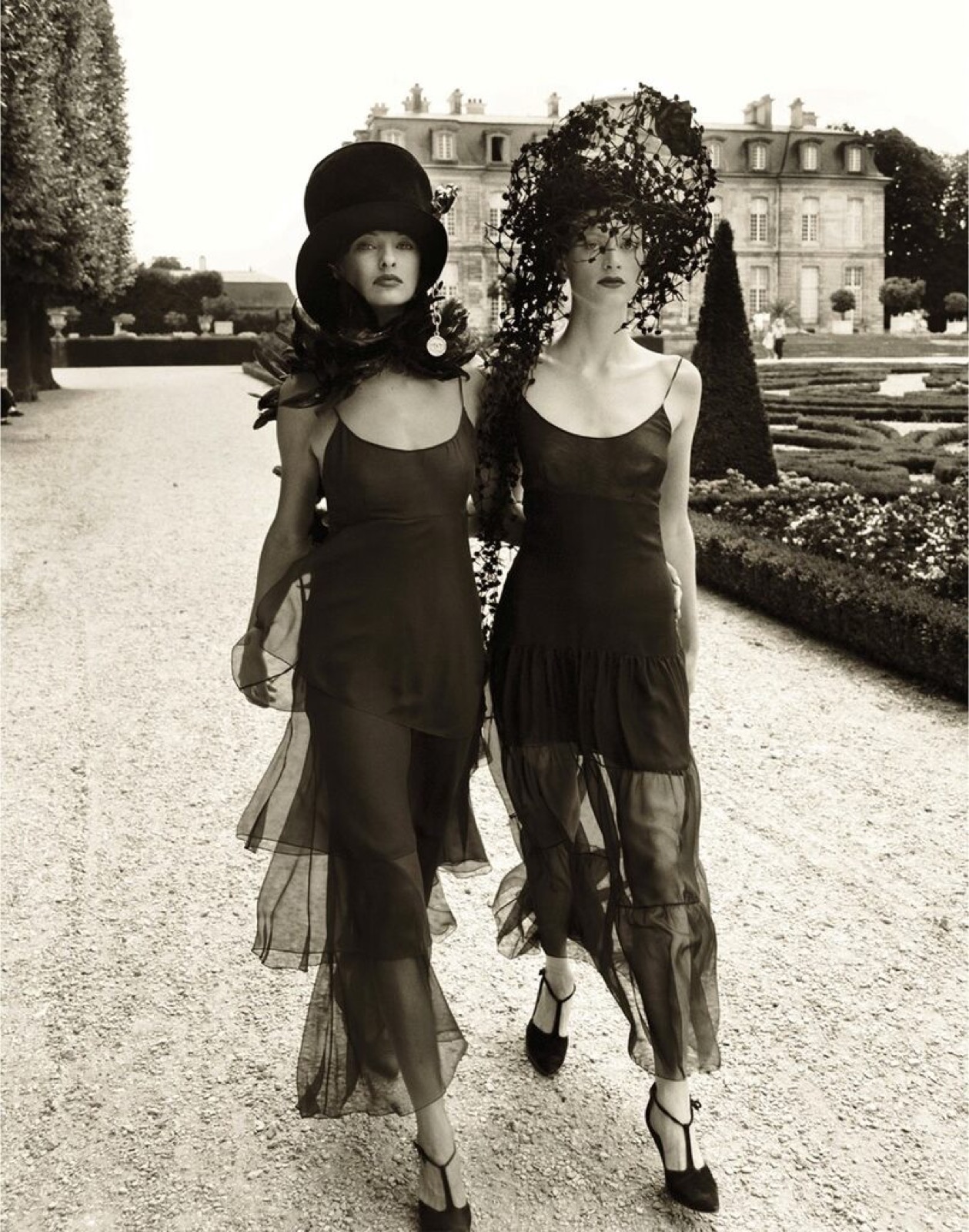
A gravel allée in a formal French garden, clipped box parterres and cone topiary ranged along one side, a great house closing the view at the end. Two women walk toward the camera in sheer black slip dresses layered with panels of organza that sweep almost to the ground. One wears a tall black hat with a veil pulled back over the crown; the other an enormous confection of dark foliage and flowers that swallows half her face. Both wear T-bar heels. The print is warm, almost sepia, and the light is late, flat and even.
Everything here is quotation. The garden supplies the class, the hats supply the period, and the dresses, gauzy and sleeveless and cut close, supply the actual date. Nothing in the picture pretends the past is being documented; it is being staged, and staged with the resources of a house that could still afford to close a garden for an afternoon. The two sitters walk in step, at ease, neither performing pleasure nor withholding it, and the effect is less fashion plate than a still from a film with no plot attached.
What gives the tableau away, and improves it, is a single figure standing far off among the box hedges, small, out of focus, presumably a groundsman, the only person in the frame not dressed for 1928. Constructed pictures always leak at one edge, and how a photographer handles the leak is the whole question. Meisel keeps it in. The fiction is left holding the door open, and the picture becomes about the making of an atmosphere rather than the atmosphere itself.