Steven Meisel American, b. 5/06/1954
Edition of 7
Edition of 6
Edition of 3
Edition of 1
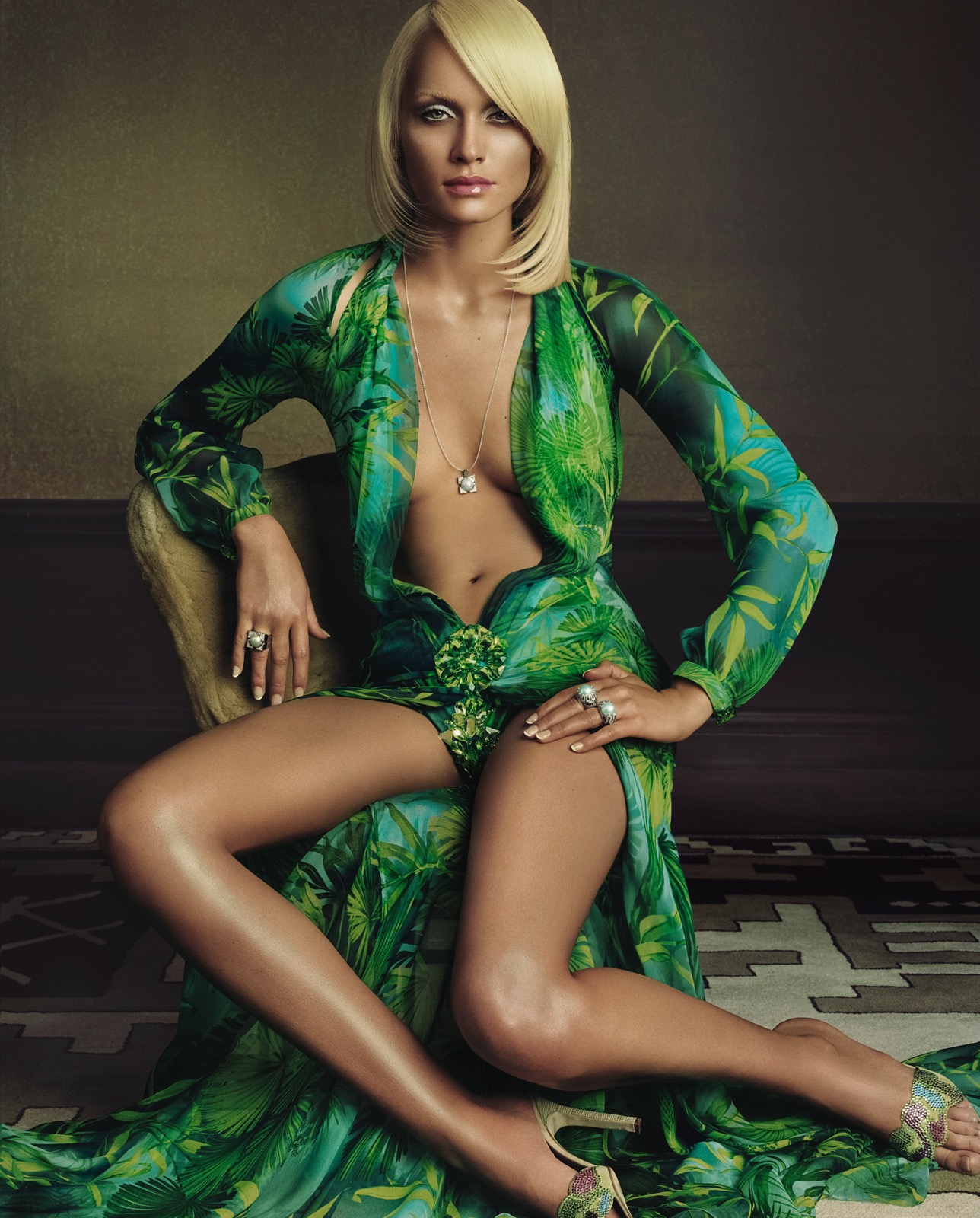
She sits on the floor of a panelled room, leaning back against a low chair as though it were a throne she had decided not to use properly. The dress is printed silk chiffon, jungle leaves in five greens, open the whole way down the front and held at the waist by a jewelled clasp. One knee is up. The other leg runs out along the floor and ends in a jewelled sandal. A fine chain drops a square stone into the opening of the dress. Two heavy rings on one hand, one on the other. Blonde bob, straight fringe, level chin, and she is looking directly at the camera.
The dress is doing a great deal and she is doing almost nothing, which is the arrangement. Everything that could be given to the garment has been given to it. The wall is olive, the panelling is dark, and the one patterned thing in the room, a geometric carpet, has been pushed out to the corner of the frame. She holds the middle of all this perfectly still and declines to smile. There is a kind of labour in that stillness which fashion photography rarely lets you see.
Meisel understood that the picture only works if she outranks the clothes. A dress cut to the navel can very easily photograph the wearer as an accessory to it. Here the hand on the chair arm is relaxed, the shoulders are square, the gaze invites nothing at all, and the whole apparatus of silk and jewels arranges itself around somebody who has evidently decided how this is going to go. Take the dress out of the picture and the pose still holds. That is not true of most fashion photographs.