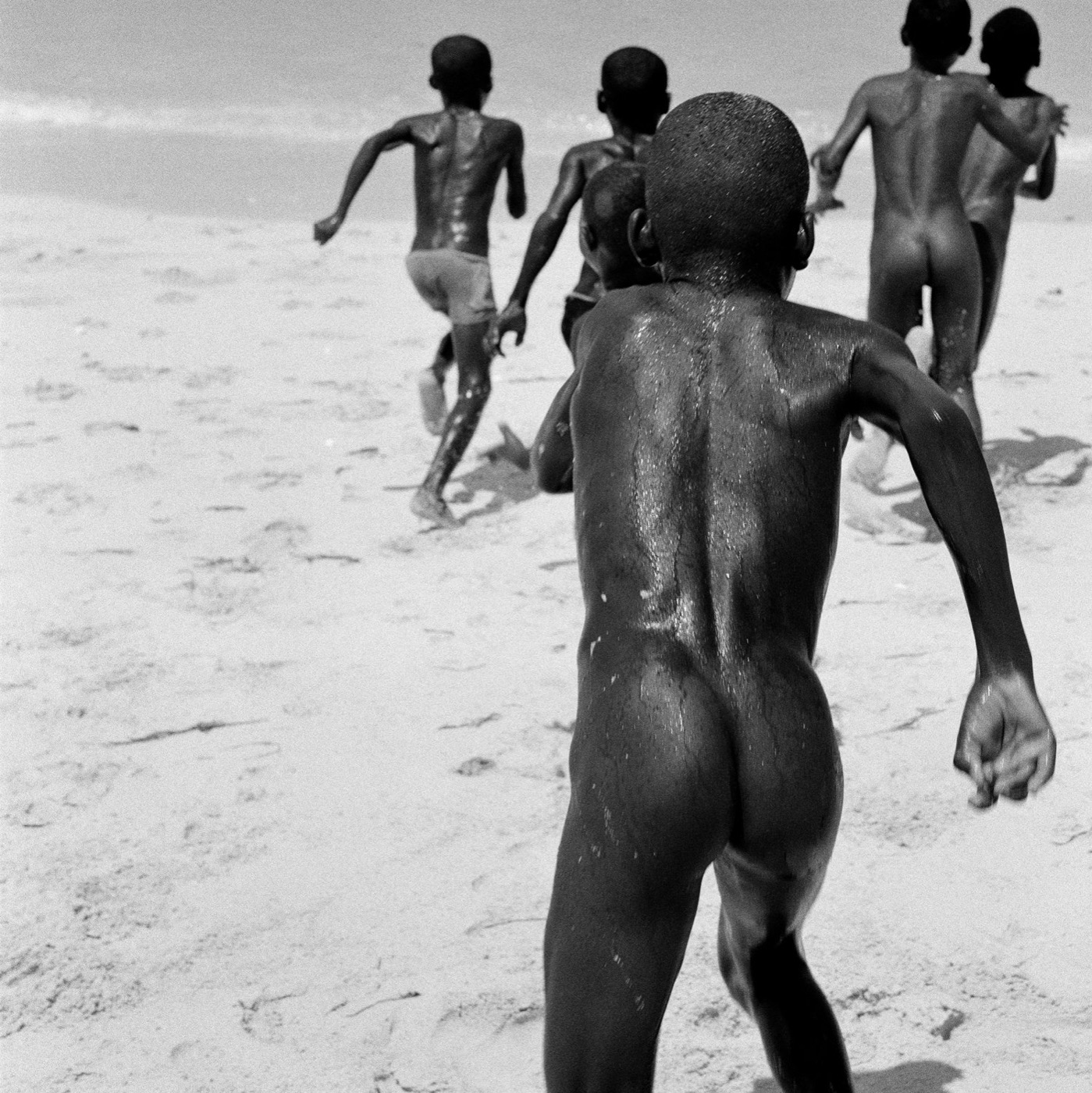
Pancho Saula Spanish, b. 3/10/1972
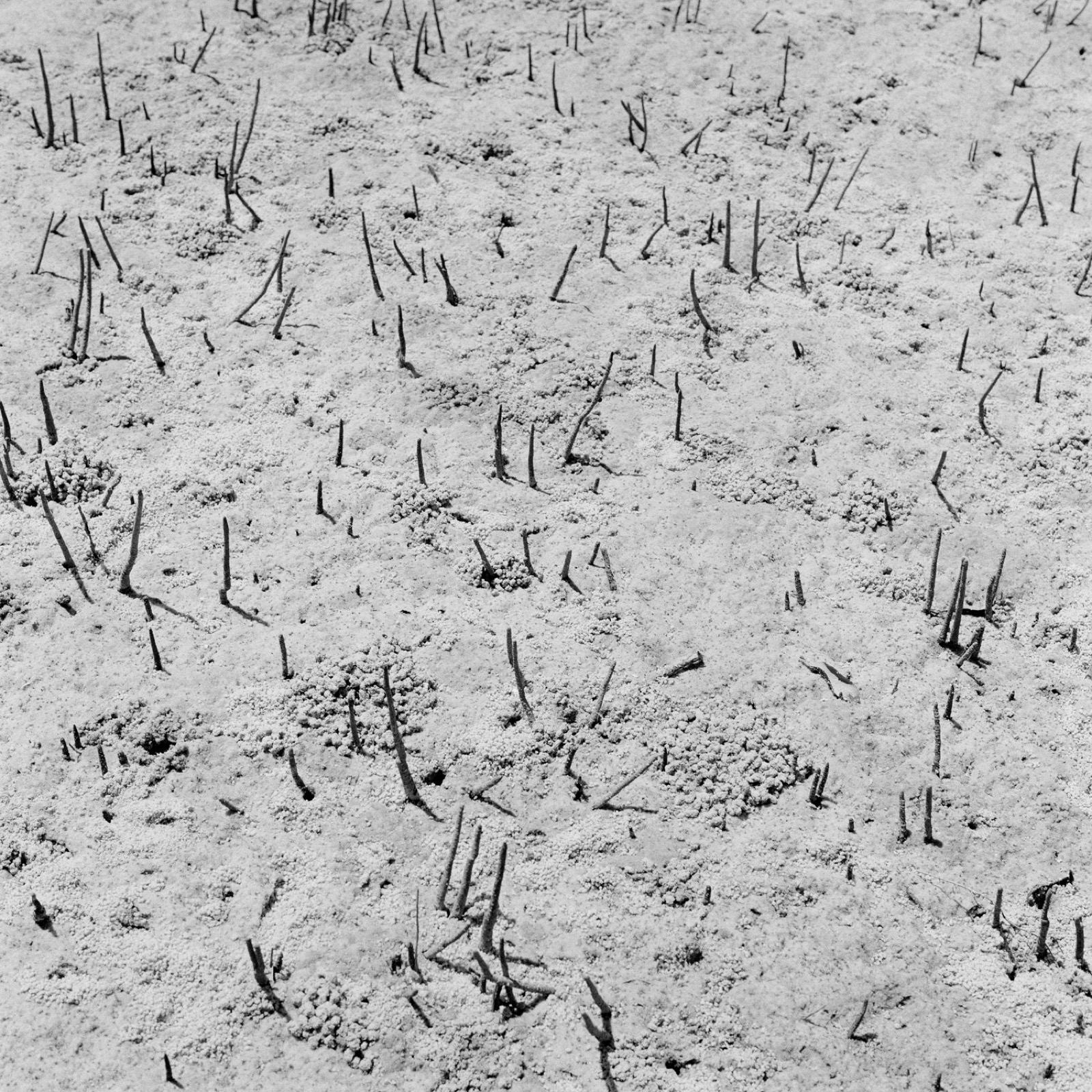
No sky, no horizon, no scale. The frame is taken up entirely by ground: a pale flat surface, chalk or salt or bleached sand, seen from just above and slightly to the side. Out of it stick several hundred dark stubs, the broken ends of stalks, each one snapped or cut off short. Some stand upright. Some lean. Some have gone over altogether and lie where they fell, throwing a thin shadow. Between them sit small pale clusters, granular, like something crumbled and dropped.
The title is Grass and there is no grass in it. What there is instead is the record of grass, a field of index marks left in a surface, which is close to a description of how a photograph works in the first place. Each stub is the place where something stood. Each small shadow gives that stub a length. The pale ground has kept the entire account, the way a plate keeps an exposure, without being asked and without any idea what it is holding.
This is a hard picture to keep looking at and a hard one to stop looking at, which usually means the subject is texture rather than incident. Nothing here is more important than anything else. There is no centre, no foreground, no story, only an even distribution of small dark facts across a bright field. The camera has done the one thing it does better than any other instrument, which is to hold an enormous quantity of trivial information perfectly still until somebody decides it matters.