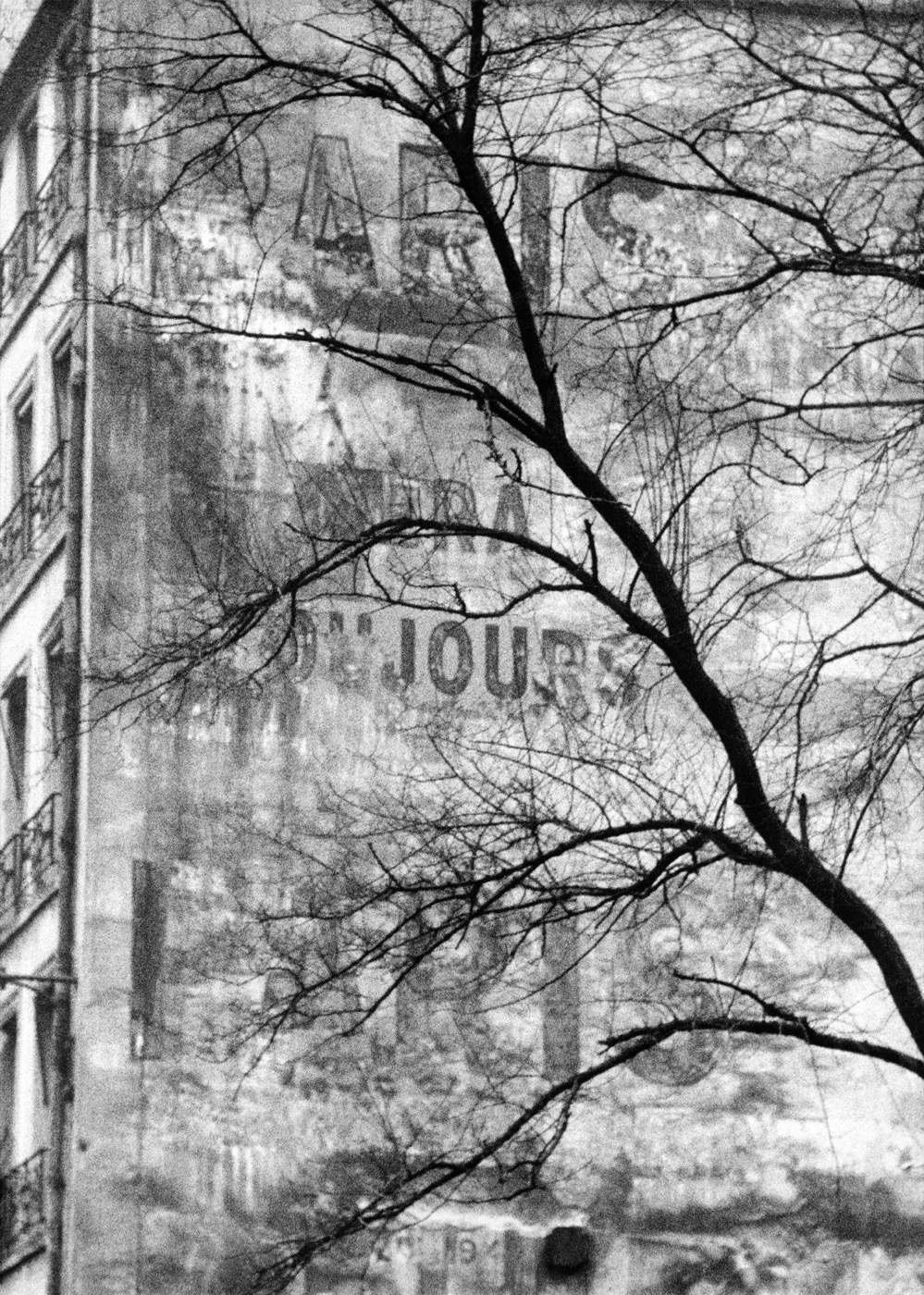
Frank Horvat Italian, 28/04/1928–21/10/2020
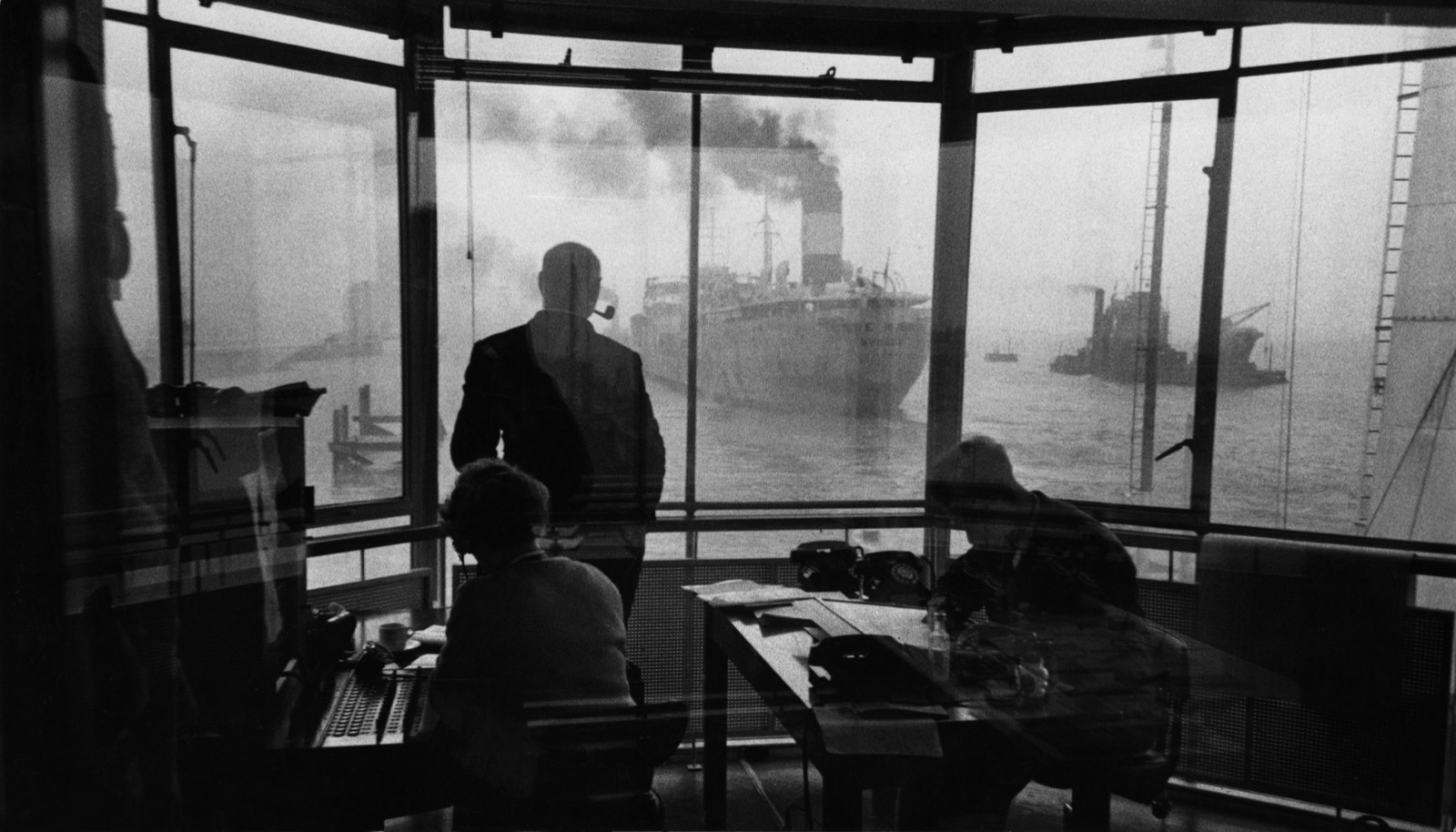
A glazed control cabin above the Manchester Ship Canal, its angled panes meeting at black mullions like the bridge of a liner. A man in a dark suit stands at the centre with his back to us, a pipe clamped in his teeth, watching a freighter slide past under a plume of its own smoke while a tug idles off its stern. Two colleagues sit at desks below him, one at a bank of switches with a cup at their elbow, the other bent over a row of black telephones. Beyond the glass, cranes and masts thin out into the haze.
Horvat, still in his photojournalist years, lets the cabin do the work. The glass both frames and betrays: reflections of the desks and their papers float out across the water, so that the office seems to drift among the ships. The standing figure is pure silhouette, a man reduced to posture and pipe, and the picture becomes a study of supervision, of an industry watched rather than worked. Nobody in the frame looks at anyone; everyone looks out.
It is tempting to read this as a portrait of post-war Britain still running on steam and paperwork, but what stays is the apparatus of looking itself. A window like this is already a camera: fixed vantage, moving subject, a shutter's worth of ship passing through. Horvat found the one place where the machinery of trade paused to watch itself go by, and quietly stood behind the watchers.