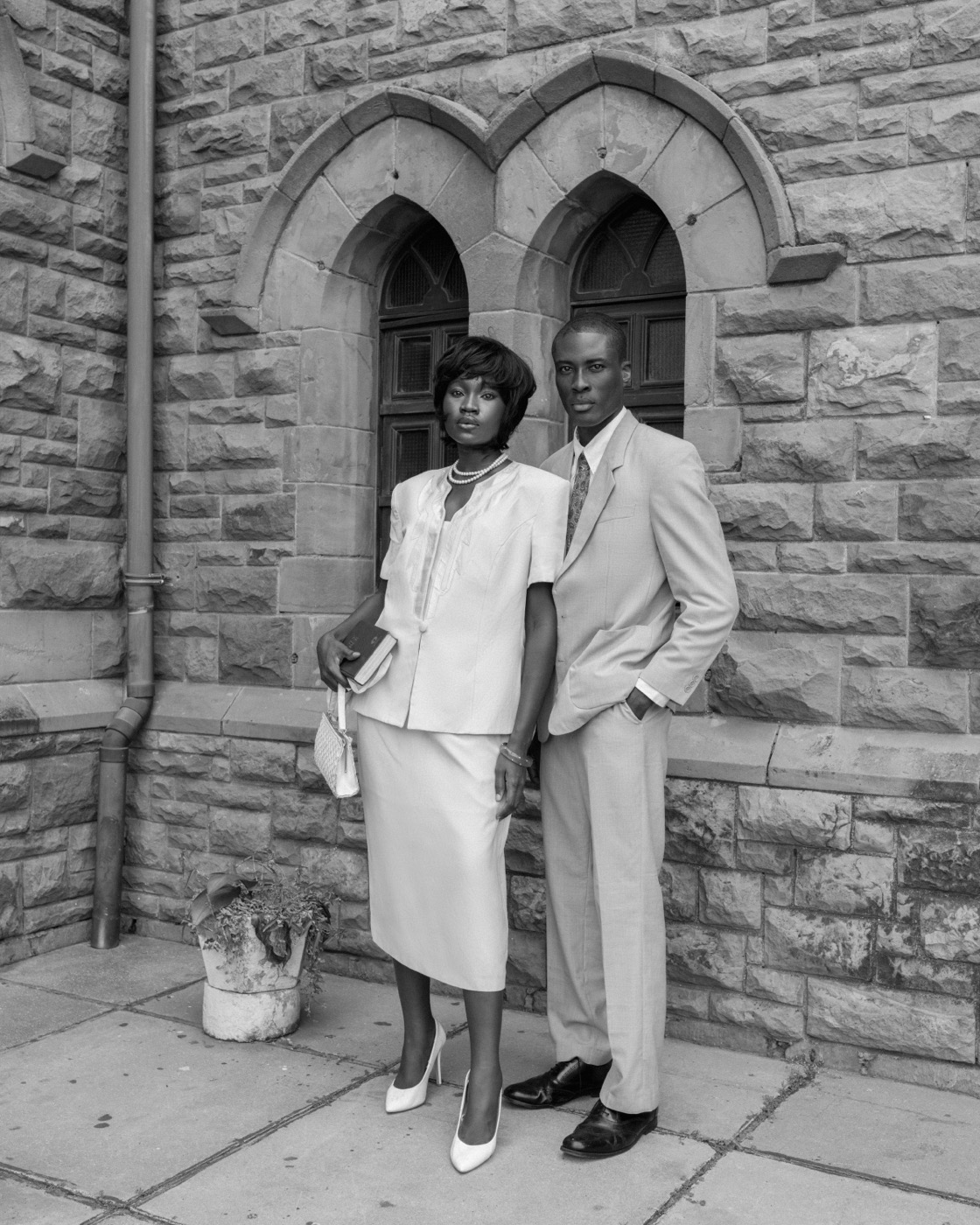
Carlos Idun-Tawiah Ghanaian, b. 18/5/1997
Edition of 3 plus 2 artist's proofs
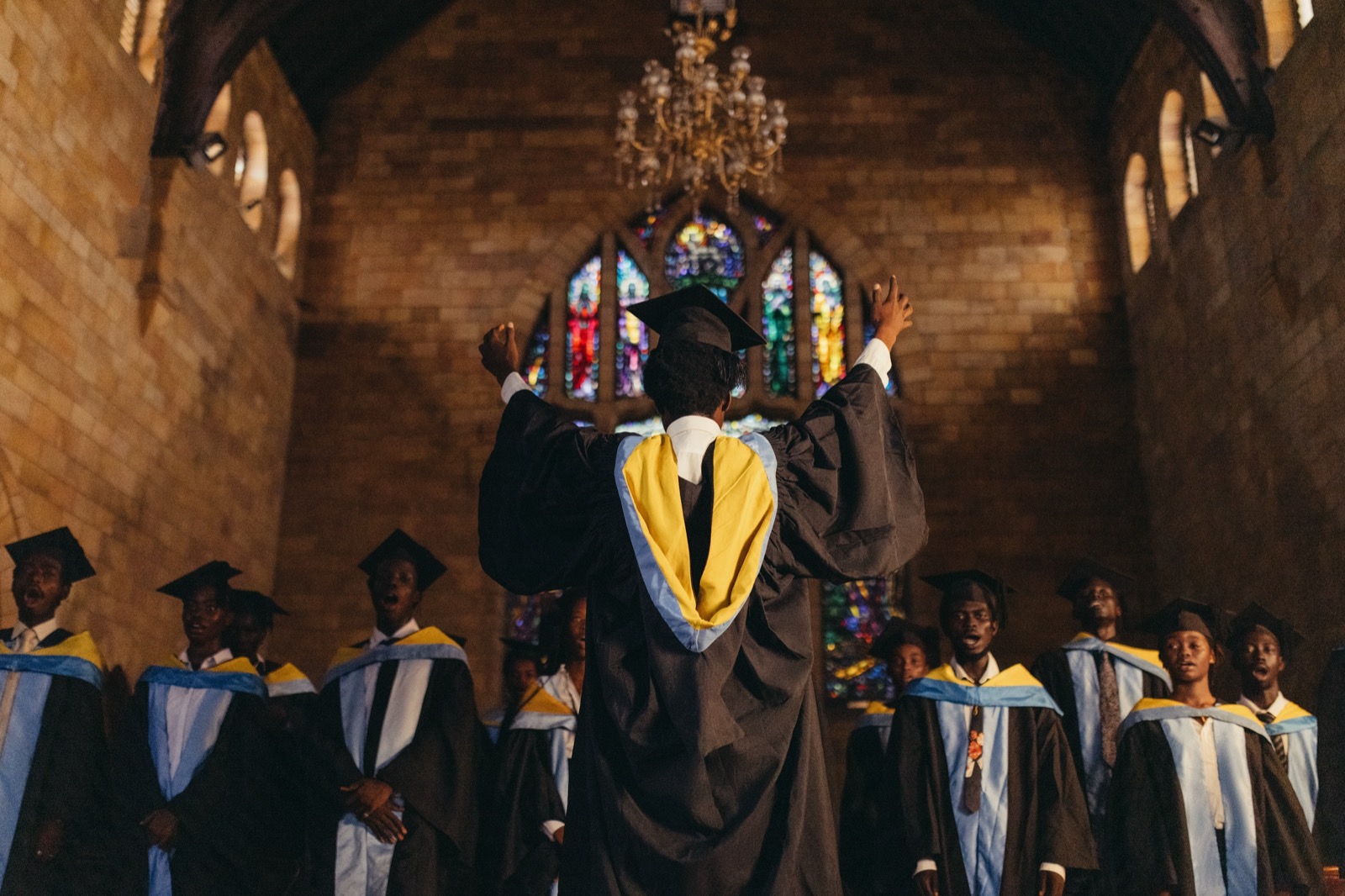
A stone chapel, a stained-glass window, a chandelier hanging low over everything. Facing us in two ranks, about fifteen singers in black academic gowns with yellow and pale blue hoods and mortarboards, mouths open, caught mid-note. And in the middle of the frame, back to us, wearing the same gown and the same hood, a figure with both arms up. He is not one more graduate in the crowd. He is what the crowd is watching.
The arms are the grammar of the picture. One hand is high and open, the other closed at shoulder height, and every face in front of him has been caught inside the same breath. A photograph of a choir is nearly always a photograph of a wall of people. This one has been taken from directly behind the person that wall is answering to, so the singing acquires a direction and a beat.
Idun-Tawiah stages everything, down to the hoods and the hour that puts light through the glass, and the staging is not the difficulty. What cannot be arranged is the sound, and the photograph has had to invent a shape for it: fifteen open mouths, a pair of lifted arms, a ceiling high enough to hold the noise. The title promises a thousand hallelujahs and a thousand more. What you get is the half second between two of them.