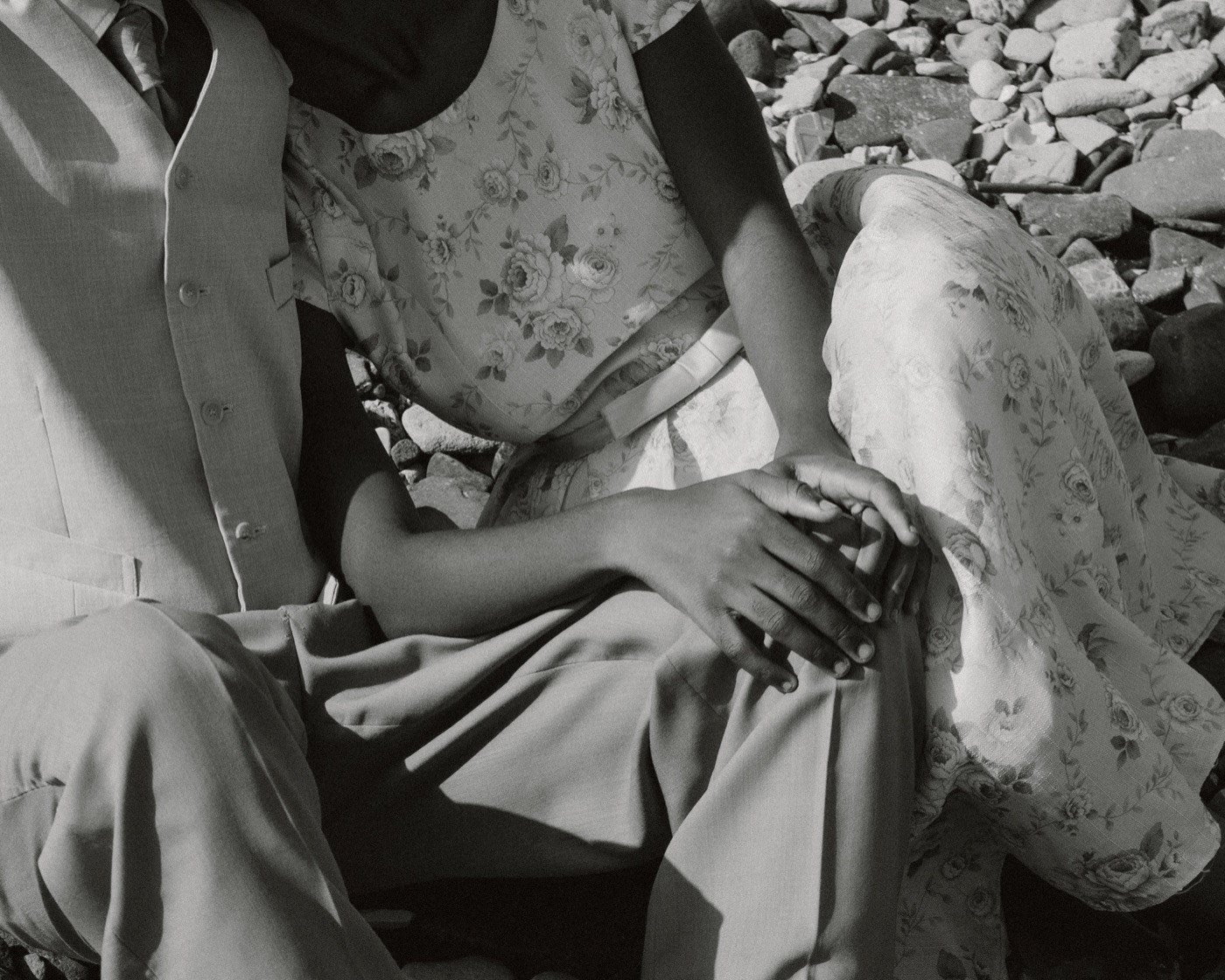
Carlos Idun-Tawiah Ghanaian, b. 18/5/1997
Edition of 3 plus 2 artist's proofs
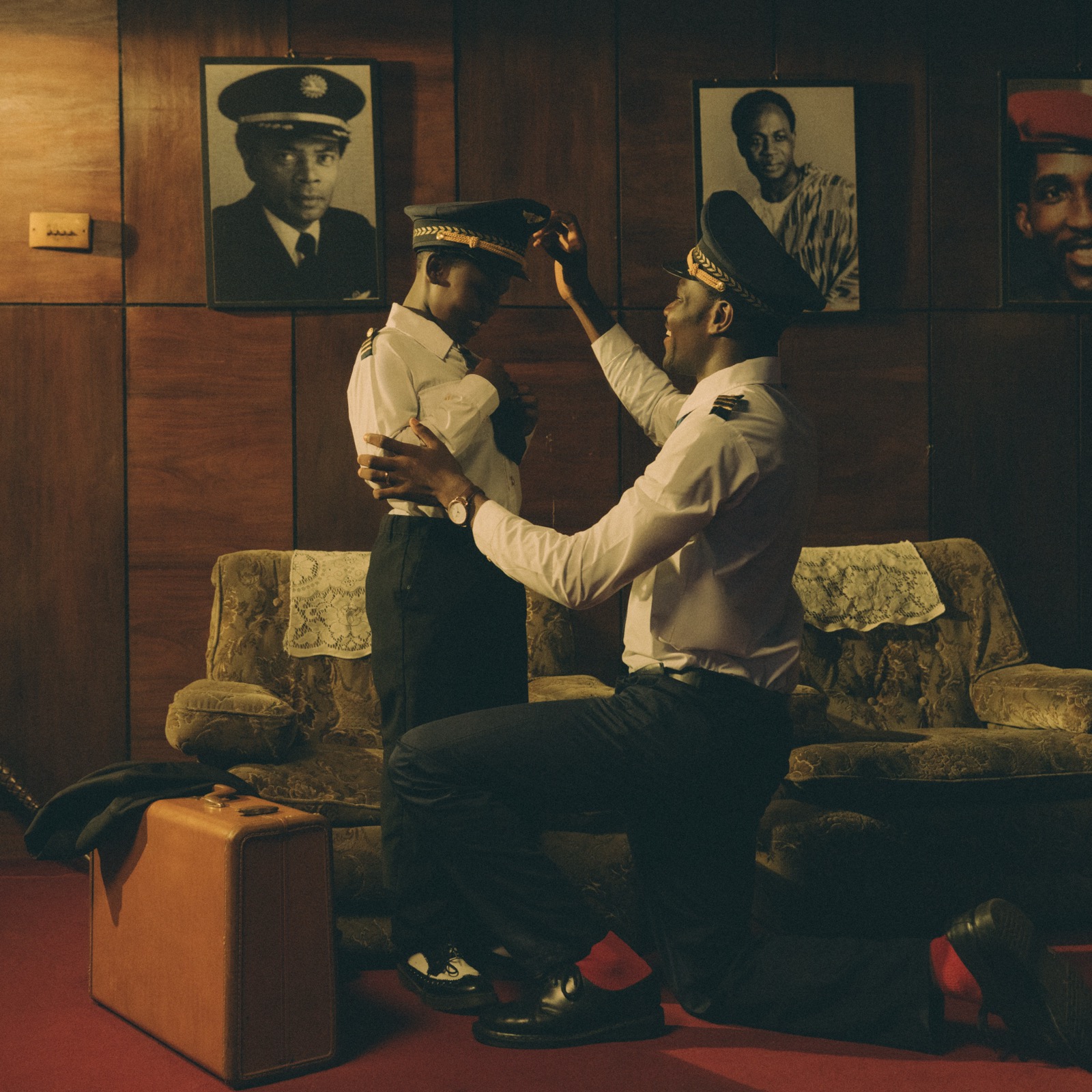
A wood-panelled room. A man in a pilot's white shirt with epaulettes kneels on one knee in front of a boy dressed in the same shirt with the same epaulettes, and lowers a peaked cap onto his head. His other hand rests on the boy's arm. The boy is standing very straight. A tan suitcase sits on the red carpet at the left with a jacket folded over the chair behind it. The armchairs are green brocade with lace laid across their backs.
Three framed portraits hang on the panelling behind them, and they carry the argument: a man in a pilot's cap in an older photograph, a man in Ghanaian cloth, a man in a red beret. The room has been furnished with its own ancestors. Whatever is being handed to the boy has been handed down before, and the wall establishes that before either figure moves.
All of it is constructed, obviously. The boy's shirt was made to match, the suitcase was placed, the portraits were hung for the camera. Idun-Tawiah does not pretend otherwise and the picture is better for the honesty. He is not after a moment he happened to witness. He is after one that ought to exist in photographs and does not, which is a different job and a harder one. The title calls the cap a ticket home.