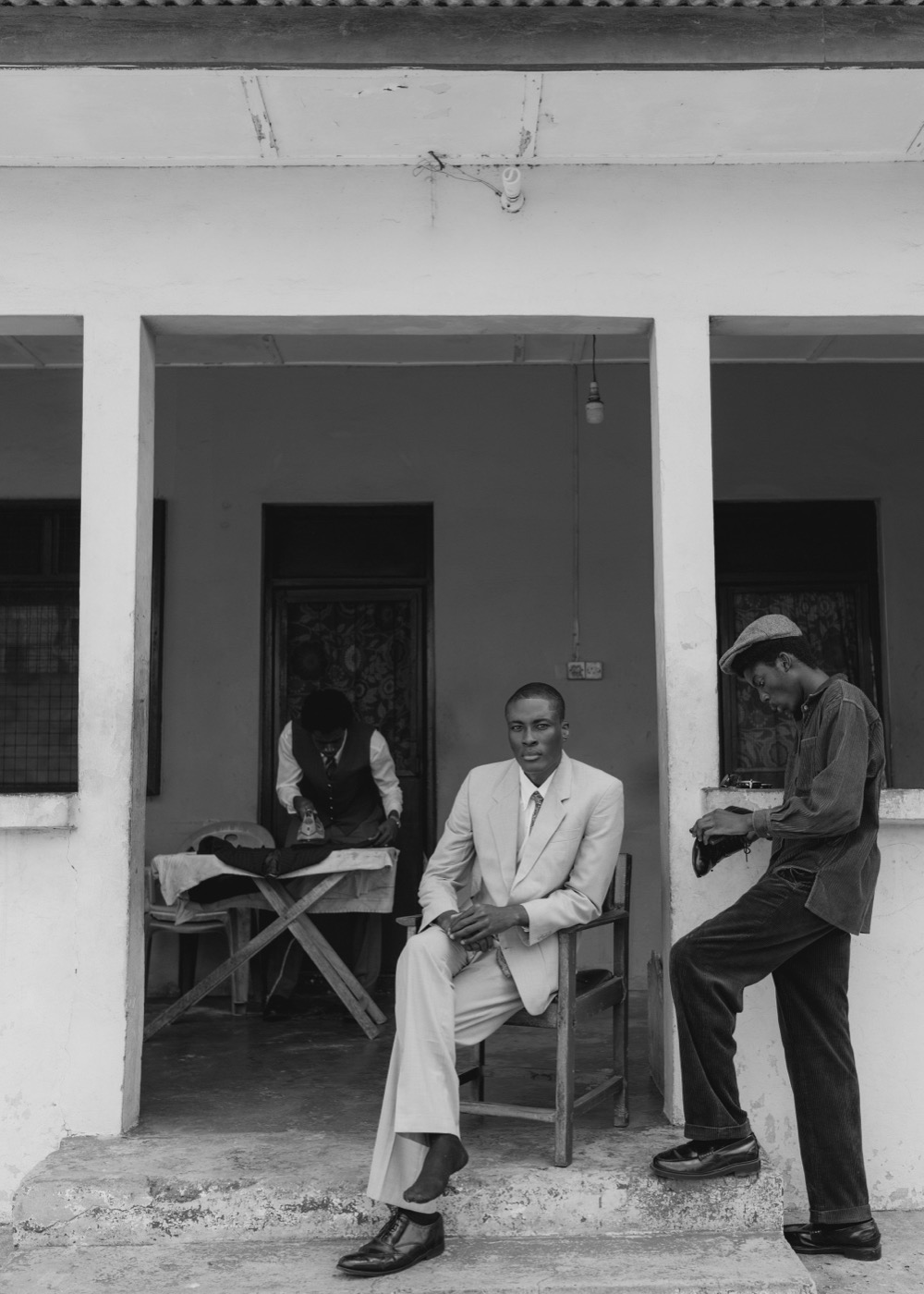
Carlos Idun-Tawiah Ghanaian, b. 18/5/1997
Edition of 3 plus 2 artist's proofs
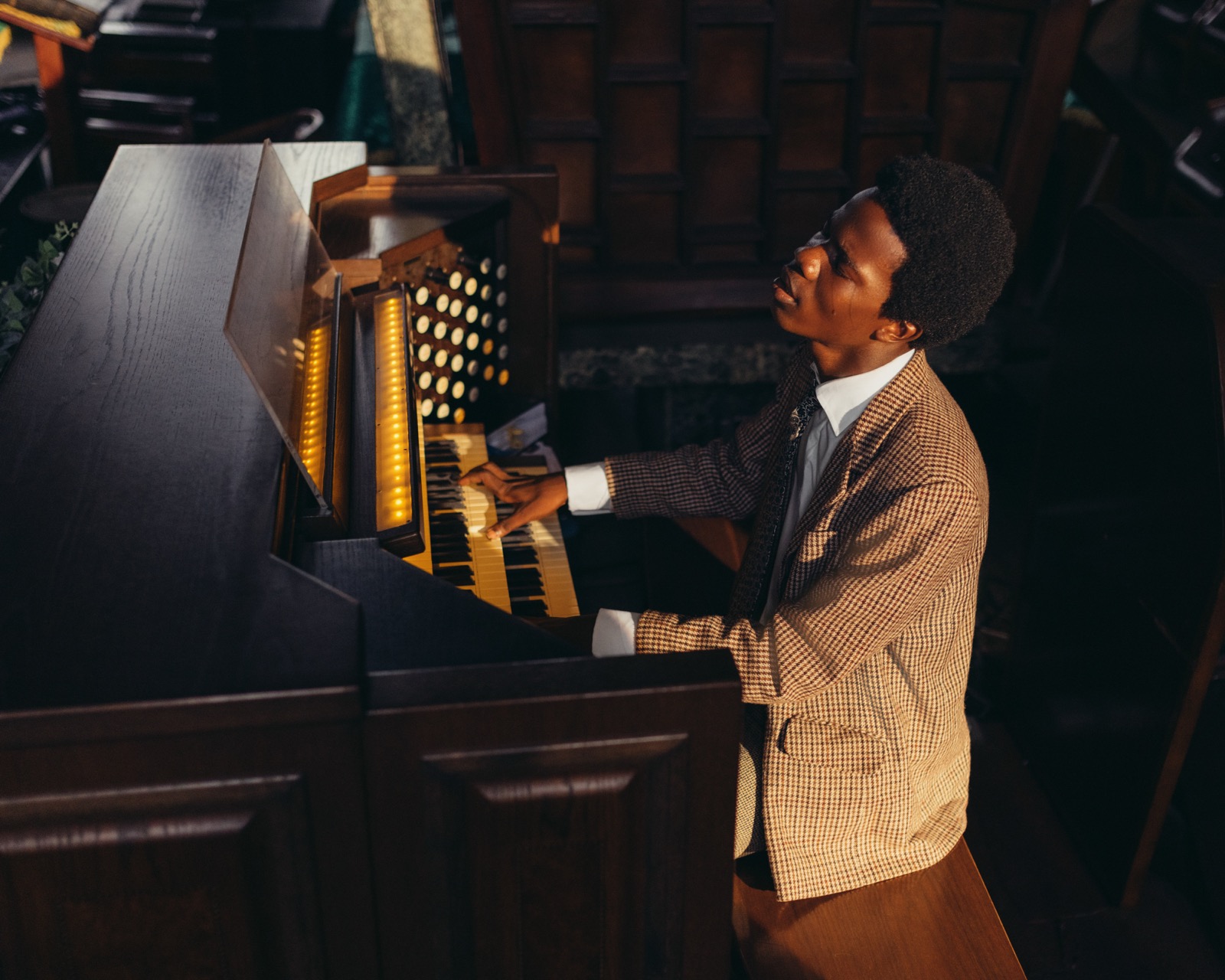
Seen from above and a little behind: a young man at the console of a pipe organ. His hands are down on the manuals, one playing, the other reaching across, and his head has gone right back, chin up, eyes on the ceiling, mouth slightly open. He wears a houndstooth jacket and tan trousers. In front of him the stop knobs glow amber in two long banks with a white disc of them above, and beyond that the dark panelled wall of the church.
He is not looking at his hands. That is the photograph. Everything about the instrument is demanding attention at once, the manuals, the stops, the pedals somewhere below the bottom edge, and the player has taken his eyes off all of it and put them on the roof. Whatever he is doing has been in those hands long enough that the hands no longer require him.
The stops carry their own light, which is unusual and does a great deal of work here: two rows of warm gold running along the console in a room that is otherwise brown and black, like a keyboard's idea of itself. Idun-Tawiah has found the one angle that gives you the machine and the face together, and the face is the surprise. The title tells the man to play on. He does not appear to be taking instructions from anybody.