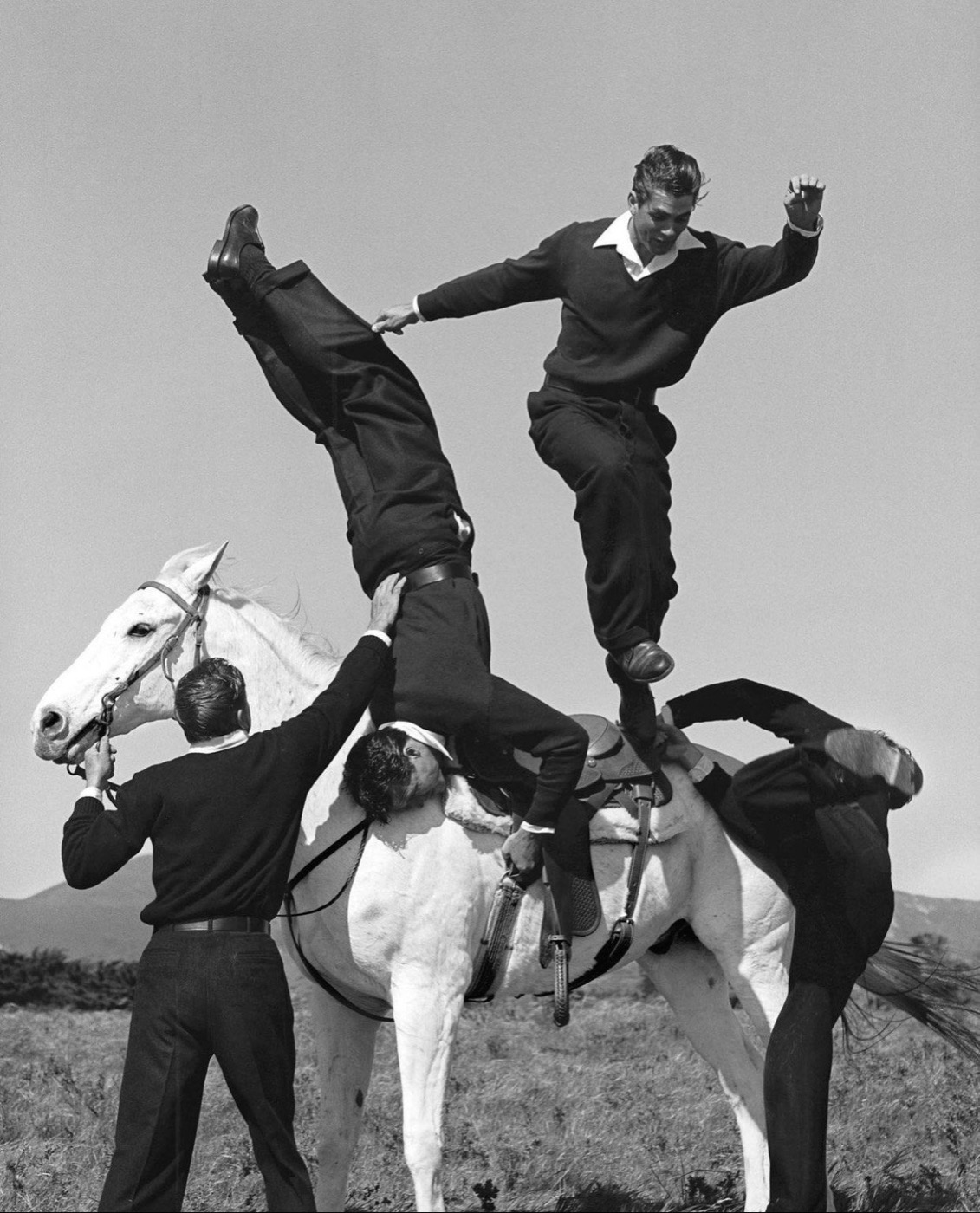
Bruce Weber American, b. 29/3/1946
50 x 60 cm / 20 x 24 in
Umbrella edition of 15
Edition of 5
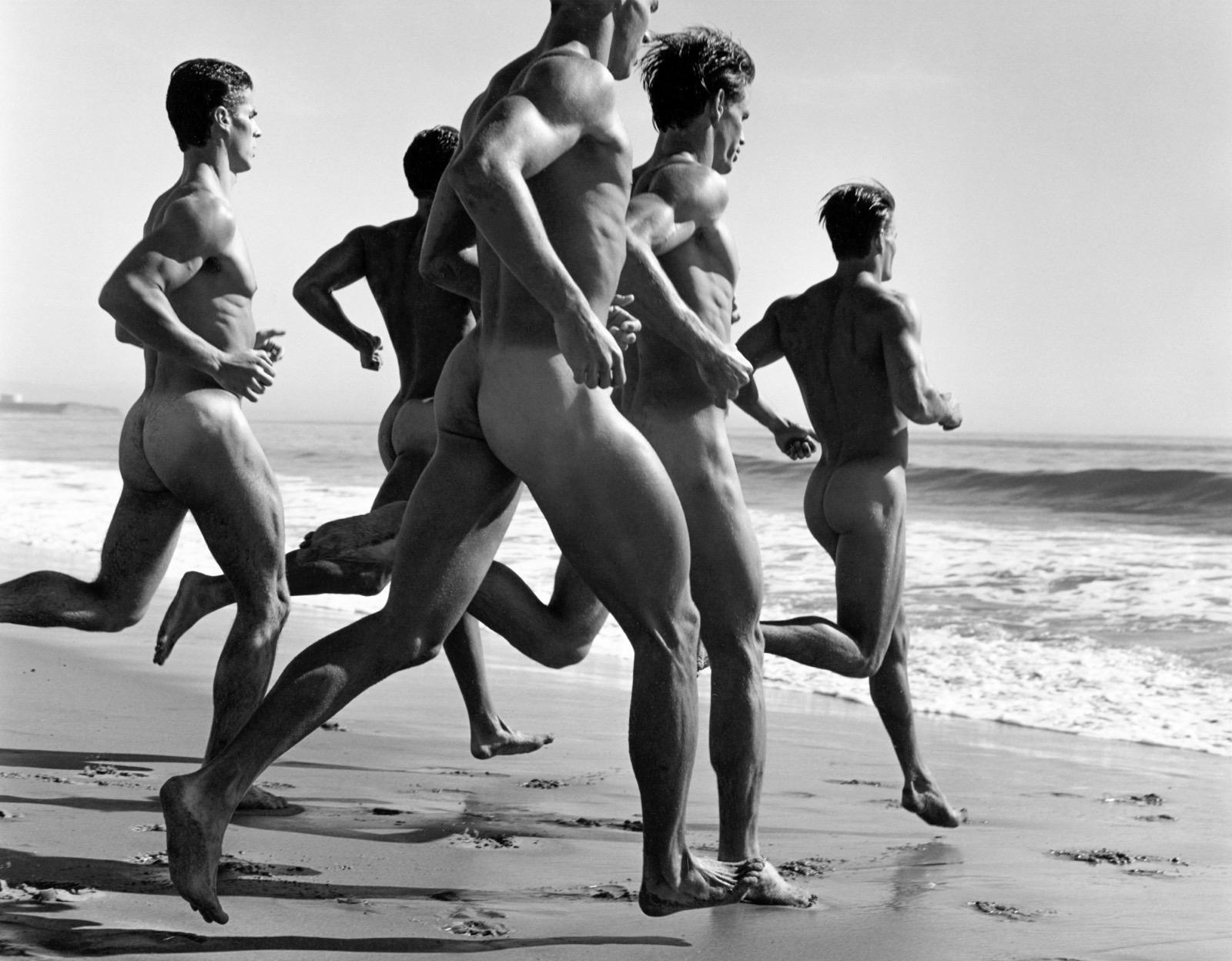
Five men run at the waterline, left to right, and no two are at the same point of the stride. One is stretched full out. One comes down with the knee still high. One has just pushed off, and the sand behind him is scuffed where he went. They overlap as they pass, so the five read as one body carried through a single step. The sun sits low on the right and does the anatomy: the long muscle of a back, a hamstring gathering, a calf under load. A wave breaks beyond them. The horizon is a flat white line.
They are naked and after a moment you stop noticing. Nobody is posing. Every man in the frame is busy with the work of running, and the work is what the eye follows. A shoulder drives forward. A spine holds its line against the swing of the arms. The foot of the nearest man is splayed wide, toes open, gripping wet sand. Athletes have been photographed and carved without clothes for a very long time, and the reason has never had much to do with undressing. You take the clothes off to watch the body work.
The sand keeps them out of the museum. It is stuck wet to those spread toes. The tide has left its ridges and its dark scatter of weed across the flat, and the shadows lie long and cool behind the runners. A marble athlete holds his stride for centuries and it costs him nothing. These five are carrying their own weight down a beach and in a minute they will be winded. That is the pleasure of the picture. Bodies at the top of their condition, doing the simplest thing a body can do, and making it look like nothing at all.