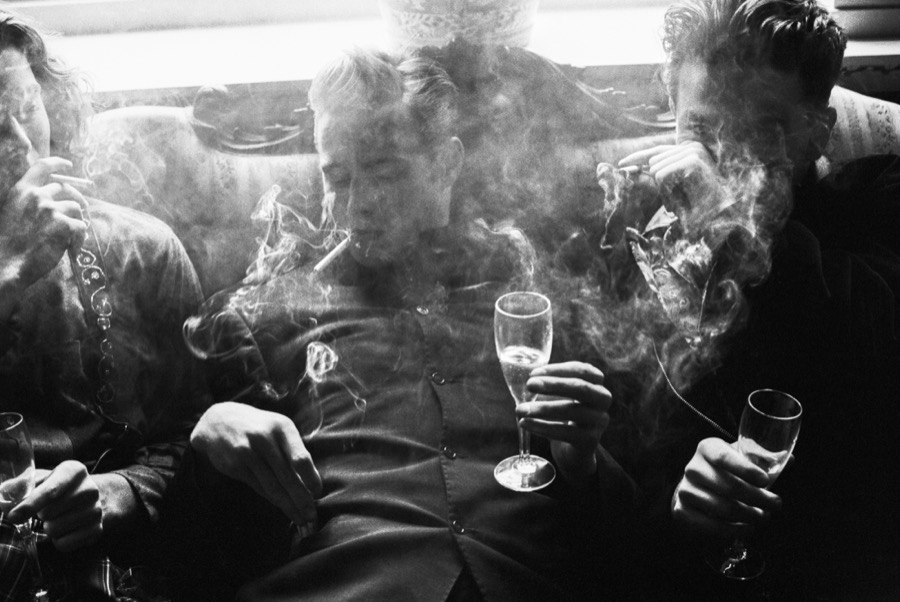
Bruce Weber American, b. 29/3/1946
Edition of 15
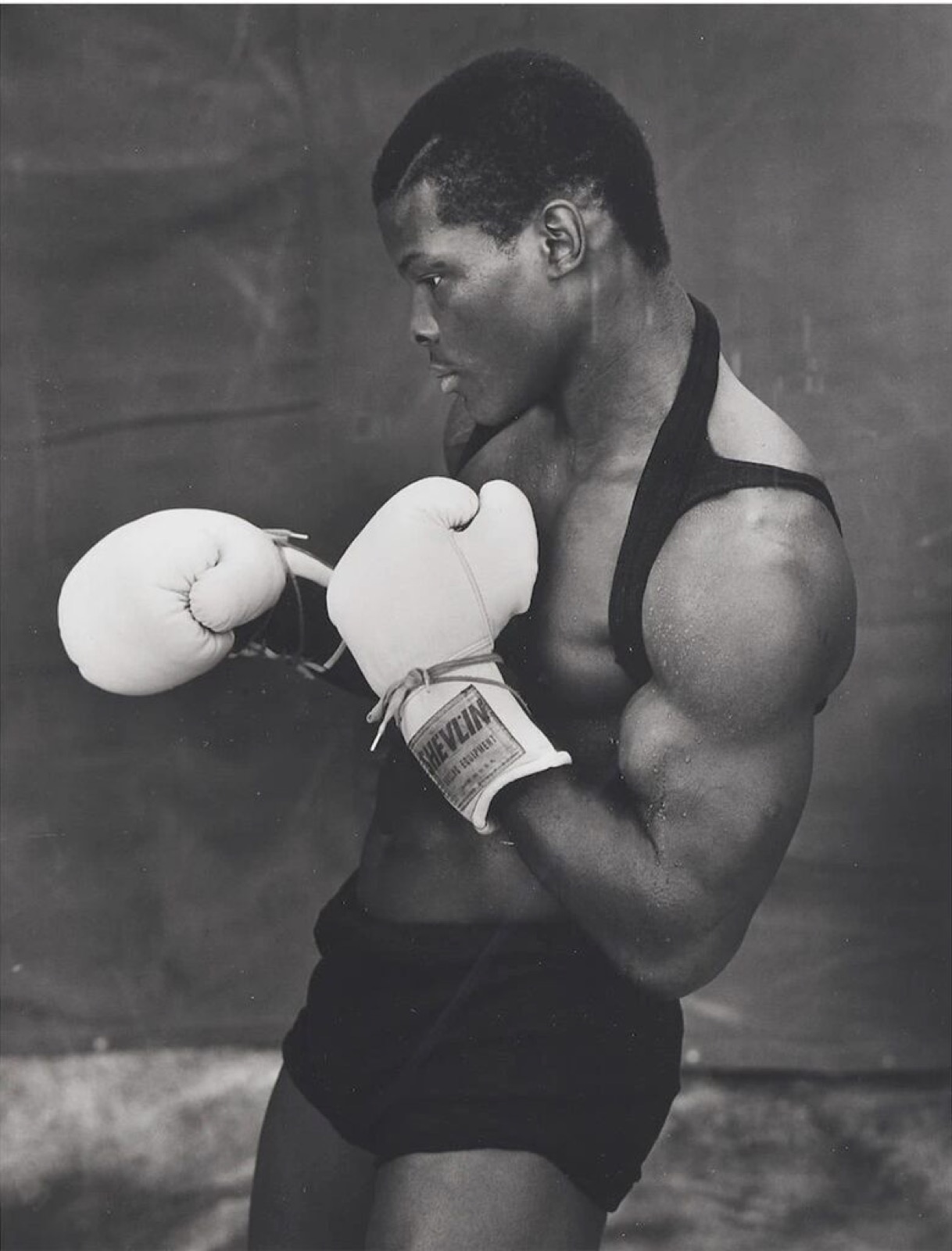
A young boxer stands in profile against a hung canvas, gloves raised in a loose guard, the laces of the near glove trailing free, EVERLAST stamped across the wrist. Black singlet, black trunks, and a hard side light that models every fibre of the shoulder and arm. He is not looking at the camera. The ground is bare dirt; the backdrop is still creased from being folded.
Weber made this at an amateur sports festival, working the way an itinerant portraitist would have worked a century earlier: a length of cloth hung outdoors, daylight, a queue of athletes, one exposure each. The lineage is long and specific — Eakins's boxers, the studio cards of prizefighters, the athletic nudes of the twenties and thirties — and the picture knows it, which is why the pose is a formal one rather than a fighting one.
What such an archive usually loses is the sitter. Ricky Womack was a fighter with a name and a record, not a physique model hired for the day, and the photograph holds him at the moment when he is simply a young man in good light doing the thing he does best. That is the double office of pictures like this one: they take their place in the history of a genre and, at the same time, keep one afternoon of one person's life from disappearing entirely.