Bruce Weber American, b. 29/3/1946
Edition of 5
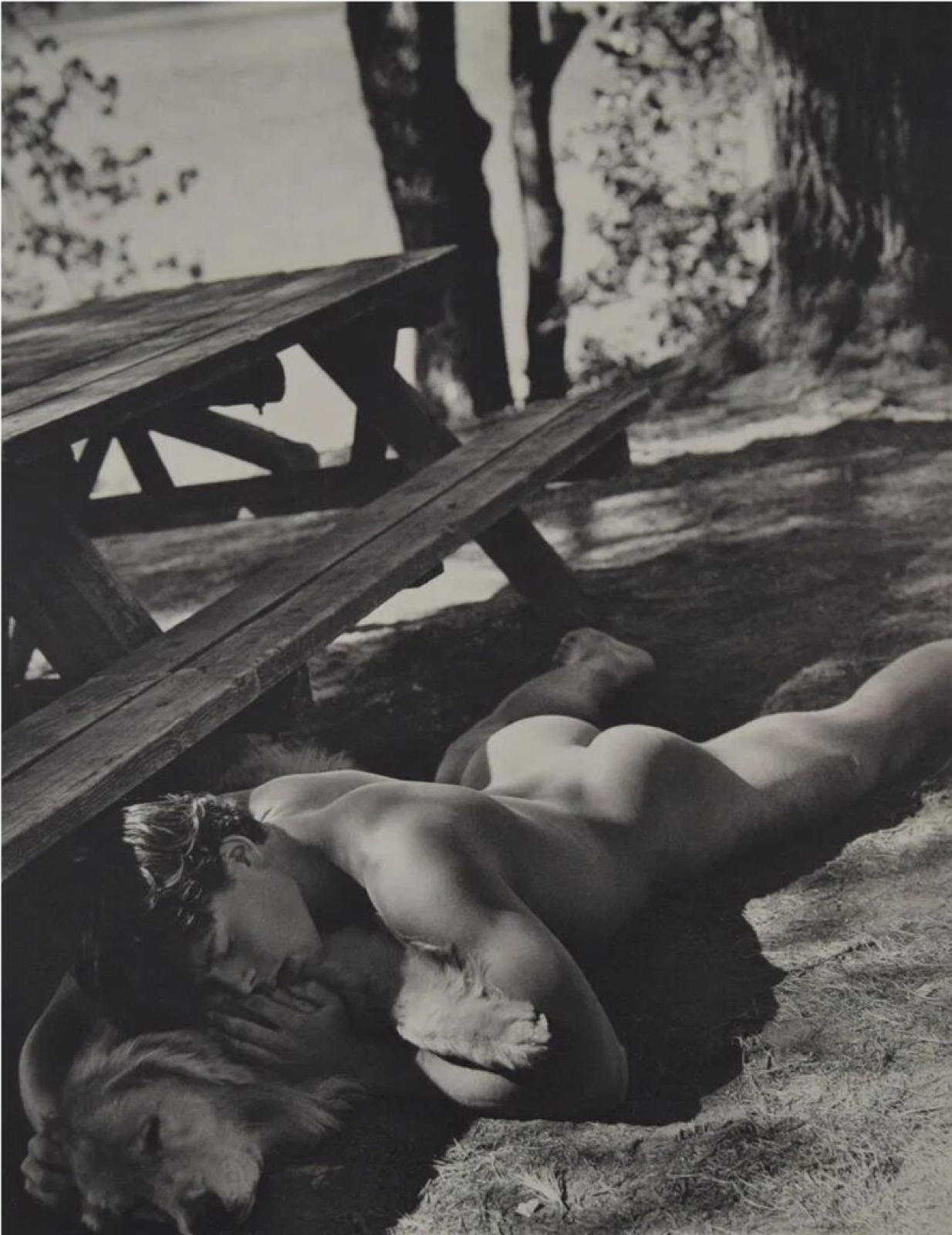
Late sun comes in low under the trees and lands in long stripes on the ground, and in one of those stripes a young man lies asleep, face down, naked, one arm across a golden retriever who is also asleep, nose in the grass. A picnic table occupies the top left of the frame, its planks worn pale. Beyond it a slope of shadow, a tree trunk, and a slice of the pond going white.
Both names are in the title, the boy's and the dog's, and that matters. Little Bear is not a prop. The two bodies are given the same light and the same attention, arranged as equals in the frame, and the photograph makes no distinction between the animal's sleep and the human's. Weber has been doing this for decades and it is not a mannerism; it is a way of seeing in which a dog is a person one happens to know.
The Adirondack summers gave him the whole vocabulary he still uses: friends, water, pines, an afternoon with no purpose in it. To call this innocence is to make it smaller than it is. What the picture records is trust, which is far harder to arrange than nudity and impossible to fake, and which the sleeping dog confirms more convincingly than any human face could.