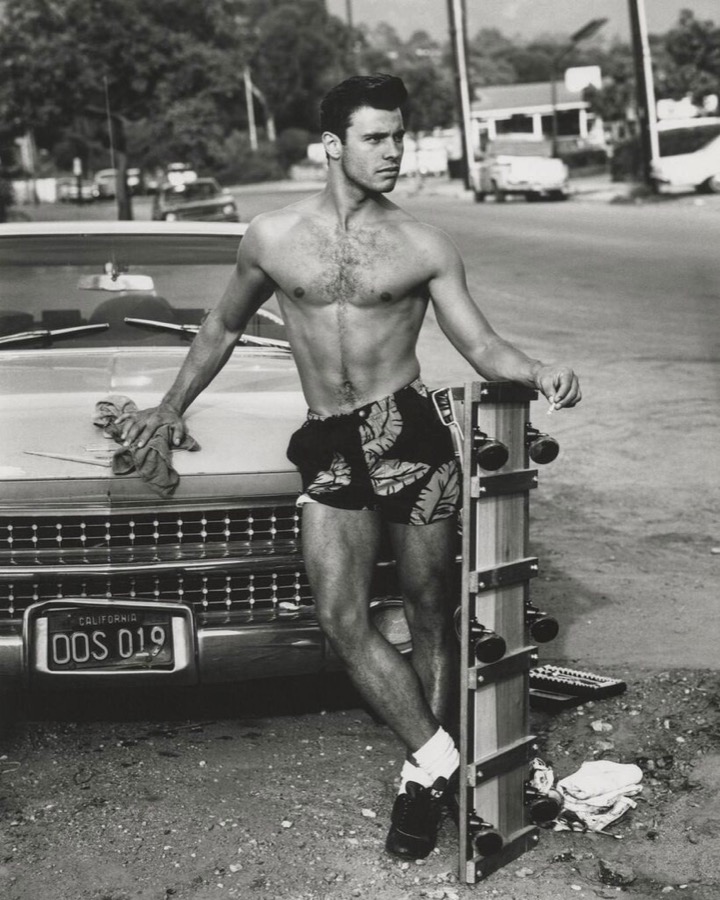
Bruce Weber American, b. 29/3/1946
Edition of 15
Edition of 5
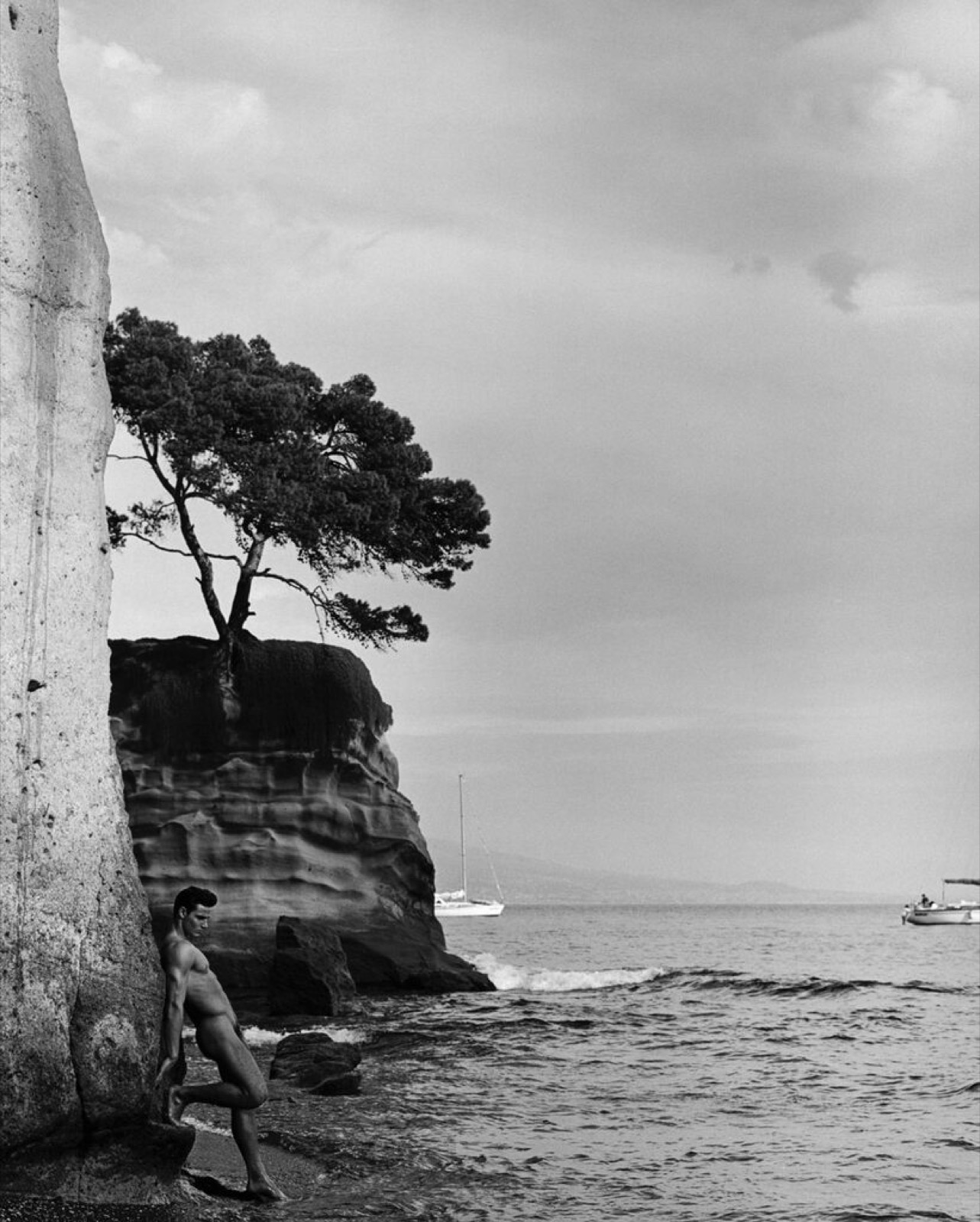
A cliff fills the left third of the frame, pale and sheer. Out of the rock above it grows a single pine, leaning far out over the water in the classical manner. There is a bay, a moored sailboat, a small motorboat, a headland dissolving into haze. And at the bottom left, at the foot of the cliff, in shadow, stands a naked young man with one foot up on the rock, so small in the frame that he might be taken for a flaw in the print.
The scale is the argument. Everything the picture wants to say about the place — that it is old, that it is beautiful, that people have been coming here to be photographed against it for a century and a half — depends on the figure being tiny. Enlarge him and it becomes a nude on a beach. Kept this small, he becomes what tourism makes of a body: an accessory to a view.
Capri has been photographed to death, which is not a reason to stop photographing it but the condition under which any new picture of it has to work. Weber's answer is to concede the cliché entirely — the pine, the boat, the haze, all of it — and then to plant in one corner the small human fact that the postcard version always removes.