Series: Hero, Father, Friend.
Archival pigment print mounted on aluminium Dibond.
Edition of 3
40.6 x 50.8 cm / 16 x 20 in
Hand-signed by the artist, with title, date, and edition number inscribed in ink on an archival label affixed to the reverse side of the mounted photograph
© The Artist

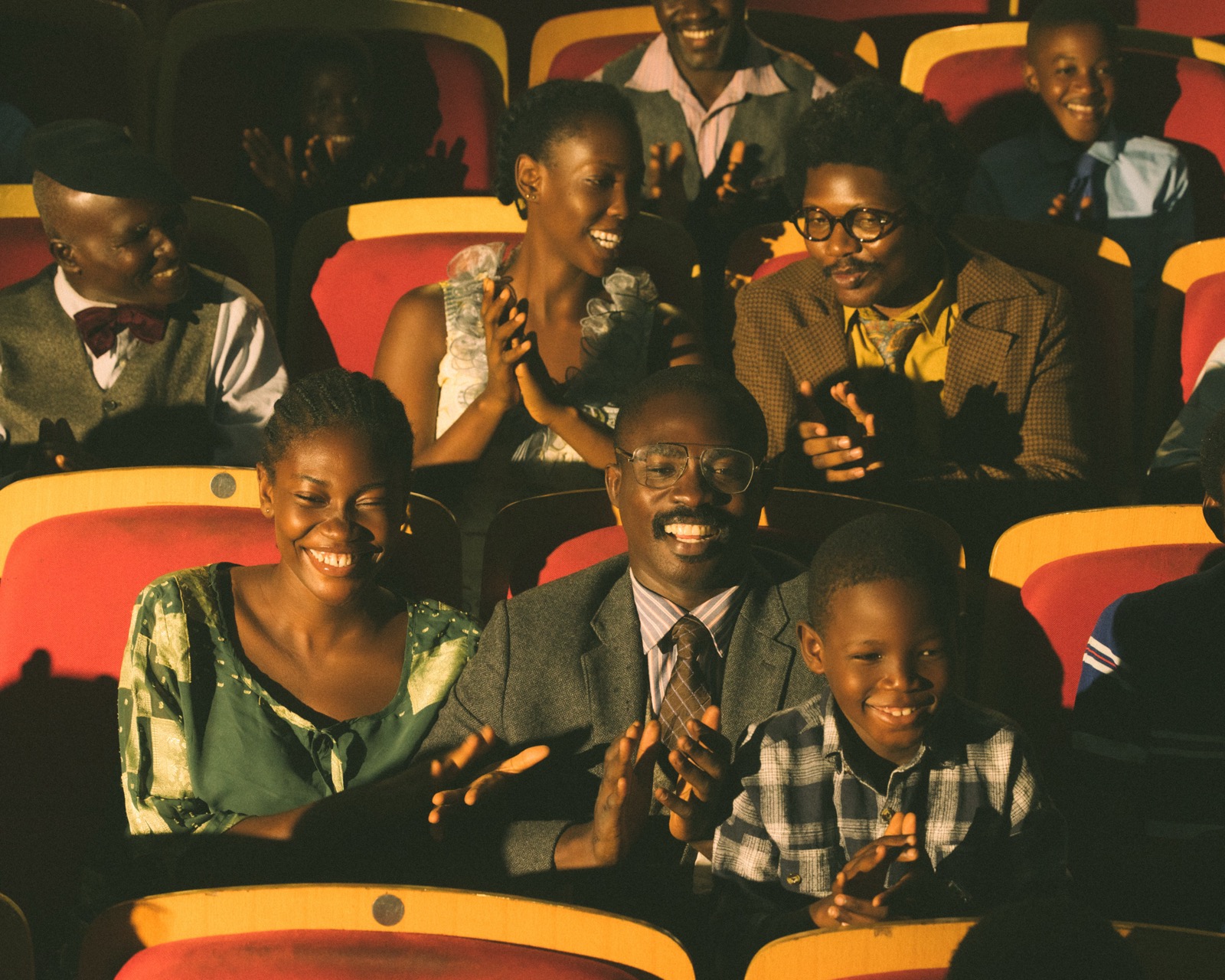
There is a tradition of painters who turned away from the stage to study the faces watching it — Daumier in the loges, Renoir's theatre boxes, Hopper's lone usherette in the aisle's amber wedge. Idun-Tawiah enters that lineage and bends it, then snaps it shut on this single Accra row: not a spectator alone, but a family lit by the same fugitive glow, the screen left entirely out of frame so that the audience becomes the picture's whole event.
The light is the colour of late projector glow, a honeyed amber sliding down the red plush of the cinema seats, falling unevenly, leaving the back rows in cooler shadow while it gilds this family in front. The father at the centre, grey suit and patterned tie, his glasses catching the warmth, claps already; the daughter beside him laughs with her eyes shut, as though the joy were too bright to watch directly. Lower right, a small boy in a checked shirt holds his palms apart — the clap still arriving, a held breath a half-second before the hands close. Around them strangers join in, a man in a bow tie, a woman mid-motion, a boy grinning over a seatback, the warmth spreading outward as if it were contagious.
He made this for his series Hero, father, friend, and the title's argument is here without strain: heroism as the act of sitting beside your children in the dark and being glad. There is tenderness in how he photographs Black fatherhood — fully present, unguarded, laughing with rather than over. The applause, finally, is not for the film. It is for the ordinary courage of showing up, and being seen doing it.