Series: 2 - Outskirts
Archival pigment print mounted on aluminium Dibond.
Edition of 10 + 3 AP
61 x 50.8 cm / 24 x 20 in
Edition of 5 + 1AP
96.5 x 76.2 cm / 38 x 30 in
Edition of 3 + 1AP
121.9 x 96.5 cm / 48 x 38 in
Edition of 1 + 1 AP NFS
187.3 x 149.9 cm / 73 3/4 x 59 in
61 x 50.8 cm / 24 x 20 in
Edition of 5 + 1AP
96.5 x 76.2 cm / 38 x 30 in
Edition of 3 + 1AP
121.9 x 96.5 cm / 48 x 38 in
Edition of 1 + 1 AP NFS
187.3 x 149.9 cm / 73 3/4 x 59 in
Signed, titled, numbered, and dated on a label affixed to the verso of the mount
© The Artist

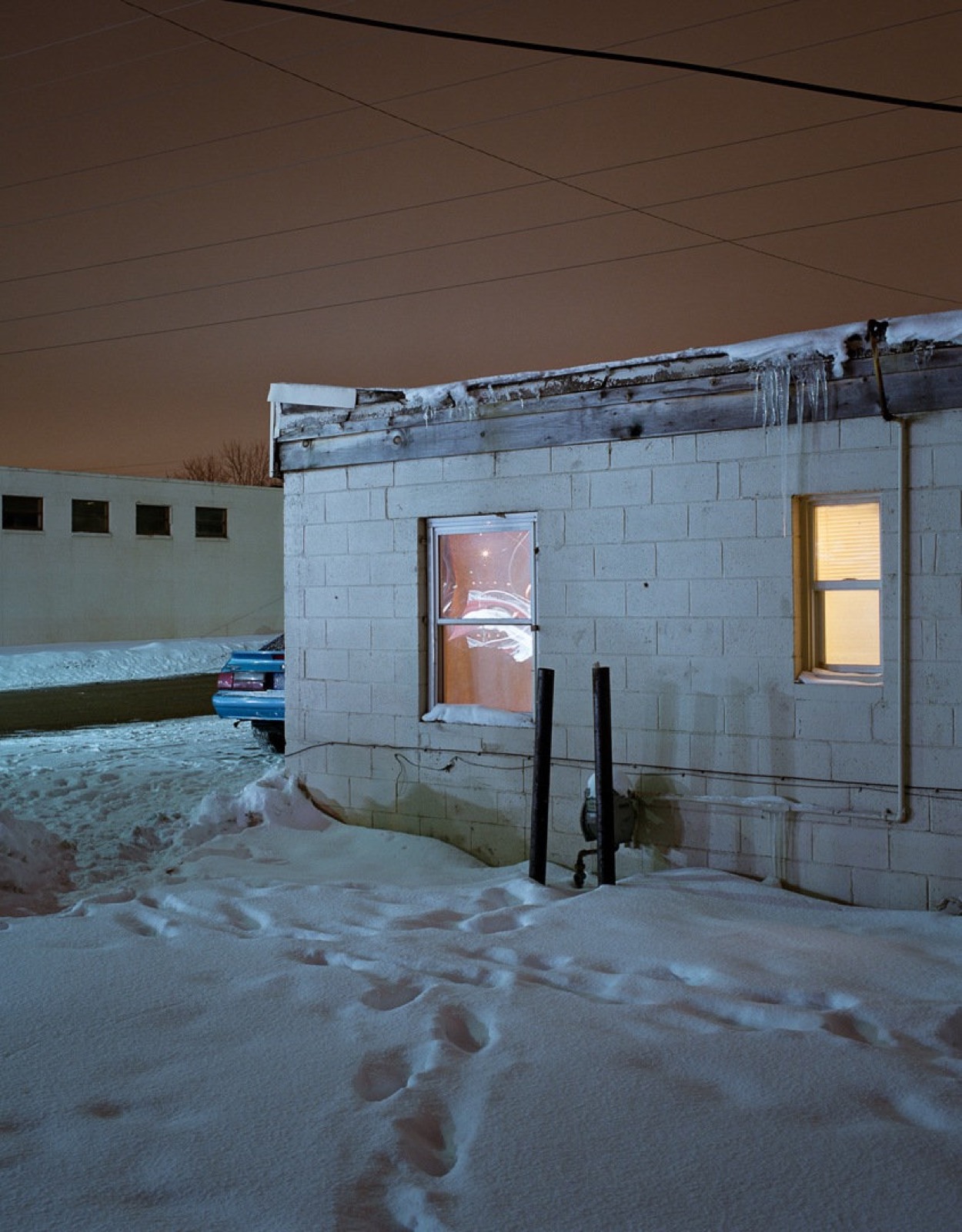
Two windows, and a decision about how much we are permitted to know. The one on the right burns a flat amber, frank as a bare bulb; the one beside the buried car is curtained in a sickly pink, and behind it the light goes vague, refusing us. To photograph a lit window at night is to insist on a story while withholding it. Hido has built his whole method on this withholding. The wall — cinder block, painted white, never once intended to be looked at — is the most photographed and least interesting surface imaginable, and that is precisely why he aims the camera at it.
What the picture actually contains is weather and trespass. Snow has been walked through, churned into a record of someone's coming and going, and the footprints lead, as such evidence always does, nowhere. We read them anyway. We cannot help converting the trace into a person, the lit room into a life, the orange sodium ceiling into dread. This is the seduction the image both offers and quietly distrusts: it teaches us how readily we narrate a stranger's house from the cold side of the glass, how the act of looking from outside is never neutral, always a little like surveillance.
Hido's "House Hunting" and "Outskirts" pictures, made across the American periphery around 2001, have settled into the canon of contemporary color photography precisely because they refuse the consolation they seem to promise. The icicles, the half-hidden blue car, the wire slung across the stained sky — none of it resolves. Someone is inside. The light is on. The rest we supply, and the supplying is the subject.