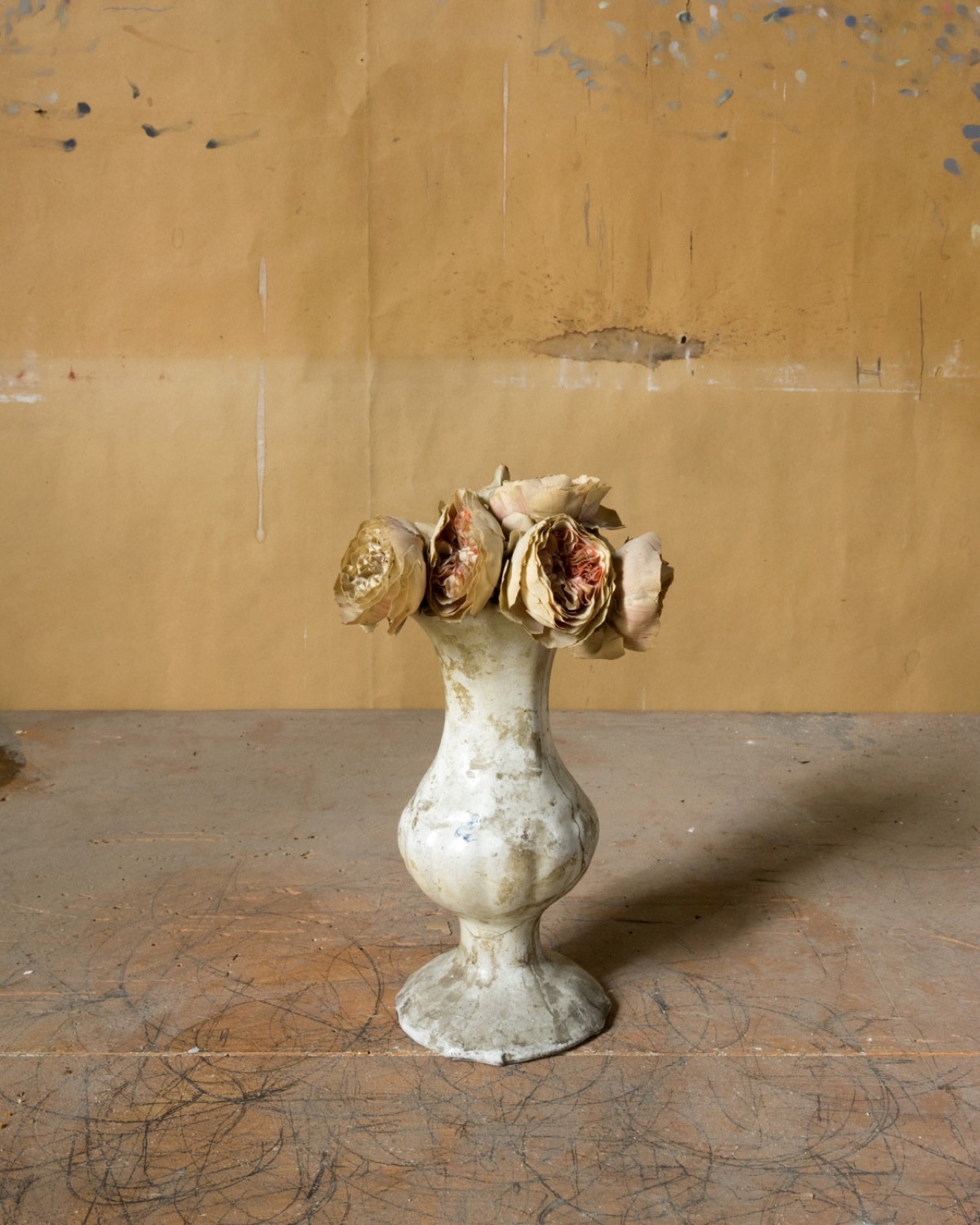
What is a photograph obliged to keep? Here the answer is the tabletop, covered in faint pencil arcs, the loops a hand made marking where things had stood, and the camera reads them as plainly as it reads the vase set down on top of them. That is the quiet joke and the seriousness of this picture at once: a photograph keeps the accidental record a draftsman left behind, and lifts it to the same level of attention as the subject placed deliberately in front of it.
The vase is a chalky, dust-bloomed thing, its white gone the color of plaster left in a corner, balanced on a foot too narrow for its belly. Meyerowitz centers it without ceremony and lets the light come from the left, so the swell of the body turns from glare to shadow and the ochre wall behind goes from warm to dim across the frame. Four spent roses lean over the lip, brown at the edges, one of them collapsed inward, and they are described petal by petal rather than arranged into a bouquet. Nothing is improved. The crack in the wall, the drip stains, the scuffed floor are all given their due.
The fact behind the picture matters, though the picture would hold without it: these are the actual objects from Giorgio Morandi's Bologna studio, the vessels he painted for decades, photographed where they sat. Meyerowitz, an American who spent his life on color and the street and later on the still life, here puts the camera in front of another man's lifelong subject and simply describes it. The result is not homage so much as a demonstration of what description can do. The thing is humble; the looking is not.
What is a photograph obliged to keep? Here the answer is the tabletop, covered in faint pencil arcs, the loops a hand made marking where things had stood, and the camera reads them as plainly as it reads the vase set down on top of them. That is the quiet joke and the seriousness of this picture at once: a photograph keeps the accidental record a draftsman left behind, and lifts it to the same level of attention as the subject placed deliberately in front of it.
The vase is a chalky, dust-bloomed thing, its white gone the color of plaster left in a corner, balanced on a foot too narrow for its belly. Meyerowitz centers it without ceremony and lets the light come from the left, so the swell of the body turns from glare to shadow and the ochre wall behind goes from warm to dim across the frame. Four spent roses lean over the lip, brown at the edges, one of them collapsed inward, and they are described petal by petal rather than arranged into a bouquet. Nothing is improved. The crack in the wall, the drip stains, the scuffed floor are all given their due.
The fact behind the picture matters, though the picture would hold without it: these are the actual objects from Giorgio Morandi's Bologna studio, the vessels he painted for decades, photographed where they sat. Meyerowitz, an American who spent his life on color and the street and later on the still life, here puts the camera in front of another man's lifelong subject and simply describes it. The result is not homage so much as a demonstration of what description can do. The thing is humble; the looking is not.