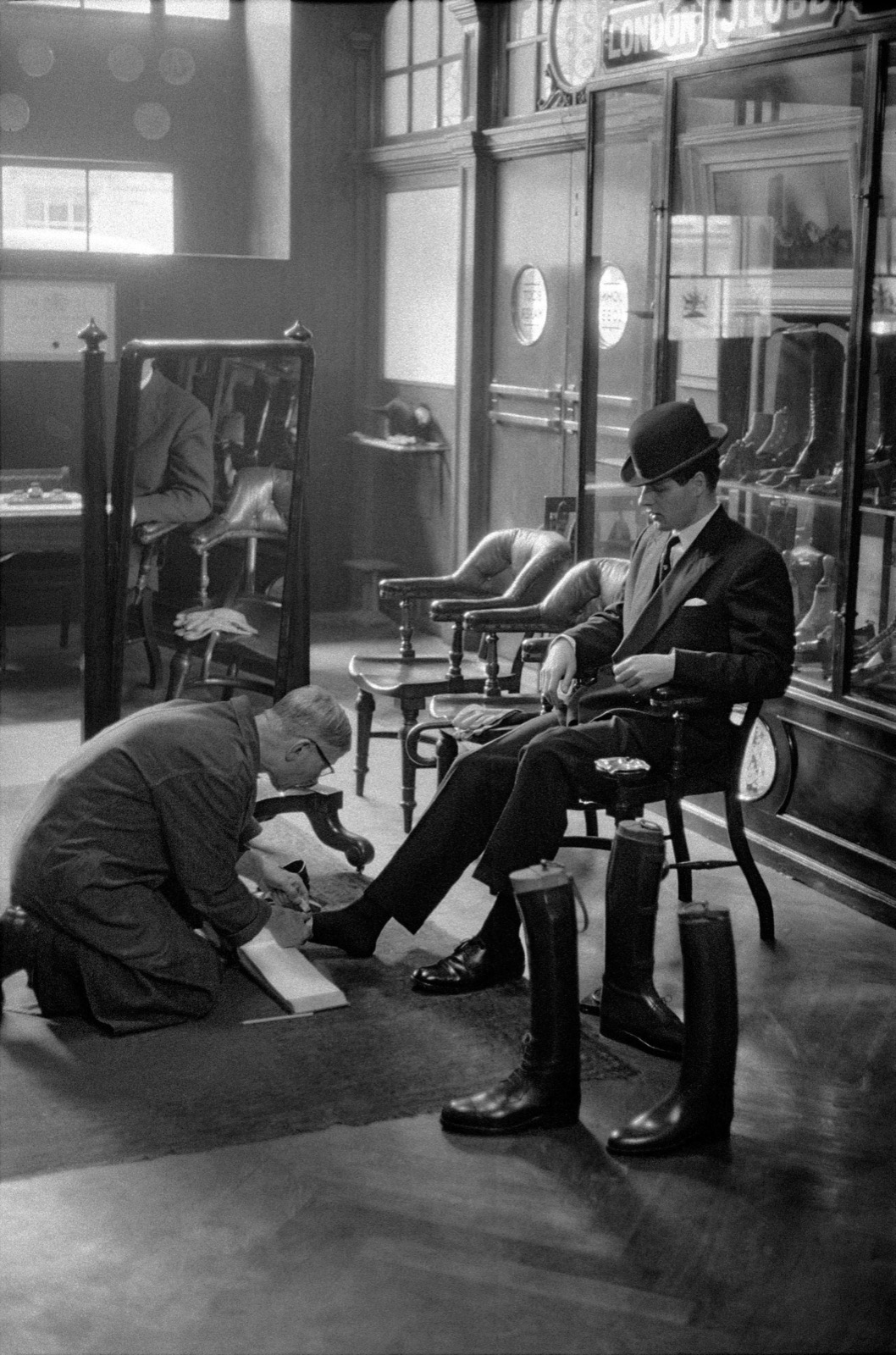
A photograph this orderly is usually a photograph about work, and the work here is measurement. Everything settles onto a single white card, slid beneath the customer's shoe by the kneeling fitter — the one bright rectangle in a room of dark wood and darker cloth, and the figure around which Horvat has built the frame. The old man is folded down onto the parquet, pencil in hand; the young customer sits above him, upright in bowler and dark suit, one polished shoe offered up to be traced. The transaction is plain, and the camera describes it without comment.
What keeps the frame from being a simple anecdote is how much it holds at once. To the left, a tall pivot mirror catches a second customer deeper in the shop, so that the picture quietly doubles its cast and its depth. To the right, a row of finished riding boots stands at attention in the lit cabinet, the trade's promise made glossy and upright while its labor goes on at floor level. Horvat lets the gap between those boots and the kneeling man do the work; he does not underline it.
This is reportage made by a photographer who also knew fashion's exacting light, and the discipline shows. The deep grays hold their detail, the verticals stay true, and the eye is led from card to mirror to cabinet without a wasted gesture. Horvat, a central figure in the postwar generation that carried European photojournalism into the magazines, was rarely better than in these London interiors of the late 1950s, where an ordinary errand becomes, under his attention, a small study in how a room arranges its people.
A photograph this orderly is usually a photograph about work, and the work here is measurement. Everything settles onto a single white card, slid beneath the customer's shoe by the kneeling fitter — the one bright rectangle in a room of dark wood and darker cloth, and the figure around which Horvat has built the frame. The old man is folded down onto the parquet, pencil in hand; the young customer sits above him, upright in bowler and dark suit, one polished shoe offered up to be traced. The transaction is plain, and the camera describes it without comment.
What keeps the frame from being a simple anecdote is how much it holds at once. To the left, a tall pivot mirror catches a second customer deeper in the shop, so that the picture quietly doubles its cast and its depth. To the right, a row of finished riding boots stands at attention in the lit cabinet, the trade's promise made glossy and upright while its labor goes on at floor level. Horvat lets the gap between those boots and the kneeling man do the work; he does not underline it.
This is reportage made by a photographer who also knew fashion's exacting light, and the discipline shows. The deep grays hold their detail, the verticals stay true, and the eye is led from card to mirror to cabinet without a wasted gesture. Horvat, a central figure in the postwar generation that carried European photojournalism into the magazines, was rarely better than in these London interiors of the late 1950s, where an ordinary errand becomes, under his attention, a small study in how a room arranges its people.