Carbon Print / Archival Pigment Print.
Carbon Print · Edition of 15
Image: 56.8 x 43 cm / 22 3/8 x 16 7/8 in / Paper: 72 x 56 cm / 28 3/8 x 22 in
Sold Out
Archival Pigment Print · Edition of 5
200 x 150 cm / 78 3/4 x 59 in
Image: 56.8 x 43 cm / 22 3/8 x 16 7/8 in / Paper: 72 x 56 cm / 28 3/8 x 22 in
Sold Out
Archival Pigment Print · Edition of 5
200 x 150 cm / 78 3/4 x 59 in
Hand-signed by Artist, titled, numbered and dated on print verso
© The Artist
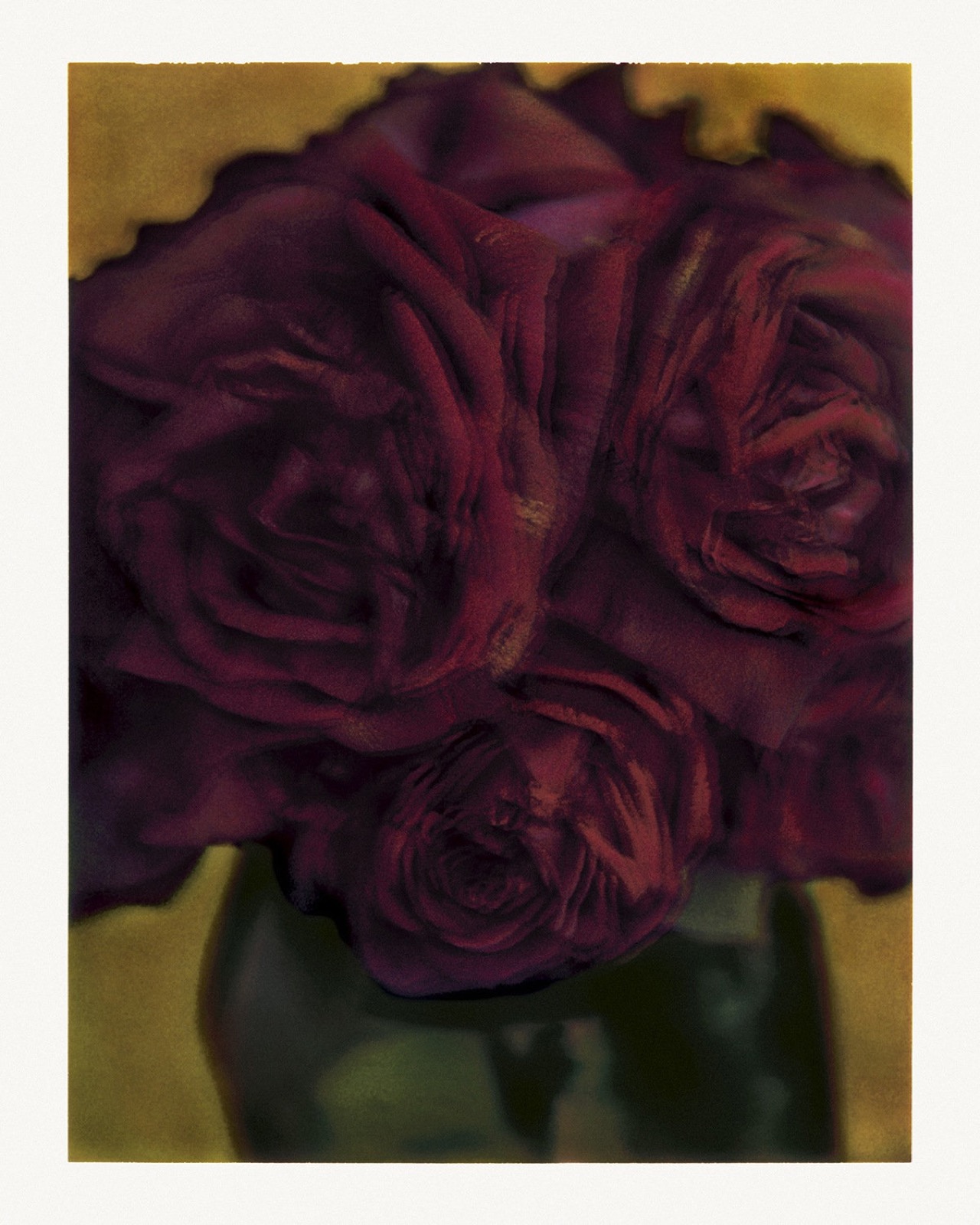
To photograph a flower at its peak is sentimental; to photograph it as it begins to fail is something else — an argument about what beauty is for. Sarah Moon has chosen the second course. These roses are caught at the hour when red deepens past ripeness into wine and bruise, the petals thickening until they read less as flowers than as something bodily, and the whole dark mass is lit from within, as if it were burning slowly and from the inside out.
A photograph of a rose insists, more plainly than most images do, that we are looking at time. The flower is already a clock, and to fix it is to admit that fixing changes nothing. Moon understands this and refuses the consolations of the genre. There is no crisp botanical record here, no pride of possession. The carbon print softens, the grain settles like dust, the green glass vase sinks into shadow, and the ground behind goes the tarnished gold of old altarpieces. What survives is not the bouquet but the memory of it — and memory, she seems to say, is the only form in which beauty is ever actually held.
To call such an image morbid is to mistake its tenderness for a verdict. The lowest rose opens toward us like a mouth about to speak; the others lean and fold into one another the way petals do in the last hour before they drop. Nothing is sharp, and nothing needs to be. Moon, who came to photography from in front of the camera and never lost the conviction that an image should remember rather than report, has made decay look not like an ending but like a kind of attention — proof that to look hard at what is passing is itself a way of keeping it.