Series: 1 - House Hunting
Archival pigment print mounted on aluminium Dibond.
Edition of 10 + 3 AP
61 x 50.8 cm / 24 x 20 in
Sold Out
Edition of 5 + 1AP
96.5 x 76.2 cm / 38 x 30 in
Edition of 3 + 1AP
121.9 x 96.5 cm / 48 x 38 in
Edition of 1 + 1 AP NFS
187.3 x 149.9 cm / 73 3/4 x 59 in
61 x 50.8 cm / 24 x 20 in
Sold Out
Edition of 5 + 1AP
96.5 x 76.2 cm / 38 x 30 in
Edition of 3 + 1AP
121.9 x 96.5 cm / 48 x 38 in
Edition of 1 + 1 AP NFS
187.3 x 149.9 cm / 73 3/4 x 59 in
Signed, titled, numbered, and dated on a label affixed to the verso of the mount
© The Artist

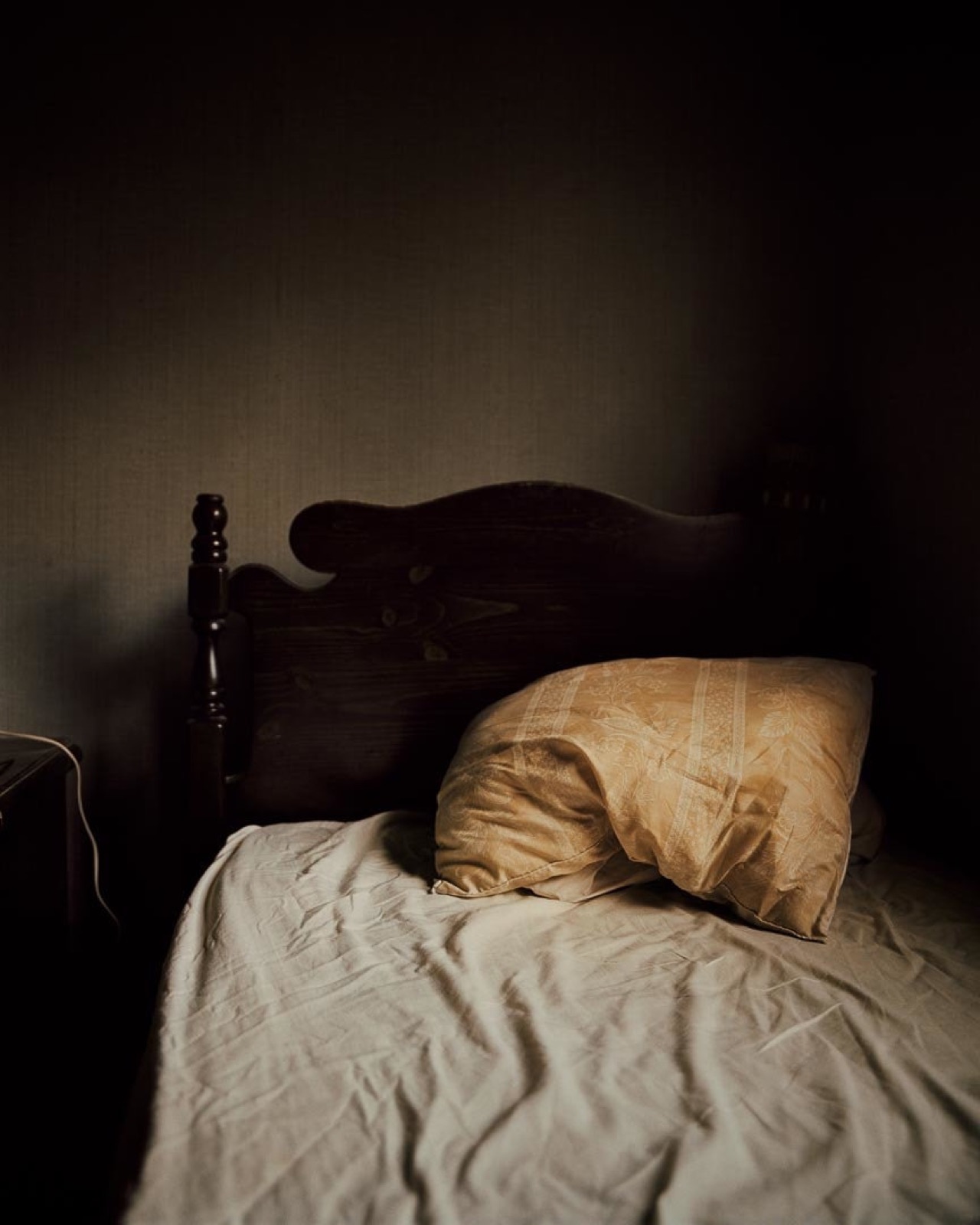
An empty bed waits in the corner of a dim room, its ornate wooden headboard swallowed by shadow, a single golden pillow catching the only warm light. Todd Hido made this interior in 1994, and like all his finest work it is steeped in solitude, a quiet American melancholy that hovers between memory and dread. No one is here, yet the room feels recently abandoned, the bedclothes rumpled, the air heavy with stories the picture will not tell.
Hido is celebrated for his nocturnes of suburban houses glowing in the dark and for interiors like this one, many of them found in foreclosed or vacated homes across the American West. Working with long exposures and only the available light, he turns the most ordinary domestic spaces into cinematic stages charged with emotion, closer in spirit to the paintings of Edward Hopper and the films of David Lynch than to documentary photography. The color is muted and filmic, the single warm note of the pillow doing the work of a whole narrative, the mood unmistakably his.
Across acclaimed monographs such as House Hunting and Outskirts, and a long collaboration with Nazraeli Press, Hido has become one of the most collected photographers of his generation and an influential teacher of the next. His prints are held in the Guggenheim, the Whitney, the San Francisco Museum of Modern Art, and beyond. This early interior is a pure distillation of his vision, the loneliness of the American home rendered with such tender, dusky light that absence itself becomes the subject.