Chromogenic Print. Printed 2022.
Image: 34.3 x 22.5 cm / 13 1/2 x 8 7/8 in / Paper: 35.6 x 27.9 cm / 14 x 11 in
Saul Leiter Foundation copyright stamp dated "2022" with signature in pencil by Margit Erb, director, on label and Saul Leiter Foundation edition stamp with print date and edition number in pencil on label affixed to print verso
© The Artist

Saul Leiter made some of the most beautiful colour photographs of the twentieth century while scarcely seeming to try, and for decades almost no one noticed. A painter first, moving in the Abstract Expressionist New York of the 1940s and 50s, he treated the streets around his East Village home as a field for pure seeing, working in colour long before the art world would grant it dignity. Recognition came only late, with the publication of Early Color in 2006, when the world finally caught up with what he had quietly known all along.
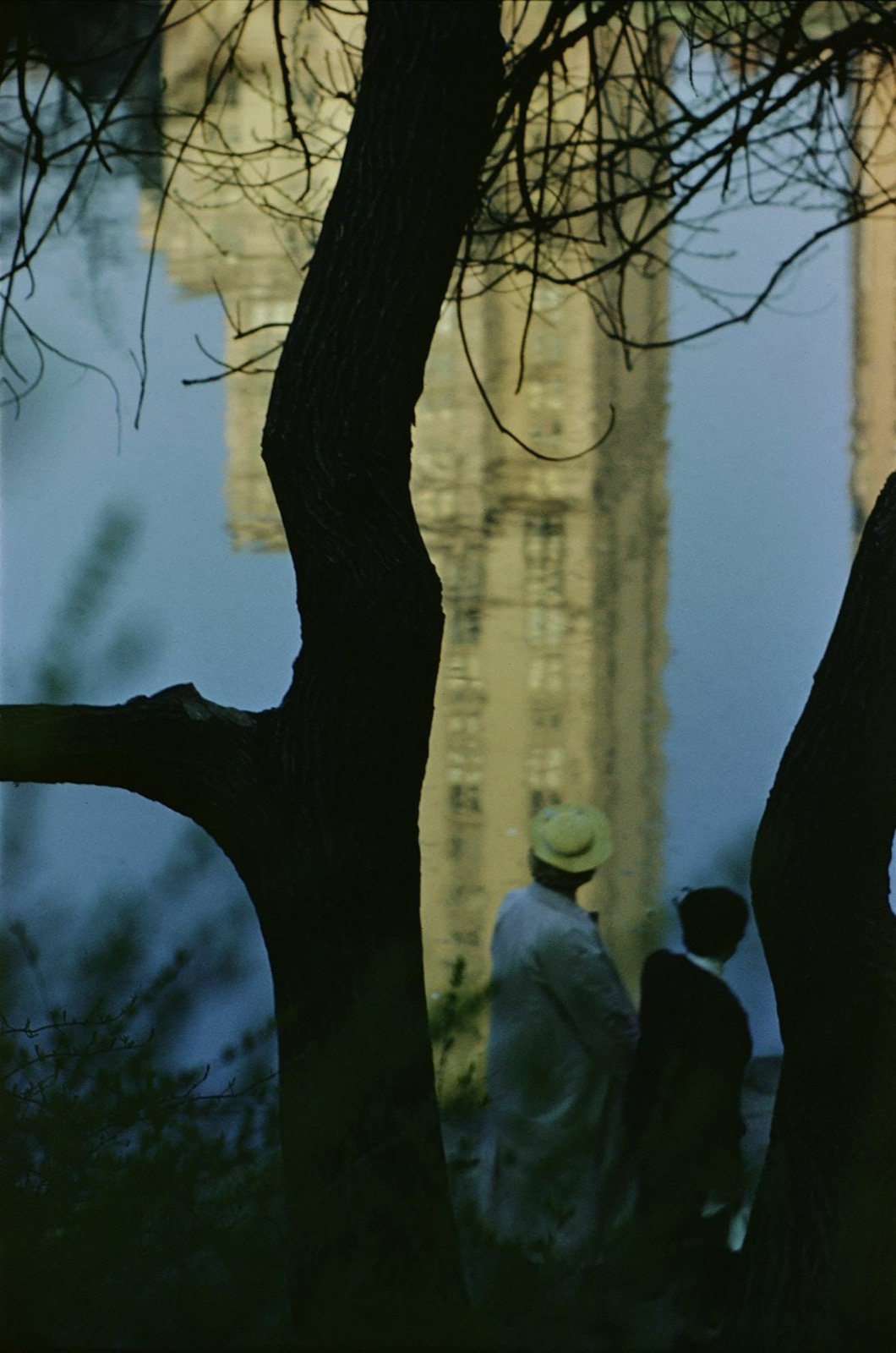
This untitled chromogenic print is Leiter at his most characteristic. The image is built in layers: in the foreground, the dark, near-abstract trunks of bare trees; beyond them, two figures glimpsed and partly hidden; further still, a tall building dissolving into golden, out-of-focus light. The whole scene is cooled to a dusk blue, save for a single straw hat that holds the last of the warmth like a struck note.
Leiter found his poetry not in the decisive moment but in the overlooked margins — the world seen sidelong, through obstruction, in reflection, in weather. There is Japanese woodblock in his cropping and Bonnard in his colour, yet the sensibility is wholly his: unhurried, tender, content to let meaning hover rather than declare itself. To live with a Leiter is to be reminded that the ordinary city, attended to with enough love, is inexhaustibly strange and lovely — and that the quietest pictures are often the ones that refuse to leave you. The museums and the market arrived late but decisively; what was once overlooked now reads as a founding chapter of colour photography.