Archival pigment print. Printed later.
Edition of 20
20 x 24 in / 50 × 60 cm
Edition of 5
30 x 40 in / 76 × 101 cm / 48 x 60 in / 121 × 152 cm
Edition of 3
60 x 75 in / 152.4 x 190.5 cm
20 x 24 in / 50 × 60 cm
Edition of 5
30 x 40 in / 76 × 101 cm / 48 x 60 in / 121 × 152 cm
Edition of 3
60 x 75 in / 152.4 x 190.5 cm
Hand-signed by artist, mounted, titled, editioned and print date in ink label affixed to mount verso
© The Artist

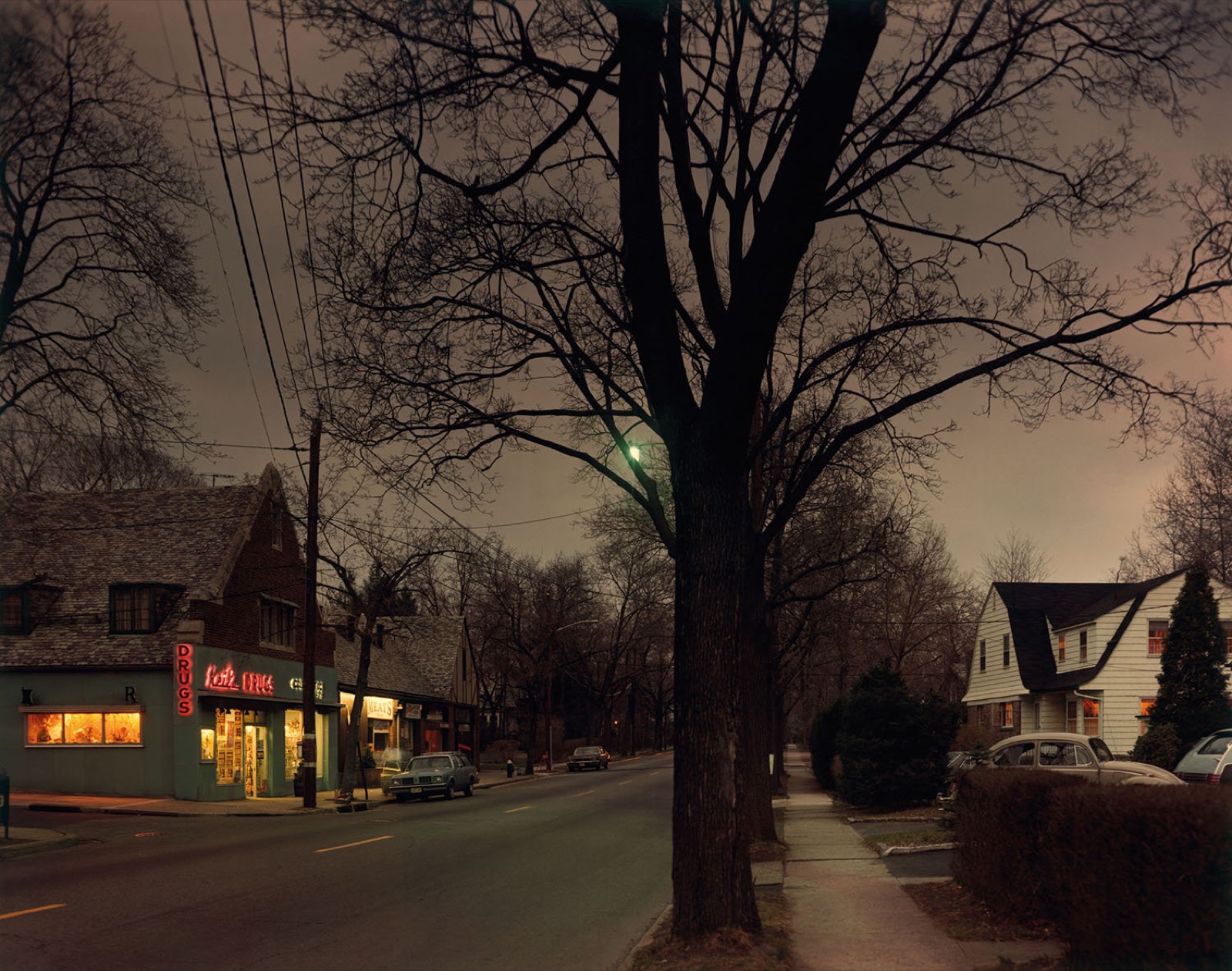
A bare tree stands almost dead center, and this is the whole problem the picture sets itself. Most photographers would have moved a step to dump that trunk to one side; Meyerowitz lets it rise straight up the middle and split the street in two, so the eye must choose between the drugstore glowing on the left and the dark houses banked on the right. The branches fork open at the top and catch the one green streetlamp like something snagged there, a cool acid note set against all the warm domestic light below.
What the camera describes, working at the end of the day on a long exposure, is the exact minute when the two kinds of light come even. The sky still holds a smudged mauve daylight; the DRUGS sign and the shop windows have just taken over the sidewalk. Neither has won. The road itself is nearly empty and reads as a flat gray plane running back to nothing, which is what gives the scene its held breath. A few parked cars sit low and patient at the curbs, described down to their chrome but never made into incident.
The discipline here is that nothing is dramatized. A suburban corner in New Jersey is allowed to be exactly itself, and the large-format negative renders every shingle, wire, and twig with an even, unhurried attention that small flattery would only spoil. Meyerowitz was among the first to argue that color could carry the full weight of serious photography, and this frame is part of the body of work that won that argument. From the sold-out edition of ten, it is a plain, hard-won picture of an hour most people walk through without looking up.