Start with the woman's gloved hand reaching across the marble for her drink. It is the one gesture that bridges the picture's two worlds. She leans away on her stool in a beaded cloche and a long rope of pearls, dressed for somewhere else; the man in the bow tie steadies a coupe beside her; and just past her wrist the bar dissolves into bottles, a tiered cake stand, and the heavy-lidded face of a regular who has folded his hands and is paying none of them any mind. The reach is what holds it together. Without it she would simply be pasted into the room.
What the camera does best here is describe a crowded space without losing its order. Horvat works from a slight remove, and the long lens stacks everything—chandelier, etched mirror, the line of men along the zinc—into one shallow, glittering plane. The mirrored back wall doubles the figures and lamps until you cannot say where the room stops. Light pools on the white tablecloth at the bottom edge and on the bald crown of the seated man, two bright anchors that keep the eye from drifting off into the dark upper corners.
The interesting thing is how little the photograph insists on its model. She is set low and to the left, partly turned from us, while the patterned tile floor and the unposed strangers claim as much attention as she does. Made in 1957 for the Paris magazines as Horvat was carrying his reporter's habits into fashion, it treats the fashion picture as a scene observed rather than staged—the elegant figure left to find her own place among people who happen to be there. The picture trusts description, and the description is exact.
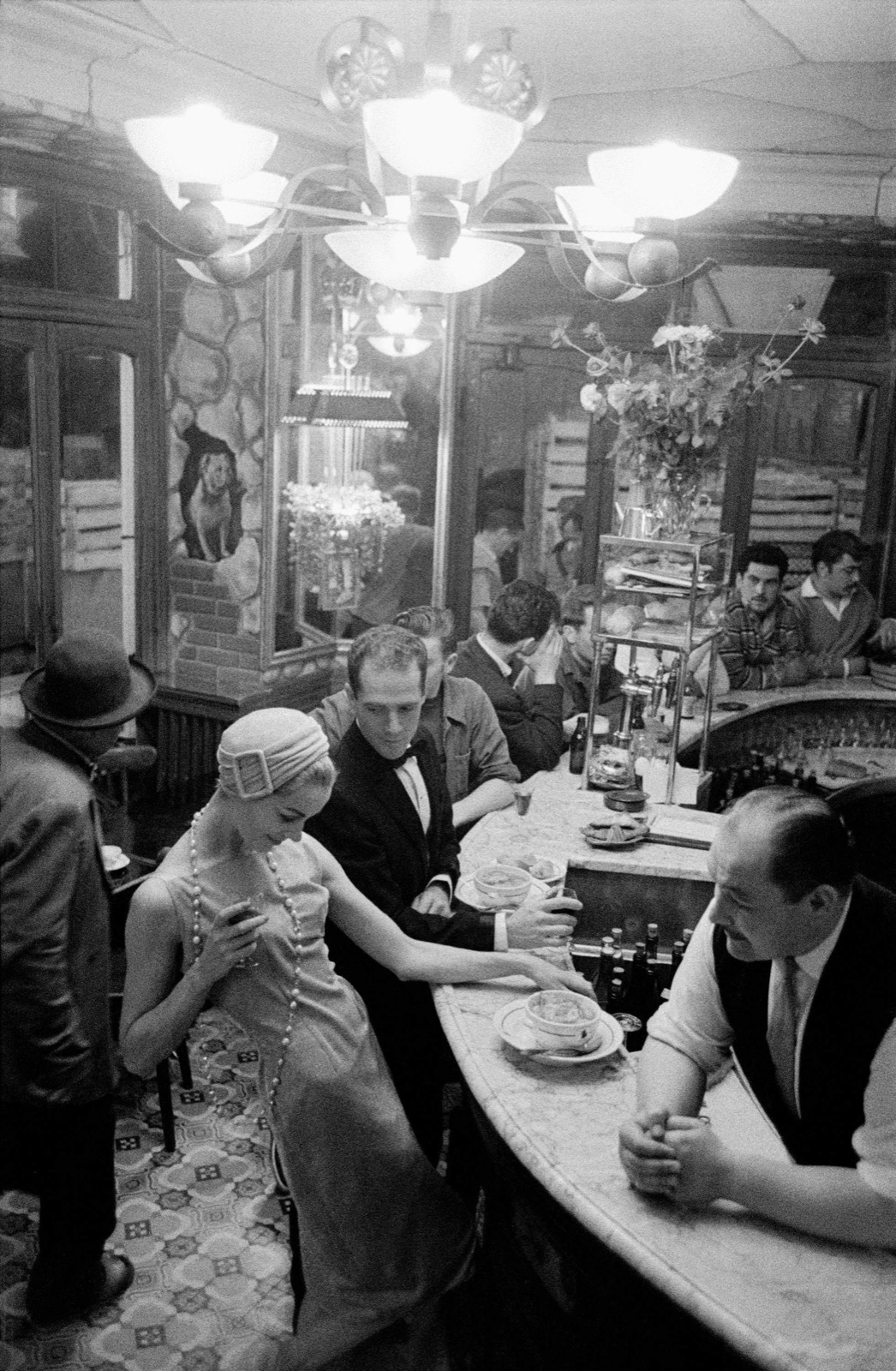
Start with the woman's gloved hand reaching across the marble for her drink. It is the one gesture that bridges the picture's two worlds. She leans away on her stool in a beaded cloche and a long rope of pearls, dressed for somewhere else; the man in the bow tie steadies a coupe beside her; and just past her wrist the bar dissolves into bottles, a tiered cake stand, and the heavy-lidded face of a regular who has folded his hands and is paying none of them any mind. The reach is what holds it together. Without it she would simply be pasted into the room.
What the camera does best here is describe a crowded space without losing its order. Horvat works from a slight remove, and the long lens stacks everything—chandelier, etched mirror, the line of men along the zinc—into one shallow, glittering plane. The mirrored back wall doubles the figures and lamps until you cannot say where the room stops. Light pools on the white tablecloth at the bottom edge and on the bald crown of the seated man, two bright anchors that keep the eye from drifting off into the dark upper corners.
The interesting thing is how little the photograph insists on its model. She is set low and to the left, partly turned from us, while the patterned tile floor and the unposed strangers claim as much attention as she does. Made in 1957 for the Paris magazines as Horvat was carrying his reporter's habits into fashion, it treats the fashion picture as a scene observed rather than staged—the elegant figure left to find her own place among people who happen to be there. The picture trusts description, and the description is exact.